

Last Reviewed: July 2025
Microneedling is one of the most clinically validated minimally invasive procedures in dermatology — and when paired with the right serum applied after your session, its results compound dramatically. The science is clear: what you apply immediately post-procedure determines how much of microneedling’s collagen-inducing potential your skin actually realizes. Bradceuticals Gold Mesenchymal Stem Cell Growth Factor Serum was formulated specifically for this post-procedure window — combining hyaluronic acid with a full-spectrum mesenchymal stem cell growth factor complex that delivers EGF, FGF, TGF, and VEGF after your session ends, when absorption is highest and your skin is most ready to rebuild.
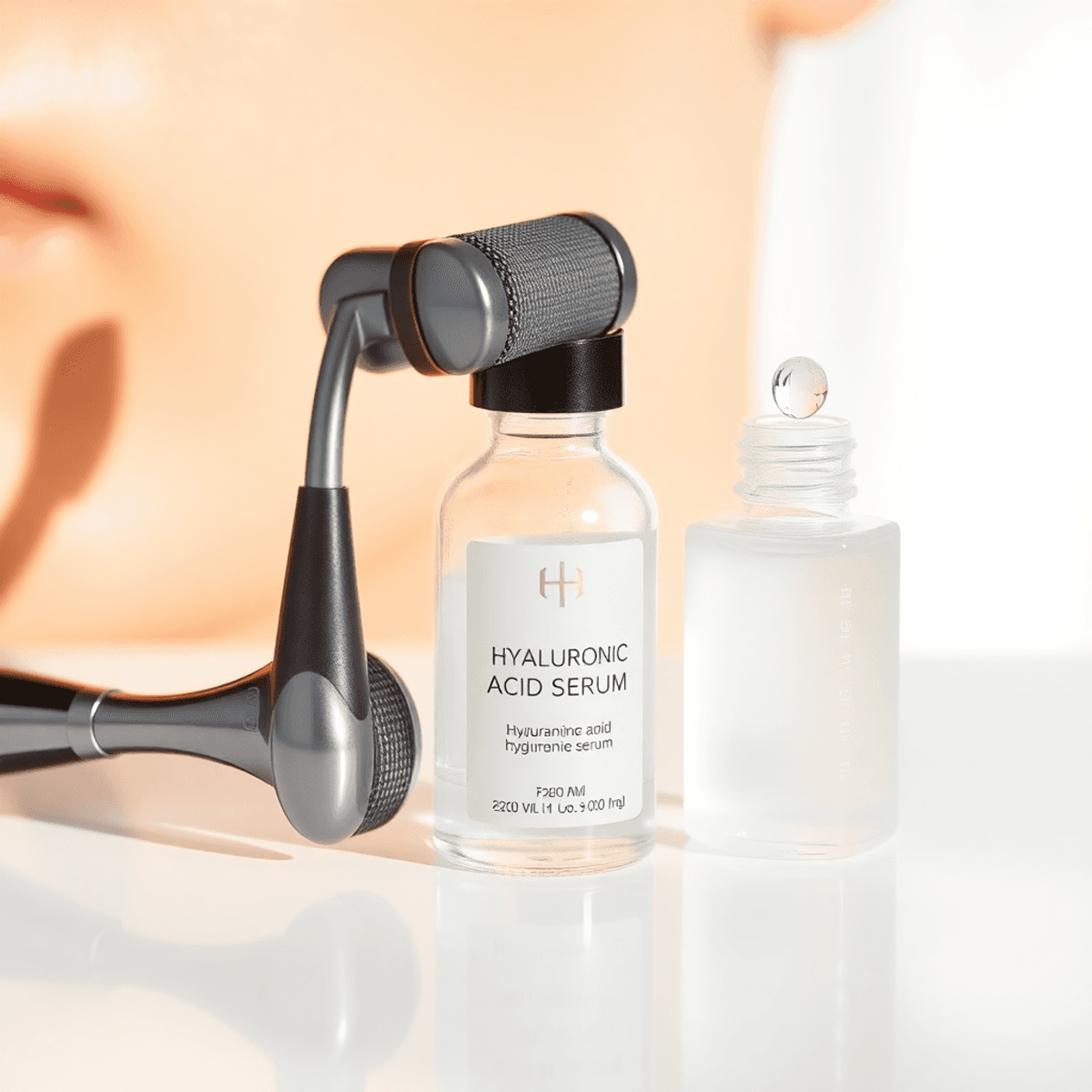
What Microneedling Is — and Why It Works
Microneedling, also known as collagen induction therapy or percutaneous collagen induction, is a minimally invasive dermatological procedure that uses fine sterile needles to create controlled micro-injuries in the skin’s epidermis and upper dermis. These micro-wounds trigger the body’s natural wound-healing cascade — activating platelets, releasing growth factors, and stimulating fibroblasts to produce new collagen and elastin.
The collagen formed through microneedling is Type III initially, progressively remodeling into the more structurally organized Type I collagen — producing measurable improvements in skin texture, firmness, and the appearance of fine lines, wrinkles, and scars over weeks and months. Importantly, microneedling achieves this dermal remodeling without ablating the epidermis — preserving the skin’s barrier layer and resulting in significantly less downtime and fewer side effects than ablative laser treatments. [Kalil C et al., PMC, 2024 — PMC11499218]
Microneedling is also a highly effective transdermal drug delivery system. The micro-channels created during treatment temporarily increase skin permeability, allowing topical actives — including hyaluronic acid and growth factors — to bypass the stratum corneum and reach the dermis where they have the most clinical impact. This is what makes post-procedure serum application so critical to results.
The Clinical Evidence for Microneedling — What the Research Actually Shows
The evidence base for microneedling is extensive and growing. A systematic review across 33 clinical articles found that all studies evaluated showed improvement in acne scar appearance following microneedling treatment. [Mujahid N et al., Dermatol Surg, 2020 — PMID: 31356435] A separate meta-analysis of 12 randomized controlled trials found that microneedling without radiofrequency achieved superior results for objective scar improvement and was preferred over other treatments due to minimal side effects and no cases of secondary scarring. [Shen YC et al., Aesthetic Plast Surg, 2022 — PMID: 35426044]
Across 58 studies examining 1,845 patients treated for various scar types, microneedling consistently produced clinical improvement with high patient satisfaction and no serious adverse events. Boxcar and rolling scars showed the greatest improvement, while icepick scars were more resistant — a pattern consistent across multiple independent reviews. [Dushnicky MJ et al., Clin Cosmet Investig Dermatol, 2021]
Microneedling results can last several months to years depending on skin type, condition treated, and treatment depth — with collagen remodeling continuing for months post-treatment and results compounding across a properly spaced treatment series. [Kalil C et al., PMC, 2024 — PMC11499218]
9 Compelling Reasons Microneedling with Hyaluronic Acid Transforms Skin
1. Collagen Induction That Continues for Months
Microneedling’s most powerful mechanism is the sustained collagen synthesis it initiates. Fibroblasts activated by the wound-healing cascade produce Type III collagen that progressively remodels into Type I — the mature structural collagen responsible for skin firmness and wrinkle reduction. This remodeling continues for months after each session.
Histological examination of skin treated with four microneedling sessions one month apart showed up to a 400% increase in collagen and elastin deposition at six months post-treatment. The new collagen forms with a normal lattice pattern — not the parallel bundles seen in scar tissue — meaning microneedling produces genuine structural improvement. [Aust MC et al., PMC, 2016 — PMC4976400]
2. Hyaluronic Acid Delivered Where It Works Best
On intact skin, topical HA stays largely on the surface due to the stratum corneum’s size restriction. Microneedling removes this barrier entirely — delivering HA directly to the dermis through open micro-channels, where it supports the extracellular matrix, maintains the hydrated environment fibroblasts need to operate, and reinforces the moisture barrier as channels close.
A randomized clinical study comparing microneedling alone to microneedling with hyaluronic acid applied post-procedure in 60 acne scar patients found the HA group demonstrated significantly faster healing, reduced bruising, and a higher proportion of “good” to “very good” improvement ratings. None of the microneedling-only patients achieved a “very good” outcome. [Chauhan P et al., PMC, 2024 — PMC10833484]
3. Superior Acne Scar Reduction — Clinically Confirmed
Microneedling is one of the most studied treatments for atrophic acne scarring in dermatology. It works by physically disrupting the compact bands of collagen that pull atrophic scars downward — allowing revascularization and organized new collagen deposition that gradually elevates and softens scar contours.
A systematic review of randomized controlled trials in atrophic acne scars confirmed that microneedling consistently produced significant scar improvement and was preferred over many alternatives due to its lower hyperpigmentation risk — particularly in darker Fitzpatrick skin types. [Sitohang IBS et al., PMC, 2021 — PMC8450803] Adding HA post-procedure enhances these results by accelerating healing and providing a superior extracellular matrix environment for collagen deposition.
4. Fine Line and Wrinkle Reduction That Builds Over Sessions
Microneedling’s progressive collagen remodeling produces measurable wrinkle reduction that builds across treatment series. Each session initiates a new round of fibroblast activation — compounding on the collagen already deposited from previous sessions. Patients typically see the most significant visible improvements at weeks 8–12 after a series of 3–6 sessions spaced 4–6 weeks apart.
Hyaluronic acid applied after each session provides immediate plumping that smooths the appearance of fine lines while the deeper collagen remodeling occurs — delivering both immediate and long-term improvement with every session.
5. Enhanced Product Absorption Up to 300%
Microneedling’s micro-channels dramatically increase the skin’s permeability to topical actives. Research confirms that micro-channels significantly increase transdermal delivery and absorption — transforming serums applied after microneedling from surface-level products into deeply delivered therapeutics. [Kalil C et al., PMC, 2024 — PMC11499218]
This makes what you apply after microneedling more important than what you apply during a normal skincare routine. Growth factors, peptides, and hyaluronic acid applied after microneedling reach the dermis at concentrations they simply cannot achieve on intact skin.
6. Hyperpigmentation Improvement Without the Risks of Ablative Treatments
A significant advantage of microneedling over laser resurfacing and chemical peels is its hyperpigmentation safety profile — particularly in darker skin types. The meta-analysis of 12 RCTs found that no form of microneedling caused post-inflammatory hyperpigmentation — an important clinical distinction that makes microneedling suitable for a far broader range of skin types than ablative alternatives. [Shen YC et al., Aesthetic Plast Surg, 2022 — PMID: 35426044]
7. Growth Factors After Microneedling Produce Measurably Better Results
The post-microneedling window is also peak absorption time for growth factor serums. A randomized controlled trial found that adding a growth factor serum after microneedling produced significantly greater improvements in skin texture and hydration than microneedling alone — with VISIA imaging confirming superior results in the growth factor group across all measured parameters. [Merati M et al., J Clin Aesthet Dermatol, 2020 — PMC7716740]
This is why Bradceuticals Gold — applied after your session — delivers what hyaluronic acid alone cannot. Its full-spectrum MSC growth factor complex amplifies the collagen remodeling response microneedling initiates, supporting faster recovery and more visible results across every session.
8. Minimal Downtime Compared to Alternatives
Microneedling preserves the epidermis while targeting the dermis — preserving the skin’s barrier function and producing quicker recovery than ablative laser treatments. Multiple systematic reviews confirm that microneedling consistently shows similar results to other treatments but is preferred due to minimal side effects and shorter downtime. [ScienceDirect systematic review, 2017]
Most patients experience redness and mild sensitivity resolving within 24–72 hours, making microneedling a practical option for those who cannot afford extended post-procedure downtime.
9. Cumulative Results That Compound Across a Treatment Series
Each microneedling session builds on the collagen deposited by the previous one. The 400% increase in collagen at six months documented histologically after four sessions confirms that this is not a one-session treatment — it is a progressive, compounding therapy. [PMC4976400] Consistent post-procedure care with growth factor serums like Bradceuticals Gold sustains and extends the remodeling response between sessions, maximizing the cumulative result across your full treatment course.
Microneedling Devices — Choosing the Right Tool
Dermarollers — cylindrical drums covered with fine needles rolled across the skin. Cost-effective and accessible for home use at 0.25–0.5mm depths. Professional-grade rollers with 1–1.5mm needles are used in clinical settings.
Dermapens (motorized microneedling devices) — motorized pen devices with adjustable needle depth and speed. More precise than rollers, better suited for targeting specific areas and uneven terrain like around the nose and eyes. Preferred in professional settings for scar treatment and deeper rejuvenation.
Radiofrequency microneedling — combines mechanical needling with controlled radiofrequency energy delivered to the dermis, creating both micro-channels and thermal coagulation zones that enhance collagen stimulation. Extended recovery compared to standard microneedling but potentially more robust collagen induction for deeper skin laxity concerns.
Post-Microneedling Protocol: Maximizing Every Session
Immediately after your session is complete: Apply Bradceuticals Gold or HA serum to clean skin within 5–10 minutes while micro-channels remain open. Pat gently — never rub sensitized skin.
First 24–48 hours: Twice-daily serum and ceramide moisturizer. No actives, no makeup for at least 24 hours.
Days 3–7: Continue growth factor or HA serum. Allow natural peeling — do not force it. SPF every morning.
Days 5–7: Cautiously reintroduce vitamin C. Retinoids wait a minimum of 5–7 days.
Between sessions: Maintain twice-daily growth factor serum to sustain the collagen remodeling environment microneedling builds.
Session spacing: 4–6 weeks between sessions for most skin concerns. Sessions spaced too closely don’t allow complete collagen maturation between rounds.
Who Is Microneedling Suitable For?
Microneedling is suitable for Fitzpatrick skin types I–VI — one of its key advantages over laser and ablative treatments that carry higher pigmentation risks in darker tones. It effectively addresses acne scars, fine lines, wrinkles, enlarged pores, hyperpigmentation, stretch marks, and general skin texture and firmness concerns.
Contraindications include: active acne breakouts, eczema or psoriasis flares, open wounds, blood-thinning medications, and pregnancy. Always consult a licensed provider before beginning a microneedling course.
Frequently Asked Questions
How many microneedling sessions do I need? Most clinical protocols recommend 3–6 sessions spaced 4–6 weeks apart. Histological studies confirm collagen remodeling continues for months after each session, with cumulative results compounding significantly across a full course. [PMC4976400]
Can microneedling be done at home? Home dermarollers at 0.25–0.5mm depths offer mild results for general skin maintenance. Professional microneedling devices reach deeper depths (1–2.5mm) and produce substantially greater collagen induction. For scar treatment or significant rejuvenation, professional sessions are recommended.
What serum should I apply after microneedling? A growth factor serum containing the full MSC complex — like Bradceuticals Gold — applied after your session delivers the most comprehensive post-procedure support. It should never be used as a glide medium during the procedure.
Is microneedling safe for darker skin types? Yes — microneedling has a significantly lower hyperpigmentation risk than ablative lasers, making it one of the preferred options for darker Fitzpatrick skin types. [Shen YC et al., PMID: 35426044]
How long do microneedling results last? Studies indicate results can last several months to years depending on skin type, condition treated, and treatment depth, with collagen remodeling continuing for months post-treatment. [PMC11499218] Maintenance sessions every 6–12 months help sustain long-term results.
The Bottom Line
Microneedling is among the most evidence-backed minimally invasive procedures in dermatology — producing clinically confirmed improvements in acne scars, fine lines, skin texture, hyperpigmentation, and overall skin quality across all skin types. Paired with hyaluronic acid and a full-spectrum growth factor serum applied after each session, the results compound significantly beyond what microneedling alone achieves. Bradceuticals Gold, applied after the needles are done, is the post-procedure serum the science points toward — delivering the growth factors and deep hydration that make every microneedling session count.
References
- Kalil C et al. Microneedling in Dermatology: A Comprehensive Review. PMC. 2024; PMC11499218. https://pmc.ncbi.nlm.nih.gov/articles/PMC11499218/
- Shen YC et al. Microneedling Monotherapy for Acne Scar: Systematic Review and Meta-Analysis. Aesthetic Plast Surg. 2022; PMID: 35426044. https://pubmed.ncbi.nlm.nih.gov/35426044/
- Sitohang IBS et al. Microneedling in the Treatment of Atrophic Scars: A Systematic Review of RCTs. PMC. 2021; PMC8450803. https://pmc.ncbi.nlm.nih.gov/articles/PMC8450803/
- Mujahid N et al. Microneedling as a Treatment for Acne Scarring: A Systematic Review. Dermatol Surg. 2020; PMID: 31356435. https://pubmed.ncbi.nlm.nih.gov/31356435/
- Chauhan P et al. Comparative Evaluation of Microneedling Alone Versus Microneedling with Hyaluronic Acid. PMC. 2024; PMC10833484. https://pmc.ncbi.nlm.nih.gov/articles/PMC10833484/
- Merati M et al. An Assessment of Microneedling with Topical Growth Factors for Facial Skin Rejuvenation. J Clin Aesthet Dermatol. 2020; PMC7716740. https://pmc.ncbi.nlm.nih.gov/articles/PMC7716740/
- Aust MC et al. Skin Cell Proliferation Stimulated by Microneedles. PMC. 2016; PMC4976400. https://pmc.ncbi.nlm.nih.gov/articles/PMC4976400/
Disclaimer: This article is intended for informational purposes only and does not constitute medical advice. Always consult a licensed dermatologist or skincare professional before beginning any new treatment, particularly following microneedling procedures.
About Bradceuticals : Thuy Myers is the founder of Bradceuticals which manufactures and distributes skin care and hair regrowth serums that use growth factors from human stem cells as the catalyst for regeneration. When she is not busy running the business and maintaining blogs, she is continuing her practice as a semiconductor engineer and occasionally teaches college engineering. In her free time, she enjoys the beach, working out at the gym and hanging out with her kiddo Brad.