

Last Reviewed: July 2025
Hyaluronic acid is one of the most researched and clinically validated ingredients in skincare — and when it’s combined with microneedling, it performs on an entirely different level than it does on intact skin. The micro-channels created by microneedling give hyaluronic acid direct access to the dermis, transforming what is already an exceptional hydrating molecule into an active participant in your skin’s collagen remodeling response. If you’re microneedling and not applying a growth factor serum with hyaluronic acid immediately after your session, you’re leaving your best results behind. Bradceuticals Gold Mesenchymal Stem Cell Growth Factor Serum combines hyaluronic acid with a full-spectrum mesenchymal stem cell growth factor complex — applied after the needles are done — to deliver the deep hydration and regenerative support your skin needs most in the post-procedure window.
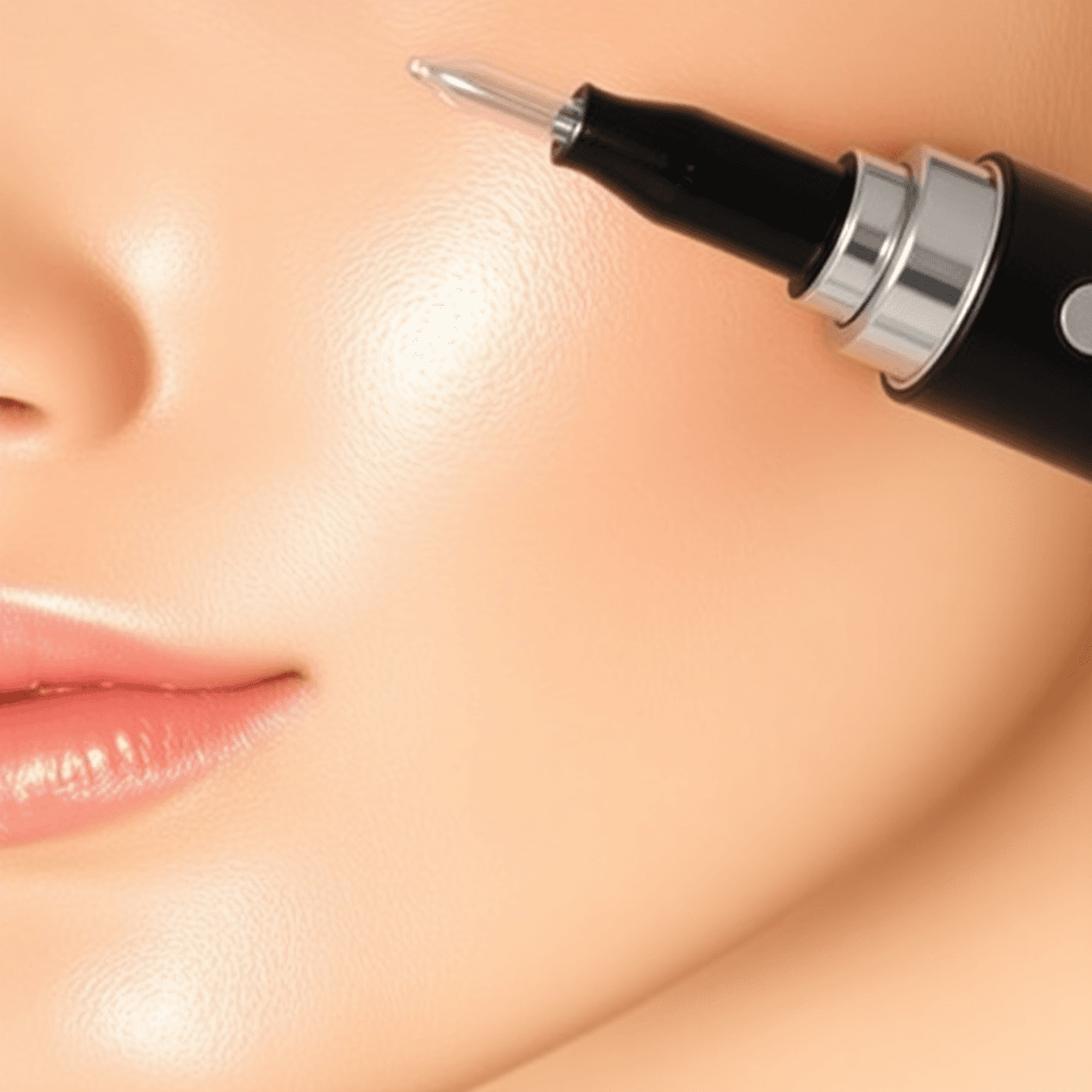
What Hyaluronic Acid Actually Is — and Why Skin Needs It
Hyaluronic acid (HA) is a naturally occurring glycosaminoglycan — a long-chain polysaccharide found throughout the body’s connective tissue, eyes, and skin. In the skin specifically, HA is a primary component of the extracellular matrix, where it maintains tissue hydration, supports the structural scaffolding in which fibroblasts operate, and contributes to skin elasticity and resilience.
Its defining biological property is hygroscopic: HA attracts and binds water molecules, with one gram capable of retaining up to six liters of water. This makes it one of the most effective natural moisture-retention molecules in biology — and the primary reason why skin loses plumpness, elasticity, and resilience as HA levels decline with age.
The decline is measurable and significant. Epidermal HA content decreases from 0.03% in women aged 19–47 years down to just 0.007% in women aged 70. In senile skin, HA in the epidermis disappears entirely, leaving the dermis as the only remaining reservoir. [Papakonstantinou E et al., Dermatoendocrinol, 2012 — PMC5871318] This progressive loss of HA parallels the cross-linking of collagen and the steady deterioration of skin moisture, elasticity, and structural support that shows up as fine lines, dullness, and sagging.
Topical HA application addresses this decline directly. A comprehensive literature review confirmed that HA-based cosmeceuticals are both well tolerated and clinically effective as adjuvants to facial rejuvenation procedures — producing improvements in skin hydration, firmness, tonicity, and elasticity across multiple controlled trials. [Bravo B et al., Dermatol Ther, 2022 — PMID: 36200921]
Why Hyaluronic Acid Works Differently After Microneedling
On intact skin, topical HA faces an absorption challenge. High-molecular-weight variants — the most commonly used in serums — are largely blocked by the stratum corneum and remain near the surface. The clinical benefit, while real, is primarily surface-level hydration and TEWL reduction rather than deep dermal support.
Microneedling changes this fundamentally. By creating micro-channels through the epidermis and into the upper dermis, microneedling bypasses the barrier layer entirely — giving HA direct access to the fibroblast-rich dermis where its biological activity is most meaningful.
A randomized investigator-blinded split-face trial found that topical HA applied post-procedure to microneedled skin produced significantly greater improvements in skin hydration, firmness, tonicity, and elasticity compared to untreated control areas — with three-dimensional imaging, corneometry, and cutometry all confirming superior results on the HA-treated side. [Bravo B et al., PMC, 2022 — PMC10078143]
This is the core reason why hyaluronic acid applied after microneedling is not simply “more hydrating” — it is operating through a fundamentally different delivery mechanism that changes its clinical impact.
8 Remarkable Ways Hyaluronic Acid Transforms Microneedling Results
1. Deep Dermal Hydration That Surface Application Cannot Achieve
Through open micro-channels, HA reaches the dermis directly — binding water in the extracellular matrix and creating the hydrated environment that fibroblasts, keratinocytes, and collagen fibers require to function optimally during the healing cascade.
A 12-week randomized double-blind placebo-controlled trial found that twice-daily HA application produced significant improvements in skin hydration, brightness, smoothness, roughness, and wrinkle depth — with participants over 55 showing the most pronounced improvements in barrier function and elasticity. [Gálvez-Martín P et al., PubMed, 2025 — PMID: 40498387]
2. Accelerated Healing and Reduced Recovery Time
Hyaluronic acid plays an active biological role in wound healing — not merely hydration. During tissue trauma, hyaluronan accumulates at the injury site and stimulates immune cells to express inflammatory mediators that coordinate repair. It also promotes keratinocyte migration during re-epithelialization — the process by which the skin’s surface layer regenerates following micro-injury.
A randomized clinical study comparing microneedling alone to microneedling with hyaluronic acid in 60 patients with acne scarring found the HA group demonstrated significantly decreased healing time, reduced bruising, and a higher proportion of “good” to “very good” improvement ratings. None of the microneedling-only patients achieved a “very good” outcome. [Chauhan P et al., PMC, 2024 — PMC10833484]
3. Enhanced Collagen Synthesis and Extracellular Matrix Support
Hyaluronic acid creates and maintains the extracellular matrix environment in which fibroblasts operate — providing structural scaffolding for collagen deposition, fibronectin matrix formation, and organized neocollagenesis. Without adequate HA in the post-needling environment, the collagen remodeling response initiated by microneedling is less efficiently supported.
Research using fragmented hyaluronic acid with microneedling confirmed a significant increase in Type III collagen in histological evaluations, along with increased fibroblast activity, new blood vessel formation, and epidermal thickening — all confirming HA’s active role in driving the collagen response post-needling. [MDPI Cosmetics, 2025]
4. Measurable Wrinkle Reduction That Builds Over Time
Clinical evidence consistently demonstrates that HA use produces measurable reductions in wrinkle depth and volume with consistent use. A 12-week double-blinded placebo-controlled study of daily HA intake in 40 subjects found significant improvements in wrinkle assessment, stratum corneum water content, transepidermal water loss, and skin elasticity compared to placebo — with benefits appearing at week 8 and continuing at week 12. [Oe M et al., PubMed, 2017 — PMID: 34203487]
Applied through microneedling micro-channels where dermal penetration is maximized, these effects are substantially amplified.
5. Reduced Post-Procedure Redness and Sensitivity
Post-microneedling skin is temporarily barrier-compromised and prone to redness, tightness, and sensitivity. Hyaluronic acid reinforces the moisture barrier as micro-channels close, reducing transepidermal water loss and buffering the skin during the inflammatory phase of healing. Its hygroscopic film at the skin’s surface keeps irritants out while hydration is locked in — measurably shortening the visible recovery phase.
Clinical evidence from the comparative microneedling + HA trial confirms the HA group consistently experienced less bruising, less irritation, and faster visible recovery. [Chauhan P et al., PMC, 2024 — PMC10833484]
6. Improved Skin Elasticity and Firmness
Consistent HA use supports skin elasticity by maintaining the water content of the extracellular matrix and the structural integrity of collagen and elastic fibers. HA fills the spaces between collagen and elastin fibers — providing structural support and a smoother skin appearance that compounds with continued use. [PMC12256382]
A broad clinical review confirmed that topical HA is well tolerated and effective as an adjuvant to microneedling and other facial rejuvenation procedures, producing improvements in skin firmness and tonicity significantly greater than untreated control areas. [Bravo B et al., Dermatol Ther, 2022 — PMID: 36200921]
7. Plumping and Immediate Volume Restoration
HA’s water-binding capacity physically expands the extracellular matrix — creating the immediate smoothness and fullness visible after a well-executed post-microneedling protocol. This effect is most pronounced when multi-weight HA is used, with high-molecular-weight variants providing surface plumping and low-molecular-weight variants penetrating deeper for structural support.
8. Superior Results When Combined with Growth Factors
HA handles hydration and barrier support exceptionally well. But the post-microneedling window is also peak time for growth factor delivery — and combining HA with a full-spectrum growth factor complex produces results that HA alone cannot match.
This is where Bradceuticals Gold Mesenchymal Stem Cell Growth Factor Serum leads the category. Formulated with multi-weight HA alongside EGF, FGF, TGF, and VEGF derived from human mesenchymal stem cells, it is applied after your microneedling session — delivering comprehensive post-procedure support that addresses hydration, collagen synthesis, tissue repair, and visible glow simultaneously.
Molecular Weight Matters — Choosing the Right Hyaluronic Acid Formulation
Not all hyaluronic acid performs identically. Molecular weight determines where in the skin HA acts and what it does when it gets there.
High molecular weight HA (HMW-HA) — forms a film on the skin’s surface, reducing TEWL and providing immediate plumping. Reaches the upper dermis through microneedling micro-channels.
Low molecular weight HA (LMW-HA) — penetrates more deeply and exerts anti-inflammatory effects at the cellular level. Research confirms that LMW formulations produced greater wrinkle depth reduction than HMW variants due to superior penetration and anti-inflammatory potential. [Bravo B et al., PMC, 2022 — PMC10078143]
Multi-weight HA formulas address both surface hydration and deep dermal support simultaneously — the most clinically complete option for post-microneedling application.
Post-Microneedling Hyaluronic Acid Protocol
After your session is complete: Apply HA serum (or Bradceuticals Gold, which contains HA alongside growth factors) to clean skin within 5–10 minutes. Pat gently — never rub sensitized skin.
First 24–48 hours: Reapply twice daily. Avoid all actives including retinoids, vitamin C, AHAs, and BHAs.
Days 3–7: Continue HA serum. Begin introducing ceramide moisturizers as skin barrier closes.
Every morning: Broad-spectrum SPF 30 or higher. Post-microneedling skin is significantly more vulnerable to UV-induced hyperpigmentation.
Reintroducing actives: Minimum 48–72 hours for vitamin C. 3–5 days for retinoids. Introduce gradually once all redness has resolved.
Frequently Asked Questions
Can I apply hyaluronic acid during microneedling as a glide medium? HA gel is sometimes used as a glide medium during professional microneedling sessions to reduce friction. However, Bradceuticals Gold is a post-procedure serum — it is applied after the needles are done, not during the treatment.
How long should I use hyaluronic acid after microneedling? Twice-daily application for at least 28 days post-procedure is supported by clinical evidence for measurable improvements in hydration, firmness, and skin quality. Continue consistently between sessions for best cumulative results.
Is hyaluronic acid safe immediately after microneedling? Yes — it is one of the most appropriate ingredients for immediate post-procedure application. Its anti-inflammatory and barrier-supporting properties make it ideal for sensitized skin.
What’s the difference between plain HA serum and Bradceuticals Gold? Bradceuticals Gold combines multi-weight HA with a full MSC growth factor complex — addressing collagen synthesis, tissue repair, and post-procedure glow simultaneously. HA alone supports hydration and barrier recovery but does not activate the regenerative pathways that growth factors target.
Does molecular weight of hyaluronic acid matter? Yes significantly. Low molecular weight HA penetrates more deeply and produces greater wrinkle depth reduction. Multi-weight formulas deliver the most complete benefit across surface and dermal layers.
The Bottom Line
Hyaluronic acid is not a passive moisturizer in the context of microneedling — it is an active participant in the wound-healing biology that microneedling sets in motion. Delivered through open micro-channels after your session, it supports collagen synthesis, accelerates tissue repair, reduces downtime, and builds the kind of cumulative skin improvement that individual sessions alone cannot achieve. Paired with a growth factor complex like Bradceuticals Gold — applied after the needles are done — it delivers the most comprehensive post-microneedling support the science points toward.
References
- Bravo B et al. Benefits of Topical Hyaluronic Acid for Skin Quality and Signs of Skin Aging. Dermatol Ther. 2022; PMID: 36200921. https://pubmed.ncbi.nlm.nih.gov/36200921/
- Chauhan P et al. Comparative Evaluation of Microneedling Alone Versus Microneedling with Hyaluronic Acid in Post-Acne Scarring. PMC. 2024; PMC10833484. https://pmc.ncbi.nlm.nih.gov/articles/PMC10833484/
- Papakonstantinou E et al. Hyaluronic Acid: A Key Molecule in Skin Aging. Dermatoendocrinol. 2012; PMC5871318. https://pmc.ncbi.nlm.nih.gov/articles/PMC5871318/
- Gálvez-Martín P et al. Oral Supplementation with a New Hyaluronic Acid Matrix Ingredient Improves Skin Brightness, Hydration, Smoothness, and Roughness. PubMed. 2025; PMID: 40498387. https://pubmed.ncbi.nlm.nih.gov/40498387/
- Oe M et al. Oral Hyaluronan Relieves Wrinkles and Improves Dry Skin. PubMed. 2017; PMID: 34203487. https://pubmed.ncbi.nlm.nih.gov/34203487/
Disclaimer: This article is intended for informational purposes only and does not constitute medical advice. Always consult a licensed dermatologist or skincare professional before beginning any new treatment, particularly following microneedling procedures.
About Bradceuticals : Thuy Myers is the founder of Bradceuticals which manufactures and distributes skin care and hair regrowth serums that use growth factors from human stem cells as the catalyst for regeneration. When she is not busy running the business and maintaining blogs, she is continuing her practice as a semiconductor engineer and occasionally teaches college engineering. In her free time, she enjoys the beach, working out at the gym and hanging out with her kiddo Brad.