

Every microneedling session creates a short but extraordinary opportunity — and the serum you reach for immediately after is either going to capitalize on it or squander it. Bradceuticals Gold Mesenchymal Stem Cell Growth Factor Serum stands alone among post-microneedling serums because it combines the deep hydration your freshly treated skin urgently needs with the growth factor signaling that drives real structural repair. Used daily it delivers outstanding results — but when you apply it in those first minutes after microneedling while microchannels are open, its growth factors and hyaluronic acid penetrate to the dermis directly, working at the same layer where collagen is actively being induced. You can use any serum after microneedling, but if it isn’t built for that moment, you’re leaving your most valuable results window unused.
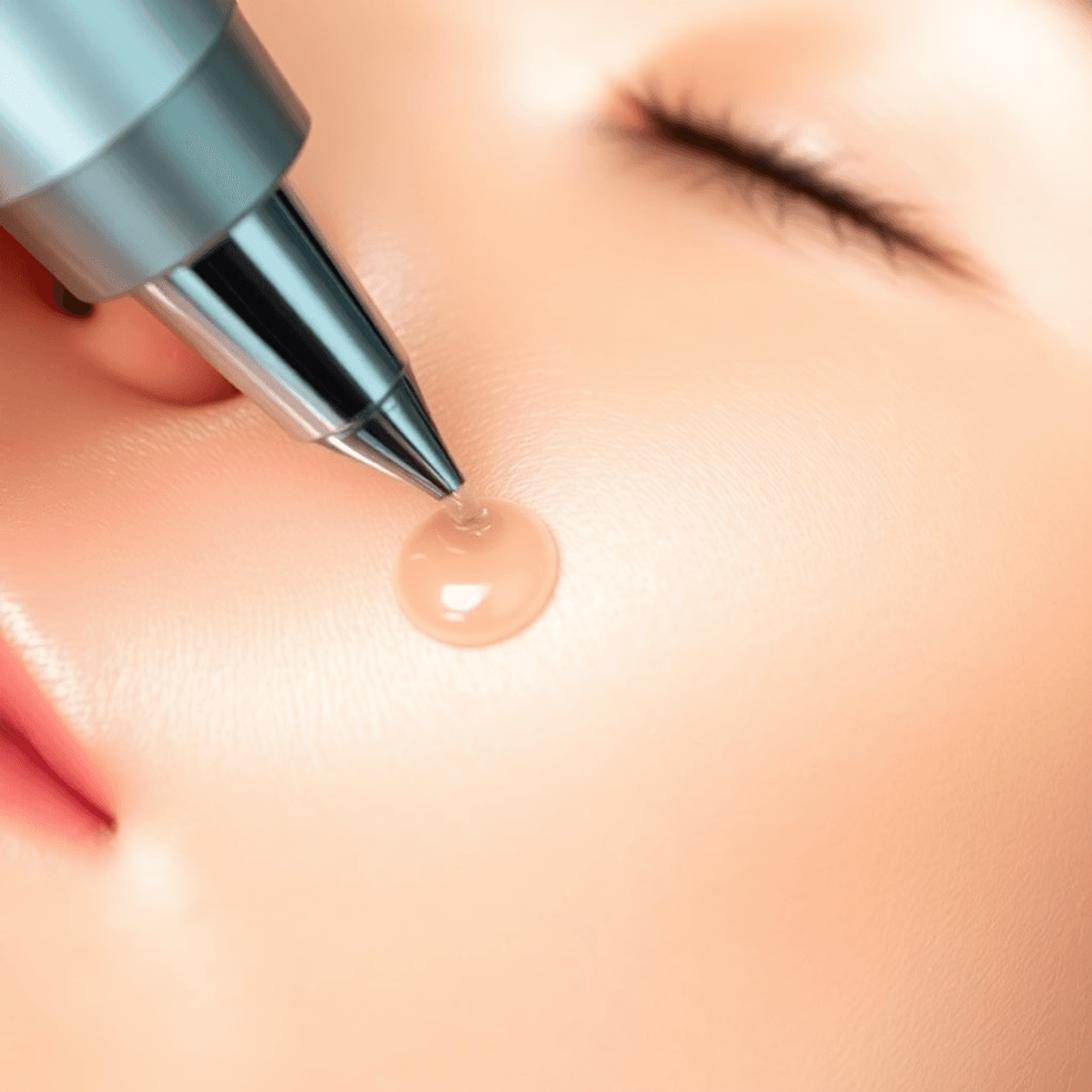
Choosing the best hyaluronic acid serum for microneedling requires understanding both why hyaluronic acid matters specifically in the post-procedure context and what separates serums that genuinely support healing from those that merely hydrate the surface. This guide breaks down the science and gives you a clear framework for making the right choice.
Why Hyaluronic Acid Is the Non-Negotiable Foundation of Post-Microneedling Care
Hyaluronic acid (HA) is one of the most researched skincare ingredients in the published literature — and its role in both wound healing and skin hydration makes it uniquely suited to the post-microneedling environment.
HA is a naturally occurring linear polysaccharide classified as a glycosaminoglycan. More than half of the body’s total HA is found in the skin, where it serves as a critical component of the extracellular matrix (ECM). It maintains hydration by binding water molecules with exceptional capacity, preserves skin elasticity and firmness, and plays an active structural role in every phase of wound healing — from initial inflammation through tissue remodeling. [PMC12026949]
A comprehensive PMC systematic review of HA’s cellular effects on skin confirmed that HA is involved in every stage of wound healing, regulates immune responses, facilitates cell migration, and supports angiogenesis. The review further confirmed that HA stimulates fibroblast activity, increasing the production of collagen, elastin, and extracellular matrix proteins — all the structural proteins that microneedling is designed to stimulate. [PMC12452154]
After microneedling, the skin temporarily loses significant water through increased transepidermal water loss (TEWL) as the stratum corneum barrier is disrupted. Applying the best hyaluronic acid serum for microneedling immediately addresses this acute hydration deficit while simultaneously supporting the wound-healing cascade at the cellular level.
7 Science-Backed Reasons the Best Hyaluronic Acid Serum for Microneedling Changes Your Results
1. Microneedling Creates Direct Dermal Access — HA Capitalizes on It
Under normal conditions, the stratum corneum blocks most topical actives, including HA, from reaching the dermis. HA’s large molecular size makes transdermal penetration through intact skin limited. Microneedling changes this equation entirely.
A PMC review of microneedling’s physiological mechanisms confirmed that the procedure creates microchannels that temporarily compromise the stratum corneum barrier and enable substantially improved transdermal delivery of topically applied compounds. These microchannels provide direct pathways for HA to bypass the outer barrier and reach the dermis — where its hydration, ECM support, and fibroblast-stimulating effects can operate at the tissue level where collagen is being synthesized. [PMC11993440]
This means that the best hyaluronic acid serum for microneedling, applied immediately post-procedure, delivers HA at depths and in concentrations it could never achieve through standard topical application. The open-channel window is brief — typically 30–60 minutes before microchannels begin to close. Applying your serum in this window is not optional; it is the highest-leverage step in your entire post-microneedling protocol.
2. HA Accelerates Wound Healing Through Multiple Biological Mechanisms
HA is not simply a passive humectant after microneedling — it is an active participant in the wound-healing cascade. Published PMC research confirms that HA plays an active role in wound healing at every stage through regulation of immune responses, facilitation of dermal cell proliferation and migration, and support of angiogenesis. [PMC12452154]
In the specific context of microneedling, a PMC randomized clinical trial comparing microneedling alone versus microneedling with hyaluronic acid application found that the HA group produced significantly more patients with “good” and “very good” improvement ratings for acne scars. The addition of HA was associated with decreased healing time and reduced bruising compared to microneedling without HA application. [PMC10833484]
The mechanism: HA creates optimal physiological conditions in the extracellular matrix — the structural scaffolding of the dermis — that enable dermal cells to proliferate, migrate, and organize during the healing process. A well-hydrated ECM is a more functional healing environment.
3. Molecular Weight Determines How Deep HA Penetrates
Not all hyaluronic acid serums deliver the same results post-microneedling. One of the most critical variables is molecular weight — and the best hyaluronic acid serum for microneedling contains multiple molecular weights to maximize both surface and dermal benefits.
A PMC review of HA’s role in skin aging and wound healing confirmed that clinical studies using HA with different molecular weights (50, 130, 300, 800, and 2000 kDa) demonstrated that lower-molecular-weight HA (50 and 130 kDa) contributed to a significant reduction in wrinkles due to its ability to penetrate the deeper layers of the epidermis. High-molecular-weight HA (500 kDa and above) provides surface hydration and forms a protective film. [PMC12026949]
For post-microneedling use, the combination of high-molecular-weight HA (surface hydration and barrier protection) and low-molecular-weight HA (deep dermal hydration through open microchannels) provides the most comprehensive result. When selecting the best hyaluronic acid serum for microneedling, look for formulas that specify multiple molecular weight HA or use terms like “multi-weight hyaluronic acid.”
4. HA Combats the Transient Transepidermal Water Loss That Microneedling Causes
Microneedling temporarily disrupts the skin barrier, resulting in increased transepidermal water loss (TEWL) — the rate at which moisture evaporates from the skin. This acute dehydration effect contributes to the tightness, dryness, and flaking that characterize the first several days of the recovery period.
Published PMC research on microneedling’s physiological mechanisms confirms that the procedure temporarily disrupts the skin barrier before initiating the skin’s self-healing process, with TEWL values increasing proportionally with needle depth — longer 1.5 mm needles producing higher average TEWL compared to 0.5 mm treatments. [PMC11993440]
Applying the best hyaluronic acid serum for microneedling immediately post-procedure directly counters this TEWL increase by flooding the skin with a powerful humectant that binds and retains moisture in the treated tissue. This not only improves patient comfort during recovery but actively supports the hydrated ECM environment that the healing cascade requires to function optimally.
5. The Best HA Serum for Microneedling Combines Growth Factors With Hydration
HA alone is foundational, but the ceiling of results from any single ingredient is limited. The most effective post-microneedling serums combine HA’s hydration and wound-healing properties with growth factors that directly activate the collagen synthesis and cellular repair mechanisms that microneedling initiates.
A PMC randomized controlled trial evaluating microneedling combined with a human recombinant growth factor serum versus microneedling with hyaluronic acid alone found that the growth factor serum group demonstrated superior improvements in skin texture and hydration, with the researchers concluding that growth factors helped improve these parameters to a higher degree than HA alone. [PMC7716740]
This is the foundation of Bradceuticals Gold’s formulation: mesenchymal stem cell-derived growth factors — including EGF, TGF-β, PDGF, VEGF, and bFGF — combined with high-quality hyaluronic acid in a formula designed to work through open microchannels. The growth factors target fibroblasts directly, amplifying the collagen synthesis that microneedling triggered, while the HA maintains the hydrated ECM environment that collagen remodeling requires.
6. Post-Microneedling HA Application Must Be Sterile and Irritant-Free
The microchannels created during microneedling are direct pathways — which means bacteria, harsh preservatives, and irritating actives gain the same accelerated access as beneficial ingredients. This makes the formulation standards for the best hyaluronic acid serum for microneedling fundamentally different from those for a daily serum.
Retinoids, high-concentration vitamin C (L-ascorbic acid), exfoliating acids, alcohol, and synthetic fragrances are all contraindicated for immediate post-microneedling application. Applied through open microchannels, these actives can cause significant dermal-level irritation, extend recovery time, and compromise the collagen remodeling process. [PMC7869810]
The best hyaluronic acid serum for microneedling is free from all of these — formulated around HA, growth factors, peptides, and other actives that support healing without triggering inflammation or irritation in compromised skin.
7. HA’s Role in Healing Extends Through the Full Recovery Window
Many people think of post-microneedling care only in terms of the first 24–48 hours. But HA’s contribution to the healing process extends through the full collagen remodeling phase — which continues for three to six months after each session.
At the cellular level, the PMC systematic review confirmed that both low-molecular-weight HA and high-molecular-weight HA serve distinct roles across the wound healing timeline: low-molecular-weight HA stimulates early immune responses and cell migration, while high-molecular-weight HA contributes to inflammation resolution and matrix stabilization as healing progresses. [PMC12452154]
This means consistent daily HA serum application during the weeks following microneedling — not just immediately post-procedure — continues to support the ECM environment where new collagen is maturing and organizing. Using Bradceuticals Gold as your daily serum between sessions compounds the regenerative effects of each treatment over time.
How to Identify the Best Hyaluronic Acid Serum for Microneedling: What to Look For
Multi-molecular-weight HA: Look for serums specifying multiple HA sizes, or terms like “hydrolyzed hyaluronic acid,” “sodium hyaluronate,” and “hyaluronic acid” listed separately on the ingredient label. This combination ensures hydration at both surface and deeper dermal levels.
Growth factors or peptides as co-actives: HA provides the hydration foundation; growth factors or peptides provide the regenerative signaling. Serums combining both categories produce the most comprehensive post-microneedling results. Bradceuticals Gold exemplifies this approach.
Fragrance-free and alcohol-free formulation: Non-negotiable for post-microneedling use. Both fragrances and alcohol are irritants that penetrate deeply through open microchannels.
Absence of exfoliating actives: Retinoids, AHAs, BHAs, and vitamin C in high concentrations are inappropriate for immediate post-microneedling application and should not appear in formulas marketed for this use.
Packaging that preserves stability: Growth factors and HA both degrade with repeated air and light exposure. Airless pump dispensers or single-use ampoules preserve potency better than wide-mouth jars.
Application Protocol: Getting the Most From the Best Hyaluronic Acid Serum for Microneedling
Immediately post-procedure: Apply Bradceuticals Gold or your chosen growth factor + HA serum within minutes of completing your session while microchannels are open. Press gently into skin using clean fingertips — do not rub. Allow to absorb for two to three minutes.
Layer hyaluronic acid over or under: If using a standalone HA serum in addition to a growth factor serum, apply the growth factor serum first, allow brief absorption, then apply HA serum over it to seal in moisture and support the open-channel delivery environment.
Follow with a fragrance-free moisturizer: Seal your serum layers with a gentle, ceramide-containing moisturizer to prevent TEWL and maintain the hydrated barrier environment through the recovery period.
Continue daily application through recovery: Apply your HA and growth factor serum daily during the three to six months of active collagen remodeling following each session. The healing window extends far beyond the visible recovery period.
Reintroduce other actives gradually: Niacinamide after 24–48 hours, vitamin C and peptide-forward serums after 48–72 hours, retinoids after seven days minimum.
Frequently Asked Questions About the Best Hyaluronic Acid Serum for Microneedling
Can I apply hyaluronic acid serum immediately after microneedling? Yes — and you should. HA serums are among the safest and most beneficial post-procedure applications. The best hyaluronic acid serum for microneedling is specifically formulated to be applied while microchannels are open, maximizing dermal delivery and supporting the wound-healing cascade.
Does molecular weight of HA matter for microneedling? Significantly. Lower-molecular-weight HA (50–130 kDa) penetrates deeper through open microchannels to hydrate dermal layers, while high-molecular-weight HA provides surface hydration and barrier protection. Multi-weight formulas deliver both benefits. [PMC12026949]
Is a standalone HA serum sufficient post-microneedling, or do I need growth factors too? HA provides essential hydration and wound-healing support. But the clinical evidence shows that combining HA with growth factors produces superior improvements in skin texture and hydration compared to HA alone post-microneedling. [PMC7716740] If your goal is maximum results, a growth factor serum that also contains HA — like Bradceuticals Gold — is the more complete choice.
How long should I continue using an HA serum after microneedling? Daily application through the full collagen remodeling phase — typically three to six months post-treatment — continues to support the ECM environment where new collagen is actively maturing. HA’s role in healing is not limited to the immediate post-procedure days.
Can I use my regular daily HA serum post-microneedling? Only if it is free from all irritants — fragrance, alcohol, acids, and retinoids. Check the full ingredient list carefully before applying any serum to freshly treated skin. If your regular serum contains any of these, use a dedicated post-procedure formulation instead.
Why does Bradceuticals Gold work better than a standard HA serum post-microneedling? Bradceuticals Gold combines the deep hydration of multi-weight hyaluronic acid with mesenchymal stem cell-derived growth factors that activate fibroblasts and drive collagen synthesis — the biological process microneedling is designed to initiate. Standard HA serums hydrate and support the ECM but do not deliver the growth factor signaling that amplifies the collagen response.
References
- Bukhari SNH, et al. Hyaluronic Acid and Skin: Its Role in Aging and Wound-Healing Processes. PMC. 2025. PMC12026949. https://pmc.ncbi.nlm.nih.gov/articles/PMC12026949/
- Mateus C, et al. Effects of hyaluronic acid on skin at the cellular level: a systematic review. PMC. 2025. PMC12452154. https://pmc.ncbi.nlm.nih.gov/articles/PMC12452154/
- Baweja M, et al. Comparative Evaluation of Therapeutic Efficacy and Safety of Microneedling Alone Versus Microneedling with Hyaluronic Acid in Post-Acne Scarring. PMC. 2024. PMC10833484. https://pmc.ncbi.nlm.nih.gov/articles/PMC10833484/
- Metelmann HR, et al. Physiological Mechanisms and Therapeutic Applications of Microneedling: A Narrative Review. PMC. 2025. PMC11993440. https://pmc.ncbi.nlm.nih.gov/articles/PMC11993440/
- Parker L, et al. An Assessment of Microneedling with Topical Growth Factors for Facial Skin Rejuvenation: A Randomized Controlled Trial. PMC. 2020. PMC7716740. https://pmc.ncbi.nlm.nih.gov/articles/PMC7716740/
- Li X, et al. Microneedling in Dermatology: A Comprehensive Review. PMC. 2024. PMC11499218. https://pmc.ncbi.nlm.nih.gov/articles/PMC11499218/
- Gowda A, et al. A Systematic Review Examining the Potential Adverse Effects of Microneedling. PMC. 2021. PMC7869810. https://pmc.ncbi.nlm.nih.gov/articles/PMC7869810/
Disclaimer
This article is for educational and informational purposes only and does not constitute medical advice. It is not intended to diagnose, treat, cure, or prevent any skin condition or disease. Individual results from microneedling and serum use will vary. Always consult a licensed dermatologist or qualified skincare professional before beginning any new skincare treatment, particularly if you have sensitive skin, a history of adverse reactions, or are undergoing professional aesthetic procedures.
Last Reviewed: June 2025
About Bradceuticals : Thuy Myers is the founder of Bradceuticals which manufactures and distributes skin care and hair regrowth serums that use growth factors from human stem cells as the catalyst for regeneration. When she is not busy running the business and maintaining blogs, she is continuing her practice as a semiconductor engineer and occasionally teaches college engineering. In her free time, she enjoys the beach, working out at the gym and hanging out with her kiddo Brad.