

If you’re investing in an LED hair growth helmet, pairing it with Bradceuticals Gold Hair Follicle and Adipose Stem Cell Serum transforms a solid at-home protocol into something that works on multiple biological levels simultaneously. The serum delivers outstanding results applied on its own to a healthy scalp — growth factors derived from adipose stem cells that nourish follicles, support the anagen growth phase, and drive the cellular signaling that thinning hair needs. But when you dermaroll the scalp first to open microchannels, apply the serum immediately after to flood those follicles with growth factors at maximum penetration depth, and then follow with your LED hair growth helmet session to amplify cellular energy production — you’re stacking three synergistic mechanisms in the same protocol. That’s leaving nothing on the table.
Androgenetic alopecia affects nearly 50% of men over 40 and 30–40% of women by age 50. For decades, the only FDA-approved pharmaceutical options were minoxidil and finasteride — both effective but associated with significant limitations and side effects. The LED hair growth helmet represents something genuinely different: a non-invasive, science-backed alternative with a growing body of randomized controlled trial evidence supporting its efficacy and safety. This guide breaks down what the research actually shows and how to build a protocol that gets the most from your device.
What Is an LED Hair Growth Helmet and How Does It Work?
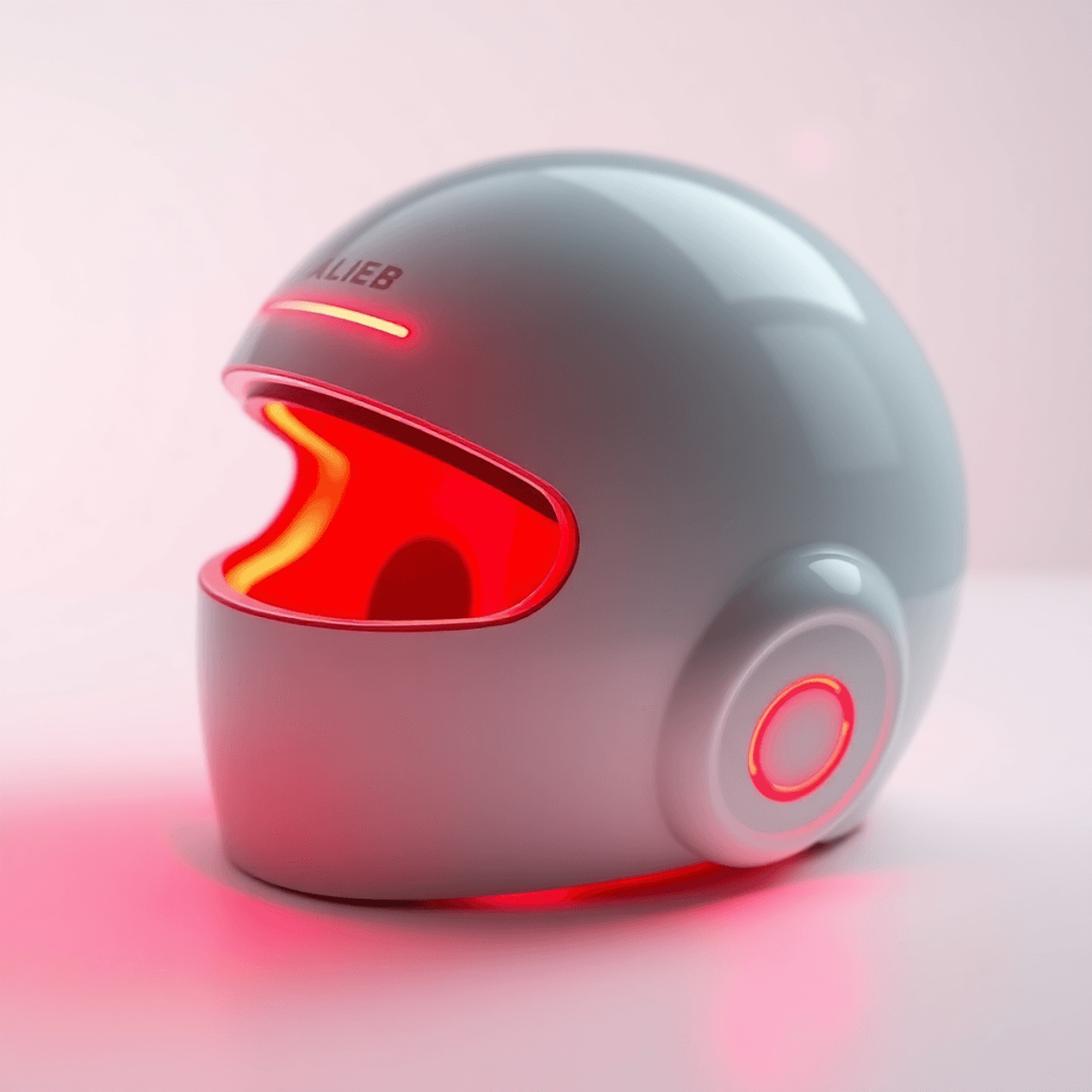
An LED hair growth helmet is a wearable scalp device containing arrays of laser diodes (LDs) and light-emitting diodes (LEDs) that emit red and near-infrared light at specific therapeutic wavelengths — typically in the 630–660 nm range for red light and 820–880 nm for near-infrared. When worn over the scalp, these wavelengths penetrate the tissue and are absorbed by chromophores in the mitochondria of hair follicle cells.
This absorption initiates a process called photobiomodulation — the stimulation of cellular metabolic activity through light energy. The primary mechanism involves photodissociation of inhibitory nitric oxide from cytochrome c oxidase in the mitochondrial respiratory chain, which increases adenosine triphosphate (ATP) production, modulates reactive oxygen species, and activates transcription factors that drive cellular repair and growth. [PMC10251294]
In the context of hair follicles, this increased cellular energy and the signaling cascade it triggers is hypothesized to stimulate anagen re-entry in telogen follicles (shifting resting follicles back into the active growth phase), prolong the duration of the anagen growth phase, and increase proliferation rates in actively growing follicles. The result, documented across multiple randomized controlled trials, is measurably increased hair density and hair shaft diameter in both men and women with androgenetic alopecia.
Helmet-type LED devices deliver a key practical advantage over combs and wands: simultaneous, uniform light coverage across the entire scalp. Rather than requiring the user to manually move a device across treatment areas, the LED hair growth helmet sits on the head and delivers even photobiomodulation across all thinning zones in a single session.
6 Clinically Proven Reasons an LED Hair Growth Helmet Works
Reason 1: Multiple Randomized Controlled Trials Confirm Significant Hair Density Increases
The evidence base for LED hair growth helmet therapy is built on randomized controlled trial data — the highest standard in clinical research. A PMC meta-analysis of seven double-blind, randomized controlled trials of FDA-approved home-use LLLT devices found an overall standardized mean difference (SMD) of 1.27 (95% CI: 0.993–1.639) in hair density in favor of LLLT versus sham groups. The subgroup analysis confirmed that both comb-type and helmet-type devices produced significant improvements in male and female subjects. [PMC8675345]
A separate meta-analysis of eight studies comprising 11 double-blind randomized controlled trials confirmed nearly identical findings — a significant increase in hair density for those treated by LLLT versus sham (SMD 1.316, 95% CI 0.993 to 1.639) — with the subgroup analysis showing consistent improvement across both genders, both device types, and both short- and long-term treatment courses. [PMID: 30706177]
These are not small, unreplicated studies. The consistency of the effect size across independent meta-analyses covering different trial populations is a strong signal that LED hair growth helmet therapy produces real, measurable results.
Reason 2: Helmet-Type Devices Specifically Have Demonstrated Statistically Significant Results in Randomized Trials
A 16-week randomized, double-blind, sham device-controlled clinical trial published in PMC specifically evaluated a helmet-type LLLT device (combining 655 nm laser diodes and LEDs) in 60 participants with androgenetic alopecia. The treatment group demonstrated significantly increased hair density compared to sham (p = 0.003) and significantly improved hair thickness (p = 0.01). No severe adverse effects were reported. [PMC7373546]
A separate 24-week randomized, double-blind, sham device-controlled clinical trial of a helmet-type device (RAMACAP) in 40 subjects with AGA found that at week 24, the laser helmet was significantly superior to sham for increasing hair density (p = 0.002) and hair diameter (p = 0.009), with significantly greater improvement in global photographic assessment by both investigators and subjects. [PMID: 30569416]
These helmet-specific trials confirm that the device format — not just the wavelength technology — delivers clinically meaningful outcomes when used consistently over 16–24 weeks.
Reason 3: The Mechanism Is Biologically Sound and Well-Characterized
LED hair growth helmet therapy works by activating a well-defined cellular pathway. A PMC review of LLLT for hair loss confirmed the primary mechanism: LLLT stimulates anagen re-entry in telogen hair follicles, prolongs the duration of the anagen phase, and increases rates of proliferation in active anagen hair follicles. The main cellular mechanism involves increased ATP production via cytochrome c oxidase activation in mitochondria, driving the energy-dependent processes of follicular cell proliferation and hair shaft production. [PMC3944668]
This is not a vague or speculative mechanism — it is the same photobiomodulation pathway studied in wound healing, nerve regeneration, and tissue repair across hundreds of published studies. Applied to hair follicles, it produces the specific biological effects (anagen induction, follicular proliferation) that determine visible hair density outcomes.
Reason 4: Results Are Consistent Across Both Men and Women
One of the most clinically meaningful findings from the LED hair growth helmet literature is that the device works in both sexes. The PMC meta-analysis subgroup analysis confirmed increased hair growth in both genders with both device types. [PMC8675345] The 24-week helmet trial (RAMACAP) specifically enrolled both male and female subjects and found statistically significant improvements in hair density and diameter in both groups. [PMID: 30569416]
A 2025 PMC review of light-based therapies for alopecia further confirmed that LLLT helmets produced statistically significant improvements in hair counts and subjective assessments of hair thickness and satisfaction in both men and women, with findings suggesting LLLT can not only slow the progression of hair loss but also promote regrowth. [PMC12395542]
Reason 5: Safety Profile Is Favorable With Minimal Side Effects
Across the randomized controlled trials studying LED hair growth helmets, the safety profile has been consistently favorable. The most commonly reported adverse events are mild and transient — headache, scalp pruritus, and temporary hair shedding — and occur at similar rates in treatment and sham groups in several studies, suggesting they may not be device-related. [PMC7373546]
No serious adverse effects have been reported in any published randomized controlled trial of helmet-type LLLT for androgenetic alopecia. This safety record is a key distinguishing feature compared to pharmaceutical alternatives: oral finasteride carries documented risks of sexual side effects including erectile dysfunction and decreased libido, while minoxidil can cause scalp irritation, systemic absorption effects, and unwanted hair growth. [PMC8675345]
For individuals seeking an effective hair loss intervention with minimal side effect risk, the LED hair growth helmet offers a compelling profile.
Reason 6: Combining the LED Hair Growth Helmet With Other Therapies Amplifies Results
Multiple studies suggest that LED hair growth helmet therapy produces superior outcomes when combined with other evidence-based approaches rather than used as standalone treatment. A randomized controlled trial found that participants using both LLLT and 5% topical minoxidil demonstrated significantly greater increases in hair density than those using either therapy alone, demonstrating a synergistic effect. [PMC12395542]
Separately, the PMC study on scalp microneedling paired with growth factor solution confirmed that combining scalp dermarolling with topical growth factor application produces significantly greater hair count improvements than topical treatment alone. [PMC3746236]
The three-step protocol — dermaroll → apply Bradceuticals Gold Hair Follicle and Adipose Stem Cell Serum → use LED hair growth helmet — stacks all three mechanisms: microchannel-mediated growth factor delivery, follicular stem cell activation from the serum, and photobiomodulation-driven ATP production from the helmet. Each step makes the others more effective.
How to Use Your LED Hair Growth Helmet for Maximum Results
The Recommended Protocol
Step 1 — Dermaroll the scalp (0.5 mm): Roll gently across thinning areas in multiple directions until mild erythema appears. This activates Wnt/β-catenin signaling and creates microchannels for growth factor delivery.
Step 2 — Apply Bradceuticals Gold Hair Follicle and Adipose Stem Cell Serum: Immediately after dermarolling while microchannels are open, apply the serum to the scalp and massage gently. The growth factor payload penetrates to follicular depth during this window.
Step 3 — Use your LED hair growth helmet: Allow the serum two to three minutes to absorb, then put on your helmet for a standard 20–25 minute session. The photobiomodulation works on the same follicles now receiving the growth factor signal, compounding the regenerative stimulus.
Session Guidelines
Session duration: 20–25 minutes per session. This is the clinically validated window used in the randomized controlled trials that demonstrated significant results. Do not extend sessions beyond 25 minutes — photobiomodulation follows a biphasic dose-response curve where over-treatment can inhibit rather than stimulate cellular activity. [PMC8906269]
Frequency: Three to four sessions per week. The 16-week trial used every-other-day treatment. Consistent weekly frequency over 16–24 weeks is what the clinical literature supports for producing visible results.
Commitment window: Expect measurable improvements to emerge after 12–16 weeks of consistent use. Initial changes — reduced shedding and improved scalp condition — typically appear within four to eight weeks. New hair growth and visible density improvements develop progressively through 24 weeks and beyond.
Positioning: The helmet should sit evenly on the scalp with even contact across all thinning zones. Proper positioning ensures uniform photon delivery to all target areas.
What to Expect: LED Hair Growth Helmet Results Timeline
Weeks 1–4: Most users notice a reduction in hair shedding and improvement in scalp condition. This early response reflects the follicular shift away from accelerated telogen and the initial anti-inflammatory effects of photobiomodulation on the scalp environment.
Weeks 4–12: Existing hair shafts begin to thicken as follicles in active growth respond to continued LLLT stimulation. Hair may appear fuller, shinier, and stronger even before new terminal hair growth becomes visible.
Weeks 12–24+: New hair growth in previously thinning areas becomes progressively more visible. Hair density measurements in clinical trials showed the most significant improvements by 16–24 weeks of consistent treatment. [PMC7373546, PMID: 30569416]
Results vary individually and depend significantly on the severity and duration of hair loss at the time treatment begins, consistency of the protocol, and the presence or absence of complementary therapies.
Choosing an LED Hair Growth Helmet: What to Look For
FDA clearance: As of 2020, only 32 home-use LLLT devices had received FDA 510(k) clearance. [PMC8675345] FDA clearance confirms that a device meets safety standards and has been evaluated as substantially equivalent to legally marketed devices. Prioritize FDA-cleared devices over uncertified alternatives.
Wavelength specifications: Devices with clearly disclosed wavelengths in the 630–660 nm range have the strongest clinical evidence base for hair follicle stimulation. Multi-wavelength devices incorporating near-infrared wavelengths in the 820–880 nm range may provide additional benefit through deeper tissue penetration. [PMC10564188]
Diode count and coverage: Helmet-type devices in the clinical trials demonstrating efficacy used diode counts ranging from 40 to over 300. Higher diode counts generally provide more uniform scalp coverage, which is particularly important for diffuse thinning. [PMC8675345]
Automatic shutoff: Built-in session timers that automatically turn the device off after the treatment period prevent accidental overexposure and ensure consistent dosing.
Frequently Asked Questions About LED Hair Growth Helmets
How long before an LED hair growth helmet shows results? Clinical trials documented statistically significant improvements in hair density at 16 weeks, with continued improvement through 24 weeks. Most users notice reduced shedding within four to eight weeks and progressive improvements in density thereafter.
Can women use an LED hair growth helmet? Yes — and the clinical evidence specifically includes female subjects. Multiple randomized controlled trials enrolled both men and women and found statistically significant improvements in both. [PMC7373546, PMID: 30569416]
Is an LED hair growth helmet safe for long-term use? The safety profile across all published randomized controlled trials is favorable, with no serious adverse effects reported in any included trial. Mild, transient side effects were uncommon and resolved spontaneously. [PMC8675345]
Can I use an LED hair growth helmet with minoxidil? Yes. Clinical evidence supports the combination, with one randomized controlled trial finding that LLLT combined with 5% topical minoxidil produced significantly greater hair density increases than either treatment alone. [PMC12395542] Consult your dermatologist before combining multiple hair loss treatments.
Does the dermaroll + serum + helmet protocol really make a difference? The evidence supports each component individually and the synergy of combining them. Dermarolling activates Wnt/β-catenin signaling and creates microchannels for growth factor delivery. Growth factor serums applied post-dermarolling penetrate to follicular depth and activate cellular repair signals. The LED hair growth helmet then drives photobiomodulation at the same target tissue. Each intervention amplifies the others.
How do I know if my LED hair growth helmet is working? Take consistent photographs of thinning areas under consistent lighting at baseline and every four weeks. In clinical trials, phototrichograms and hair count measurements showed measurable improvement by week 8 in many subjects, with the most significant changes at 16–24 weeks. Don’t evaluate results before 12 weeks of consistent use.
References
- Kim HJ, et al. Low-level light therapy using a helmet-type device for the treatment of androgenetic alopecia: A 16-week, multicenter, randomized, double-blind, sham device-controlled trial. PMC. 2020. PMC7373546. https://pmc.ncbi.nlm.nih.gov/articles/PMC7373546/
- Ratanapokasatit Y, et al. A Systematic Review and Meta-analysis of Randomized Controlled Trials of FDA-Approved, Home-use, Low-Level Light/Laser Therapy Devices for Pattern Hair Loss. PMC. 2021. PMC8675345. https://pmc.ncbi.nlm.nih.gov/articles/PMC8675345/
- Avci P, et al. Low-Level Laser (Light) Therapy (LLLT) for Treatment of Hair Loss. PMC. 2014. PMC3944668. https://pmc.ncbi.nlm.nih.gov/articles/PMC3944668/
- Goel R, et al. Efficacy of Low-Level Laser Therapy in Androgenetic Alopecia — A Randomized Controlled Trial. PMC. 2023. PMC10251294. https://pmc.ncbi.nlm.nih.gov/articles/PMC10251294/
- Suchonwanit P, et al. Low-level laser therapy for the treatment of androgenetic alopecia in Thai men and women. PubMed. 2019. PMID: 30569416. https://pubmed.ncbi.nlm.nih.gov/30569416/
- Ratanapokasatit Y, et al. Comparative effectiveness of low-level laser therapy for adult androgenic alopecia: systematic review and meta-analysis. PubMed. 2019. PMID: 30706177. https://pubmed.ncbi.nlm.nih.gov/30706177/
- Dhurat R, et al. A Randomized Evaluator Blinded Study of Effect of Microneedling in Androgenetic Alopecia. PMC. 2013. PMC3746236. https://pmc.ncbi.nlm.nih.gov/articles/PMC3746236/
- Soliman YS, et al. The Use of Light-Based Therapies in the Treatment of Alopecia. PMC. 2025. PMC12395542. https://pmc.ncbi.nlm.nih.gov/articles/PMC12395542/
Disclaimer
This article is for educational and informational purposes only and does not constitute medical advice. It is not intended to diagnose, treat, cure, or prevent any condition including hair loss. Individual results from LED hair growth helmet therapy will vary. Always consult a licensed dermatologist or qualified healthcare professional before beginning any new hair loss treatment protocol, particularly if you have a scalp condition, are taking medications that affect hair growth, or have been diagnosed with a form of alopecia other than androgenetic alopecia.
Last Reviewed: June 2025
About Bradceuticals : Thuy Myers is the founder of Bradceuticals which manufactures and distributes skin care and hair regrowth serums that use growth factors from human stem cells as the catalyst for regeneration. When she is not busy running the business and maintaining blogs, she is continuing her practice as a semiconductor engineer and occasionally teaches college engineering. In her free time, she enjoys the beach, working out at the gym and hanging out with her kiddo Brad.