

The best face serum for aging skin operates at the level where aging actually originates — declining intercellular communication between the cells responsible for maintaining skin structure. Every visible sign of facial aging traces back to the same root cause: fibroblasts receiving fewer growth factor signals to produce collagen, keratinocytes cycling more slowly without adequate proliferative signaling, and inflammatory mediators accumulating without the regulatory cytokines that once kept them in check (Suh et al., 2019). The best face serum for aging skin intervenes at this signaling layer, restoring the molecular conversation between cells that your skin conducted automatically in younger tissue but progressively loses with each passing decade.
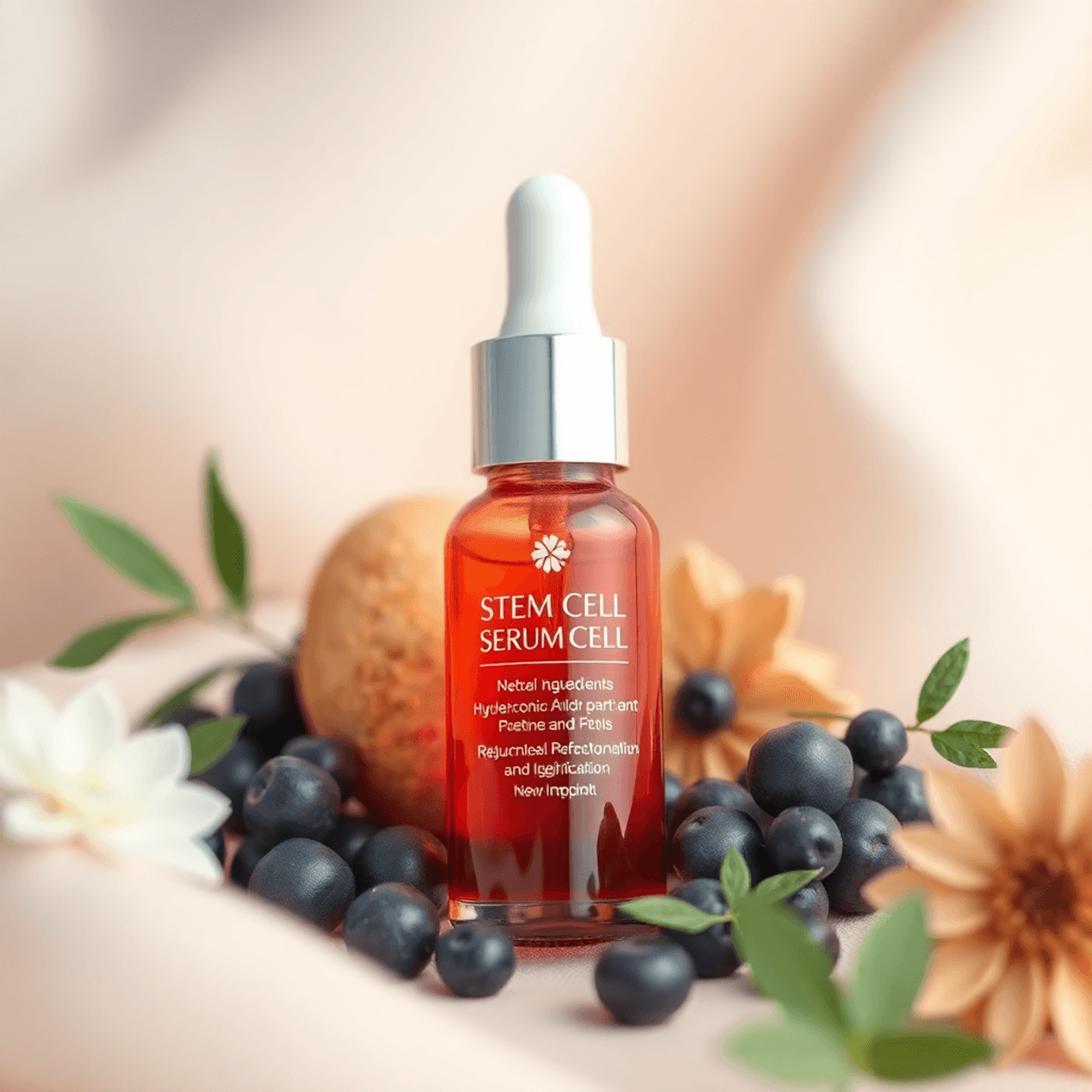
The difference between the best face serum for aging skin that transforms your complexion and one that merely moisturizes with an impressive label comes down to what reaches your fibroblasts. Bradceuticals’ Gold Mesenchymal Stem Cell Growth Factor Serum delivers the complete human mesenchymal stem cell secretome — EGF, FGF, TGF-β, VEGF, PDGF, and dozens of supporting cytokines — in a lightweight formulation that absorbs rapidly into damp, dewy facial skin. Used daily, it provides the regenerative signaling your declining endogenous production can no longer supply. Used immediately after microneedling through open microchannels, it reaches dermal fibroblasts at concentrations that redefine what the best face serum for aging skin can accomplish — delivering growth factors to the exact cellular layer where collagen synthesis is initiated.
Why Facial Skin Demands a Specialized Anti-Aging Serum
Your face presents biological challenges that no other body area shares, which is why the best face serum for aging skin must be formulated differently than general anti-aging products (Ganceviciene et al., 2012).
Facial dermis averages 1.5mm thick across most zones — significantly thinner than the 3 to 4mm found on the back or thighs. The periorbital area measures just 0.5mm, making it the thinnest skin on the entire body. This reduced dermal volume means less collagen reserve, fewer fibroblasts per square centimeter, and faster visible consequences when growth factor signaling declines. The best face serum for aging skin must deliver regenerative signals efficiently through this thin tissue to reach the limited fibroblast population that maintains structural integrity.
Chronic ultraviolet exposure compounds every age-related decline. Facial skin receives more cumulative UV radiation than almost any covered body area. This exposure activates matrix metalloproteinases that degrade existing collagen while simultaneously suppressing the TGF-β signaling that would stimulate replacement production (Quan et al., 2009). The best face serum for aging skin must counteract this dual assault — protecting what remains while rebuilding what has been lost. The best approaches to treating sun damage details how growth factors address both photoaging mechanisms simultaneously.
Repetitive muscular contraction creates mechanical stress unique to the face. Orbicularis oculi, frontalis, corrugator supercilii, and orbicularis oris contract thousands of times daily — creating dynamic forces against skin that progressively loses the elasticity to recover. The best face serum for aging skin containing elastin-supporting growth factors like FGF addresses this mechanical dimension that body-focused products typically ignore.
Sebaceous gland density on the face exceeds most body areas, influencing how topical products absorb, spread, and interact with the skin’s lipid barrier. The best face serum for aging skin uses lightweight vehicles that navigate this sebaceous environment efficiently without congesting pores or creating occlusive films that trap active ingredients at the surface.
The Growth Factor Cascade: What the Best Face Serum for Aging Skin Actually Delivers
Understanding what growth factors do individually reveals why the coordinated secretome approach outperforms isolated ingredients (Ferreira et al., 2020).
EGF — Epidermal Renewal Acceleration
EGF binds to ErbB1 receptors on keratinocytes, triggering a tyrosine kinase signaling cascade that accelerates epidermal cell proliferation. Faster turnover means damaged, pigmented, and senescent surface cells are replaced more quickly — producing the improved brightness and texture that users of the best face serum for aging skin notice first. The reasons why EGF serums lead skin rejuvenation explains how this single growth factor drives measurable improvements when delivered at adequate concentrations.
FGF — Direct Fibroblast Activation
FGF directly stimulates the cells that produce your skin’s structural proteins. Activated fibroblasts increase collagen type I and type III synthesis, boost elastin production, and deposit the glycosaminoglycans that maintain dermal hydration and volume. FGF is arguably the most important growth factor in any formulation competing for the title of best face serum for aging skin targeting wrinkles and laxity.
TGF-β — Dual Anti-Inflammatory and Collagen Driver
TGF-β modulates inflammation while simultaneously driving collagen deposition. In aging facial skin, chronic low-grade inflammation — termed inflammaging — accelerates structural breakdown. TGF-β in the best face serum for aging skin addresses both the cause and the consequence simultaneously (Fitzpatrick & Rostan, 2003).
VEGF — Vascular Support for Active Repair
VEGF promotes formation of new blood vessels, improving oxygen and nutrient delivery to facial tissue that is actively rebuilding. Without adequate vascular support, fibroblasts stimulated by FGF and TGF-β cannot sustain the metabolic demands of intensive collagen production.
PDGF — Organized Tissue Remodeling
PDGF coordinates the tissue remodeling phase — influencing how newly formed collagen organizes into structured fiber networks that provide long-term firmness rather than disordered scar-like deposition.
The best face serum for aging skin containing the complete secretome delivers all five signals in their native biological ratios. This coordinated delivery mirrors how your body orchestrates tissue repair naturally — which is fundamentally different from applying one or two isolated growth factors and hoping they produce a complete regenerative response.
Human-Derived vs. Plant-Based: The Distinction That Defines Your Results
This is the most important distinction in the entire anti-aging serum category, and understanding it protects you from spending premium prices on products that cannot deliver what their marketing implies (Schmid et al., 2008).
Human-derived conditioned media comes from culturing human mesenchymal stem cells and collecting the growth factor-rich liquid they secrete. These growth factors bind to receptors on your skin cells with native affinity because the signals and the targets evolved within the same biological system. When EGF from human conditioned media encounters a keratinocyte EGF receptor, the binding event and downstream signaling cascade match what the cell expects from its own endogenous EGF production.
The best face serum for aging skin built on human conditioned media delivers genuine regenerative capability — measurable collagen synthesis increases, accelerated cellular turnover, modulated inflammation, and enhanced wound healing supported by published peer-reviewed research. The best stem cell serums ranked for 2026 compares products across this sourcing distinction.
Plant-derived stem cell extracts from Swiss apple, grape, edelweiss, or argan sources produce metabolites that evolved to protect plant tissue from environmental stress. These extracts deliver polyphenolic antioxidants and anti-inflammatory compounds that meaningfully reduce oxidative damage to existing collagen and elastin. However, plant growth factors cannot bind to human fibroblast receptors. They cannot initiate the collagen-synthesis signaling cascade. A plant-based serum provides antioxidant protection — valuable for what it does — but it operates through a categorically different mechanism than human-derived formulations.
Penetration Science: How the Best Face Serum for Aging Skin Reaches Its Targets
The stratum corneum evolved specifically to prevent foreign molecules from reaching living tissue — creating the central challenge for every topical anti-aging product (Suh et al., 2019).
Research establishes that molecules larger than 500 Daltons struggle to cross intact skin passively. Most growth factors significantly exceed this threshold — EGF alone weighs approximately 6,045 Daltons. This does not mean topical application is ineffective. Epidermal signaling, indirect dermal effects through paracrine communication, and partial penetration through follicular pathways all contribute measurable benefit.
But the full regenerative potential of growth factors requires enhanced delivery methods. Three approaches improve how the best face serum for aging skin reaches its target cells:
Microneedling creates thousands of microchannels that temporarily bypass the stratum corneum, increasing active ingredient penetration by up to 300%. When the best face serum for aging skin is applied through these channels within minutes of treatment, growth factors reach dermal fibroblasts at concentrations that weeks of surface application cannot achieve (Singh & Yadav, 2016). The complete stages of microneedling recovery maps the healing timeline so you know when growth factor delivery has its greatest impact.
Application to damp skin maintains the hydrated tissue state that facilitates initial molecular movement into the upper epidermis. Growth factor receptor binding requires aqueous conditions — dehydrated tissue reduces receptor accessibility.
Lightweight formulation vehicles that avoid heavy emollients and waxes maintain active ingredient mobility rather than trapping growth factors in an occlusive matrix on the skin surface. This is why the best face serum for aging skin uses water-based vehicles rather than rich cream bases.
10 Facts That Should Guide Your Decision
1. Source matters more than marketing language. The best face serum for aging skin using human mesenchymal stem cell conditioned media delivers receptor-compatible growth factors. One using plant extracts delivers antioxidants. Both have value — only one provides direct regenerative signaling.
2. The secretome outperforms isolated ingredients. Regeneration is a coordinated multi-signal process. The best face serum for aging skin containing the complete growth factor cascade produces more comprehensive results than one containing a single recombinant growth factor (Ferreira et al., 2020).
3. Delivery determines outcome. The same serum applied to intact skin versus applied through microchannels after microneedling reaches different tissue depths at dramatically different concentrations. The healing stages every patient should know details how to optimize this enhanced delivery window.
4. Concentration appears in the ingredient list. Growth factors or conditioned media listed in the first five INCI ingredients indicate therapeutic concentrations. The same ingredients listed after preservatives suggest trace amounts included for label claims rather than biological effect.
5. Packaging protects bioactivity. Growth factors degrade with heat, light, and air exposure. Airless pumps and opaque containers indicate a manufacturer who understands that the best face serum for aging skin is a bioactive formulation. Jar packaging compromises active ingredients with every opening.
6. Consistency beats concentration. A moderate-potency serum used twice daily for 12 weeks outperforms a high-potency product used sporadically. Collagen remodeling operates on cumulative biological timelines that reward sustained signaling.
7. Results require patience. Hydration and radiance improve within 1 to 2 weeks. Texture normalizes by weeks 4 to 6. Collagen-related improvements — reduced wrinkles, increased firmness — require 8 to 12 weeks of consistent daily application. The best face serum for aging skin that claims instant structural results is making marketing claims, not biological ones.
8. Complementary ingredients amplify results. Vitamin C serves as a collagen synthesis cofactor that growth factor-stimulated fibroblasts require to translate increased activity into actual collagen deposition (Pullar et al., 2017). Niacinamide strengthens the barrier protecting newly regenerated tissue. Hyaluronic acid creates the hydrated environment that receptor binding requires. The best growth factor serums for youthful skin evaluates formulations that incorporate these complementary actives.
9. The best face serum for aging skin works with retinoids, not against them. Retinoids upregulate collagen gene expression. Growth factors provide the signaling proteins that execute that expression. Apply retinol first, allow absorption, then layer your growth factor serum. Complementary pathways that amplify each other.
10. SPF protects your investment. UV-induced matrix metalloproteinase activation degrades the collagen that your serum is working to build. Daily broad-spectrum SPF 30+ is the single most important factor in preserving treatment results long-term.
How to Apply the Best Face Serum for Aging Skin Correctly
Morning Protocol
Cleanse thoroughly — growth factors need direct access to epidermal receptors. Residual sunscreen, makeup, or product layers create physical barriers between the best face serum for aging skin and its target cells.
Apply to damp, dewy skin. Pat dry to the point of slight dampness — never bone dry, never dripping wet. This hydrated state facilitates molecular movement into the upper epidermis and maintains receptor accessibility.
Use fingertip patting to distribute across the full facial surface. Never rub or drag — friction causes uneven distribution and can degrade protein structures.
Prioritize high-turnover zones: periorbital area, nasolabial folds, forehead lines, and neck before distributing remaining product broadly. These zones have the thinnest dermis and show aging earliest.
Layer in correct sequence: the best face serum for aging skin immediately after cleansing, before hyaluronic acid, moisturizer, and sunscreen. Lighter actives first, heavier barriers last.
Evening Protocol
Double cleanse to remove sunscreen and environmental debris. Apply the best face serum for aging skin to clean, damp skin. Evening application leverages the nocturnal growth hormone peak that creates a synergistic window for repair. On alternating nights, apply retinol first, allow two minutes for absorption, then layer your growth factor serum. On non-retinol nights, add a peptide serum for complementary collagen stimulation. Seal with a ceramide-rich night cream.
Post-Microneedling Protocol
Have the serum ready before the procedure begins. Apply to damp skin within the first one to two minutes while microchannels remain open. Never use as a gliding serum during the procedure itself. Follow with hyaluronic acid and a fragrance-free ceramide moisturizer. Skip retinoids, acids, and fragrance for 48 to 72 hours. The microneedling healing timeline provides day-by-day guidance on when to reintroduce each active.
Results Timeline: What to Expect
Weeks 1–2: Improved hydration and radiance. The barrier-strengthening effects of supporting ingredients become noticeable. Skin feels smoother and more supple.
Weeks 3–6: Fine lines begin softening as new collagen deposition from growth factor signaling starts manifesting visibly. Skin tone becomes more even. Texture improves as accelerated keratinocyte turnover replaces damaged surface cells.
Weeks 8–12: Measurable wrinkle depth reduction and improved elasticity. The cumulative effect of daily growth factor application compounds for visible structural improvement. This timeline aligns with published clinical trial data on stem cell conditioned media.
Months 4–6: With monthly microneedling sessions added, dermal thickness increases become more pronounced. The combination of enhanced microchannel delivery and daily topical growth factor application accelerates results beyond what either approach achieves alone.
Frequently Asked Questions
What does the best face serum for aging skin actually do? It delivers growth factors that signal fibroblasts to produce more collagen and elastin, accelerates keratinocyte turnover for fresher surface cells, modulates chronic low-grade inflammation that drives structural decline, and supports the extracellular matrix that maintains facial contours and firmness.
How is the best face serum for aging skin different from retinol? Retinol modulates gene expression to increase cell turnover indirectly. Growth factor serums deliver proteins that directly activate receptor-mediated cellular responses — proliferation, migration, and collagen synthesis. They work through completely different pathways and produce complementary results when combined.
Can I use the best face serum for aging skin on sensitive skin? Human mesenchymal stem cell conditioned media contains anti-inflammatory cytokines including IL-10 and TGF-β that actively calm reactive skin. Choose fragrance-free, preservative-minimal formulations. Bradceuticals’ Gold Mesenchymal Stem Cell Growth Factor Serum is formulated specifically for application on compromised skin, making it appropriate for sensitive skin types.
How long before I see results from the best face serum for aging skin? Improved hydration and radiance within 1 to 2 weeks. Texture and brightness changes by weeks 4 to 6. Measurable firmness and wrinkle reduction at 8 to 12 weeks of consistent twice-daily application. Maximum results develop over 3 to 6 months as collagen remodeling matures.
Should I use the best face serum for aging skin with microneedling? This is the optimal delivery method. Professional microneedling every 4 to 6 weeks with the serum applied through open channels immediately post-treatment delivers growth factors at concentrations and tissue depths that daily topical use cannot match through intact skin.
References
- Suh, A., et al. (2019). Adipose-derived mesenchymal stem cell secretome. International Journal of Molecular Sciences. https://pmc.ncbi.nlm.nih.gov/articles/PMC6835901/
- Ganceviciene, R., et al. (2012). Skin anti-aging strategies. Dermato-Endocrinology. https://pmc.ncbi.nlm.nih.gov/articles/PMC3583892/
- Quan, T., et al. (2009). Matrix-degrading metalloproteinases in photoaging. Journal of Investigative Dermatology. https://pmc.ncbi.nlm.nih.gov/articles/PMC3299230/
- Ferreira, J.R., et al. (2020). Mesenchymal stromal cell secretome. Frontiers in Cell and Developmental Biology. https://pmc.ncbi.nlm.nih.gov/articles/PMC7140425/
- Fitzpatrick, R.E. & Rostan, E.F. (2003). Topical growth factors for photodamage. Journal of Cosmetic and Laser Therapy. https://pmc.ncbi.nlm.nih.gov/articles/PMC4024460/
- Schmid, D., et al. (2008). Plant stem cell extract for skin longevity. International Journal for Applied Science. https://pmc.ncbi.nlm.nih.gov/articles/PMC4296986/
- Pullar, J.M., et al. (2017). The roles of vitamin C in skin health. Nutrients. https://pmc.ncbi.nlm.nih.gov/articles/PMC3673383/
- Singh, A. & Yadav, S. (2016). Microneedling: Advances and widening horizons. Indian Dermatology Online Journal. https://pmc.ncbi.nlm.nih.gov/articles/PMC5556159/
Disclaimer: This article is for informational purposes only and does not constitute medical advice. Results vary based on formulation quality, skin type, application consistency, and delivery method. Consult a qualified dermatologist for personalized skincare recommendations.
Last reviewed: March 2026
About Bradceuticals : Thuy Myers is the founder of Bradceuticals which manufactures and distributes skin care and hair regrowth serums that use growth factors from human stem cells as the catalyst for regeneration. When she is not busy running the business and maintaining blogs, she is continuing her practice as a semiconductor engineer and occasionally teaches college engineering. In her free time, she enjoys the beach, working out at the gym and hanging out with her kiddo Brad.