

Subject: EGF serum for microneedling | Last Reviewed: August 2025
EGF serum for microneedling is everywhere right now — and the science is clear that the real magic happens after the treatment, when skin is most receptive to a growth factor serum like Bradceuticals Gold.
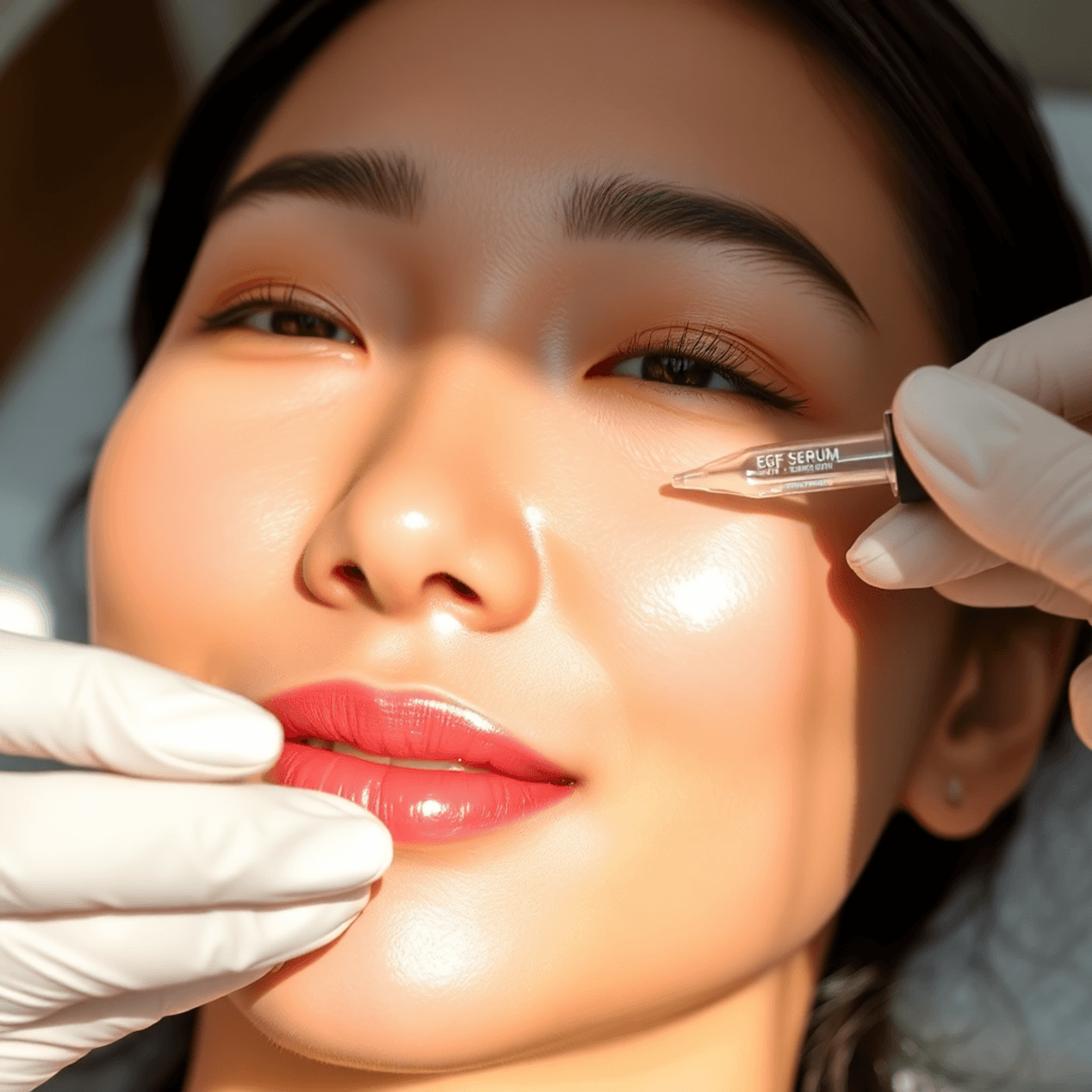
If you’ve been following skincare trends, you’ve probably noticed the buzz around EGF serum for microneedling — and wondered whether the celebrity glow-ups are too good to be true. Facialists to Hollywood A-listers have been pairing epidermal growth factor (EGF) serums with microneedling treatments for years, quietly fueling one of the more research-backed trends in aesthetic medicine. But what does the science actually say? And does this combination deliver for everyday skin, not just red carpet skin?
Here’s a clear-eyed look at what EGF serum does, why microneedling amplifies its effects, and what the clinical evidence — not the hype — tells us.
EGF Serum for Microneedling: What Is EGF and Why Does It Matter for Skin?
Epidermal Growth Factor is a naturally occurring protein that regulates cell survival, proliferation, migration, and differentiation — essentially, it tells your skin cells to grow, repair, and renew. As we age, EGF production declines, and so does the skin’s ability to bounce back from environmental damage, sun exposure, and time.
Topical formulations use recombinant human EGF (rhEGF), a bioidentical version synthesized to mirror the body’s own signaling protein. In vitro studies confirm that rhEGF promotes fibroblast migration and increases both hyaluronic acid and collagen synthesis in aged skin cells. [Shin JW et al., Int Wound J, 2023 — PMC10333026]
Clinically, the results have been encouraging. A three-month trial of topical EGF-containing serum in 29 women with photoaged skin showed measurable improvements in pigmentation, skin texture, pore size, and wrinkles. [Schouest et al., cited in Shin JW et al., Int Wound J, 2023] A separate four-week study found that EGF delivered via micro-spicule cream significantly improved periocular wrinkles in 20 Korean women. [Ha JM et al., Ann Dermatol, 2017 — PMC5383723]
Why Microneedling Changes the Equation
EGF serum applied to intact skin faces a real barrier problem. Growth factor molecules are large — typically exceeding 15,000 kilodaltons — and the skin’s stratum corneum generally blocks molecules larger than 500 kDa from penetrating. [Merati M et al., J Clin Aesthet Dermatol, 2020 — PMC7716740] In other words, most of a topically applied EGF serum stays on the surface.
Microneedling solves this. By creating hundreds of controlled micro-channels in the upper dermis, microneedling bypasses the stratum corneum and provides a direct route for active ingredients to reach the cells that need them. A systematic review in the Journal of Clinical and Aesthetic Sciences confirmed that EGF penetration is significantly enhanced when applied following microneedling or laser resurfacing procedures. [Esquirol-Caussa J & Herrero-Vila E, J Clin Aesthet Sci, 2021 — PMC8423211]
Beyond delivery, microneedling triggers its own wound-healing cascade — stimulating collagen induction, neovascularization, and the release of transforming growth factors (TGF-α and TGF-β), platelet-derived growth factor (PDGF), and EGF itself. [Iriarte C et al., J Clin Aesthet Dermatol, 2017] When exogenous EGF is applied immediately after needling, it amplifies a process that’s already underway.
What Clinical Research Shows About the Combination
The evidence for EGF serum used specifically with microneedling is still growing, but early controlled trials are promising.
A randomized controlled trial published in the Journal of Clinical and Aesthetic Dermatology found that patients who received growth factor serum alongside microneedling showed greater improvements in skin texture and hydration than those who received microneedling alone. The authors concluded that growth factors appear to enhance the collagen remodeling response initiated by needling. [Merati M et al., J Clin Aesthet Dermatol, 2020 — PMC7716740]
A separate randomized double-blind clinical trial evaluated 30 patients with acne scarring, dividing them into two groups: microneedling alone versus microneedling with EGF drug delivery. Multispectral imaging showed that the EGF group achieved a significant reduction in porphyrins and a measurable improvement in skin texture compared to microneedling alone. The researchers identified EGF as a promising adjunct strategy for post-procedure skin remodeling. [Iriarte C et al., An Bras Dermatol, published via Redalyc]
For scar reduction specifically, a murine wound healing study found that EGF-treated wounds healed approximately 28% faster, produced smaller scars, and showed significantly lower inflammatory cell counts compared to controls — suggesting EGF actively modulates the inflammatory phase of healing. [Kim et al., PubMed — PMID: 20358003]
The Celebrity Angle: What’s Real
Georgia Louise’s “Hollywood EGF Facial,” which pairs microneedling with high-concentration EGF serum, LED therapy, and cooling masks, became widely discussed after high-profile clientele reported the kind of post-treatment radiance that reads well on camera. That visibility has driven significant interest in replicating the result at home or in med spa settings.
What’s driving the appeal isn’t magic — it’s timing and delivery. Applying EGF serum immediately post-microneedling hits the skin during peak absorption, when micro-channels are open and the wound-healing response is active. That window matters. Left untreated, micro-injured skin still produces collagen. Supported by growth factors, research suggests it produces more, and recovers faster.
The honest caveat: individual results depend heavily on skin type, age, needle depth, EGF concentration, and product formulation. Not all EGF serums are equal, and not all microneedling sessions are performed under the same conditions.
Choosing a Post-Microneedling Growth Factor Serum
When selecting an EGF serum to use after microneedling, look for formulations that combine multiple growth factors rather than EGF alone. Research supports the idea that growth factor complexes — including fibroblast growth factor (FGF), vascular endothelial growth factor (VEGF), and transforming growth factor (TGF) — work synergistically to support collagen synthesis, tissue repair, and skin renewal. [Merati M et al., J Clin Aesthet Dermatol, 2020 — PMC7716740]
Bradceuticals Gold Mesenchymal Stem Cell Growth Factor Serum is formulated with a multi-growth factor complex derived from human mesenchymal stem cells, designed specifically for post-procedure recovery and the kind of visible glow that follows a well-executed microneedling session. It’s built around the principle that the post-needling window is when your skin is most receptive — and most worth supporting.
How to Use EGF Serum After Microneedling: A Simple Protocol
Step 1 — Cleanse gently. Use a fragrance-free, non-active cleanser to remove surface debris without disrupting the micro-channels or irritating sensitized skin.
Step 2 — Apply EGF serum immediately. Pat a thin layer onto clean, damp skin using fingertips — no rubbing. Apply while micro-channels are still open for maximum absorption.
Step 3 — Seal with a barrier moisturizer. Follow with a lightweight formula containing hyaluronic acid or ceramides to lock in moisture and reinforce the skin barrier during recovery.
Step 4 — Sun protection the next morning. Post-microneedling skin is more vulnerable to UV damage. Use a broad-spectrum SPF 30 or higher daily until redness fully resolves.
What to avoid: Retinoids, AHAs/BHAs, vitamin C, and any active exfoliants for at least 48–72 hours post-treatment. These can irritate compromised skin and interfere with the healing process.
Frequently Asked Questions
Can I use EGF serum after at-home microneedling? Yes — the same principles apply. At-home dermarollers create shallower channels than professional devices, but EGF serum still penetrates more effectively post-needling than on intact skin. Use a 0.25–0.5mm roller for home use and apply your serum immediately after.
How soon after microneedling should I apply EGF serum? Immediately, while the skin is still slightly flushed and micro-channels are open. This is your highest-absorption window.
How many sessions before I see results? Most clinical studies report visible improvement after 3 sessions spaced 4–6 weeks apart. Consistency matters more than any single treatment.
Is EGF serum safe for all skin types? Generally yes, though those with known EGF sensitivity or active skin conditions should consult a dermatologist before use. EGF has demonstrated anti-inflammatory properties in several studies, making it generally well tolerated post-procedure.
Can EGF serum replace microneedling? No — they serve different functions. EGF serum enhances and extends the healing response that microneedling initiates. Used alone on intact skin, absorption is limited by the stratum corneum barrier.
The Bottom Line
EGF serum for microneedling is one of the better-supported combinations in aesthetic skincare — not because celebrities say so, but because the biology makes sense and the clinical evidence, while still building, points in the same direction. Microneedling opens the door; EGF serum walks through it, supporting faster healing, enhanced collagen production, and more visible results over time.
The celebrity connection brought this pairing into public conversation. The research is what keeps it there.
References
- Shin JW et al. The use of epidermal growth factor in dermatological practice. Int Wound J. 2023; PMC10333026. https://pmc.ncbi.nlm.nih.gov/articles/PMC10333026/
- Merati M et al. An Assessment of Microneedling with Topical Growth Factors for Facial Skin Rejuvenation: A Randomized Controlled Trial. J Clin Aesthet Dermatol. 2020; PMC7716740. https://pmc.ncbi.nlm.nih.gov/articles/PMC7716740/
- Esquirol-Caussa J, Herrero-Vila E. Epidermal Growth Factor in Aesthetics and Regenerative Medicine: Systematic Review. J Clin Aesthet Sci. 2021; PMC8423211. https://pmc.ncbi.nlm.nih.gov/articles/PMC8423211/
- Ha JM et al. The effect of micro spicule containing epidermal growth factor on periocular wrinkles. Ann Dermatol. 2017;29(2):187–193. PMID: 28392650.
- Kim et al. Effect of recombinant human EGF against cutaneous scar formation in murine full-thickness wound healing. PMID: 20358003. https://pubmed.ncbi.nlm.nih.gov/20358003/
Disclaimer: This article is intended for informational purposes only and does not constitute medical advice. Always consult a licensed dermatologist or aesthetic professional before beginning any new skincare treatment, particularly following microneedling procedures.
Reference articles
https://www.gloskinbeauty.com/blog/everything-you-need-to-know-about-epidermal-growth-factor-egf
https://drpen.com.au/blogs/news/the-best-serums-to-use-with-microneedling
https://prpmed.de/en/home/plasma-skin-egf-serum-set
#EGFSerum #MicroneedlingSerum #SkinRenewal #GrowthFactorSerum #SkinRejuvenation #CollagenBoost #YouthfulSkin #SkinHealing #BeautyInnovation #SkinRevitalization #MicroneedlingTreatment #SkinRepair #HealthyGlow #SkinTransformation #SkinCareInnovation #EGFSkincare #GlowingSkin #SkinCareRoutine #AntiAgingSerum #SkinFirming #BeautyScience #SerumForMicroneedling #RadiantSkin #SkinBooster #MicroneedlingResults #SkincareObsessed #AgelessSkin #SkinCareGoals #SerumMagic #SkinRegeneration
About Bradceuticals : Thuy Myers is the founder of Bradceuticals which manufactures and distributes skin care and hair regrowth serums that use growth factors from human stem cells as the catalyst for regeneration. When she is not busy running the business and maintaining blogs, she is continuing her practice as a semiconductor engineer and occasionally teaches college engineering. In her free time, she enjoys the beach, working out at the gym and hanging out with her kiddo Brad.