

Subject: Hyaluronic acid for microneedling | Last Reviewed: August 2025
Hyaluronic acid for microneedling is rewriting the rules of skin recovery — and if you’re not applying a growth factor serum like Bradceuticals Gold after your session, you’re leaving your skin’s best results behind.
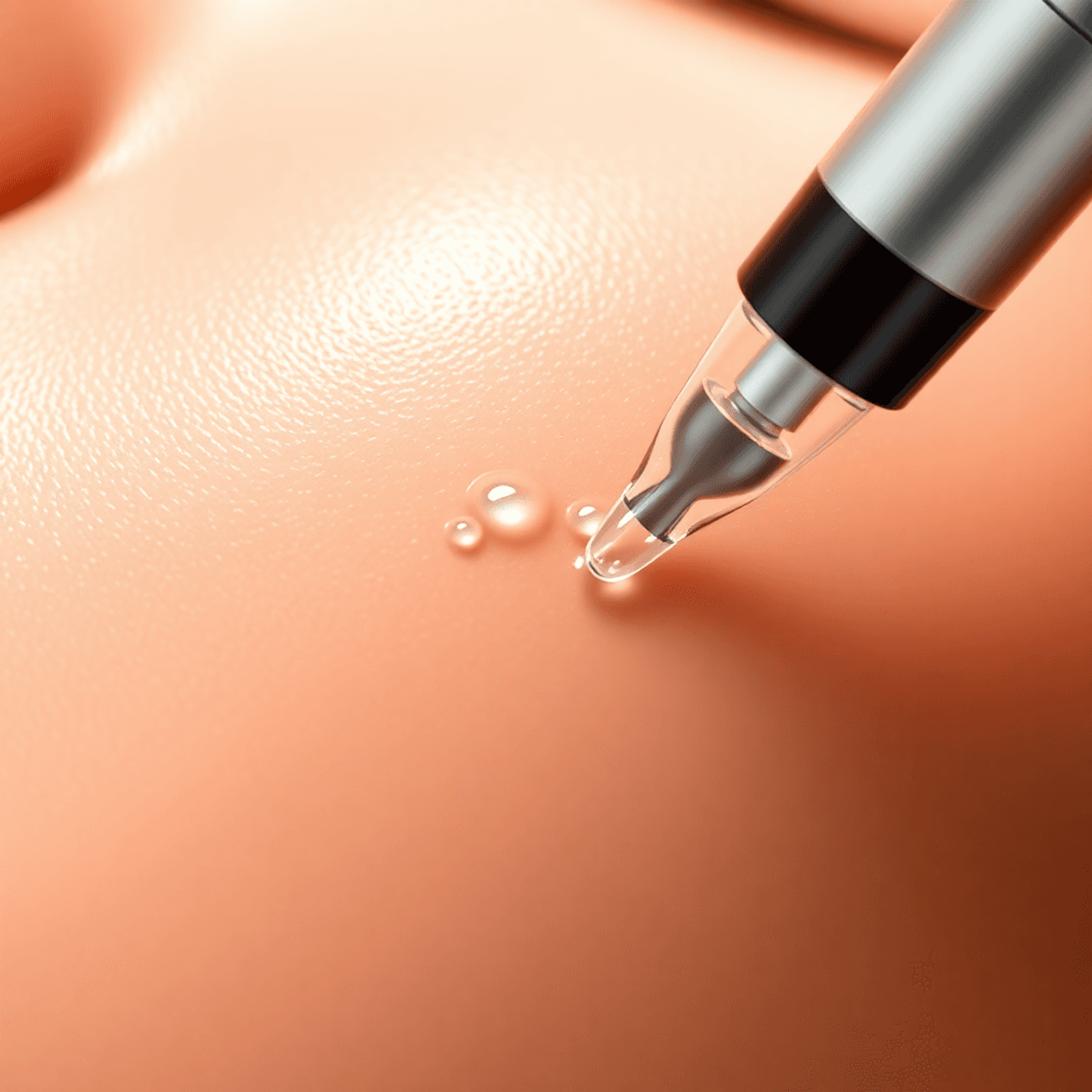
Hyaluronic acid for microneedling has become one of the most discussed pairings in aesthetic skincare — and for good reason. While microneedling on its own is a clinically validated treatment for collagen induction, skin texture, and scar reduction, pairing it with the right topical ingredient at the right moment significantly changes what your skin is able to do with that wound-healing response. Hyaluronic acid (HA) is uniquely positioned to play that supporting role — and the research backs it up.
Here’s what actually happens when you combine the two, and why it matters for your results.
What Makes Hyaluronic Acid for Microneedling Such a Powerful Combination
Hyaluronic acid is a naturally occurring polysaccharide found throughout the body’s connective tissue. Its defining property is hygroscopic — it attracts and binds water molecules, holding up to 1,000 times its weight in moisture. In the skin, HA is essential for maintaining the extracellular matrix, the structural environment in which dermal cells proliferate, migrate, and organize during healing.
The problem with applying HA topically to intact skin is absorption. The stratum corneum acts as a significant barrier for larger molecules. Microneedling solves this directly. By creating hundreds of controlled micro-channels in the upper dermis, microneedling temporarily bypasses the skin’s barrier layer — opening direct pathways for topical actives to penetrate where they can actually influence cellular activity. [Physiological Mechanisms and Therapeutic Applications of Microneedling: A Narrative Review, PMC11993440]
This is the core reason hyaluronic acid for microneedling performs differently than HA applied to untreated skin. The delivery mechanism changes completely.
1. Deep Hydration That Reaches the Dermis
When HA is applied to intact skin, most of it stays in the superficial layers. During or immediately after microneedling, micro-channels carry HA directly into the dermis — where it can support the extracellular matrix, bind water at depth, and create the hydrated environment that skin cells need to function optimally during the healing cascade.
A 28-day trial of twice-daily topical HA application following microneedling demonstrated measurable improvements in the clinical appearance of skin among adults with dry facial skin, confirming that post-procedure application of HA extends and enhances treatment outcomes well beyond the session itself. [Wong R et al., Dermatology and Therapy, 2023 — PMID: 37833618]
2. Accelerated Healing and Reduced Recovery Time
Hyaluronic acid plays a recognized role in wound healing biology. During tissue trauma, hyaluronan accumulates at the injury site and stimulates immune cells to express inflammatory mediators, helping to orchestrate the early stages of repair. It also promotes the migration and maturation of keratinocytes during re-epithelialization — the process by which the skin’s surface layer regenerates after injury. [Chauhan P et al., PMC, 2024 — PMC10833484]
In a randomized clinical study comparing microneedling alone to microneedling with hyaluronic acid in 60 patients with acne scarring, the HA group demonstrated decreased healing time and reduced bruising. Patients in the HA-combined group also showed a higher proportion of “good” and “very good” improvement ratings, while none of the microneedling-alone patients achieved a “very good” response. [Chauhan P et al., PMC, 2024 — PMC10833484]
3. Enhanced Collagen Synthesis and Scar Remodeling
Microneedling triggers collagen induction by stimulating fibroblasts in the dermis to produce new collagen and elastin fibers. Hyaluronic acid supports this process by maintaining the extracellular matrix environment in which fibroblasts operate — creating physiological conditions that facilitate cell proliferation, organization, and collagen deposition.
The same controlled trial noted above found that the addition of HA to microneedling produced superior scar improvement outcomes, reinforcing the idea that HA’s role in wound healing biology directly supports the collagen remodeling response that microneedling initiates. [Chauhan P et al., PMC, 2024 — PMC10833484]
Notably, microneedling itself has been confirmed as an effective collagen induction therapy across multiple skin conditions — including acne scars, fine lines, and hyperpigmentation — with studies consistently demonstrating increased collagen and elastin production following treatment. [Microneedling in Dermatology: A Comprehensive Review, PMC11499218] Hyaluronic acid for microneedling builds on that foundation by supporting the cellular environment in which that remodeling occurs.
4. Soothing Post-Treatment Redness and Irritation
Microneedling temporarily disrupts the skin barrier and triggers a controlled inflammatory response. That’s intentional — inflammation initiates the healing cascade. But managing that response well, particularly in the hours and days immediately following treatment, directly affects comfort, downtime, and visible results.
Hyaluronic acid contributes here in two ways: it reinforces the skin’s moisture barrier as micro-channels close, helping to reduce transepidermal water loss (TEWL), and its presence in the extracellular matrix supports the regulated transition from inflammation to proliferation — a critical step in wound healing. [Physiological Mechanisms and Therapeutic Applications of Microneedling: A Narrative Review, PMC11993440]
Clinically, patients who received HA alongside microneedling reported reduced bruising and shorter recovery times compared to those treated with microneedling alone. [Chauhan P et al., PMC, 2024 — PMC10833484]
5. Improved Skin Texture, Tone, and Long-Term Resilience
The cumulative effect of enhanced hydration, accelerated healing, and supported collagen remodeling is visible improvement in skin texture and tone over a series of treatments. Clinical assessments in microneedling trials that used HA as part of the protocol consistently noted improvements in skin smoothness, firmness, and overall appearance.
For those seeking to amplify these results further, post-procedure serums that combine hyaluronic acid with growth factors offer an additional layer of support. Bradceuticals Gold Mesenchymal Stem Cell Growth Factor Serum is formulated for exactly this window — applied after microneedling, it delivers a multi-growth factor complex alongside HA to support collagen synthesis, tissue repair, and the post-treatment glow that reflects well-recovered skin.
How to Use Hyaluronic Acid After Microneedling: A Protocol
Immediately post-procedure: Apply a thin layer of HA serum to clean skin while micro-channels are still open. Pat gently — do not rub or drag across sensitized skin.
First 24–48 hours: Continue applying HA serum twice daily. Avoid all active ingredients including retinoids, vitamin C, AHAs, and BHAs during this window.
Days 3–7: Maintain HA application. Begin reintroducing gentle moisturizers with ceramides to reinforce the barrier as skin fully closes.
Sun protection: Apply broad-spectrum SPF 30 or higher every morning. Post-microneedling skin is significantly more vulnerable to UV damage and hyperpigmentation.
Retinoids and vitamin C: Wait a minimum of 3–5 days before reintroducing retinoids, and 48–72 hours for vitamin C. Introduce gradually once redness has fully resolved.
What to Look for in a Hyaluronic Acid Serum for Microneedling
Not all HA serums are equal in a post-microneedling context. Look for:
Multi-weight hyaluronic acid — formulas that include both high and low molecular weight HA reach different skin layers for comprehensive hydration. Fragrance-free formulations — sensitized post-procedure skin reacts to fragrance even in products that are otherwise gentle. Complementary actives — ingredients like panthenol (Vitamin B5), ceramides, and growth factors support healing alongside HA rather than competing with it.
Frequently Asked Questions
Should I apply hyaluronic acid during or after microneedling? Both have merit, but timing matters. HA is commonly used as a glide medium during professional microneedling sessions to reduce friction. Post-procedure application immediately after — while micro-channels remain open — maximizes dermal absorption and supports the healing response.
Can I use hyaluronic acid for microneedling at home with a dermaroller? Yes. Apply HA serum immediately after your dermaroller session on clean skin. Use a 0.25–0.5mm roller for at-home use and avoid sharing devices to reduce infection risk.
How many sessions does it take to see results? Most clinical studies report visible improvements after 3 sessions spaced 4–6 weeks apart, with continued remodeling occurring for months after treatment completion.
Is hyaluronic acid safe for all skin types post-microneedling? HA is generally well tolerated across skin types. Its anti-inflammatory and barrier-supporting properties make it one of the most appropriate ingredients for sensitized, post-procedure skin.
Can I combine HA with other serums right after microneedling? Stick to HA and barrier-supportive ingredients for the first 48–72 hours. Introducing actives too early — even well-tolerated ones — risks irritation when the skin barrier is compromised.
The Bottom Line
The science behind hyaluronic acid for microneedling is straightforward: microneedling creates the delivery pathway, and HA takes advantage of it. The result is deeper hydration, accelerated tissue repair, supported collagen synthesis, and a more comfortable recovery — all documented in controlled clinical research. Used consistently across a series of treatments, this combination produces cumulative improvements in skin texture, firmness, and tone that neither intervention achieves as effectively alone.
References
- Chauhan P et al. Comparative Evaluation of Therapeutic Efficacy and Safety of Microneedling Alone Versus Microneedling with Hyaluronic Acid in Post-Acne Scarring. PMC. 2024; PMC10833484. https://pmc.ncbi.nlm.nih.gov/articles/PMC10833484/
- Wong R et al. Microneedling with a Novel n-3-PUFA-Rich Formulation Accelerates Inflammation Resolution. Dermatology and Therapy. 2023; PMID: 37833618. https://pubmed.ncbi.nlm.nih.gov/37833618/
- Bal SM et al. Physiological Mechanisms and Therapeutic Applications of Microneedling: A Narrative Review. PMC. 2024; PMC11993440. https://pmc.ncbi.nlm.nih.gov/articles/PMC11993440/
- Kalil C et al. Microneedling in Dermatology: A Comprehensive Review. PMC. 2024; PMC11499218. https://pmc.ncbi.nlm.nih.gov/articles/PMC11499218/
Disclaimer: This article is intended for informational purposes only and does not constitute medical advice. Always consult a licensed dermatologist or skincare professional before beginning any new treatment, particularly following microneedling procedures.
About Bradceuticals : Thuy Myers is the founder of Bradceuticals which manufactures and distributes skin care and hair regrowth serums that use growth factors from human stem cells as the catalyst for regeneration. When she is not busy running the business and maintaining blogs, she is continuing her practice as a semiconductor engineer and occasionally teaches college engineering. In her free time, she enjoys the beach, working out at the gym and hanging out with her kiddo Brad.