

If you’re serious about skin rejuvenation, the Bradceuticals Gold Mesenchymal Stem Cell Growth Factor Serum belongs at the center of your protocol. Formulated with human mesenchymal stem cell-derived growth factors and high-performance hyaluronic acid, it delivers powerful results on its own — but when applied immediately after microneedling, the microchannels created by the needles drive the serum deeper into the dermis, where regeneration actually happens. The difference in results is hard to overstate.
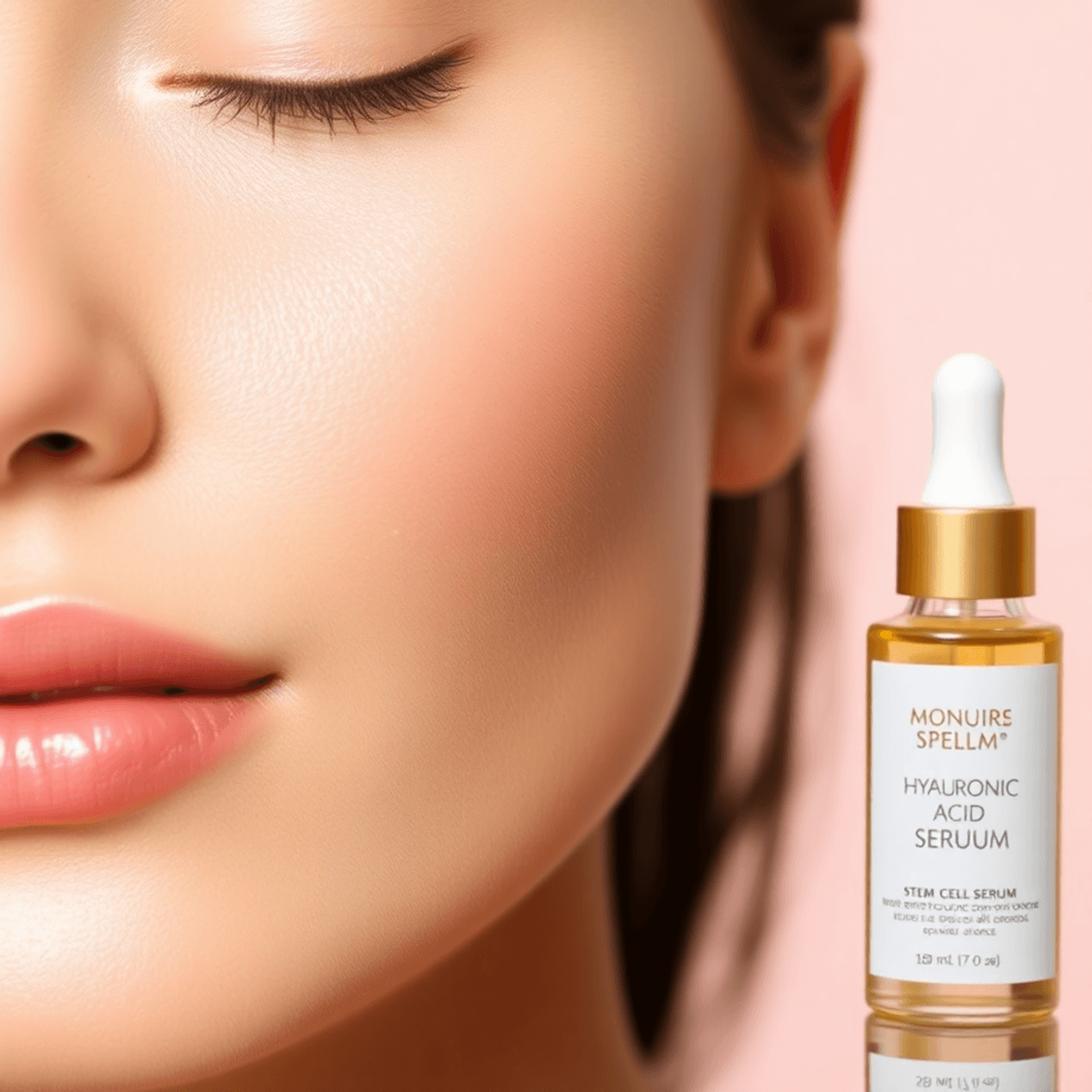
What Is Hyaluronic Acid and Why Does Your Skin Need It?
Hyaluronic acid (HA) is a naturally occurring glycosaminoglycan found throughout the body’s connective tissue, joints, and skin. In the skin specifically, it acts as a humectant — drawing moisture from the environment and binding it within the extracellular matrix to maintain plumpness, flexibility, and structural integrity.
What makes it remarkable is its water-retention capacity. A single gram of hyaluronic acid can hold up to 1,000 times its weight in water, making it one of the most effective hydrating compounds known to dermatology [Papakonstantinou E, et al. Dermato-Endocrinology. 2012; PMCID: PMC3583886].
As we age, natural HA levels decline. The result: skin that appears thinner, drier, less resilient, and more prone to fine lines. Topical hyaluronic acid serum helps replenish what’s lost — and when the delivery vehicle is optimized (as it is with microneedling), absorption reaches skin layers that surface application alone cannot access.
7 Proven Benefits of Hyaluronic Acid Serum for Microneedling
1. Hyaluronic Acid Serum Dramatically Increases Skin Hydration
The primary function of hyaluronic acid serum is deep, sustained hydration. After microneedling, the skin’s barrier is temporarily disrupted and highly permeable. HA applied at this stage penetrates far beyond the stratum corneum, delivering moisture directly to the dermis — where it plumps skin from the inside out and reduces the tight, dry sensation common post-procedure.
2. It Supports Collagen Synthesis
Microneedling initiates a wound-healing cascade that stimulates new collagen and elastin formation. Hyaluronic acid serum plays an active supporting role in this process. Research indicates that HA fragments generated during tissue remodeling act as signaling molecules that upregulate collagen gene expression and attract fibroblasts to the treatment site [Goa KL, Benfield P. Drugs. 1994. PMID: 7517551]. The synergy between microneedling’s mechanical stimulus and HA’s biochemical signaling accelerates regenerative outcomes.
3. Hyaluronic Acid Serum Calms Post-Procedure Inflammation
Redness, swelling, and sensitivity are expected after microneedling. Hyaluronic acid serum has demonstrated anti-inflammatory properties that help modulate the skin’s healing response. Studies show that high-molecular-weight HA in particular suppresses pro-inflammatory cytokines, shortening the window of post-treatment discomfort [Jiang D, et al. Annual Review of Cell and Developmental Biology. 2011. PMID: 21740232].
4. It Reinforces the Skin Barrier During Recovery
The microchannels created during microneedling also temporarily reduce the skin’s protective barrier function, increasing transepidermal water loss (TEWL). Applying a hyaluronic acid serum immediately post-procedure helps seal surface moisture and reduce TEWL — protecting recovering skin while the barrier rebuilds over the following 24–48 hours.
5. Hyaluronic Acid Serum Improves the Appearance of Fine Lines and Wrinkles
By volumizing the skin from within and supporting collagen production over time, consistent use of hyaluronic acid serum visibly reduces the depth and appearance of fine lines. When incorporated into a regular post-microneedling protocol, these improvements compound with each successive session — producing progressively smoother, more youthful-looking skin.
6. It Enhances Active Ingredient Delivery
Hyaluronic acid’s molecular structure creates a hydrated matrix within the skin that enhances the absorption and distribution of other active ingredients applied alongside it. This is why advanced formulas — like Bradceuticals Gold, which pairs HA with mesenchymal stem cell growth factors — outperform single-ingredient serums. The HA acts as a carrier medium, ensuring growth factors reach their target depth in the dermis.
7. Hyaluronic Acid Serum Accelerates Visible Recovery
Users who apply HA serum consistently in the 48–72 hours following microneedling report faster resolution of redness and faster return to a normal complexion. This makes it a practical essential for anyone undergoing regular treatment cycles — reducing downtime and allowing for more frequent sessions.
How Molecular Weight Affects Hyaluronic Acid Serum Performance
Not all hyaluronic acid serums are equivalent. One of the most important technical distinctions is molecular weight — and understanding it helps you choose a formula that actually works at the right depth.
High-molecular-weight HA (typically above 1,000 kDa) remains on the skin’s surface, forming a film that reduces TEWL and creates an immediate smoothing effect. It’s excellent for soothing and protecting.
Low-molecular-weight HA (below 50 kDa) penetrates deeper into the epidermis and upper dermis, where it can exert direct hydrating and signaling effects on skin cells. Research has confirmed that low-molecular-weight HA fragments demonstrate greater biological activity in wound-healing contexts [Litwiniuk M, et al. Wounds. 2016. PMID: 26978861].
Multi-weight formulas — which include both high- and low-molecular-weight variants — provide layered hydration across all skin depths and represent the gold standard for post-microneedling serums.
Bradceuticals Gold Mesenchymal Stem Cell Growth Factor Serum incorporates this multi-weight approach alongside its growth factor complex, ensuring comprehensive coverage from surface to dermis.
The Right Way to Use Hyaluronic Acid Serum After Microneedling
Step 1: Apply Immediately Post-Procedure
As soon as the microneedling session ends, apply your hyaluronic acid serum to clean, slightly damp skin. The microchannels are open and primed — this is the optimal window for maximum absorption. Pat (don’t rub) to avoid irritating treated skin.
Step 2: Reapply Frequently in the First 24 Hours
Reapply every 3–4 hours during the first day to maintain consistent hydration. Skin loses moisture rapidly post-procedure; frequent reapplication prevents the tight, dry feeling that slows recovery.
Step 3: Keep the Routine Minimal
For the first 48 hours, your only actives should be hyaluronic acid serum and a gentle, fragrance-free moisturizer. Avoid retinoids, vitamin C, exfoliating acids, and anything with alcohol. These can cause significant irritation on compromised skin.
Step 4: Protect with Mineral Sunscreen
Beginning the morning after treatment, apply a mineral-based SPF 30 or higher. Freshly microneedled skin is highly photosensitive — UV exposure during this period increases the risk of hyperpigmentation and undermines your results.
Step 5: Continue Serum Use Between Sessions
Don’t reserve your hyaluronic acid serum only for microneedling days. Daily application in your standard AM and PM routine maintains hydration levels, supports collagen production, and prepares the skin to respond optimally to each new session.
Hyaluronic Acid Serum vs. Other Post-Microneedling Ingredients
| Ingredient | Primary Role | Best Used |
|---|---|---|
| Hyaluronic Acid Serum | Hydration, barrier support, HA signaling | Immediately post-procedure |
| Growth Factors | Cellular regeneration, collagen induction | Post-procedure, ongoing |
| Peptides | Collagen synthesis support | Post-procedure |
| Niacinamide | Barrier repair, brightening | After 48–72 hours |
| Retinoids | Cell turnover acceleration | After full healing (7+ days) |
| Vitamin C | Antioxidant, collagen cofactor | After full healing (5–7 days) |
Hyaluronic acid serum is the only ingredient safe and beneficial to apply in the immediate post-microneedling window — which is precisely why it’s the foundation of every sound recovery protocol.
Microneedling Treatment Areas: Where Hyaluronic Acid Serum Shines
The microneedling and HA combination is effective across multiple body zones:
Face: The most common treatment area. Targets fine lines around the eyes and mouth, enlarged pores, acne scars, and uneven texture. HA serum applied post-procedure accelerates smoothing and provides immediate plumping.
Neck: One of the first areas to show age-related laxity. Microneedling combined with hyaluronic acid serum improves firmness and reduces crepiness along the neck and jawline.
Décolletage: Sun damage and skin thinning are common in the chest area. Post-microneedling HA application helps restore hydration and supports elastin recovery.
Hands: Often overlooked, the backs of the hands respond well to this combination — reducing dryness, minimizing age spots, and improving overall skin quality.
Frequently Asked Questions About Hyaluronic Acid Serum and Microneedling
Can I use hyaluronic acid serum as a gliding serum during microneedling? Pure, unfragranced HA serum is commonly used during the procedure itself to lubricate the device and reduce friction. However, for the most potent regenerative effects, a specialized post-microneedling serum like Bradceuticals Gold — with its full growth factor complex — should be applied after the procedure is complete, not during.
How long should I wait before applying other serums after microneedling? Stick exclusively to hyaluronic acid serum and gentle moisturizer for the first 48 hours. Introduce niacinamide and peptides after 72 hours. Wait a full 5–7 days before reintroducing retinoids or vitamin C.
How many microneedling sessions do I need to see results? Most individuals see meaningful improvement after 3–6 sessions spaced 4–6 weeks apart. Consistent use of hyaluronic acid serum between sessions maintains hydration and supports the cumulative collagen-building response.
Is hyaluronic acid serum safe for all skin types? Yes. HA is a naturally occurring molecule with an excellent tolerability profile across all skin types, including sensitive and acne-prone skin. Choose fragrance-free, alcohol-free formulas to minimize any risk of irritation.
Can I use hyaluronic acid serum daily, not just after microneedling? Absolutely — and you should. Daily application maintains baseline hydration, supports skin barrier integrity, and keeps skin primed for the most effective microneedling response at your next session.
What’s the difference between hyaluronic acid serum and a hyaluronic acid filler? Topical hyaluronic acid serum hydrates and supports the skin from the outside in, working in concert with the skin’s natural biology. Injectable HA fillers add volume beneath the skin’s surface and are administered by medical professionals. They serve different purposes and can be used complementarily.
Final Thoughts
The relationship between microneedling and hyaluronic acid serum is one of skincare’s most evidence-backed pairings. Microneedling creates the delivery pathway; HA serum capitalizes on it — driving hydration, calming inflammation, and supporting the collagen cascade that produces lasting results.
For those ready to go further, Bradceuticals Gold Mesenchymal Stem Cell Growth Factor Serum takes this protocol to its ceiling. By combining pharmaceutical-grade hyaluronic acid with a concentrated growth factor complex derived from human mesenchymal stem cells, it addresses skin regeneration at the cellular level — giving you everything HA offers, plus the biological signaling that drives real structural change.
References
- Papakonstantinou E, Roth M, Karakiulakis G. Hyaluronic acid: A key molecule in skin aging. Dermato-Endocrinology. 2012;4(3):253-258. PMCID: PMC3583886.
- Goa KL, Benfield P. Hyaluronic acid. A review of its pharmacology and use as a surgical aid in ophthalmology, and its therapeutic potential in joint disease and wound healing. Drugs. 1994;47(3):536-566. PMID: 7517551.
- Jiang D, Liang J, Noble PW. Hyaluronan as an immune regulator in human diseases. Annual Review of Cell and Developmental Biology. 2011;27:497-521. PMID: 21740232.
- Litwiniuk M, Krejner A, Speyrer MS, Gauto AR, Grzela T. Hyaluronic acid in inflammation and tissue regeneration. Wounds. 2016;28(3):78-88. PMID: 26978861.
Disclaimer: The information provided in this article is for educational purposes only and does not constitute medical advice. Consult a licensed dermatologist or skincare professional before beginning any microneedling or new skincare regimen. Individual results may vary.
Last Reviewed: March 2026
About Bradceuticals : Thuy Myers is the founder of Bradceuticals which manufactures and distributes skin care and hair regrowth serums that use growth factors from human stem cells as the catalyst for regeneration. When she is not busy running the business and maintaining blogs, she is continuing her practice as a semiconductor engineer and occasionally teaches college engineering. In her free time, she enjoys the beach, working out at the gym and hanging out with her kiddo Brad.