

Collagen induction therapy is the clinical term for microneedling — a procedure that uses fine needles to create controlled micro-injuries, triggering the body’s natural wound-healing cascade to produce new collagen and elastin. A comprehensive review in Dermatologic Surgery confirms that collagen induction therapy stimulates growth factor release and new collagen formation while preserving the epidermis, making it effective for scars, wrinkles, melasma, photodamage, and skin rejuvenation (PMID: 27755171). Understanding what collagen induction therapy can do for your skin — and which products amplify its effects — is the first step toward achieving real, lasting results.
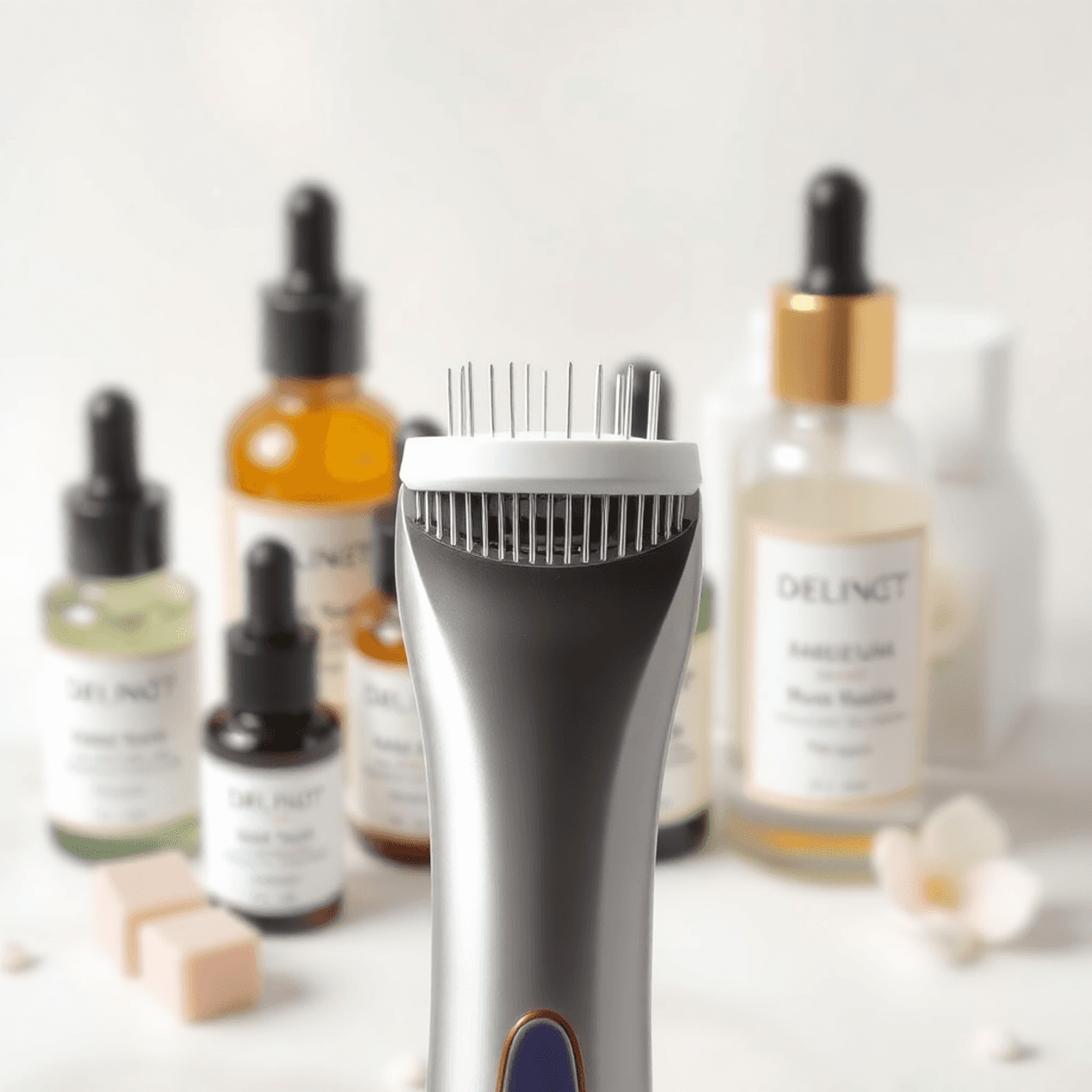
Research demonstrates that mesenchymal stem cell conditioned media contains a concentrated blend of growth factors — including VEGF, TGF-β1, and HGF — that significantly enhance fibroblast proliferation, collagen synthesis, and extracellular matrix production (PMC7904527). Bradceuticals Gold Mesenchymal Stem Cell Growth Factor Serum delivers this full regenerative secretome for post-procedure application, providing concentrated growth factor signaling through the micro-channels that collagen induction therapy creates. Applied to damp, dewy skin immediately after treatment, it floods the dermal layer with repair signals at the precise moment absorption peaks. See full details at Bradceuticals Gold Mesenchymal Stem Cell Growth Factor Serum.
What Is Collagen Induction Therapy?
Collagen induction therapy — also called percutaneous collagen induction or microneedling — is a minimally invasive procedure that uses a device equipped with fine, sterile needles to create thousands of tiny punctures in the skin’s surface. These controlled micro-injuries activate the body’s wound-healing response, which unfolds in three overlapping phases: inflammation, proliferation, and remodeling.
During the inflammation phase, platelets release growth factors and cytokines that recruit fibroblasts to the treatment area. During proliferation, those fibroblasts produce new collagen type III, elastin, and extracellular matrix proteins. During the remodeling phase — which continues for months — the initial collagen III is gradually replaced by stronger collagen type I, resulting in firmer, smoother, more resilient skin.
Research on percutaneous collagen induction confirms that this process increases gene expression for collagen type I, collagen type III, and growth factors like VEGF and EGF, with collagen fiber bundles becoming thicker and more organized in both the papillary and reticular dermis (PMID: 20413357). This biological foundation is what makes collagen induction therapy so effective for a wide range of skin concerns.
The procedure is performed at various depths depending on the concern being treated. Shallow treatments at 0.25 mm to 0.5 mm primarily enhance product absorption and provide gentle collagen stimulation. Deeper treatments at 1.0 mm to 2.5 mm, performed by licensed professionals, target scars, wrinkles, and significant textural irregularities. Always consult a licensed dermatologist or qualified skincare professional to determine whether collagen induction therapy is appropriate for your individual skin type and concerns.
10 Science-Backed Benefits of Collagen Induction Therapy
1. Stimulates New Collagen Production
The primary benefit of collagen induction therapy is right in the name — it induces collagen. Growth factors released during the wound-healing cascade signal fibroblasts to ramp up production of both collagen and elastin. Research confirms that growth factors and cytokines orchestrate every phase of this process (PMID: 19128254). The result is progressively firmer, more structured skin that improves over weeks and months following each session.
2. Reduces Fine Lines and Wrinkles
As new collagen fills in the dermal layer, the skin’s surface smooths out. Clinical evidence shows that topical growth factor application combined with collagen induction therapy produced a 17.6% improvement in skin texture and a 17.3% reduction in wrinkles in just three months (PMID: 34951101). For those exploring growth factor serums for youthful skin, pairing them with collagen induction therapy delivers significantly amplified results.
3. Improves Acne Scar Appearance
Collagen induction therapy is particularly effective for atrophic acne scars — the depressed scars caused by collagen loss during breakout healing. The controlled micro-injuries break down disorganized scar collagen and trigger replacement with healthier, more structured fibers. Rolling and boxcar scars tend to respond best, though multiple sessions are typically required. Consult a licensed dermatologist for personalized assessment of your scar type before beginning treatment.
4. Enhances Topical Product Absorption
The micro-channels created during collagen induction therapy temporarily bypass the stratum corneum — the skin’s outermost barrier that normally blocks up to 95% of topical product absorption. Research confirms that active ingredients delivered through these channels achieve significantly enhanced bioavailability (PMID: 32036009). This is why the serum you apply immediately after collagen induction therapy matters so much — it reaches the dermal layer at concentrations impossible with normal topical application.
5. Fades Hyperpigmentation and Dark Spots
Collagen induction therapy accelerates cell turnover, pushing pigmented surface cells out faster and replacing them with fresh, evenly toned cells. This makes it effective for sun spots, melasma, and post-inflammatory hyperpigmentation. When combined with a niacinamide or vitamin C serum, collagen induction therapy addresses both the texture and discoloration components of uneven skin tone. For more on treating sun damage, see our guide on how to repair sun damaged skin.
6. Minimizes Enlarged Pores
As new collagen fills in the skin around pore openings, pores appear visually tighter and smaller. Collagen induction therapy does not physically shrink pores, but the surrounding tissue becomes firmer and more supportive, reducing their visible prominence. Multiple sessions produce cumulative improvement.
7. Improves Overall Skin Texture
Rough, uneven texture results from inconsistent cell turnover and disorganized surface cells. Collagen induction therapy resets this process by triggering uniform cellular renewal across the treated area. The result is smoother, more refined skin with a more even surface. This is one of the earliest visible benefits of collagen induction therapy — many patients notice textural improvement within the first one to two weeks.
8. Tightens and Firms Skin
Collagen induction therapy addresses laxity by rebuilding the structural proteins that maintain skin firmness. The combination of new collagen and elastin creates a tighter, more resilient dermal framework. While collagen induction therapy cannot replicate the results of surgical lifting, it provides meaningful improvement in mild to moderate laxity, particularly along the jawline, neck, and cheeks.
9. Works on Most Skin Types and Tones
Unlike some laser treatments that carry higher risks for darker skin tones, collagen induction therapy is generally considered safe across Fitzpatrick skin types I through VI because it does not use thermal energy that targets melanin. This makes it a versatile option for a wider range of patients. However, individual risk factors vary — always consult a licensed professional before treatment.
10. Produces Compounding Results Over Multiple Sessions
Each collagen induction therapy session builds on the collagen remodeling triggered by the previous one. A clinical study confirmed that growth factor application over six months reduced periorbital wrinkles by 33% and perioral wrinkles by 25%, with ultrastructural analysis showing actual new collagen formation (PMID: 18569263). Most professionals recommend three to six sessions spaced four to six weeks apart for optimal cumulative results.
The Role of Serums in Collagen Induction Therapy
What you apply after collagen induction therapy is arguably as important as the procedure itself. The micro-channels remain open for approximately 15 to 30 minutes, creating a window of dramatically enhanced absorption.
Growth Factor Serums
Growth factor serums are the most impactful post-procedure product for collagen induction therapy. They deliver signaling proteins that activate fibroblasts and direct the collagen-building process. Bradceuticals Gold Mesenchymal Stem Cell Growth Factor Serum provides the full mesenchymal stem cell secretome — the complete spectrum of regenerative growth factors — through open channels at peak absorption. Apply to damp, dewy skin immediately after treatment.
Hyaluronic Acid
Hyaluronic acid binds up to 1,000 times its weight in water, providing the deep hydration that healing skin needs after collagen induction therapy. It is universally safe for immediate application and supports fibroblast activity. For more on this pairing, see our guide to hyaluronic acid serums for microneedling.
Peptides
Peptides signal fibroblasts to increase collagen output through biological pathways distinct from growth factors. Combining peptides with growth factors provides multi-pathway collagen stimulation after collagen induction therapy.
What to Avoid
After collagen induction therapy, avoid retinol, AHAs, BHAs, fragrance, alcohol, essential oils, and exfoliants for at least 48 hours. These can cause excessive irritation through open micro-channels and may compromise the healing process.
Collagen Induction Therapy Recovery Timeline
Understanding what to expect after collagen induction therapy helps you manage the recovery process confidently.
Immediately after: Redness and warmth similar to a mild sunburn. Apply growth factor serum and hyaluronic acid to damp skin. Do not touch face with unwashed hands.
24 hours: Peak redness begins subsiding. Apply SPF 30+ mineral sunscreen before any sun exposure. Avoid makeup.
Days 2–3: Redness fades to a pink flush. Mild dryness or flaking possible. Continue simplified routine.
Days 4–5: Light peeling as damaged surface cells shed. Do not pick or scratch. Continue growth factor serum twice daily.
Days 5–7: Visible surface healing largely complete. Skin appears brighter and smoother. Begin cautiously reintroducing regular products.
Weeks 2–12: Collagen remodeling phase. The most significant structural improvements develop during this period. Consistent daily growth factor serum use supports and amplifies collagen production. For a detailed breakdown, see our guide to microneedling recovery stages.
Recovery time varies based on needle depth. Shallow collagen induction therapy at 0.25–0.5 mm typically resolves within 24–48 hours. Deeper professional treatments at 1.0–2.5 mm may require 5–7 days of visible recovery. For more details, see our guide on microneedling healing time stages.
Who Is a Good Candidate for Collagen Induction Therapy?
Collagen induction therapy may be appropriate for individuals seeking improvement in fine lines and wrinkles, acne scars (atrophic), enlarged pores, uneven skin texture and tone, mild skin laxity, sun damage and hyperpigmentation, and stretch marks.
Collagen induction therapy may not be appropriate for individuals with active acne or skin infections, rosacea flare-ups, eczema or psoriasis in the treatment area, a history of keloid scarring, active cold sores (herpes simplex) in the treatment area, or those currently using blood thinners or immunosuppressive medications.
This list is not exhaustive. Always consult a board-certified dermatologist or licensed skincare professional for a thorough evaluation before undergoing collagen induction therapy. Individual responses vary, and professional guidance ensures the treatment is safe and appropriate for your specific situation.
Frequently Asked Questions
What is collagen induction therapy? Collagen induction therapy is the clinical term for microneedling — a procedure that uses fine needles to create controlled micro-injuries that stimulate the body’s natural collagen and elastin production for skin rejuvenation.
How does collagen induction therapy differ from regular microneedling? They are the same procedure. Collagen induction therapy is the medical terminology used in clinical literature, while microneedling is the more common consumer term.
How many collagen induction therapy sessions do I need? Most professionals recommend three to six sessions spaced four to six weeks apart. Results are cumulative — each session builds on the collagen remodeling from the previous one. Consult your dermatologist for a personalized treatment plan.
What is the best serum to use after collagen induction therapy? Growth factor serums deliver the strongest results. Bradceuticals Gold Mesenchymal Stem Cell Growth Factor Serum provides the full growth factor spectrum for post-treatment application on damp skin.
Is collagen induction therapy painful? Most patients describe the sensation as mild to moderate discomfort. Topical numbing cream is commonly applied before treatment to minimize sensation. Individual pain tolerance varies.
How long before I see results from collagen induction therapy? Initial improvements in texture and brightness may appear within one to two weeks. Significant wrinkle reduction, scar improvement, and firmness develop over one to three months as collagen production peaks.
Can collagen induction therapy be done at home? At-home devices with shorter needles (0.25–0.5 mm) are available for gentle collagen stimulation and enhanced product absorption. Deeper treatments should only be performed by licensed professionals. Consult a dermatologist before beginning any at-home regimen. For at-home tips, see our guide to microneedling at home.
References
- Hou A, Cohen B, Haimovic A, Elbuluk N. Microneedling: A Comprehensive Review. Dermatol Surg. 2017;43(3):321-339. (PMID: 27755171)
- Aust MC, Reimers K, Kaplan HM, et al. Percutaneous collagen induction — regeneration in place of cicatrisation? J Plast Reconstr Aesthet Surg. 2011;64(1):97-107. (PMID: 20413357)
- Kim SN, Lee CJ, Nam J, et al. The Effects of Human Bone Marrow-Derived Mesenchymal Stem Cell Conditioned Media on Skin Rejuvenation Characteristics. Int J Stem Cells. 2021;14(1):94-102. (PMC7904527)
- Quinlan DJ, Ghanem AM, Hassan H. Topical growth factors and home-based microneedling for facial skin rejuvenation. J Cosmet Dermatol. 2021;21(8):3469-3478. (PMID: 34951101)
- Hussain M, Phelps R, Goldberg DJ. Clinical, histologic, and ultrastructural changes after use of human growth factor and cytokine skin cream. J Cosmet Laser Ther. 2008;10(2):104-109. (PMID: 18569263)
- Zhu J, Tang X, Jia Y, Ho CT, Huang Q. Applications and delivery mechanisms of hyaluronic acid used for topical/transdermal delivery. Int J Pharm. 2020;578:119127. (PMID: 32036009)
- Barrientos S, Stojadinovic O, Golinko MS, Brem H, Tomic-Canic M. Growth factors and cytokines in wound healing. Wound Repair Regen. 2008;16(5):585-601. (PMID: 19128254)
Disclaimer
This article is for educational and informational purposes only and does not constitute medical advice, diagnosis, or treatment. Collagen induction therapy carries inherent risks including but not limited to infection, scarring, hyperpigmentation, and allergic reactions. Always consult a licensed dermatologist or qualified skincare professional before beginning any collagen induction therapy regimen to determine whether it is appropriate for your individual skin type and concerns. Individual results may vary. Bradceuticals products are not intended to diagnose, treat, cure, or prevent any disease. The information in this article should not be used as a substitute for professional medical advice.
Last reviewed: March 2026
About Bradceuticals : Thuy Myers is the founder of Bradceuticals which manufactures and distributes skin care and hair regrowth serums that use growth factors from human stem cells as the catalyst for regeneration. When she is not busy running the business and maintaining blogs, she is continuing her practice as a semiconductor engineer and occasionally teaches college engineering. In her free time, she enjoys the beach, working out at the gym and hanging out with her kiddo Brad.