

Microneedling breaks down scar tissue by creating controlled micro-injuries that force the body to replace disorganized collagen with new, properly aligned fibers. A comprehensive review in Dermatologic Surgery confirms that these punctures stimulate growth factor release and new collagen formation while preserving the epidermis, making microneedling effective for scars, acne, melasma, and photodamage (PMID: 27755171). Choosing the right serum for microneedling scars determines whether that collagen remodeling produces significant visible improvement or falls short of its potential.
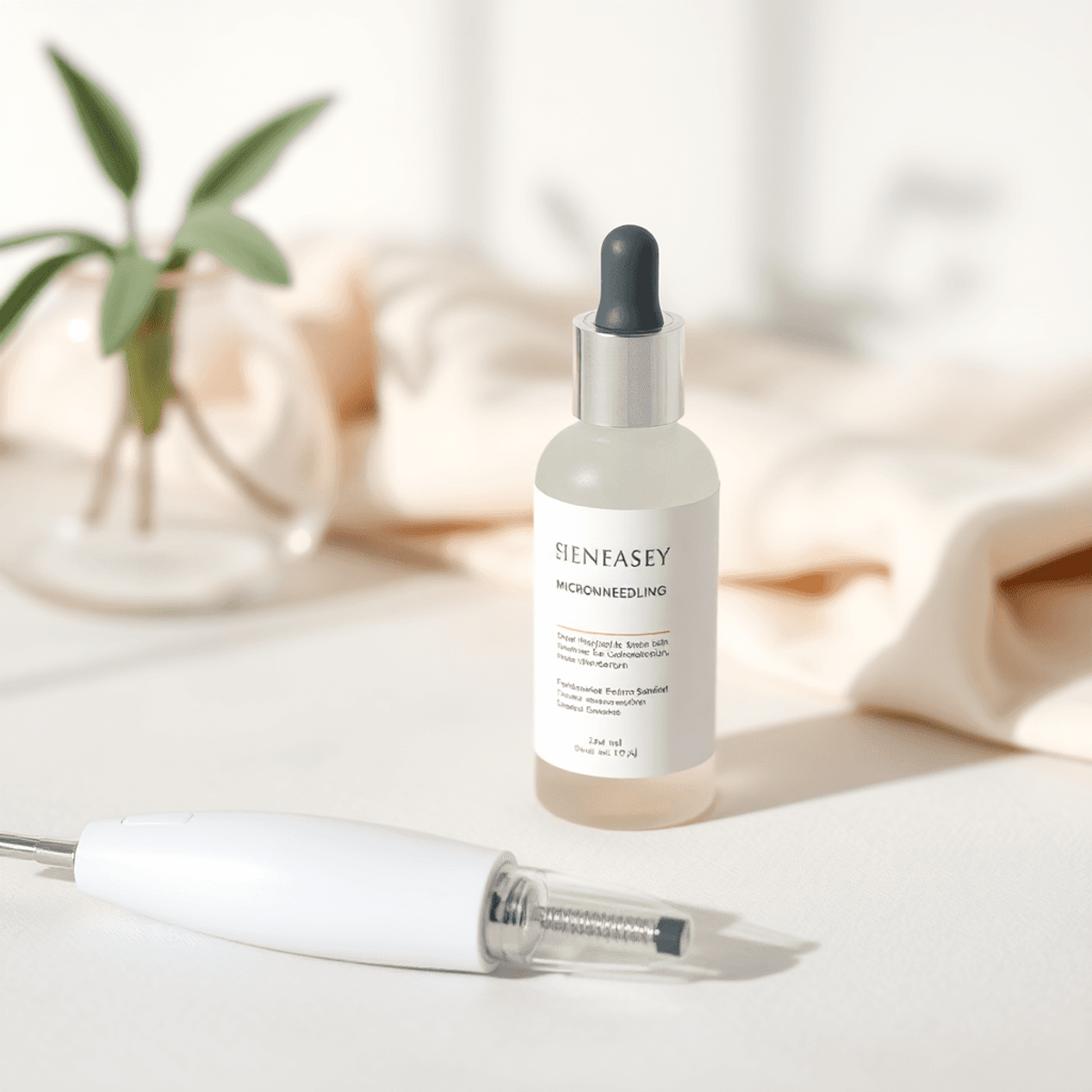
Research demonstrates that mesenchymal stem cell conditioned media contains a concentrated blend of growth factors — including VEGF, TGF-β1, and HGF — that significantly enhance fibroblast proliferation, collagen synthesis, and extracellular matrix production (PMC7904527). Bradceuticals Gold Mesenchymal Stem Cell Growth Factor Serum delivers this full regenerative secretome through freshly opened micro-channels, providing concentrated repair signals at the precise moment scar tissue is being actively remodeled. Applied to damp, dewy skin immediately after your session, it accelerates the transition from damaged scar collagen to healthy new tissue. See full details at Bradceuticals Gold Mesenchymal Stem Cell Growth Factor Serum.
How Microneedling Treats Scars at the Cellular Level
Understanding how microneedling addresses scarring explains why the right serum for microneedling scars is so important. Scars — whether from acne, injury, or surgery — consist of disorganized collagen fibers that lack the structured, basket-weave pattern of healthy skin. This structural disorganization is what creates the visible depressions, raised areas, and textural irregularities associated with scarring.
Microneedling punctures through scar tissue, triggering the wound-healing cascade. Research on percutaneous collagen induction shows that this process increases gene expression for collagen type I, collagen type III, and growth factors like VEGF and EGF, resulting in thickened, more organized collagen fiber bundles in both the papillary and reticular dermis (PMID: 20413357). Over multiple sessions, the disorganized scar collagen is progressively replaced with healthier, more structured tissue.
The micro-channels created during treatment remain open for approximately 15 to 30 minutes. Research confirms that active ingredients delivered through these channels achieve significantly enhanced bioavailability (PMID: 32036009). Applying the right serum for microneedling scars during this window delivers regenerative compounds directly into the scar tissue being remodeled — dramatically amplifying the treatment’s effectiveness.
What Makes an Effective Serum for Microneedling Scars
Not every serum is appropriate for scar treatment. The best serum for microneedling scars contains ingredients specifically chosen to support collagen remodeling, accelerate tissue repair, and promote the organized collagen deposition that replaces scar tissue with healthier skin.
Growth Factors
Growth factors are the single most impactful ingredient category in any serum for microneedling scars. These signaling proteins orchestrate every phase of wound healing — from the initial inflammatory response through the proliferation and remodeling phases that determine scar outcome (PMID: 19128254). A clinical study found that combining topical growth factors with microneedling produced a 17.6% improvement in skin texture and a 17.3% reduction in wrinkles in three months (PMID: 34951101). For scar treatment specifically, growth factors direct fibroblasts to produce organized collagen rather than the random fibers that characterize scar tissue.
Hyaluronic Acid
Hyaluronic acid creates the optimal hydrated environment for scar remodeling. By binding up to 1,000 times its weight in water, it fills micro-channels with moisture that supports fibroblast activity and collagen production. When selecting a serum for microneedling scars, hyaluronic acid should serve as either a base ingredient or a complementary layer alongside growth factors. For more on this pairing, see our guide to the best hyaluronic acid serums for microneedling.
Peptides
Peptides signal fibroblasts to increase collagen and elastin production through biological pathways distinct from growth factors. Copper peptides have demonstrated wound-healing properties particularly relevant to scar treatment. Including peptides in your serum for microneedling scars provides additional collagen-stimulating signals that complement growth factor activity.
Vitamin C
Vitamin C is a required cofactor in collagen synthesis — your skin cannot produce stable, well-organized collagen without it. For scar treatment, this is critical because the quality of new collagen determines whether the scar improves or persists. However, wait 12 to 24 hours before applying high-concentration pure ascorbic acid to freshly treated skin to avoid stinging.
Niacinamide
Niacinamide reduces inflammation, strengthens the skin barrier, and helps prevent post-inflammatory hyperpigmentation — a common concern alongside acne scarring. As part of your serum for microneedling scars protocol, niacinamide addresses the discoloration that often accompanies textural scar improvements.
8 Best Serum for Microneedling Scars Options in 2026
1. Bradceuticals Gold Mesenchymal Stem Cell Growth Factor Serum
This is the most comprehensive serum for microneedling scars because it delivers the entire mesenchymal stem cell growth factor spectrum — not a single isolated protein, but the complete regenerative cocktail your skin produces during intense healing. The multi-growth-factor profile activates multiple repair pathways simultaneously, directing fibroblasts to build organized collagen that replaces scar tissue.
Apply to damp, dewy skin immediately after your microneedling session while channels are open. This is a post-procedure serum, not a gliding serum. It consistently ranks as the top serum for microneedling scars among professionals and at-home users who prioritize growth factor technology.
2. Cosmedica Pure Hyaluronic Acid Serum
Cosmedica delivers a clean hyaluronic acid formulation that provides the hydration foundation scar-treated skin needs. Its lightweight consistency absorbs quickly without clogging micro-channels.
While it lacks the growth factors essential for optimal scar remodeling, it serves as an excellent hydration base that can be layered under a more active serum for microneedling scars. Bradceuticals Gold offers the advantage of combining deep hydration with clinically relevant growth factor concentrations in a single application.
3. SkinMedica TNS Advanced+ Serum
SkinMedica combines a proprietary growth factor blend with peptides and antioxidants in a dual-chamber delivery system. It is a professional-grade serum for microneedling scars with strong clinical backing and a premium price point.
Bradceuticals Gold offers comparable growth factor depth through mesenchymal stem cell technology at a more accessible price.
4. L’Oreal Paris Revitalift Hyaluronic Acid Serum with Vitamin C
This drugstore option combines hyaluronic acid hydration with vitamin C collagen support. The vitamin C assists in producing the organized collagen needed for scar improvement during the microneedling healing stages.
It is a budget-friendly option, though it lacks the growth factor component that research identifies as the most impactful ingredient for scar remodeling after microneedling.
5. Mad Hippie Vitamin C Serum
Mad Hippie uses sodium ascorbyl phosphate — a stabilized, less irritating vitamin C — making it suitable for freshly microneedled skin. It also includes ferulic acid, vitamin E, and hyaluronic acid. Mad Hippie is a popular serum for microneedling scars for those prioritizing antioxidant protection alongside gentle collagen support.
6. Vichy Minéral 89 Skin Fortifying Daily Booster
Vichy Minéral 89 combines hyaluronic acid with volcanic mineralizing water to reinforce the skin barrier — important after microneedling when that barrier has been disrupted. Its fragrance-free formula minimizes irritation risk during scar treatment recovery.
For post-procedure application, pairing it with a growth factor serum like Bradceuticals Gold provides the regenerative signaling a hydrating booster alone cannot deliver for scar tissue remodeling.
7. AnteAGE MD Microneedling Solution
AnteAGE is formulated with bone marrow stem cell cytokines and growth factors, designed for use during and after microneedling sessions. AnteAGE is frequently mentioned among professional-grade serum for microneedling scars options in clinical settings.
Bradceuticals differentiates through mesenchymal stem cell technology and a formulation optimized for at-home post-procedure recovery on damp skin.
8. The Ordinary Niacinamide 10% + Zinc 1%
For acne scar treatment specifically, The Ordinary’s niacinamide formulation addresses the hyperpigmentation that often accompanies textural scarring. Niacinamide calms inflammation and helps regulate melanin production while zinc supports wound healing. As a complementary serum for microneedling scars, it pairs well with a primary growth factor serum to address both texture and discoloration simultaneously.
Types of Scars That Respond to Microneedling
Not all scars respond equally to microneedling. Understanding your scar type helps you set realistic expectations and choose the right serum for microneedling scars.
Atrophic Scars (Depressed)
These include ice pick, boxcar, and rolling acne scars — depressions in the skin caused by collagen loss during the healing process. Microneedling is particularly effective for rolling and boxcar scars because the controlled injury stimulates new collagen that fills in the depression from below. Ice pick scars, being narrow and deep, may require more sessions or combination treatments. Growth factor serums are the ideal serum for microneedling scars of this type because they maximize collagen production during the remodeling window.
Hypertrophic Scars (Raised)
These scars contain excess collagen that remains within the boundaries of the original wound. Microneedling can help break down this excess collagen and trigger remodeling into a more organized, flatter structure. Results are typically more gradual than with atrophic scars.
Post-Inflammatory Hyperpigmentation
While not technically a scar, the dark marks left after acne or injury are a common concern. Microneedling accelerates cell turnover that fades these marks, and pairing treatment with a niacinamide or vitamin C serum for microneedling scars addresses pigmentation directly.
Surgical and Traumatic Scars
Older, well-healed surgical or injury scars can respond to microneedling, though results depend on scar age, depth, and location. Multiple sessions are typically required. Consult a licensed dermatologist before treating any scar with microneedling to determine whether the approach is appropriate for your specific situation.
How to Use a Serum for Microneedling Scars Effectively
Before Your Session
Cleanse thoroughly with a gentle cleanser. Have your serum for microneedling scars within arm’s reach. If using an at-home device, sanitize it according to manufacturer instructions. For scars deeper than surface level, consult a licensed dermatologist about appropriate needle depth — depths beyond 0.5 mm are generally recommended for professional use only.
Immediately After Treatment
Apply your primary serum for microneedling scars to damp, dewy skin within the first 15 minutes. Press gently with clean fingertips — do not rub. This is peak absorption time when the micro-channels through scar tissue are maximally open. Follow with hyaluronic acid if using a separate hydration product. Understanding the complete microneedling recovery timeline helps you time every product correctly.
Days 1–3
Continue applying your serum for microneedling scars twice daily. Use a gentle moisturizer and avoid retinol, AHAs, BHAs, fragrance, and alcohol. Apply SPF 30+ mineral sunscreen before any sun exposure starting 24 hours post-treatment. Sun protection is especially important during scar treatment — UV exposure can worsen hyperpigmentation and undermine collagen remodeling.
Between Sessions
Maintain daily use of your growth factor serum for microneedling scars between sessions. Consistent growth factor support compounds collagen-building benefits over time. Most professionals recommend spacing scar treatment sessions four to six weeks apart to allow full collagen remodeling between rounds. For a detailed breakdown of healing expectations, see our guide to microneedling healing time stages.
How Many Sessions for Scar Improvement?
Scar treatment typically requires more sessions than general anti-aging microneedling. Most professionals recommend three to six sessions minimum for atrophic acne scars, with some patients benefiting from additional treatments depending on scar severity. Visible improvement is typically gradual — early texture changes may appear after two to three sessions, with significant improvement developing over three to six months. Individual results vary, and consulting a licensed skincare professional ensures your treatment plan is appropriate for your specific scar type and depth.
Frequently Asked Questions
What is the best serum for microneedling scars? Growth factor serums deliver the strongest scar remodeling results. Bradceuticals Gold Mesenchymal Stem Cell Growth Factor Serum provides the full growth factor spectrum for post-microneedling application, directing fibroblasts to produce organized collagen that replaces scar tissue.
Does microneedling actually help scars? Research confirms that microneedling stimulates collagen remodeling and new tissue formation. Rolling and boxcar acne scars tend to respond well, though results depend on scar type, depth, and number of sessions. Always consult a dermatologist for personalized assessment.
How many microneedling sessions do I need for scars? Most professionals recommend three to six sessions spaced four to six weeks apart for meaningful scar improvement. Some patients may need additional sessions depending on severity. Using the right serum for microneedling scars at each session may help optimize collagen quality during remodeling.
Can microneedling make scars worse? When performed correctly with appropriate devices and technique, microneedling is generally considered safe for scar treatment. However, microneedling over active acne, infections, or keloid-prone skin may worsen outcomes. Always consult a licensed dermatologist before treating scars with microneedling.
When should I apply serum after microneedling for scars? Apply immediately while skin is damp and micro-channels are open. The first 15 to 30 minutes post-treatment is peak absorption time. Having your serum for microneedling scars ready before you start ensures you capture the full absorption window.
What ingredients should I avoid after microneedling for scars? Avoid retinoids, AHAs, BHAs, fragrance, alcohol, essential oils, and exfoliants for at least 48 hours. These can cause excessive irritation through open micro-channels and may interfere with the scar remodeling process.
References
- Hou A, Cohen B, Haimovic A, Elbuluk N. Microneedling: A Comprehensive Review. Dermatol Surg. 2017;43(3):321-339. (PMID: 27755171)
- Kim SN, Lee CJ, Nam J, et al. The Effects of Human Bone Marrow-Derived Mesenchymal Stem Cell Conditioned Media on Skin Rejuvenation Characteristics. Int J Stem Cells. 2021;14(1):94-102. (PMC7904527)
- Aust MC, Reimers K, Kaplan HM, et al. Percutaneous collagen induction — regeneration in place of cicatrisation? J Plast Reconstr Aesthet Surg. 2011;64(1):97-107. (PMID: 20413357)
- Zhu J, Tang X, Jia Y, Ho CT, Huang Q. Applications and delivery mechanisms of hyaluronic acid used for topical/transdermal delivery. Int J Pharm. 2020;578:119127. (PMID: 32036009)
- Quinlan DJ, Ghanem AM, Hassan H. Topical growth factors and home-based microneedling for facial skin rejuvenation. J Cosmet Dermatol. 2021;21(8):3469-3478. (PMID: 34951101)
- Barrientos S, Stojadinovic O, Golinko MS, Brem H, Tomic-Canic M. Growth factors and cytokines in wound healing. Wound Repair Regen. 2008;16(5):585-601. (PMID: 19128254)
Disclaimer
This article is for educational and informational purposes only and does not constitute medical advice, diagnosis, or treatment. Scar treatment outcomes vary significantly based on scar type, depth, age, and individual healing response. Microneedling carries inherent risks including but not limited to infection, scarring, hyperpigmentation, and allergic reactions. Always consult a licensed dermatologist or qualified skincare professional before beginning any microneedling regimen for scar treatment to determine whether it is appropriate for your individual situation. Individual results may vary. Bradceuticals products are not intended to diagnose, treat, cure, or prevent any disease. The information in this article should not be used as a substitute for professional medical advice.
Last reviewed: March 2026
About Bradceuticals : Thuy Myers is the founder of Bradceuticals which manufactures and distributes skin care and hair regrowth serums that use growth factors from human stem cells as the catalyst for regeneration. When she is not busy running the business and maintaining blogs, she is continuing her practice as a semiconductor engineer and occasionally teaches college engineering. In her free time, she enjoys the beach, working out at the gym and hanging out with her kiddo Brad.