

The 72 hours following a microneedling session determine how much collagen your skin ultimately produces — and the post microneedling serum you apply during that window plays a direct role in the outcome. Microneedling creates thousands of controlled microchannels that temporarily bypass the stratum corneum, increasing topical absorption by up to 80% according to transdermal delivery research. This means the active ingredients in your post microneedling serum reach fibroblasts in the dermis where collagen remodeling actually occurs (Doddaballapur, 2009). Choosing the wrong product — or worse, using an irritating formulation — wastes this critical absorption window and can compromise healing.
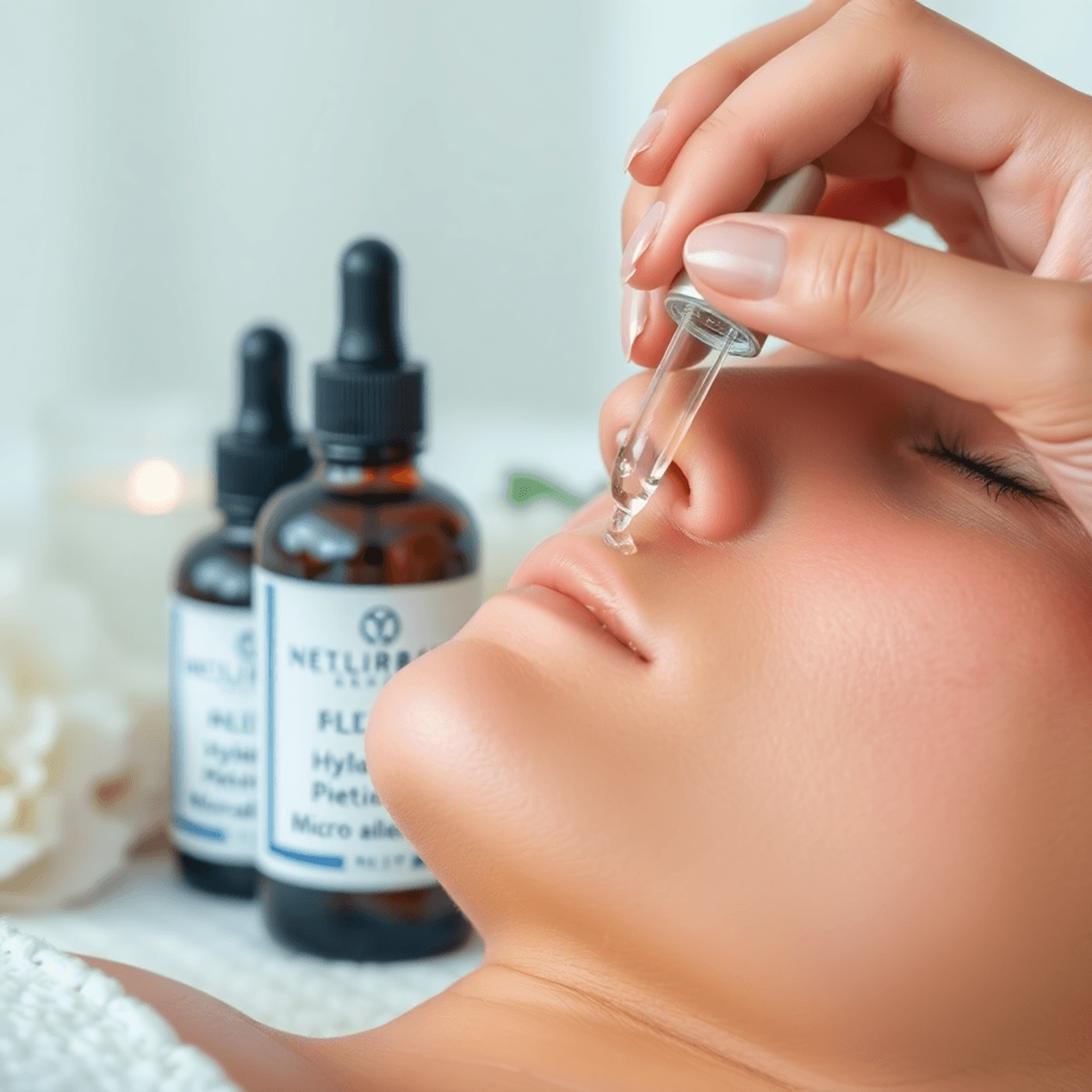
Growth factors derived from mesenchymal stem cell conditioned media represent the most clinically supported category of post microneedling serum actives. A study in the Journal of Cosmetic Dermatology demonstrated that human adipose-derived stem cell conditioned media applied topically for eight weeks produced significant reductions in wrinkle depth and improvements in elasticity (Kim et al., 2020). When delivered through open microchannels immediately after a procedure, these growth factors — EGF, TGF-β, PDGF, and VEGF — reach their target receptors with dramatically increased efficiency. Bradceuticals’ Gold Mesenchymal Stem Cell Growth Factor Serum is formulated specifically for this purpose: a lightweight concentration of human mesenchymal stem cell conditioned media designed for application on damp, dewy skin immediately post-procedure, never as a gliding serum during the treatment itself.
Why Your Post Microneedling Serum Matters More Than Any Other Step
The Microchannels Close Fast
The absorption window created by microneedling begins closing within minutes as the coagulation cascade seals microchannels. Applying your post microneedling serum immediately — while skin is still damp and dewy from the procedure — ensures maximum delivery of active ingredients to the dermal layer. Waiting even thirty minutes reduces penetration significantly. This urgency is why the formulation of your post microneedling serum must be ready at chairside before the first needle pass is complete.
Fibroblasts Are Primed for Signaling
The controlled injury from microneedling activates fibroblasts and triggers the release of endogenous growth factors as part of the wound healing cascade. When you supplement this natural response with exogenous growth factors from a post microneedling serum, you amplify the collagen synthesis signal. Research from Seoul National University confirmed that mesenchymal stem cell conditioned media increased type I collagen production by up to 31% in dermal fibroblasts (Park et al., 2019). Timing this delivery to coincide with the fibroblast activation window creates a compounding effect on collagen output.
Healing Phases and How Your Post Microneedling Serum Supports Each One
Phase 1 — Hemostasis (Minutes 1–10)
Microchannels fill with platelet-rich blood that initiates clotting. Your post microneedling serum should be applied during this phase to ride the absorption wave before channels seal. Hyaluronic acid in the formula provides immediate hydration that prevents the tight, dry sensation common in the first hour. Growth factors begin binding to receptors on activated fibroblasts and keratinocytes within minutes of application.
Phase 2 — Inflammatory Response (Days 1–4)
Redness, warmth, and mild swelling characterize this phase as neutrophils and macrophages clear cellular debris. Your post microneedling serum should contain no fragrance, no active acids, and no alcohol during this period. Growth factors from stem cell conditioned media help regulate the inflammatory response — promoting sufficient inflammation for healing while preventing the excessive response that leads to prolonged redness or post-inflammatory hyperpigmentation. Understanding the complete stages of microneedling recovery helps you anticipate what your skin needs each day.
Phase 3 — Proliferation (Days 4–14)
This is the collagen construction phase. Fibroblasts are actively depositing new type I and type III collagen, and keratinocytes are migrating to re-epithelialize the surface. Continue applying your growth factor post microneedling serum twice daily. After day seven, you can begin reintroducing vitamin C serum in the morning for antioxidant support and additional collagen cofactor activity. The healing stages every patient should know maps this timeline so you know precisely when to add each active back into rotation.
Phase 4 — Remodeling (Day 14 Onward)
Type III collagen gradually converts to stronger type I collagen, and the extracellular matrix reorganizes into mature tissue. By this phase your skin can tolerate a full routine, but continuing your post microneedling serum maintains the growth factor supply that supports ongoing remodeling for up to 90 days post-procedure. This extended remodeling window is why consistent serum use between microneedling sessions matters as much as the application immediately after treatment.
What Ingredients Belong in a Post Microneedling Serum
Growth Factors — The Non-Negotiable Active
EGF, TGF-β, and PDGF from human stem cell conditioned media are the most evidence-backed actives for post-procedure application. A clinical trial in the International Journal of Molecular Sciences confirmed that topical EGF accelerated re-epithelialization and improved texture in compromised skin (Esquirol-Caussa & Herrero-Vila, 2015). The reasons why EGF serums lead in skin rejuvenation details how this specific growth factor drives measurable recovery improvements.
Hyaluronic Acid — Immediate Hydration Without Irritation
Medium to high molecular weight hyaluronic acid draws water into the upper dermis and epidermis without penetrating deep enough to cause inflammation in freshly treated skin. It provides the hydration foundation that allows growth factors to function optimally — dehydrated skin downregulates receptor activity, reducing the efficacy of every other active in your post microneedling serum.
Niacinamide — Barrier Repair and Anti-Inflammation
Niacinamide strengthens the lipid barrier that microneedling temporarily disrupts. It also reduces post-inflammatory redness and helps prevent hyperpigmentation that can occur in deeper needle depth treatments. Its anti-inflammatory profile makes it safe for inclusion from day one post-procedure.
What to Exclude From Your Post Microneedling Serum
Retinoids, alpha hydroxy acids, beta hydroxy acids, vitamin C at high concentrations (above 10%), essential oils, fragrance, and alcohol have no place in a post microneedling serum used during the first 48 to 72 hours. These ingredients cause irritation, stinging, and can trigger excessive inflammation that undermines collagen synthesis rather than supporting it. The microneedling healing timeline provides day-by-day guidance on when each active can safely re-enter your routine.
Application Technique for Maximum Results
Step 1 — Prepare Before the Procedure
Have your post microneedling serum open and ready before you begin microneedling. Every second of delay after the last pass reduces absorption potential.
Step 2 — Apply to Damp Skin Immediately
The moment the procedure is complete, apply a generous layer of your post microneedling serum to skin that is still damp and dewy. Do not towel dry. Do not wait for bleeding to stop completely. The serum travels through open microchannels alongside the body’s own platelet-rich plasma.
Step 3 — Pat, Never Rub
Use clean fingertips to gently pat the serum across all treated areas. Rubbing creates lateral friction on compromised skin and distributes product unevenly. Patting ensures even coverage while minimizing mechanical irritation.
Step 4 — Follow With a Simple Occlusive
After the serum absorbs for sixty seconds, apply a fragrance-free, ceramide-rich moisturizer to seal growth factors against the skin surface. This occlusive layer extends contact time between active ingredients and dermal receptors.
Step 5 — Repeat Twice Daily
Continue applying your post microneedling serum morning and evening for at least 14 days. The proliferative phase — when your skin is building the most new collagen — peaks between days 4 and 14. Skipping applications during this window forfeits the compounding benefit of sustained growth factor exposure.
Human-Derived vs. Plant-Derived Post Microneedling Serum Options
Plant stem cell extracts from Swiss apple, grape, and argan provide antioxidant protection that helps prevent post-procedure oxidative damage. A study confirmed that apple stem cell extract shielded cells from oxidative stress (Barbulova et al., 2015). These are useful supporting ingredients. However, plant cells do not produce EGF, TGF-β, or any human-compatible growth factor — they cannot signal fibroblasts to produce collagen.
For a post microneedling serum intended to maximize collagen induction from the procedure, human mesenchymal stem cell conditioned media provides the biological signaling that plant extracts cannot replicate. The best stem cell serums ranked for 2026 compares specific products across sourcing, concentration, and clinical evidence.
Long-Term Strategy — Between Sessions
Most microneedling protocols recommend treatments every four to six weeks. Your post microneedling serum should remain part of your daily routine between sessions to maintain elevated growth factor levels in the skin. A 2021 review in Stem Cell Research & Therapy found that consistent topical application of stem cell conditioned media over 8 to 12 weeks produced cumulative improvements in wrinkle depth, elasticity, and dermal thickness (Katagiri et al., 2021). Using the serum only on procedure days wastes the sustained signaling benefit that drives long-term results.
For those also addressing pigmentation concerns alongside texture, growth factors demonstrate additional value. Research in Annals of Dermatology found that stem cell conditioned media suppressed melanin production in melanocytes (Seo et al., 2019). This dual action makes a growth factor post microneedling serum particularly effective for individuals managing both sun damage and aging concerns simultaneously.
Frequently Asked Questions
What is the best post microneedling serum for beginners? A hyaluronic acid serum combined with growth factors provides the safest and most effective starting point. The combination delivers hydration and regenerative signaling without any irritation risk. Bradceuticals’ Gold Mesenchymal Stem Cell Growth Factor Serum is formulated specifically for post-procedure application on sensitive, freshly treated skin.
How soon after microneedling should I apply my serum? Immediately — within the first one to two minutes while microchannels are still open and skin is damp. Having your post microneedling serum ready before the procedure ensures zero delay.
Can I use vitamin C as my post microneedling serum? Not in the first seven days. Vitamin C at standard concentrations (10–20%) is too acidic for freshly microneedled skin and can cause stinging, irritation, and prolonged redness. Reintroduce it after day seven as a morning antioxidant layer.
How long should I use a post microneedling serum after each treatment? Continue twice-daily application for at least 14 days to cover the full proliferative phase. For best results, maintain daily use between sessions to keep growth factor levels elevated until your next treatment.
Is a post microneedling serum the same as a regular face serum? No. A post microneedling serum must be free of fragrance, active acids, retinoids, and alcohol. It should contain growth factors or hyaluronic acid as primary actives — ingredients that support healing rather than exfoliate or stimulate turnover in ways that compromise freshly treated skin.
References
- Doddaballapur, S. (2009). Microneedling with dermaroller. Journal of Cutaneous and Aesthetic Surgery. https://pmc.ncbi.nlm.nih.gov/articles/PMC2996801/
- Kim, Y.J., et al. (2020). Human adipose-derived stem cell conditioned media and skin elasticity. Journal of Cosmetic Dermatology. https://pubmed.ncbi.nlm.nih.gov/31573748/
- Park, B.S., et al. (2019). Adipose-derived stem cells and their secretory factors for skin aging. Dermatologic Surgery. https://pmc.ncbi.nlm.nih.gov/articles/PMC6835893/
- Esquirol-Caussa, J. & Herrero-Vila, E. (2015). EGF applications in dermatology. International Journal of Molecular Sciences. https://pubmed.ncbi.nlm.nih.gov/26370986/
- Barbulova, A., et al. (2015). Plant stem cells in cosmetics. Journal of Applied Pharmaceutical Sciences. https://pmc.ncbi.nlm.nih.gov/articles/PMC4740987/
- Katagiri, W., et al. (2021). Clinical applications of stem cell conditioned media. Stem Cell Research & Therapy. https://pmc.ncbi.nlm.nih.gov/articles/PMC7815998/
- Seo, K.Y., et al. (2019). Stem cell conditioned media and melanin regulation. Annals of Dermatology. https://pubmed.ncbi.nlm.nih.gov/33911573/
Disclaimer: This article is for informational purposes only and does not constitute medical advice. Consult a board-certified dermatologist before beginning any new skincare regimen.
Last reviewed: March 31, 2026
About Bradceuticals : Thuy Myers is the founder of Bradceuticals which manufactures and distributes skin care and hair regrowth serums that use growth factors from human stem cells as the catalyst for regeneration. When she is not busy running the business and maintaining blogs, she is continuing her practice as a semiconductor engineer and occasionally teaches college engineering. In her free time, she enjoys the beach, working out at the gym and hanging out with her kiddo Brad.