

Every time you smile, laugh, or speak, the muscles around your mouth compress the skin along your nasolabial folds — and those compressions are carving deeper smile lines into your face every single year. You have tried firming creams. You have considered fillers. You have layered every “anti-wrinkle” product the beauty aisle offers. And your smile lines STILL deepen — because every approach you have used either temporarily plumps the surface above the crease or paralyzes the muscles creating it without rebuilding the collagen scaffolding BENEATH it that has been collapsing since your early 30s. Research published in The American Journal of Pathology demonstrated that type I procollagen production drops approximately 32% between young and aged skin, with fibroblast-collagen contact declining from 78% to 58% of cell surface area (Varani et al., 2006 — DOI). In the nasolabial zone — where smile lines form — this collagen decline is compounded by thousands of daily muscular compressions that no other facial zone endures with such intensity.
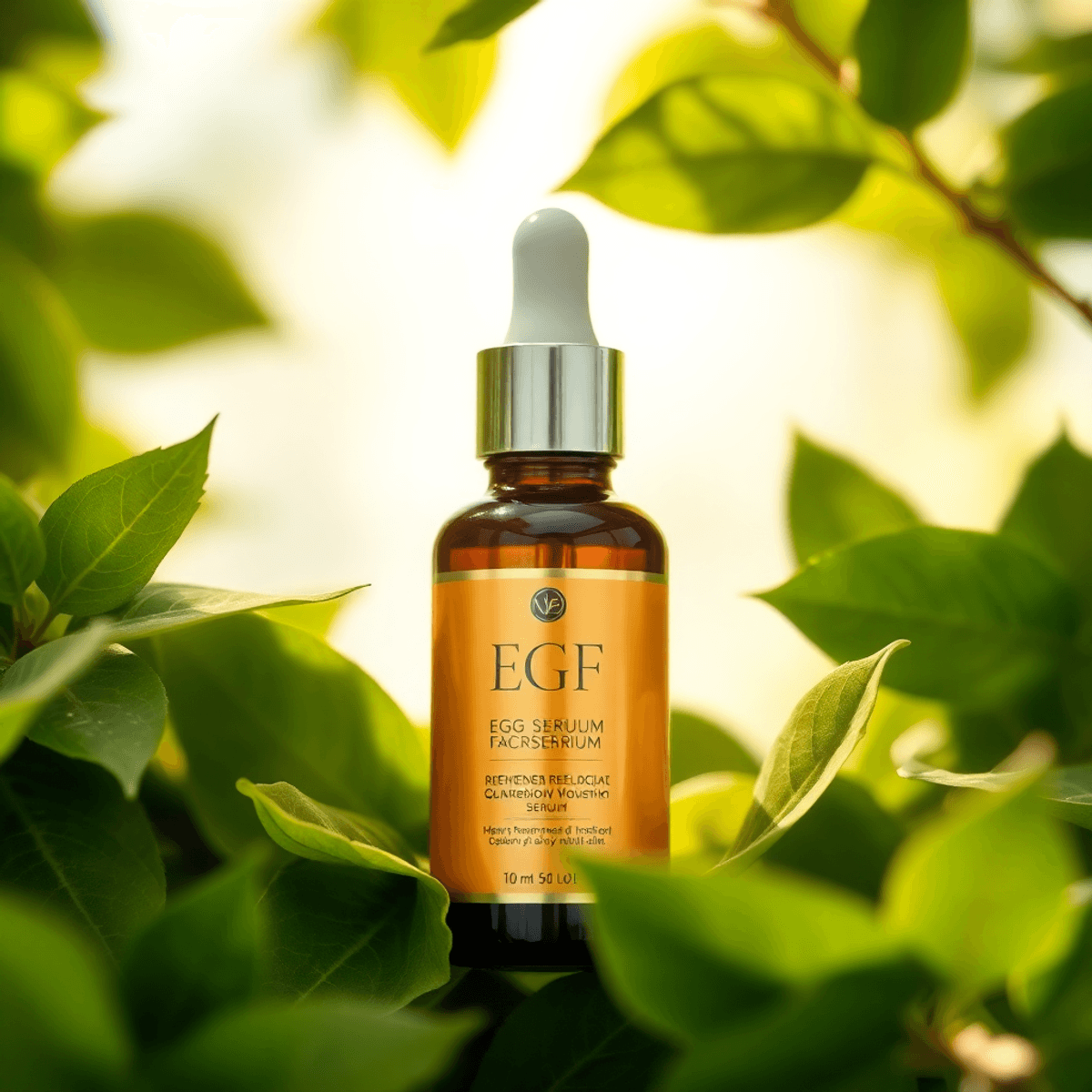
A 12-week clinical trial published in the Journal of Drugs in Dermatology confirmed what effective treatment of smile lines demands: a growth factor-based serum produced significant improvements in firmness, elasticity, and wrinkle reduction, with ultrasound imaging confirming continual dermal restructuring throughout the study (Barone et al., 2019). Not temporary filling — structural collagen change verified by imaging. Bradceuticals’ Gold Mesenchymal Stem Cell Growth Factor Serum delivers the complete human mesenchymal stem cell secretome — EGF, TGF-β, FGF, PDGF, and VEGF — applied to damp, dewy skin twice daily. For any woman watching her smile lines deepen despite her best efforts, this is the formulation tier where clinical evidence lives.
Why Smile Lines Deepen Faster Than Other Facial Wrinkles
The Mechanical Stress Problem
Smile lines occupy one of the most mechanically active zones on the human face. The zygomaticus major, levator labii superioris, and orbicularis oris muscles converge around the nasolabial fold — creating a compression point that activates during smiling, laughing, speaking, eating, and even breathing through your mouth. No other wrinkle on your face endures this volume of repetitive mechanical stress. When collagen density is high, these fibers spring back after each compression. When collagen declines, each compression leaves a slightly deeper crease that weakened scaffolding cannot recover.
The Midface Descent Factor
Smile lines are not just wrinkles — they are the visible boundary where descending midface tissue meets the fixed tissue around the mouth. As collagen and elastin decline in the cheeks, gravitational descent pushes tissue downward and inward, deepening the nasolabial fold from ABOVE. This means smile lines are driven by collagen loss in TWO zones simultaneously — the fold itself AND the cheek above it. Treating smile lines effectively requires rebuilding collagen across the entire midface, not just within the crease.
UV Damage in the Nasolabial Zone
The nasolabial zone receives significant UV exposure — it faces outward and is rarely shaded by hats or sunglasses. UV exposure activates matrix metalloproteinases that degrade collagen while suppressing the TGF-β signaling that would stimulate replacement (Quan et al., 2009 — DOI). Smile lines in sun-exposed skin deepen faster than in protected skin. The best approaches to treating sun damage details how growth factors counteract this photodamage.
The 8 Reasons Your Smile Lines Keep Getting Worse
Reason 1 — Your Fibroblasts Are Not Receiving Growth Factor Signals
The fibroblasts beneath your smile lines are still ALIVE and still CAPABLE of producing collagen. But they are receiving fewer growth factor instructions every year as endogenous EGF, FGF, and TGF-β production declines with age. Bradceuticals’ Gold Mesenchymal Stem Cell Growth Factor Serum delivers the complete secretome — EGF, FGF, TGF-β, VEGF, and PDGF — replenishing the signals that reactivate collagen production beneath smile lines. The reasons why EGF serums lead skin rejuvenation details how growth factor receptor binding drives this response.
Reason 2 — Fillers Mask Smile Lines Without Rebuilding Structure
Hyaluronic acid dermal fillers physically push the nasolabial fold outward — creating the appearance of shallower smile lines for 6 to 12 months. But fillers deposit ZERO new collagen. When they dissolve, smile lines return at the same structural depth because the collagen deficit was never addressed. The most effective long-term approach to smile lines combines the structural collagen rebuilding of growth factor serums with the immediate visual correction fillers provide — addressing both the symptom and the cause.
Reason 3 — Microneedling Delivers Growth Factors Where Smile Lines Need Them Most
Growth factors weigh 6,045+ Daltons — far exceeding the 500-Dalton passive penetration limit. Microneedling bypasses the stratum corneum to deliver actives directly into the vascularized dermis, with histological studies confirming up to 400% increase in collagen and elastin deposition after multiple sessions (Singh & Yadav, 2016 — DOI). For smile lines driven by deep nasolabial collagen loss, microneedling delivers growth factors to the fibroblasts at the BASE of the fold — the exact location where collagen deposition reduces crease depth. Apply Bradceuticals’ serum within 60 seconds post-procedure to damp skin. The complete stages of microneedling recovery maps optimal timing. The healing stages every patient should know provides day-by-day guidance.
Reason 4 — Vitamin C Supports Collagen Assembly in the Nasolabial Zone
According to the comprehensive review in Nutrients, vitamin C acts as the cofactor for prolyl and lysyl hydroxylases that stabilize collagen tertiary structure and also promotes collagen gene expression (Pullar et al., 2017 — DOI). Without vitamin C, the collagen growth factors stimulate beneath your smile lines cannot assemble into tensile fibers. Apply vitamin C serum AFTER growth factor serum every morning along the nasolabial fold.
Reason 5 — Retinol Complements Growth Factors Through an Independent Pathway
Retinol upregulates collagen gene expression through nuclear retinoic acid receptors — completely independent from growth factor membrane receptor signaling. For smile lines that require maximum collagen rebuilding, alternating growth factor serum and retinol evenings creates redundant production instructions from two separate biological cascades. The microneedling healing timeline guides retinol scheduling.
Reason 6 — Smile Lines Require Consistent Treatment Over 8 to 12 Weeks
The Barone et al. clinical trial demonstrated continual dermal restructuring through 12 weeks of growth factor application. Surface texture improves at weeks 1 to 2. Smile lines begin softening at weeks 4 to 6. Measurable depth reduction — the structural change that makes smile lines visibly shallower — manifests at weeks 8 to 12. Quitting at week 3 means you never reached the payoff.
Reason 7 — Hydration Creates the Environment Smile Lines Need
Growth factor receptor binding requires hydrated tissue. The nasolabial zone is prone to dehydration — especially in winter or dry climates — which downregulates receptor accessibility and reduces collagen output. Hyaluronic acid applied AFTER growth factor serum maintains the aqueous environment that maximizes receptor binding beneath smile lines. The best hyaluronic acid serums for microneedling evaluates formulations optimized for this pairing.
Reason 8 — Pigmentation in the Nasolabial Zone Compounds the Aging Appearance
Smile lines are often accompanied by hyperpigmentation along the fold — creating a shadow effect that makes them appear even deeper than they structurally are. Research has confirmed that adipose-derived stem cell conditioned media inhibits melanocyte proliferation and melanin synthesis through an interleukin-6 mediated mechanism (Kim et al., 2014). Treating smile lines with the complete growth factor secretome addresses BOTH the structural crease AND the pigmentation shadow simultaneously. The best stem cell serums ranked for 2026 evaluates products across this dual-action capability. The best growth factor serums for youthful skin compares formulations for nasolabial zone treatment.
The Complete Protocol for Smile Lines
Morning
Gentle cleanser → Bradceuticals’ Gold Mesenchymal Stem Cell Growth Factor Serum on damp skin — concentrate application along BOTH nasolabial folds from nose to mouth corners → vitamin C serum → niacinamide moisturizer → ceramide cream → mineral SPF 30+.
Evening
Double cleanse → growth factor serum concentrated along smile lines → retinol on alternating nights → ceramide night cream.
Monthly Microneedling
Focus microneedling passes along both nasolabial folds at 0.5 to 1.0mm depth. Roll ALONG each smile line (not across it) to create microchannels directly within the crease where collagen deposition is most needed. Apply growth factor serum within 60 seconds. Continue twice-daily protocol for 14 days.
Application Technique for Smile Lines
Use fingertip patting motions ALONG each nasolabial fold — working product INTO the crease rather than across the surface above it. Apply with gentle upward pressure from the mouth corner toward the nose — encouraging product to settle into the base of the fold where collagen deposition reduces depth most effectively.
How Growth Factor Treatment of Smile Lines Compares to Fillers
Growth Factor Serum Approach
Rebuilds actual collagen beneath smile lines. Results build gradually over 8 to 12 weeks. Changes are permanent — new collagen persists long after treatment ends. Zero downtime, zero injection risk, zero bruising. Cost: monthly serum supply. Best for: mild to moderate smile lines, long-term structural improvement.
Dermal Filler Approach
Physically pushes the fold outward for immediate volume correction. Results are instant but temporary — lasting 6 to 12 months. No collagen is deposited. Risks include bruising, asymmetry, vascular occlusion, and migration. Cost: $600-$1,200 per treatment every 6 to 12 months. Best for: deep smile lines requiring immediate visual correction.
The Optimal Combined Approach
Use growth factor serums daily to rebuild structural collagen. Use fillers strategically for immediate correction of deep folds. Over time, as growth factor-driven collagen accumulates, filler requirements decrease — potentially eliminating the need for repeat injections as the structural deficit beneath smile lines progressively fills with your own collagen.
Results Timeline for Smile Lines
Weeks 1–2: Improved texture and hydration along the nasolabial zone. Skin feels smoother around the mouth. The surface of smile lines appears slightly more refined.
Weeks 3–6: Smile lines begin softening visibly. The crease appears shallower — particularly in softer lighting. Tone evens as growth factors modulate melanocyte activity.
Weeks 8–12: Measurable depth reduction in smile lines. The fold is structurally shallower because new collagen has been deposited beneath it. This is the transformation point.
Months 4–6: Maximum improvement. Type III collagen matures to type I. With monthly microneedling along the nasolabial folds and consistent daily growth factor application, smile lines show dramatic cumulative reduction.
Frequently Asked Questions
What is the most effective treatment for smile lines? Daily growth factor serum concentrated along the nasolabial folds combined with monthly microneedling for enhanced delivery. Bradceuticals’ Gold Mesenchymal Stem Cell Growth Factor Serum delivers the complete secretome for collagen rebuilding beneath smile lines.
Can you get rid of smile lines without fillers? Yes. Growth factor serums rebuild collagen structurally — reducing the depth of smile lines from beneath rather than pushing them outward with injected volume. For mild to moderate smile lines, this approach can produce meaningful improvement without injections.
How long before smile lines improve with growth factors? Visible softening by weeks 4 to 6. Measurable depth reduction at 8 to 12 weeks. Maximum improvement over 4 to 6 months.
Why do smile lines get worse with age? Collagen decline removes the structural support resisting mechanical compression. Midface descent pushes tissue into the nasolabial fold from above. UV damage accelerates collagen degradation. These three forces compound every year.
Are smile lines reversible? Partially to significantly. Growth factor serums rebuild collagen within the fold, measurably reducing depth. Very deep, long-established smile lines may benefit from combining growth factors with fillers for maximum correction.
Is microneedling safe along the nasolabial folds? Yes — at 0.5 to 1.0mm depth. This zone responds well to microneedling because the dermal layer is accessible and fibroblasts are responsive to growth factor delivery through microchannels.
References
- Varani, J., et al. (2006). Decreased collagen production in chronologically aged skin. American Journal of Pathology. PMID: 16723701. PMC1606623. DOI
- Barone, F., et al. (2019). Clinical evidence of dermal and epidermal restructuring from a biologically active growth factor serum. Journal of Drugs in Dermatology. PMID: 30909351.
- Singh, A. & Yadav, S. (2016). Microneedling: Advances and widening horizons. Indian Dermatology Online Journal. PMID: 27559496. PMC4976400. DOI
- Pullar, J.M., et al. (2017). The roles of vitamin C in skin health. Nutrients. PMID: 28805671. PMC5579659. DOI
- Quan, T., et al. (2009). Matrix-degrading metalloproteinases in photoaging. Journal of Investigative Dermatology Symposium Proceedings. PMID: 19675548. PMC2909639. DOI
- Kim, D.W., et al. (2014). Adipose-derived stem cells inhibit epidermal melanocytes through an interleukin-6-mediated mechanism. Plastic and Reconstructive Surgery. PMID: 25158706.
- Bukhari, S.N.A., et al. (2018). Hyaluronic acid, a promising skin rejuvenating biomedicine. International Journal of Biological Macromolecules. PMID: 30287361. DOI
Disclaimer: This article is for informational purposes only and does not constitute medical advice. Consult a board-certified dermatologist before beginning any new skincare regimen.
Last reviewed: April 2026
About Bradceuticals : Thuy Myers is the founder of Bradceuticals which manufactures and distributes skin care and hair regrowth serums that use growth factors from human stem cells as the catalyst for regeneration. When she is not busy running the business and maintaining blogs, she is continuing her practice as a semiconductor engineer and teaches college engineering. In her free time, she enjoys the beach, working out at the gym and hanging out with her kiddo.