

Red light therapy for hair growth — also known as low-level laser therapy (LLLT) or photobiomodulation — uses specific wavelengths of visible red light to stimulate dormant hair follicles and promote new hair production. A double-blind, randomized controlled trial found that 655 nm red light therapy for hair growth produced a 39% increase in hair count in men with androgenetic alopecia after just 16 weeks of treatment, with no adverse events reported (PMID: 24078483). Understanding the science behind this technology — and how to maximize your results — can help you make informed decisions about your hair restoration journey.
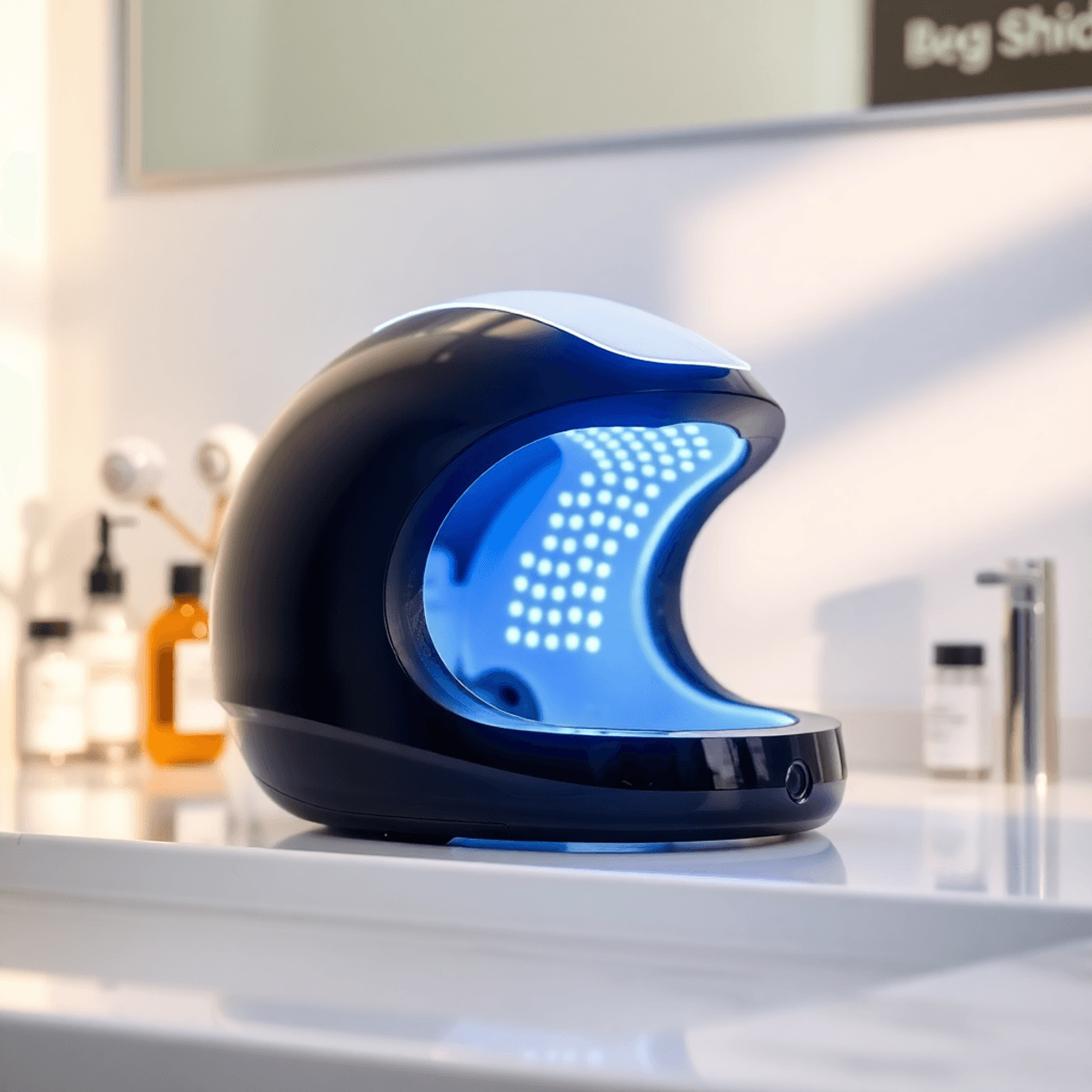
A comprehensive review in Lasers in Surgery and Medicine confirms that LLLT stimulates hair growth in both men and women, with the primary mechanism hypothesized to be stimulation of epidermal stem cells in the hair follicle bulge and shifting follicles into the active anagen growth phase (PMC3944668). Bradceuticals Gold Hair Follicle and Adipose Stem Cell Serum is designed to complement red light therapy for hair growth as part of a complete follicle-recovery protocol: first, dermaroll the scalp to create micro-channels that enhance serum absorption, then apply the serum to the damp scalp, then follow with red light therapy to stimulate follicular energy production. This three-step protocol stacks the biological mechanisms — mechanical stimulation, growth factor delivery, and photobiomodulation — for maximum follicle activation. See full details at Bradceuticals Gold Hair Follicle and Adipose Stem Cell Serum.
How Red Light Therapy for Hair Growth Works at the Cellular Level
Red light therapy for hair growth works by delivering photons of light at specific wavelengths — typically 620 to 660 nm — that penetrate the scalp and are absorbed by chromophores in the mitochondria of hair follicle cells. The primary chromophore is cytochrome c oxidase, a key enzyme in the mitochondrial electron transport chain.
When red light photons are absorbed by cytochrome c oxidase, several biological responses occur simultaneously. Adenosine triphosphate (ATP) production increases, providing more cellular energy for follicular activity. Nitric oxide is released, improving local blood circulation and nutrient delivery to the follicle. Reactive oxygen species at low levels trigger cell signaling pathways that promote proliferation and differentiation.
The net result is that dormant hair follicles in the telogen (resting) phase are stimulated to re-enter the anagen (active growth) phase. Existing follicles in the anagen phase receive more energy to produce thicker, stronger hair shafts. This is why red light therapy for hair growth can improve both hair count and hair thickness simultaneously.
7 Proven Benefits of Red Light Therapy for Hair Growth
1. Increases Hair Count in Men
The strongest evidence for red light therapy for hair growth comes from randomized controlled trials. A double-blind study of 44 men with androgenetic alopecia found that 655 nm LLLT produced a statistically significant 39% increase in hair count compared to placebo after 16 weeks of treatment (25 minutes every other day). Baseline active group hair count was 142.0 and post-treatment count was 228.7 — a dramatic improvement confirmed by blinded investigator analysis (PMID: 24078483).
No adverse events or side effects were reported in any treatment group. This safety profile makes red light therapy for hair growth one of the most well-tolerated hair restoration options available.
2. Increases Hair Count in Women
A companion randomized controlled trial using the same 655 nm protocol studied 47 women with androgenetic alopecia. The active group demonstrated a 37% increase in hair growth compared to the placebo group. Post-treatment hair counts were 309.9 in the active group versus 252.1 in the sham group. The improvement was statistically significant (P < 0.001), and no adverse events were reported (PMC4265291).
These results confirm that red light therapy for hair growth is effective for both male and female pattern hair loss at similar rates, making it a gender-neutral treatment option.
3. Stimulates Dormant Follicles into Active Growth Phase
The comprehensive review published from Harvard-affiliated Wellman Center for Photomedicine confirms that LLLT shifts dormant follicles from the telogen (resting) phase into the anagen (active growth) phase by stimulating epidermal stem cells in the hair follicle bulge (PMC3944668). This means red light therapy for hair growth does not merely maintain existing hair — it reactivates follicles that have stopped producing hair entirely.
This mechanism is what distinguishes red light therapy for hair growth from topical treatments that primarily work through chemical pathways. Photobiomodulation provides a physical stimulus that energizes the follicle at the mitochondrial level.
4. Improves Hair Thickness and Quality
Red light therapy for hair growth does not just increase hair count — it also improves the quality and thickness of individual hair shafts. By increasing ATP production in follicular cells, LLLT provides more cellular energy for keratin synthesis, the protein that makes up the hair shaft. Users frequently report that existing hair feels stronger, thicker, and more resilient within weeks of beginning treatment.
Improved blood circulation to the scalp — a documented effect of photobiomodulation — ensures that follicles receive adequate oxygen and nutrients to produce robust hair fibers rather than thin, miniaturized strands.
5. Enhances Blood Circulation to the Scalp
One of the key mechanisms through which red light therapy for hair growth works is vasodilation — the widening of blood vessels in the scalp. Red light stimulates the release of nitric oxide, a molecule that relaxes blood vessel walls and increases blood flow to the treated area.
Enhanced blood circulation delivers more oxygen, glucose, and essential nutrients to hair follicles while removing metabolic waste products that can inhibit follicular function. This improved blood supply creates a healthier scalp environment that supports both new hair growth and the maintenance of existing hair.
6. Pairs Powerfully with Scalp Microneedling and Growth Factor Serums
A clinical study protocol published in Medicine investigated combining 660 nm red laser photobiomodulation with microneedling for female pattern hair loss, hypothesizing that the combination would produce superior results by stacking mechanical follicular stimulation with photobiomodulation (PMC6709013).
This multi-mechanism approach is the foundation of the Bradceuticals hair recovery protocol. First, dermaroll the scalp to create micro-channels that break through the epidermal barrier. Then apply Bradceuticals Gold Hair Follicle and Adipose Stem Cell Serum to the damp scalp — the micro-channels allow the growth factors and stem cell signaling molecules to reach the follicular bulge directly. Then follow with red light therapy for hair growth to energize the follicles at the mitochondrial level. This three-step protocol delivers mechanical stimulation, biological growth factors, and photonic energy in a single session.
7. Safe, Non-Invasive, and Drug-Free
Red light therapy for hair growth carries one of the strongest safety profiles of any hair loss treatment. Multiple RCTs report zero adverse events. The treatment requires no drugs, no chemicals, no injections, and no surgery. It can be performed at home with FDA-cleared devices, requires no recovery time, and has no known systemic side effects.
This safety profile makes red light therapy for hair growth particularly attractive for individuals who cannot tolerate pharmaceutical treatments like minoxidil (which can cause scalp irritation) or finasteride (which carries hormonal side effects). It is also suitable for use alongside other treatments without drug interaction concerns. Always consult a healthcare professional before beginning any hair loss treatment protocol.
Optimal Parameters for Red Light Therapy for Hair Growth
Wavelength
The most clinically validated wavelength for red light therapy for hair growth is 655 nm, used in both the male and female RCTs cited above. Wavelengths in the 620–660 nm range are generally effective, with 655 nm having the strongest clinical evidence base.
Some devices also include near-infrared wavelengths (810–850 nm) for deeper tissue penetration. While near-infrared may support scalp circulation and inflammation reduction, the primary follicular stimulation evidence is strongest at the visible red 655 nm wavelength.
Treatment Duration and Frequency
The RCTs demonstrating 37–39% hair count increases used 25-minute sessions every other day for 16 weeks (60 total treatments). This is a reasonable starting protocol for most users.
Many commercial LED helmets and caps suggest similar protocols — 20 to 30 minutes per session, three to four times per week. Consistency matters more than session length. Red light therapy for hair growth is a cumulative treatment — skipping sessions delays results.
Device Power and Coverage
Look for devices that provide adequate power density (irradiance) across the entire scalp. FDA-cleared devices have been tested for safety and efficacy. The clinical trials used devices delivering 67 J/cm² per session — check your device specifications to ensure adequate energy delivery.
Full-coverage helmet and cap designs are preferred over handheld wands, which require manual movement and may result in uneven treatment. For a detailed look at LED device options, see our guide on best LED hair growth helmets.
The Complete Red Light Therapy for Hair Growth Protocol
For maximum results, combine red light therapy for hair growth with scalp microneedling and growth factor serum application.
Step 1 — Scalp Dermarolling. Use a 0.25–0.5 mm derma roller on the scalp to create micro-channels. Roll gently in multiple directions across thinning areas. This enhances serum absorption and provides mechanical follicular stimulation.
Step 2 — Growth Factor Serum Application. Apply Bradceuticals Gold Hair Follicle and Adipose Stem Cell Serum to the damp scalp immediately after dermarolling. The micro-channels allow the stem cell growth factors to penetrate directly to the follicular bulge where they can signal dormant follicles to reactivate.
Step 3 — Red Light Therapy. Apply your LED helmet or cap for 20–30 minutes. The red light energizes the follicles at the mitochondrial level while the growth factor serum works through biological signaling pathways simultaneously.
Frequency: Perform the full three-step protocol two to three times per week. On non-dermarolling days, you can still use the LED device alone for maintenance stimulation.
Timeline for results: Most clinical trials measure outcomes at 16 weeks (four months). Expect gradual improvement beginning around weeks six to eight, with meaningful density changes visible by months three to four. Continue treatment for at least six months before evaluating full results.
Who Can Benefit from Red Light Therapy for Hair Growth?
Red light therapy for hair growth is most effective for androgenetic alopecia (male and female pattern hair loss) — the most common form of hair loss, affecting approximately 50% of men over 40 and 75% of women over 65. It may also provide benefit for other forms of thinning, though evidence is strongest for androgenetic alopecia.
Red light therapy for hair growth may be less effective for complete baldness where follicles have been dormant for many years. The treatment works by reactivating existing follicles — if follicles have been permanently destroyed, regrowth is less likely. Early intervention produces the best outcomes.
Individuals with the following conditions should consult a healthcare professional before beginning red light therapy for hair growth: photosensitivity disorders, autoimmune conditions affecting the scalp, active scalp infections, pregnancy, or those taking photosensitizing medications. This list is not exhaustive — always consult a qualified healthcare provider for personalized guidance.
Frequently Asked Questions
Does red light therapy for hair growth actually work? Yes. Multiple randomized, double-blind, placebo-controlled clinical trials — the gold standard of medical evidence — demonstrate significant hair count increases. The male RCT showed a 39% increase and the female RCT showed a 37% increase after 16 weeks of treatment at 655 nm.
How long does red light therapy for hair growth take to show results? Most users notice early improvements in hair texture and shedding reduction within six to eight weeks. Meaningful density improvements typically develop over three to four months. Clinical trials measured outcomes at 16 weeks.
Is red light therapy for hair growth safe? Clinical trials report zero adverse events. The treatment is non-invasive, drug-free, and has no known systemic side effects. However, always consult a healthcare professional before beginning treatment, especially if you have photosensitivity conditions.
Can I combine red light therapy for hair growth with other treatments? Yes. Red light therapy for hair growth works through photobiomodulation — a mechanism distinct from pharmaceutical treatments like minoxidil and finasteride. Many practitioners recommend combining approaches for maximum results. The Bradceuticals protocol combines scalp dermarolling, growth factor serum application, and red light therapy in a single session.
What is the best wavelength for red light therapy for hair growth? 655 nm has the strongest clinical evidence, supported by multiple RCTs. Wavelengths in the 620–660 nm range are generally effective. Some devices include near-infrared (810–850 nm) for deeper penetration, which may provide additional circulatory benefits.
Does red light therapy for hair growth work for women? Yes. The female RCT demonstrated a 37% hair count increase — similar to the male results. Red light therapy for hair growth is effective for both male and female pattern hair loss.
How often should I use red light therapy for hair growth? Clinical trials used every-other-day treatment for 25 minutes. Most commercial devices recommend three to four sessions per week. Consistency is critical — results are cumulative.
References
- Lanzafame RJ, Blanche RR, Bodian AB, et al. The growth of human scalp hair mediated by visible red light laser and LED sources in males. Lasers Surg Med. 2013;45(8):487-495. (PMID: 24078483)
- Lanzafame RJ, Blanche RR, Chiacchierini RP, et al. The growth of human scalp hair in females using visible red light laser and LED sources. Lasers Surg Med. 2014;46(8):601-607. (PMC4265291)
- Avci P, Gupta GK, Clark J, Wikonkal N, Hamblin MR. Low-level laser (light) therapy (LLLT) for treatment of hair loss. Lasers Surg Med. 2014;46(2):144-151. (PMC3944668)
- da Silveira SP, Moita SRU, da Silva SV, et al. The role of photobiomodulation when associated with microneedling in female pattern hair loss. Medicine. 2019;98(12):e14938. (PMC6709013)
Disclaimer
This article is for educational and informational purposes only and does not constitute medical advice, diagnosis, or treatment. Hair loss can result from a wide range of medical conditions, hormonal imbalances, nutritional deficiencies, and other factors that require professional evaluation. Red light therapy for hair growth may not be effective for all types of hair loss. Always consult a licensed healthcare professional, dermatologist, or trichologist before beginning any hair loss treatment to determine whether it is appropriate for your individual situation. Individual results may vary significantly. Bradceuticals products are not intended to diagnose, treat, cure, or prevent any disease. The information in this article should not be used as a substitute for professional medical advice.
Last reviewed: March 2026
About Bradceuticals : Thuy Myers is the founder of Bradceuticals which manufactures and distributes skin care and hair regrowth serums that use growth factors from human stem cells as the catalyst for regeneration. When she is not busy running the business and maintaining blogs, she is continuing her practice as a semiconductor engineer and occasionally teaches college engineering. In her free time, she enjoys the beach, working out at the gym and hanging out with her kiddo Brad.