

Subject Filed Under: Hyaluronic acid serum for microneedling | Last Reviewed: August 2025
Choosing the right hyaluronic acid serum for microneedling recovery can make or break your results — and what you apply after the needles are done, like Bradceuticals Gold, is where the real transformation begins.
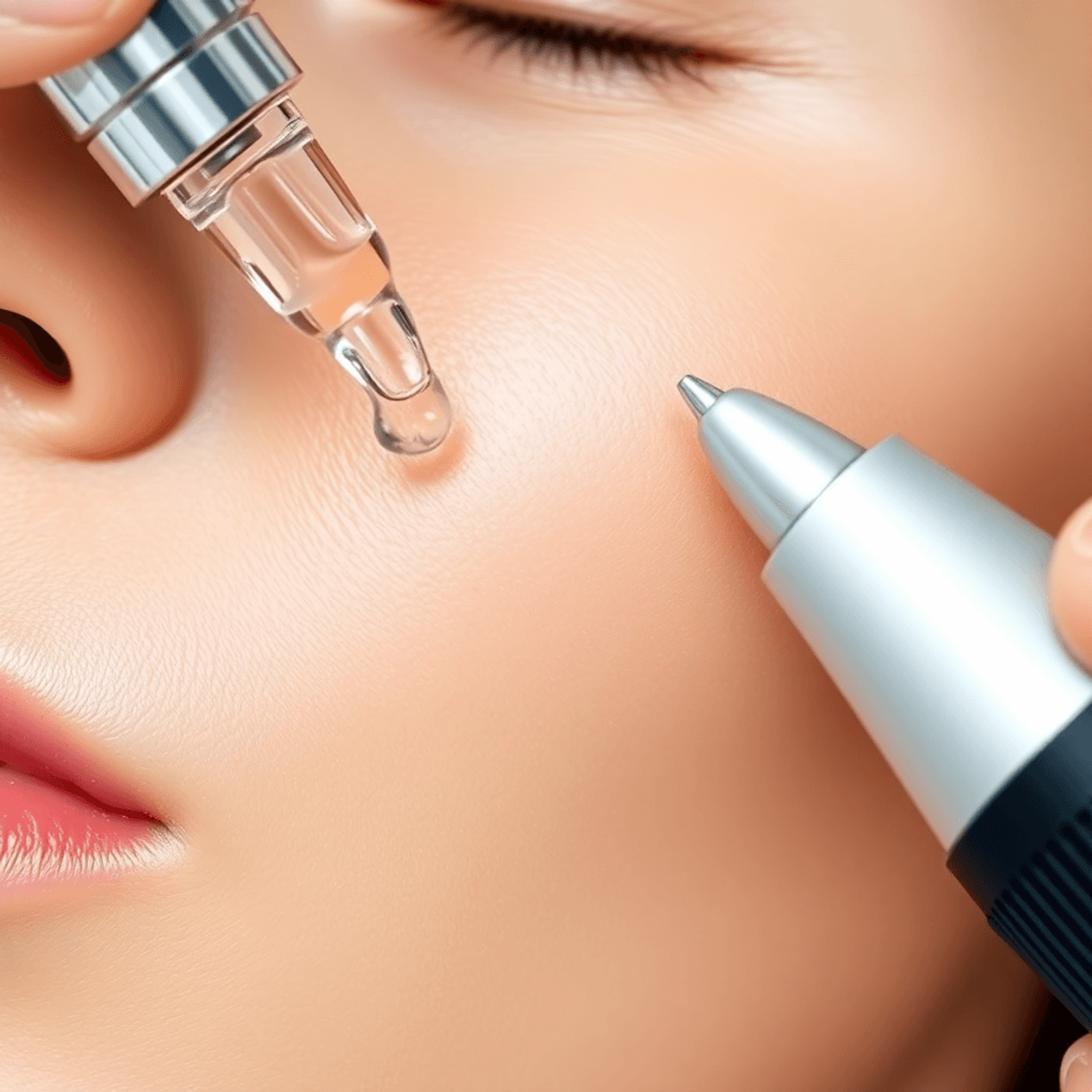
If you’ve been using hyaluronic acid serum for microneedling and wondering why your results plateau — or if you’re just starting out and want to get this right from the beginning — the science here is worth understanding. Hyaluronic acid (HA) is one of the most studied and clinically validated ingredients in aesthetic skincare, and when it’s applied in the context of microneedling, its performance changes significantly. This guide breaks down exactly what the research says, what to look for in a serum, and why not all formulations are built equally.
What Is Hyaluronic Acid and Why Does Skin Need It?
Hyaluronic acid is a naturally occurring glycosaminoglycan — a long-chain sugar molecule — found throughout the body’s connective tissue, synovial fluid, and skin. In the skin specifically, HA is a structural component of the extracellular matrix, where it maintains hydration, supports fibroblast function, and contributes to tissue elasticity and resilience.
Its defining property is hygroscopic: HA attracts and holds water molecules, with one gram capable of retaining up to six liters of water. As we age, endogenous HA levels in the skin decline, contributing to reduced elasticity, increased transepidermal water loss (TEWL), and the progressive loss of structural support that shows up as fine lines and volume loss.
Topical HA serums have been clinically validated for their ability to restore surface and dermal hydration. A 6-week clinical study of 40 women using a topical HA serum twice daily demonstrated statistically significant improvements in skin smoothness, plumping, hydration, and fine lines — with measurable increases in HA concentration in skin swabs over the treatment period. [Farber SE et al., J Drugs Dermatol, 2021 — PMID: 34176098]
The Absorption Problem — and How Microneedling Solves It
Here’s the clinical reality that most product marketing glosses over: topical HA faces a significant barrier problem on intact skin. The stratum corneum — the outermost layer of the epidermis — restricts the passage of molecules larger than 500 daltons. High molecular weight HA (commonly used in serums) can exceed 1,000,000 daltons, meaning most of it stays on the surface and never reaches the dermis where it would have the greatest impact.
Microneedling changes this equation entirely. By creating controlled micro-channels through the stratum corneum and into the upper dermis, microneedling provides a direct pathway for topical ingredients to bypass the skin’s natural barrier. A split-face randomized controlled trial investigating topical crosslinked hyaluronic acid serum for microneedling found that post-procedure HA application produced significantly greater improvements in skin hydration, firmness, tonicity, and elasticity compared to untreated control areas — confirming that the post-microneedling window dramatically amplifies HA’s clinical impact. [Sundaram H et al., PubMed, 2018 — PMID: 29601621]
This is why the timing of your hyaluronic acid serum for microneedling application matters as much as the product itself.
7 Essential Truths About Hyaluronic Acid Serum for Microneedling
1. Molecular Weight Determines Where HA Works in Your Skin
Not all HA is the same. High molecular weight HA (HMW-HA) sits primarily on the skin’s surface, forming a film that reduces TEWL and provides immediate plumping. Low molecular weight HA (LMW-HA) penetrates more deeply and exerts anti-inflammatory and regenerative effects at the dermal level.
A randomized study of 76 women applying HA formulations of different molecular weights twice daily for 60 days found that all formulations improved hydration and elasticity — but LMW-HA produced the most significant reduction in wrinkle depth, attributed to its superior penetration ability. [Pavicic T et al., PubMed, 2011 — PMID: 22052267] For microneedling specifically, a multi-weight formula that addresses both surface hydration and dermal repair is the most clinically complete choice.
2. Post-Procedure Application Is Where the Real Results Happen
Microneedling creates open micro-channels that remain receptive to topical actives for a limited window after treatment. Applying hyaluronic acid serum for microneedling immediately post-procedure — while channels are still open — maximizes dermal absorption and supports the wound-healing cascade that microneedling initiates.
A randomized investigator-blinded split-face trial confirmed that HA serum applied starting 2 days post-procedure, twice daily for 28 days, produced significantly greater improvements in skin hydration, firmness, and elasticity than untreated skin following microneedling. [Sundaram H et al., PubMed, 2018 — PMID: 29601621] The window is real — and so is the difference.
3. HA Accelerates Post-Microneedling Healing
Hyaluronic acid plays an active role in wound healing biology, not just hydration. During tissue trauma, hyaluronan accumulates at the injury site and stimulates immune cells to express inflammatory mediators that coordinate repair. It also promotes keratinocyte migration during re-epithelialization — the process by which the skin’s surface regenerates following micro-injury.
In a randomized clinical study of 60 patients comparing microneedling alone to microneedling with hyaluronic acid for acne scarring, patients in the HA group showed significantly decreased healing time, reduced bruising, and a higher proportion of “good” to “very good” improvement ratings. None of the microneedling-alone group achieved a “very good” outcome. [Chauhan P et al., PMC, 2024 — PMC10833484]
4. HA Reduces Post-Treatment Redness and Downtime
One of the most practical benefits of using hyaluronic acid serum for microneedling is what it does to recovery. Post-procedure redness, tightness, and sensitivity are normal — but how long they last is influenced by how well the skin is supported in the hours and days following treatment.
HA’s hygroscopic properties reinforce the moisture barrier as micro-channels close, reducing TEWL and buffering the skin’s sensitivity during the inflammatory phase of healing. Clinical evidence from the comparative microneedling + HA trial supports this, with the HA group reporting measurably less irritation and faster visible recovery. [Chauhan P et al., PMC, 2024 — PMC10833484]
5. HA Supports Collagen Synthesis Initiated by Microneedling
Microneedling triggers collagen induction by stimulating fibroblasts in the dermis to produce new collagen and elastin. HA creates the extracellular matrix environment in which that process occurs — providing the scaffolding for cellular proliferation, organization, and collagen deposition to proceed efficiently.
A 12-week multi-modal serum study found statistically significant improvements in all facial skin attributes alongside measurable increases in HA content in skin and a significant increase in collagen type 1a1 gene expression after 12 weeks of twice-daily HA serum application. [Farber SE et al., J Drugs Dermatol, 2017 — PMID: 28915283] When applied after microneedling, HA doesn’t just hydrate — it actively supports the remodeling response.
6. Topical HA Is Well Tolerated Across Skin Types Post-Procedure
Post-microneedling skin is sensitized and temporarily barrier-compromised. Choosing the wrong ingredient during this window risks irritation, inflammation, and delayed healing. HA is one of the safest choices for this stage. A broad literature review and clinical evidence base confirm that topical HA is well tolerated across skin types, with no increases in irritation parameters observed even in subjects with photodamaged or reactive skin. [Bravo B et al., Dermatol Ther, 2022 — PMID: 36200921]
7. Growth Factors Combined with HA Outperform HA Alone Post-Microneedling
HA handles hydration and barrier support exceptionally well. But the post-microneedling window is also peak time for growth factor delivery — and combining the two produces results that HA alone cannot match. Growth factors signal fibroblasts to produce collagen and elastin, accelerate cellular turnover, and extend the regenerative response initiated by needling.
This is where Bradceuticals Gold Mesenchymal Stem Cell Growth Factor Serum stands apart from standard HA serums. Formulated with a multi-growth factor complex derived from human mesenchymal stem cells alongside hyaluronic acid, it’s built specifically for the post-microneedling window — addressing hydration, healing, collagen support, and visible glow simultaneously. For anyone serious about maximizing their microneedling results, it is the post-procedure serum the science points toward.
How to Choose the Right Hyaluronic Acid Serum for Microneedling
With dozens of options on the market, knowing what to look for matters. Here’s what the clinical evidence supports:
Multi-weight HA — formulas containing both high and low molecular weight HA address surface hydration and deeper dermal support simultaneously, delivering more complete results than single-weight formulas.
Fragrance-free — post-procedure skin reacts to fragrance even in concentrations that would otherwise be tolerated. This is non-negotiable for the first 48–72 hours after microneedling.
Complementary actives — panthenol (Vitamin B5), ceramides, and growth factors all work synergistically with HA to support healing rather than compete with it. The more strategically the formula is built, the more your skin benefits from that open-channel window.
Avoid in the immediate post-procedure period: retinoids, vitamin C, AHAs/BHAs, and any exfoliating actives. These can disrupt the healing cascade and cause unnecessary irritation when the barrier is compromised.
Post-Microneedling Protocol: Using Hyaluronic Acid Serum Correctly
Immediately after treatment: Apply a thin layer of HA serum to clean skin while micro-channels are still open. Pat gently — never rub sensitized skin.
First 24–48 hours: Reapply HA serum twice daily. Stick to HA and barrier-supportive ingredients exclusively.
Days 3–7: Continue HA serum. Begin layering in gentle ceramide moisturizers to reinforce the barrier as skin fully closes.
Morning routine: Apply broad-spectrum SPF 30 or higher every day without exception. Post-microneedling skin is significantly more vulnerable to UV-induced hyperpigmentation.
Reintroducing actives: Wait 3–5 days minimum for retinoids. 48–72 hours for vitamin C. Introduce gradually once all visible redness has resolved.
Frequently Asked Questions
Is hyaluronic acid serum safe to use immediately after microneedling? Yes — it is one of the most appropriate ingredients for immediate post-procedure application. Its anti-inflammatory properties and barrier-supporting function make it ideal for sensitized skin.
Can I use hyaluronic acid serum for microneedling at home with a dermaroller? Yes. Apply HA serum immediately after your at-home session. Use a 0.25–0.5mm roller for home use, sanitize the device before and after, and never share it.
How long should I use HA serum after microneedling? Twice-daily application for at least 28 days post-procedure is supported by clinical evidence as the timeframe for measurable improvements in hydration, firmness, and skin quality. [Sundaram H et al., PubMed, 2018 — PMID: 29601621]
What’s the difference between using HA serum during versus after microneedling? During a professional session, HA is often used as a glide medium to reduce friction. The post-procedure application is where deeper dermal penetration occurs via open micro-channels — that’s when absorption and efficacy are highest.
Should I use a plain HA serum or one combined with growth factors? For post-microneedling results, a growth factor and HA combination like Bradceuticals Gold delivers more than HA alone — supporting collagen synthesis, accelerating tissue repair, and enhancing the visible glow that microneedling makes possible.
The Bottom Line
The science behind hyaluronic acid serum for microneedling is clear and consistent: microneedling creates the delivery pathway, and HA — particularly when combined with growth factors — takes full advantage of it. The result is deeper hydration, faster healing, supported collagen synthesis, and visible improvements in skin quality that build over a series of treatments. Choosing a formula that’s built for this specific window, like Bradceuticals Gold, is the difference between good results and exceptional ones.
References
- Chauhan P et al. Comparative Evaluation of Therapeutic Efficacy and Safety of Microneedling Alone Versus Microneedling with Hyaluronic Acid in Post-Acne Scarring. PMC. 2024; PMC10833484. https://pmc.ncbi.nlm.nih.gov/articles/PMC10833484/
- Sundaram H et al. Prospective, Randomized, Investigator-Blinded, Split-Face Evaluation of a Topical Crosslinked Hyaluronic Acid Serum for Post-Procedural Improvement. PubMed. 2018; PMID: 29601621. https://pubmed.ncbi.nlm.nih.gov/29601621/
- Pavicic T et al. Efficacy of cream-based novel formulations of hyaluronic acid of different molecular weights in anti-wrinkle treatment. PubMed. 2011; PMID: 22052267. https://pubmed.ncbi.nlm.nih.gov/22052267/
- Farber SE et al. Efficacy Evaluation of a Topical Hyaluronic Acid Serum in Facial Photoaging. J Drugs Dermatol. 2021; PMID: 34176098. https://pubmed.ncbi.nlm.nih.gov/34176098/
- Farber SE et al. Clinical Evaluation of a Multi-Modal Facial Serum That Addresses Hyaluronic Acid Levels in Skin. J Drugs Dermatol. 2017; PMID: 28915283. https://pubmed.ncbi.nlm.nih.gov/28915283/
- Bravo B et al. Benefits of Topical Hyaluronic Acid for Skin Quality and Signs of Skin Aging. Dermatol Ther. 2022; PMID: 36200921. https://pubmed.ncbi.nlm.nih.gov/36200921/
Disclaimer: This article is intended for informational purposes only and does not constitute medical advice. Always consult a licensed dermatologist or skincare professional before beginning any new treatment, particularly following microneedling procedures.
About Bradceuticals : Thuy Myers is the founder of Bradceuticals which manufactures and distributes skin care and hair regrowth serums that use growth factors from human stem cells as the catalyst for regeneration. When she is not busy running the business and maintaining blogs, she is continuing her practice as a semiconductor engineer and occasionally teaches college engineering. In her free time, she enjoys the beach, working out at the gym and hanging out with her kiddo Brad.