

The most overlooked variable in any microneedling outcome isn’t needle depth — it’s which best microneedling serums you apply immediately after. Microneedling creates temporary micro-channels that bypass the stratum corneum, the skin’s primary absorption barrier. Research confirms that molecules above 500 Daltons normally cannot cross intact skin, but growth factors, peptides, and other large actives enter the dermis directly through these channels. (PMC7716740) A randomized controlled trial found that adding topical growth factors to a standard microneedling protocol produced significantly greater improvements in skin texture and hydration compared to microneedling alone — while also reducing recovery time through downregulation of the inflammatory response. (PMC7716740) The serum you choose in that post-procedure window determines whether you get good results or transformative ones.
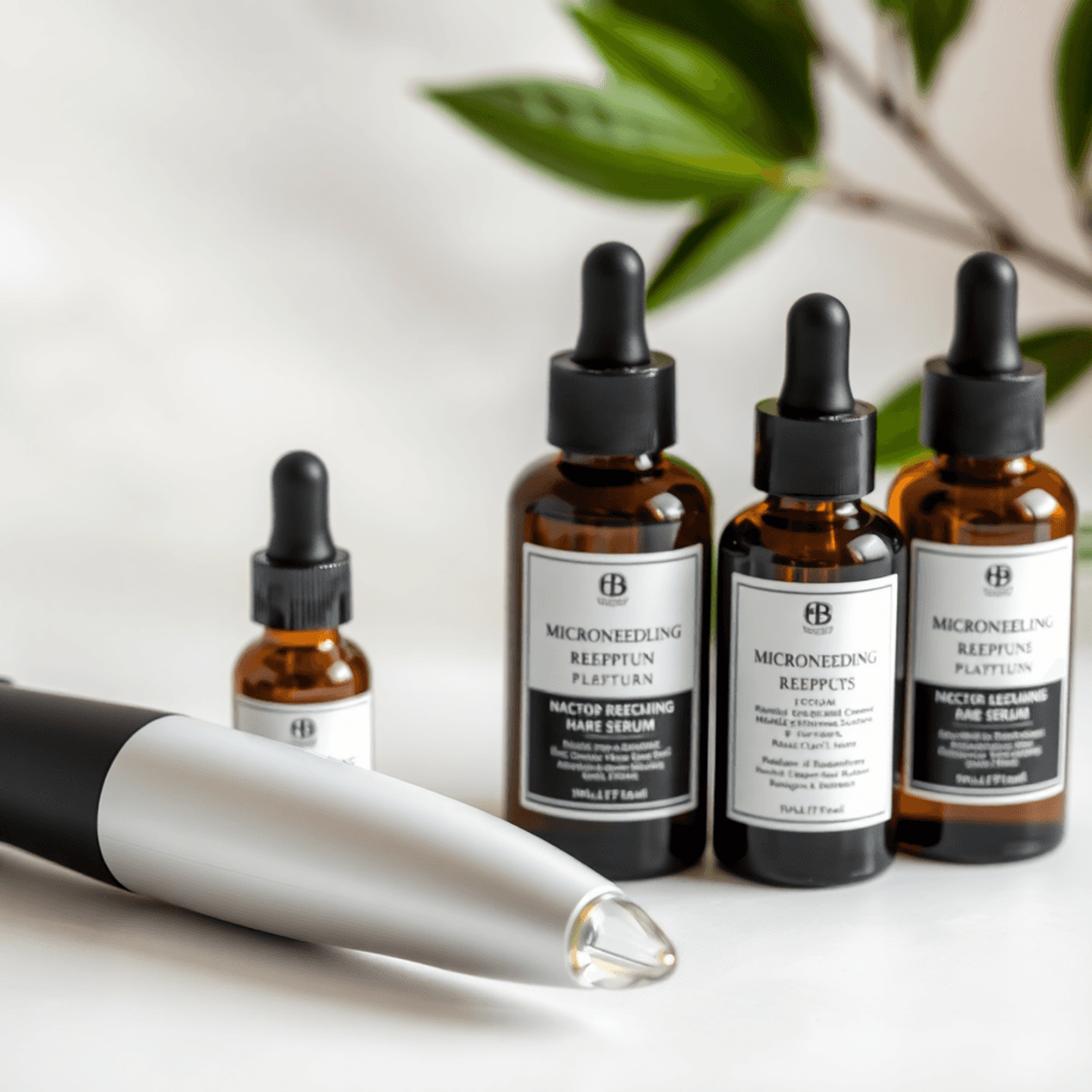
The Bradceuticals Gold Mesenchymal Stem Cell Growth Factor Serum was engineered for this exact moment. Applied to damp, dewy skin immediately after microneedling, it floods open micro-channels with stem cell-derived growth factors and peptides that signal fibroblasts to rebuild collagen and accelerate healing. It performs impressively as a standalone treatment — but paired with microneedling, the difference is compounding. Session after session, the regenerative signaling goes deeper, works faster, and produces the kind of firmness and glow that topical-only protocols simply cannot replicate. Skipping the full protocol means leaving your best results behind.
How Microneedling Creates the Best Serum Delivery Window
Microneedling — also called percutaneous collagen induction therapy — uses fine needles to create controlled micro-injuries across the epidermis and dermis. (PMC11993440) This triggers the skin’s wound-healing cascade, prompting fibroblasts to migrate to the injury site and produce collagen types I, III, and VII, elastin, glycosaminoglycans, and proteoglycans. (PMC11993440) Six treatment sessions performed at two-week intervals have been shown to produce statistically significant increases in epidermal thickness and newly formed collagen, confirmed at both one-month and three-month follow-up measurements. (PMC11993440)
The procedure’s second major advantage is its role as a transdermal delivery enhancer. Topical growth factors carry a molecular weight well above 15,000 kDa, which under normal conditions prevents them from penetrating the intact stratum corneum. Microneedling solves this by physically creating pathways through the barrier, allowing high-molecular-weight actives to reach the dermis directly. (PMC7716740) This is the scientific basis for pairing targeted serums with every microneedling session.
The 7 Best Microneedling Serums Ranked
1. Stem Cell Growth Factor Serum: The Best Microneedling Serum for Full Regeneration
Mesenchymal stem cell-derived conditioned media contains a complex of growth factors — including EGF, VEGF, and PDGF — that regulate collagen biosynthesis, reduce post-procedural inflammation, and accelerate cellular repair. A randomized controlled split-face study confirmed that microneedling combined with stem cell conditioned media produced measurable improvements in brightness, skin texture, and overall rejuvenation compared to microneedling alone. (PMC9171013) Collagen formation triggered by microneedling continues for five to seven years post-procedure, and growth factors applied through open micro-channels extend that remodeling cascade far beyond what the needles alone initiate. (PMC7716740)
The Bradceuticals Gold Mesenchymal Stem Cell Growth Factor Serum is applied post-microneedling to damp, dewy skin using gentle tapping motions — never to bone-dry skin and never used as a gliding serum during the procedure. For a full ranked comparison of options in this category, see our guide to the 7 best stem cell serums for microneedling.
2. Hyaluronic Acid Serum: Foundational Hydration for Post-Microneedling Recovery
Hyaluronic acid is a glycosaminoglycan naturally present in the dermal extracellular matrix and one of the most clinically validated actives for post-procedure skin support. Lower molecular weight HA fractions penetrate deeper into the dermis and have demonstrated up to 12.5 times greater drug permeability through skin compared to needleless application, making the post-microneedling window especially valuable for this ingredient. (MDPI Gels 2025) Applied immediately after treatment to slightly damp skin, HA replenishes moisture at both the surface and structural levels and is well tolerated across all skin types including sensitive skin.
For a detailed breakdown of the top-performing options, our guide to the 5 best hyaluronic acid serums to use with microneedling covers what to look for in a formulation.
3. EGF (Epidermal Growth Factor) Serum: Best Microneedling Serum for Accelerated Healing
Epidermal growth factor drives keratinocyte proliferation and accelerates cell turnover following controlled skin injury. Because its molecular size prevents passive penetration of intact skin, EGF delivers its most meaningful benefits specifically through the open micro-channels created by microneedling. (PMC7716740) Multiple studies using growth factor complexes containing EGF alongside other cytokines have documented significant improvements in fine lines, wrinkles, pigmentation, and epidermal thickness. (PMC7716740) For a deep dive into this ingredient category, our article covering 10 reasons why EGF serums are the best for skin rejuvenation outlines the clinical evidence.
4. Peptide Serum: Targeted Collagen Signaling Between Sessions
Peptides are short amino acid chains classified by mechanism of action: signal peptides upregulate collagen synthesis, carrier peptides deliver trace elements like copper that support wound healing, and enzyme inhibitor peptides slow collagen degradation. (PMC11762834) Copper Tripeptide-1 — one of the most studied carrier peptides — plays a direct role in tissue regeneration and wound healing through copper-dependent enzymatic processes. (PMC11762834) Used in the days between microneedling sessions, a well-formulated peptide serum extends the collagen induction process and contributes to more organized dermal architecture over time. For ranked options, see 10 best growth factor serums for youthful skin.
5. Niacinamide + Zinc Serum: Best Microneedling Serum for Calming Post-Treatment Skin
Niacinamide (vitamin B3) is among the most evidence-backed ingredients for managing the inflammatory response that naturally follows microneedling. Topical application stabilizes epidermal barrier function, stimulates ceramide synthesis, increases keratin protein production, and demonstrates anti-inflammatory effects in acne, rosacea, and irritant-induced skin conditions. (PubMed 17147561) At the cellular level, it promotes dermal fibroblast collagen synthesis and inhibits matrix metalloproteinases that degrade collagen during aging. (PMC8389214) Zinc complements this by supporting the enzymatic wound-repair processes that make microneedling’s healing phase productive rather than simply inflammatory.
Niacinamide is well tolerated across all skin types, including sensitive and acne-prone skin, making it one of the safest choices in the immediate post-procedure recovery window.
6. Ceramide Serum: Barrier Repair That Locks In Every Other Serum’s Benefits
Ceramides are lipids native to the stratum corneum that maintain the skin’s water-retention capacity and barrier integrity. Microneedling temporarily disrupts this barrier — which is what allows deeper serum penetration — but that disruption also means the barrier requires active support to heal correctly. Applied to damp, dewy skin during the recovery phase, ceramide serums reduce transepidermal water loss and sustain the hydration delivered by every other active in the post-microneedling stack. They work synergistically with hyaluronic acid to seal in moisture at the surface while deeper layers rebuild. Choose fragrance-free formulations designed for compromised or sensitive skin for best results.
7. Vitamin C Serum: Best Microneedling Serum for Long-Term Brightening and Tone
Vitamin C is a potent antioxidant and direct cofactor in the enzymatic reactions that produce collagen — making it a strategic long-term addition to any microneedling program. However, its potency means it can cause stinging and irritation when applied to freshly needled skin before the barrier has had time to partially recover. The correct protocol is to introduce it 48 to 72 hours post-procedure and use it consistently in the weeks between sessions. Over successive treatment cycles, it fades residual hyperpigmentation, neutralizes UV-induced oxidative stress, and supports the collagen maturation process already underway from each procedure. Always apply to damp, dewy skin. For related guidance on correcting cumulative pigmentation damage, see 7 proven ways to treat sun-damaged skin.
Which Best Microneedling Serums to Avoid on Treatment Day
Three ingredient categories should be held back from freshly needled skin:
Retinoids drive cellular turnover and cause significant irritation when applied to skin with a compromised barrier. Discontinue 24 to 48 hours before treatment and reintroduce only after full healing is confirmed.
AHAs and BHAs are chemical exfoliants that can exacerbate post-procedure sensitivity and interfere with the healing cascade. Avoid entirely in the immediate post-procedure window.
High-concentration vitamin C causes burning on open micro-channels. Hold off until the skin barrier has partially restored — at minimum 48 hours — before reintroducing.
How to Apply the Best Microneedling Serums for Maximum Absorption
Always apply serums to damp, dewy skin — never to completely dry skin — to support absorption and prevent product from sitting on the surface rather than penetrating. Use a gentle pressing or tapping motion rather than rubbing, which can disrupt the treated tissue. When layering multiple serums, begin with the thinnest consistency and work toward heavier formulations so each layer absorbs fully before the next is applied. Seal the final layer with a gentle, fragrance-free moisturizer to minimize moisture loss during early healing. For a detailed walkthrough of what the skin experiences at each stage of recovery, the 7 complete stages of microneedling recovery time maps out the full timeline.
Building a Post-Microneedling Skincare Routine That Compounds Results
The regenerative activity triggered by microneedling continues for weeks after each session, with collagen maturation extending for months. (PMC7716740) Protecting and extending that process requires consistency in a few key areas. Broad-spectrum SPF 30 or higher is non-negotiable — post-microneedling skin has heightened UV sensitivity, and unprotected sun exposure can trigger hyperpigmentation that directly undermines results. A mild, fragrance-free cleanser maintains hygiene without stripping the recovering barrier. Continued use of hydrating actives like hyaluronic acid and ceramides supports the moisture environment needed for optimal collagen remodeling. And integrating Bradceuticals Gold between sessions keeps growth factor signaling active well beyond the procedural window, compounding the structural improvements across your full treatment series.
Frequently Asked Questions About the Best Microneedling Serums
What is the best serum to use after microneedling? Stem cell growth factor serums are the most scientifically supported option for post-microneedling use. Applied immediately after treatment to damp, dewy skin, they deliver regenerative growth factor signals directly into the dermis while the micro-channels are open. Hyaluronic acid is the ideal companion for simultaneous hydration support.
When should I apply serum after microneedling? Immediately after your session, while the micro-channels are open and the skin is damp. This is the window of peak absorption for large bioactive molecules that cannot penetrate the intact stratum corneum under normal conditions.
Can I use vitamin C serum right after microneedling? Not immediately. Wait at least 48 to 72 hours for the skin barrier to partially recover before reintroducing vitamin C. It remains a valuable long-term addition to your routine between sessions.
How many microneedling sessions are needed before results are visible? Clinical studies documenting improvements in texture and collagen organization typically involve four to six sessions spaced three to four weeks apart. (PMC11993440) Results continue developing for months after each session as new collagen matures.
Can I use retinol after microneedling? Not in the immediate post-procedure period. Wait until healing is complete — typically four to seven days for most patients — before reintroducing retinol at a low concentration.
Why do mesenchymal stem cell serums outperform standard growth factor serums for microneedling? Mesenchymal stem cell-derived products deliver a broad, synergistic complex of growth factors, cytokines, and extracellular signaling molecules rather than a single isolated compound. This mirrors the complexity of the body’s own wound-healing response, supporting multiple repair pathways simultaneously.
References
- Physiological Mechanisms and Therapeutic Applications of Microneedling: A Narrative Review. PMC11993440. https://pmc.ncbi.nlm.nih.gov/articles/PMC11993440/
- An Assessment of Microneedling with Topical Growth Factors for Facial Skin Rejuvenation: A Randomized Controlled Trial. PMC7716740. https://pmc.ncbi.nlm.nih.gov/articles/PMC7716740/
- Efficacy of Microneedling Combined With Mesenchymal Stem Cells Conditioned Media in Skin Brightness and Rejuvenation: A Randomized Controlled Split-Face Study. PMC9171013. https://pmc.ncbi.nlm.nih.gov/articles/PMC9171013/
- Peptides: Emerging Candidates for the Prevention and Treatment of Skin Senescence. PMC11762834. https://pmc.ncbi.nlm.nih.gov/articles/PMC11762834/
- Mechanistic Basis and Clinical Evidence for the Applications of Nicotinamide (Niacinamide) to Control Skin Aging and Pigmentation. PMC8389214. https://pmc.ncbi.nlm.nih.gov/articles/PMC8389214/
- Nicotinic Acid/Niacinamide and the Skin. PubMed 17147561. https://pubmed.ncbi.nlm.nih.gov/17147561/
- Fabrication and Evaluation of Dissolving Hyaluronic Acid Microneedle Patches for Minimally Invasive Transdermal Drug Delivery. MDPI Gels 2025. https://www.mdpi.com/2310-2861/11/2/89
- Microneedling: Advances and Widening Horizons. PMC4976400. https://pmc.ncbi.nlm.nih.gov/articles/PMC4976400/
Disclaimer: This article is for educational purposes only and does not constitute medical advice. Always consult a licensed dermatologist or skincare professional before beginning any microneedling or serum protocol. Individual results vary.
Last reviewed: March 2026
About Bradceuticals : Thuy Myers is the founder of Bradceuticals which manufactures and distributes skin care and hair regrowth serums that use growth factors from human stem cells as the catalyst for regeneration. When she is not busy running the business and maintaining blogs, she is continuing her practice as a semiconductor engineer and occasionally teaches college engineering. In her free time, she enjoys the beach, working out at the gym and hanging out with her kiddo Brad.