

Facial skin aging is not simply a surface phenomenon. At the dermal level it is driven by declining fibroblast activity, progressive collagen and elastin degradation, accumulation of senescent cells that disrupt normal tissue signaling, and the depletion of the stem cell populations that would otherwise repair damaged tissue. (PMC7028374) A well-formulated stem cell serum for face addresses this biology directly — delivering the mesenchymal stem cell-derived growth factors, cytokines, and extracellular matrix proteins that the aging dermis is no longer generating in sufficient quantities on its own. A 24-week double-blind randomized controlled trial of a human fibroblast conditioned medium-based serum found that subjects reported a median self-perceived age reduction of six years after just twelve weeks of use, with skin biopsy analysis confirming increased expression of collagen, elastin, and epidermal barrier genes alongside reduced cellular senescence biomarkers. (PMC9823186) Understanding the science behind a stem cell serum for face is the foundation of choosing one that delivers results rather than marketing copy.
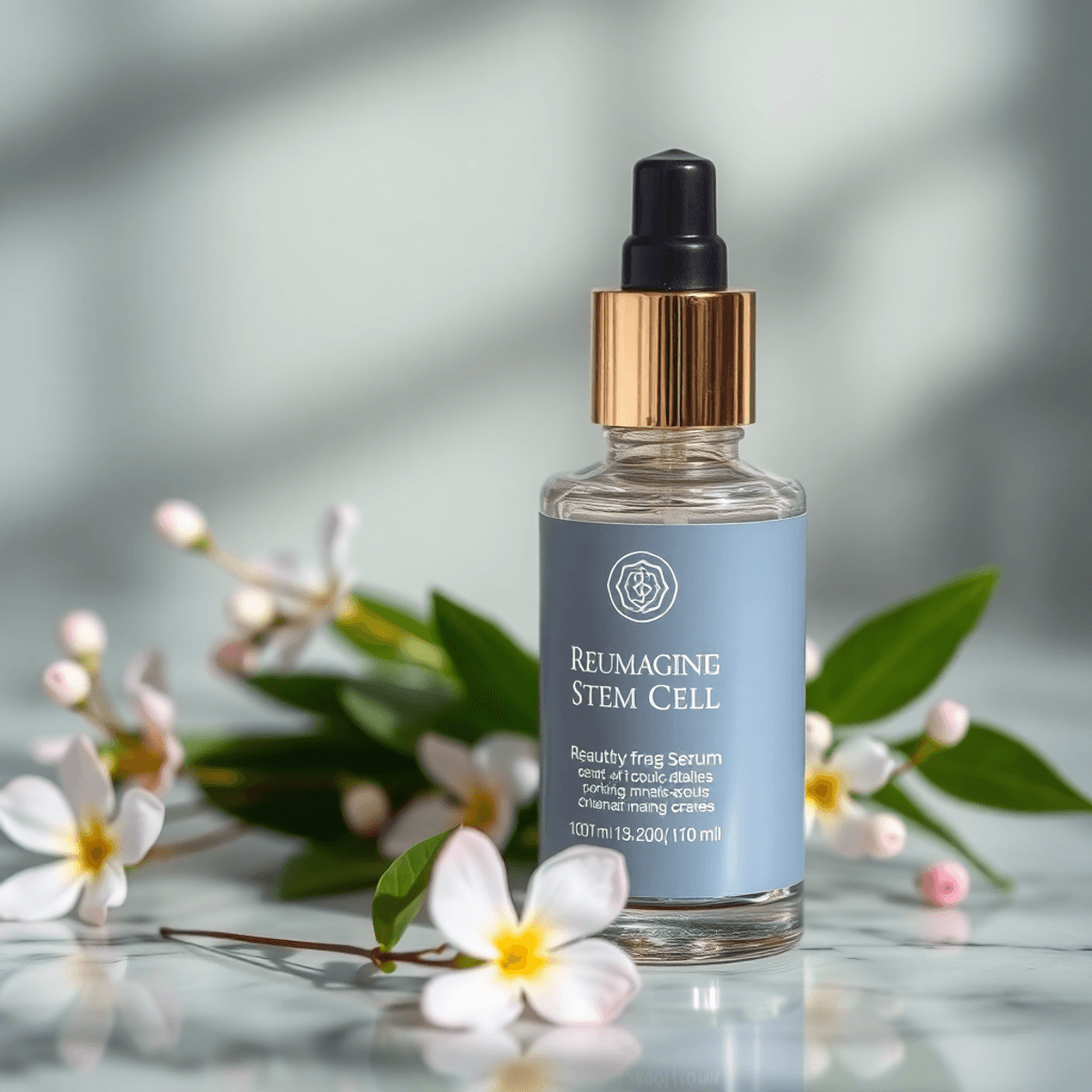
If you are ready to put the research to work on your own skin, the Bradceuticals Gold Mesenchymal Stem Cell Growth Factor Serum was designed specifically for this purpose. Applied to damp, dewy skin — never bone dry — its mesenchymal stem cell-derived growth factor complex delivers EGF, FGF-2, VEGF, TGF-β, HGF, and PDGF-AA directly to the dermis where collagen and elastin synthesis are driven. As a daily face serum it produces measurable structural improvements with consistent use. Paired with microneedling as a post-procedure serum — never as a gliding agent — the results compound across every session in ways that either protocol alone cannot match.
What Makes a Stem Cell Serum for Face Different from Other Anti-Aging Serums
The core distinction of a stem cell serum for face is biological complexity. Where a retinol serum operates through a single receptor-mediated pathway and a peptide serum signals one or a few collagen-stimulating mechanisms, a mesenchymal stem cell-derived conditioned medium contains hundreds of secreted proteins operating simultaneously — growth factors that trigger fibroblast proliferation, anti-inflammatory cytokines that downregulate the chronic low-grade inflammation accelerating facial aging, extracellular matrix proteins that directly contribute to dermal architecture, and inhibitors of the collagen-degrading enzymes that photoaging activates. (PMC7904527)
Research comparing MSC conditioned media from different sources confirms that the concentrations of VEGF, TGF-β1, and HGF — all central to skin regeneration — correlate directly with the potency of collagen and elastin production in human dermal fibroblasts. (PMC7904527) A stem cell serum for face built on this science is categorically different from one that merely includes a token quantity of conditioned medium as a label ingredient.
9 Facts About Stem Cell Serum for Face That the Research Confirms
Fact 1: A Stem Cell Serum for Face Targets the Hallmarks of Facial Aging Simultaneously
The most clinically significant feature of a high-quality stem cell serum for face is its ability to target multiple biological mechanisms of aging in a single application. A 2023 randomized controlled study of a growth factor-based serum derived from human fibroblast conditioned media confirmed measurable effects on four distinct hallmarks of aging: cellular senescence reduction, restoration of proteostasis, reversal of stem cell exhaustion markers, and normalization of intercellular communication — all in the same treatment protocol, confirmed by both gene expression analysis and skin biopsy. (PMC9823186) No conventional anti-aging category — not retinol, not vitamin C, not peptides — operates across all four simultaneously. This is what makes a stem cell serum for face the foundational investment in a serious anti-aging protocol.
Fact 2: Human Mesenchymal Stem Cell Conditioned Medium Outperforms Plant Stem Cell Extracts for Facial Rejuvenation
The skincare market uses “stem cell serum” to describe two fundamentally different product categories: those containing human mesenchymal stem cell conditioned medium and those containing plant stem cell extracts. For a stem cell serum for face targeting facial skin aging, the distinction is clinically significant. Human MSC conditioned medium contains the actual growth factors, cytokines, and ECM proteins that act on human dermal fibroblasts through the same signaling pathways the skin itself uses. Plant stem cell extracts are primarily antioxidant concentrates — valuable ingredients, but operating through a different and more limited mechanism. Research on MSC conditioned medium confirms its direct induction of fibroblast proliferation, collagen type I and III synthesis, elastin production, and MMP inhibition. (PMC7904527) A stem cell serum for face that specifies mesenchymal stem cell conditioned medium — particularly from umbilical cord or bone marrow-derived MSCs — is operating at a different biological level than a plant-derived alternative.
Fact 3: A Stem Cell Serum for Face Reverses UV-Induced Collagen Degradation
Photoaging is responsible for the majority of visible facial aging — wrinkles, loss of firmness, uneven pigmentation, epidermal thinning. The underlying mechanism is UV-induced activation of MMP-1 and MMP-2 through MAPK/AP-1 and NF-κB signaling cascades, which systematically degrade the collagen and elastin matrix. A stem cell serum for face containing adipose-derived MSC conditioned medium has been shown to efficiently downregulate all three pathways, reduce MMP-1 expression, suppress pro-inflammatory IL-6, and simultaneously upregulate TGF-β — the growth factor that drives collagen synthesis. (PMC6981944) This is a protective and restorative mechanism that acts on the structural cause of photoaged facial skin rather than its surface appearance. For more on how to address UV damage with evidence-based skincare, 7 Proven Ways to Treat Sun-Damaged Skin covers the full clinical approach.
Fact 4: Stem Cell Serum for Face Results Improve Significantly When Combined with Microneedling
The most clinically powerful delivery mechanism for a stem cell serum for face is microneedling. Growth factors are high-molecular-weight proteins that cannot penetrate intact skin — they are blocked by the stratum corneum under normal conditions. Microneedling creates micro-channels that temporarily bypass this barrier, allowing the conditioned medium’s growth factors to reach the dermis directly where fibroblasts and keratinocytes are actively remodeling. A systematic review of randomized controlled trials confirmed that combining microneedling or laser resurfacing with topical stem cell conditioned medium significantly improved facial aging symptoms including wrinkles, pigmentation, and pore size compared to the procedure alone. (PMC10676866) A separate randomized split-face study confirmed that microneedling with mesenchymal stem cell conditioned media produced superior skin brightness, texture, and pore refinement compared to microneedling with saline. (PMC9171013)
The Bradceuticals Gold Mesenchymal Stem Cell Growth Factor Serum is applied post-microneedling only — to damp, dewy skin immediately after the procedure. Never during the session. For a ranked guide to using it in a full microneedling protocol, 7 Best Stem Cell Serums for Microneedling provides the complete clinical breakdown.
Fact 5: A Stem Cell Serum for Face Rebuilds the Facial Extracellular Matrix
The extracellular matrix — the structural scaffolding of the dermis composed of collagen, elastin, fibronectin, and glycosaminoglycans — is what determines facial firmness, elasticity, and the skin’s ability to rebound from movement and expression. Aging, UV exposure, and inflammation progressively degrade it. MSC conditioned medium has been confirmed to upregulate collagen types I, III, IV, and VII expression, increase elastic fiber proteins including elastin and fibrillin, stimulate fibronectin synthesis, and inhibit the MMP enzymes that break down existing ECM — all measured by gene expression analysis in human skin models. (PMC9823186) A stem cell serum for face that delivers this breadth of ECM-rebuilding signal is addressing the structural foundation of facial aging, not its surface reflection.
Fact 6: Umbilical Cord-Derived MSC Conditioned Medium Is the Most Potent Source for a Stem Cell Serum for Face
Not all MSC conditioned medium is equal in growth factor concentration or skin rejuvenation potency. Research directly comparing MSC conditioned media from different sources found that umbilical cord-derived MSC conditioned medium contained significantly higher concentrations of bFGF (5x), HGF (8.19x), KGF (2.41x), VEGF (2.12x), TGF-β1 (2.03x), fibronectin (2.59x), and collagen type I (6.74x) compared to adipose-derived MSC conditioned medium — with these higher concentrations correlating directly with stronger fibroblast proliferation, greater collagen and elastin synthesis, and more effective inhibition of melanin production. (PMC12476799) When evaluating a stem cell serum for face, source transparency is the primary quality indicator.
Fact 7: A Stem Cell Serum for Face Reduces Facial Inflammation That Drives Premature Aging
Chronic low-grade inflammation — driven by UV exposure, pollution, dietary factors, and age-related immune dysregulation — is one of the most consistent accelerators of facial aging. MSC-derived conditioned medium secretes anti-inflammatory cytokines including IL-10, modulates macrophage polarization toward anti-inflammatory phenotypes, and produces exosomes that suppress NF-κB inflammatory signaling in skin fibroblasts and keratinocytes. (PMC9219688) A stem cell serum for face applied consistently to damp skin creates an ongoing anti-inflammatory tissue environment that shifts the dermis from a collagen-degrading state to a collagen-building one — a shift that compounds over weeks and months of regular use. For more on the role of regenerative skincare in this category, 10 Reasons Why Stem Cell Skin Care Is a Game Changer covers the full clinical picture.
Fact 8: Extracellular Vesicles in MSC Conditioned Medium Amplify the Stem Cell Serum for Face Effect
A 2024 open-access review confirmed that MSC conditioned medium-derived extracellular vesicles (EVs), when applied to human skin, were incorporated into the skin and produced statistically significant increases in collagen types I and III and elastin — at levels measurably superior to the conditioned medium itself without EV isolation. (PMC11518787) EVs from mesenchymal stem cells deliver miRNAs and proteins that regulate fibroblast proliferation, inhibit apoptosis, and activate the signaling pathways that drive facial ECM regeneration. A stem cell serum for face derived from high-quality conditioned medium retains these extracellular vesicles as part of its active complex — making formulation and processing integrity critical to the serum’s clinical effectiveness.
Fact 9: A Stem Cell Serum for Face Produces Results That Compound Across a Full Skincare Series
The visible improvements from a stem cell serum for face reflect progressive tissue-level remodeling that accelerates with consistent use and compounds when combined with a microneedling series. MSC-derived conditioned medium applied to aged skin in research models increased skin thickness, regenerative cell activity (Ki-67-positive cell count), and collagen deposition area — improvements that reflect structural regeneration rather than surface hydration. (PMC12476799) A stem cell serum for face used daily on damp skin for three to six months while completing a microneedling series delivers results that neither standalone approach produces alone. For a complete breakdown of the 7 Proven Best Stem Cell Serums Ranked for 2026, the full comparative guide is available on Bradceuticals.
How to Choose a Stem Cell Serum for Face: What Actually Matters
Source specificity: A stem cell serum for face should clearly identify its stem cell source — human mesenchymal stem cell conditioned medium from umbilical cord, bone marrow, or adipose-derived MSCs. Vague claims of “stem cell extract” without source identification are a quality red flag.
Growth factor breadth: The most effective stem cell serum for face contains a multi-factor growth factor profile — EGF, FGF-2, VEGF, TGF-β, HGF, and PDGF-AA at minimum. Isolated single growth factors do not replicate the synergistic effect of full conditioned medium.
Formulation standards: A stem cell serum for face must be fragrance-free, alcohol-free, and formulated without preservative concentrations that destabilize the conditioned medium’s bioactive proteins. The serum’s processing matters as much as its source.
Skin type suitability: A properly formulated stem cell serum for face is appropriate for all skin types. For oily and acne-prone skin, layering niacinamide alongside the stem cell serum for face reduces post-application sebum activity while complementing its barrier-repair mechanisms. For dry skin, follow immediately with hyaluronic acid on damp skin before sealing with moisturizer.
How to Apply a Stem Cell Serum for Face for Maximum Absorption
Apply 2–3 drops to clean, damp, dewy skin using a gentle pressing or tapping motion — never rubbing. Damp skin is essential: applying a stem cell serum for face to completely dry skin reduces absorption and can cause product to sit on the surface rather than penetrating. Layer the stem cell serum for face before moisturizer, allowing 30–60 seconds for initial absorption before applying heavier formulas.
For daily use, morning and evening application maximizes the collagen-building effect across the full 24-hour skin repair cycle. For post-microneedling use, apply the stem cell serum for face immediately after your session to damp skin while micro-channels are still open — this is the window of highest dermal bioavailability for the conditioned medium’s growth factors. For the complete phase-by-phase post-microneedling protocol, 7 Complete Stages of Microneedling Recovery Time maps the full approach.
Stem Cell Serum for Face by Skin Concern
Fine lines and wrinkles: MSC conditioned medium directly targets the collagen synthesis deficit and MMP-driven collagen degradation that cause wrinkle formation. Use the stem cell serum for face morning and evening on damp skin, and incorporate a microneedling series for compounded results.
Skin laxity and loss of firmness: Elastin synthesis support and fibroblast activation are the primary mechanisms by which a stem cell serum for face addresses facial laxity. Consistent use over a three-to-six-month protocol produces the most visible lifting and firming results.
Uneven tone and hyperpigmentation: MSC conditioned medium inhibits melanin production in melanocytes while simultaneously supporting organized epidermal turnover. (PMC12476799) Pair the stem cell serum for face with vitamin C applied on damp skin in the inter-session weeks for accelerated brightening.
Acne scarring: The ECM-remodeling mechanisms of a stem cell serum for face — organized collagen synthesis, anti-fibrotic cytokine signaling, MMP regulation — are directly relevant to the tissue remodeling required for acne scar improvement. A microneedling series with post-procedure stem cell serum application is the most clinically supported protocol for this concern. For the full EGF serum comparison in this context, 10 Reasons Why EGF Serums Are the Best for Skin Rejuvenation covers the evidence in depth.
Sensitive and reactive skin: The anti-inflammatory cytokine profile of MSC conditioned medium makes a properly formulated stem cell serum for face one of the most appropriate active serums for sensitive facial skin. Fragrance-free, alcohol-free formulations are non-negotiable for this skin type.
Frequently Asked Questions About Stem Cell Serum for Face
What is a stem cell serum for face and how does it work? A stem cell serum for face contains conditioned medium derived from mesenchymal stem cells — a complex of growth factors, cytokines, and ECM proteins that stimulate fibroblast activity, drive collagen and elastin synthesis, inhibit collagen-degrading enzymes, and reduce inflammation. It works at the cellular level to address the biological mechanisms of facial aging rather than masking their surface effects.
How long does a stem cell serum for face take to show results? Surface improvements in texture, hydration, and radiance typically appear within four to six weeks of consistent daily use. Measurable changes in wrinkle depth, firmness, and pore size reflect the collagen remodeling cycle and become most visible at the three-month mark.
Can I use a stem cell serum for face every day? Yes — daily use morning and evening on damp skin is the recommended protocol. Consistent application across the collagen remodeling timeline produces compound improvements that single applications cannot deliver.
Is a stem cell serum for face safe for sensitive skin? A fragrance-free, alcohol-free, preservative-minimized formulation of MSC conditioned medium is well tolerated by sensitive skin and is in fact particularly beneficial for it due to the conditioned medium’s anti-inflammatory cytokine profile.
What is the difference between a stem cell serum for face and a growth factor serum? A growth factor serum typically contains isolated individual growth factors — EGF, FGF, or similar — in a carrier formula. A stem cell serum for face contains the full conditioned medium from mesenchymal stem cells, which includes hundreds of growth factors, cytokines, and ECM proteins working synergistically. The biological bandwidth of a genuine stem cell serum for face is significantly broader than an isolated growth factor product. For a full ranked comparison, 10 Best Growth Factor Serums for Youthful Skin provides the complete guide.
References
- Applications of Mesenchymal Stem Cells in Skin Regeneration and Rejuvenation. PMC7957487. https://pmc.ncbi.nlm.nih.gov/articles/PMC7957487/
- Targeting Multiple Hallmarks of Skin Aging: Preclinical and Clinical Efficacy of a Novel Growth Factor-Based Skin Care Serum. PMC9823186. https://pmc.ncbi.nlm.nih.gov/articles/PMC9823186/
- The Effects of Human Bone Marrow-Derived Mesenchymal Stem Cell Conditioned Media on Skin Rejuvenation. PMC7904527. https://pmc.ncbi.nlm.nih.gov/articles/PMC7904527/
- Efficacy and Safety of Umbilical Cord-Derived Mesenchymal Stem Cell Conditioned Media. PMC12476799. https://pmc.ncbi.nlm.nih.gov/articles/PMC12476799/
- Conditioned Medium from Human Adipose-Derived Mesenchymal Stem Cells Prevents UVB-Induced Skin Aging. PMC6981944. https://pmc.ncbi.nlm.nih.gov/articles/PMC6981944/
- Progress in the Development of Stem Cell-Derived Cell-Free Therapies for Skin Aging. PMC10676866. https://pmc.ncbi.nlm.nih.gov/articles/PMC10676866/
- Regenerative Topical Skincare: Stem Cells and Exosomes. PMC11518787. https://pmc.ncbi.nlm.nih.gov/articles/PMC11518787/
- Role and Function of Mesenchymal Stem Cells on Fibroblast in Cutaneous Wound Healing. PMC9219688. https://pmc.ncbi.nlm.nih.gov/articles/PMC9219688/
- Platelet-Rich Plasma, Collagen Peptides, and Stem Cells for Cutaneous Rejuvenation. PMC7028374. https://pmc.ncbi.nlm.nih.gov/articles/PMC7028374/
- Efficacy of Microneedling Combined With Mesenchymal Stem Cells Conditioned Media. PMC9171013. https://pmc.ncbi.nlm.nih.gov/articles/PMC9171013/
Disclaimer: This article is for educational purposes only and does not constitute medical advice. Always consult a licensed dermatologist or skincare professional before beginning any new skincare protocol. Individual results vary.
Last reviewed: March 2026
About Bradceuticals : Thuy Myers is the founder of Bradceuticals which manufactures and distributes skin care and hair regrowth serums that use growth factors from human stem cells as the catalyst for regeneration. When she is not busy running the business and maintaining blogs, she is continuing her practice as a semiconductor engineer and teaches college engineering. In her free time, she enjoys the beach, working out at the gym and hanging out with her kiddo.