

You want stem cell products because you read the research — growth factors commanding fibroblasts to build collagen, exosomes reprogramming cells at the genetic level, biopsy-confirmed structural changes that make people look six years younger. The science is real. But the product you are about to buy almost certainly does not contain what produced those results. Most stem cell products on retail shelves use the label legally while delivering biology that cannot replicate the published outcomes. A 24-week placebo-controlled trial confirmed biopsy-proven collagen, elastin, and decorin increases — but the active was human mesenchymal stem cell conditioned media, not apple extract (PMC9823186).
That gap between the label and the biology is where your money disappears and your fine lines stay. Understanding five common label tricks protects you from stem cell products that sound clinical but perform cosmetically. Bradceuticals Gold Mesenchymal Stem Cell Growth Factor Serum delivers human bone marrow MSC conditioned media — the exact category of active ingredient the clinical trials validated — applied to damp skin morning and evening. It is among the stem cell products that earn the label through biology, not marketing.
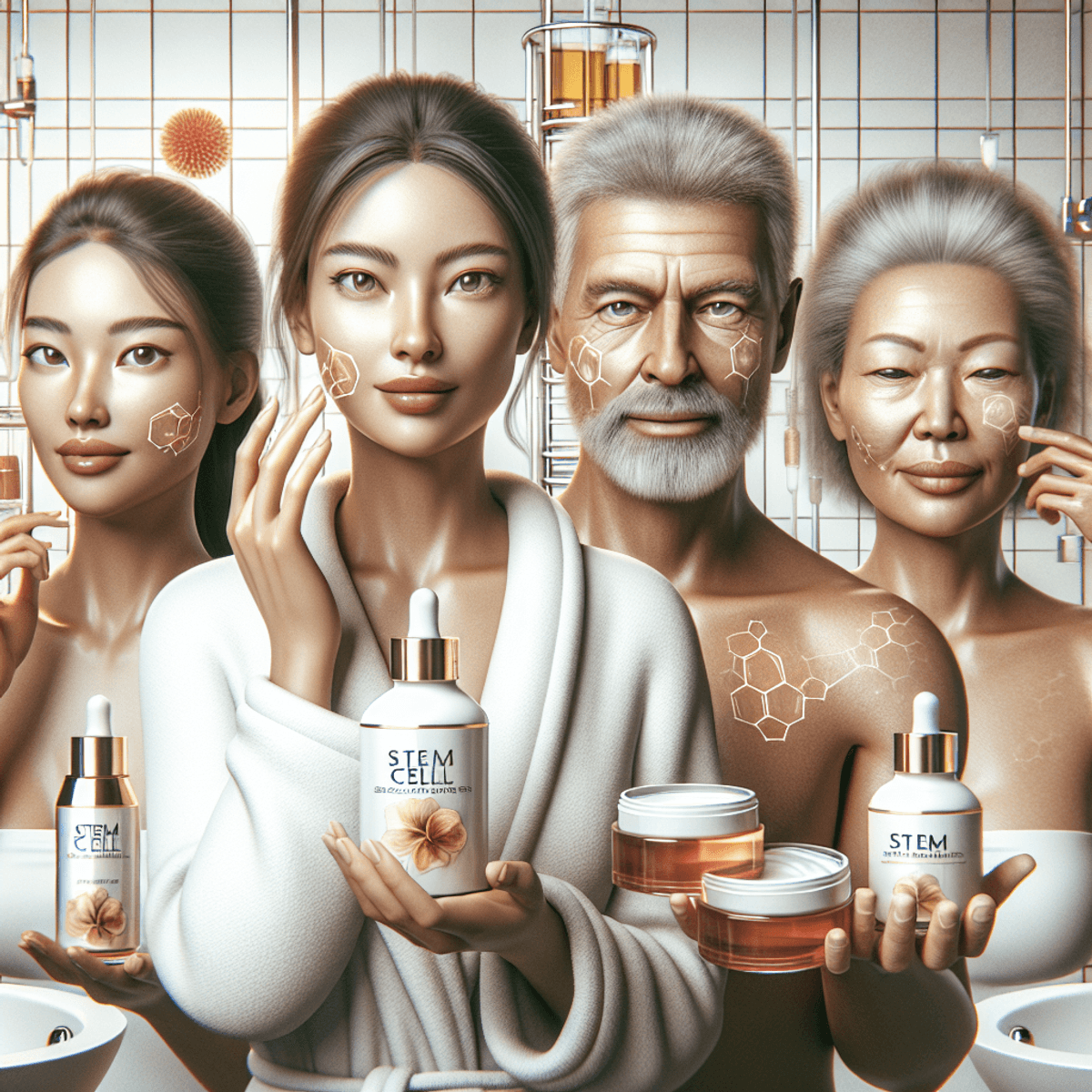
Trick 1: “Stem Cell” on the Label — Plant Extract Inside the Bottle
The most common deception among stem cell products is the simplest. “Stem Cell Serum” appears on the front. The ingredient list on the back reads “Malus Domestica callus culture extract” — apple stem cells. Or “Vitis Vinifera fruit cell extract” — grape. These are real botanical extracts with legitimate antioxidant value. They protect existing collagen from oxidative damage. But plant proteins cannot bind to human EGFR, PDGFR, or TGF-beta receptors with biological specificity.
A 2025 study confirmed that human MSC sources produce dramatically higher growth factor concentrations — bFGF 5x, HGF 8.19x higher — with significantly stronger fibroblast proliferation (PMC12476799). Among stem cell products, the word “stem cell” on the label tells you nothing. The ingredient list tells you everything. Look for “mesenchymal stem cell conditioned media” or “human stem cell conditioned media.”
Trick 2: “Growth Factors” Listed — But Only One Protein Included
Some stem cell products contain recombinant human EGF — a lab-synthesized copy of one growth factor. It binds to EGFR receptors and triggers cell proliferation. That mechanism is real. But your fibroblasts express receptors for six major growth factor families simultaneously. One instrument playing a symphony meant for an orchestra.
Research confirms up to 80% of MSCs’ therapeutic effect occurs through their complete secreted output (PMC11518787). A 2025 RCT confirmed that even PDGF alone outperformed standard care on 6 of 7 parameters after microneedling (PMC12427151). One protein beats standard care. But the complete secretome — EGF, FGF, TGF-beta, VEGF, PDGF, HGF plus exosomes — delivers the full biological conversation. The best stem cell products contain the complete secretome, not a single sentence from it.
Trick 3: Jar Packaging That Degrades Active Proteins
Growth factors are proteins that denature with oxygen, heat, and light exposure. Many stem cell products come in open jars — beautiful, heavy, luxurious jars that expose the formula to air every time you open them. After 30 days of daily use, the growth factor potency may be significantly diminished while the moisturizing base remains unchanged. The cream still feels the same. The ingredient you paid for has been degrading since day one.
Clinical-grade stem cell products use airless pump dispensers or sealed packaging that prevents oxygen contact. If your product comes in an open jar, ask yourself whether the manufacturer prioritized aesthetics over the integrity of the active ingredient you are paying for.
Trick 4: “Clinically Tested” Without Specifying What Was Measured
Many stem cell products claim “clinically tested” or “dermatologist approved” without disclosing what the test measured. Self-reported improvement scores from 20 participants are not equivalent to biopsy-confirmed collagen increases from a placebo-controlled trial.
The clinical evidence that supports growth factor efficacy includes tissue biopsies showing structural protein increases measured under a microscope (PMC9823186), randomized controlled trials with growth-factor versus control groups (PMC7716740), and conditioned media studies confirming visible improvement at 4 weeks (PMC6002314). When evaluating stem cell products, ask what was measured and how — not just whether testing occurred.
Trick 5: High Price Presented as Proof of Quality
Some stem cell products cost $300-500 per ounce. The assumption is that higher price means better ingredients. Sometimes it does. Often it means higher marketing budget, premium packaging, and celebrity endorsement fees built into the cost. Price does not correlate with whether the product contains human MSC conditioned media or plant extract.
Bradceuticals was founded specifically to make clinical-grade stem cell products accessible without the markup that funds magazine advertisements and influencer contracts. Human bone marrow MSC conditioned media with the complete secretome plus exosomes — at a price point that reflects the ingredient cost, not the marketing cost.
How to Evaluate Stem Cell Products Before You Buy
Check the ingredient list for “mesenchymal stem cell conditioned media” or “human stem cell conditioned media.” If you see plant names instead, you are buying an antioxidant product with a stem cell label.
Check the packaging. Airless pump or sealed dispenser protects protein integrity. Open jar degrades it.
Check the source. A 2025 narrative review confirmed that autologous AMSC exosomes exhibit higher biocompatibility with lower pathogen risk, and that source significantly affects exosome composition and biological effects (PMC12439826). Bone marrow MSCs are the most extensively researched source.
Patch test before committing. Apply any new product to a small area behind the ear. Wait 24-48 hours. This protects you from reactions before investing in a full routine.
Stem Cell Products and Microneedling
The most powerful application for stem cell products is post-microneedling. Growth factor proteins exceeding 15,000 daltons cannot penetrate intact skin effectively. Microchannels created during needling bypass the barrier entirely, delivering growth factors directly to dermal fibroblasts. Research shows channels remain highly permeable for two to six hours (PMC3160154). A randomized controlled trial confirmed one session with growth factors matched four sessions without (PMC7716740). New collagen persists five to seven years (PMC11993440).
Frequently Asked Questions
Do stem cell products actually contain stem cells? No. No topical product contains live stem cells. They contain conditioned media — the growth factors, cytokines, and exosomes stem cells produced during culture. The cells are removed. The biological instructions remain.
Are stem cell products safe for sensitive skin? Yes — EGF actively inhibits inflammatory cytokines, making human MSC conditioned media among the gentlest active ingredients available for reactive skin.
Which stem cell products are best? Those containing human MSC conditioned media with the complete secretome plus exosomes. Bradceuticals delivers this from bone marrow MSCs in an airless pump format.
Are expensive stem cell products better? Not necessarily. Price reflects marketing budget as much as ingredient quality. Check the label for human MSC conditioned media — that determines efficacy regardless of price.
References
- Naughton GK, et al. Targeting Multiple Hallmarks of Skin Aging. Dermatol Ther. 2023;13(1):169-186. (PMC9823186)
- Ahn H, et al. Efficacy and Safety of UCMSC-CM for Skin Aging. World J Stem Cells. 2025;17(9):108049. (PMC12476799)
- Taub A. Regenerative topical skincare: stem cells and exosomes. Front Med. 2024;11:1443963. (PMC11518787)
- Lynch SE, et al. Recombinant Pure PDGF Improves Aesthetic Results Following RF Microneedling. J Cosmet Dermatol. 2025;24(9):e70425. (PMC12427151)
- PMC12439826 — AMSC-Exos Narrative Review. Int J Nanomedicine. 2025. (PMC12439826)
- Merati M, et al. An Assessment of Microneedling with Topical Growth Factors. J Clin Aesthet Dermatol. 2020;13(11):22-27. (PMC7716740)
- Kalluri H, Banga AK. Characterization of microchannels created by metal microneedles. AAPS J. 2011;13(3):473-481. (PMC3160154)
- Tehrani L, et al. Physiological Mechanisms and Therapeutic Applications of Microneedling. Cureus. 2025;17(3):e80510. (PMC11993440)
- Kim YJ, et al. Anti-aging Properties of EPC-CM. Dermatol Ther (Heidelb). 2018;8(2):261-273. (PMC6002314)
Disclaimer: This article is for informational purposes only and does not constitute medical advice. The products discussed are cosmetic products and are not intended to diagnose, treat, cure, or prevent any disease. Individuals with any active skin condition, pre-existing medical condition, or those currently under the care of a physician or specialist should consult their healthcare provider before beginning any new skincare regimen. Always perform a patch test before using any new skincare product. Consult a qualified healthcare provider before beginning any microneedling protocol. Individual results may vary.
Last Reviewed: April 2026
About Bradceuticals : Thuy Myers is the founder of Bradceuticals which manufactures and distributes skin care and hair regrowth serums that use growth factors from human stem cells as the catalyst for regeneration. When she is not busy running the business and maintaining blogs, she is continuing her practice as a semiconductor engineer and occasionally teaches college engineering. In her free time, she enjoys visiting the beach with her MUCH better half, working out at the gym, and hanging out with her kiddo.