

Epidermal growth factor skincare represents the only category of anti-aging product built on a Nobel Prize-winning discovery in cellular biology. When Stanley Cohen received the 1986 Nobel Prize in Physiology or Medicine for identifying EGF and its role in cell proliferation and differentiation, he established the scientific foundation that modern epidermal growth factor skincare now translates into measurable skin rejuvenation. EGF is a 53-amino-acid polypeptide that binds to ErbB1 receptors on keratinocytes and fibroblasts, triggering intracellular tyrosine kinase cascades that accelerate cell proliferation, migration, and collagen synthesis — the three biological processes that determine whether your skin maintains its structure or continues its age-related decline (Esquirol-Caussa & Herrero-Vila, 2015). No other skincare active operates through this direct receptor-mediated mechanism with this depth of scientific validation.
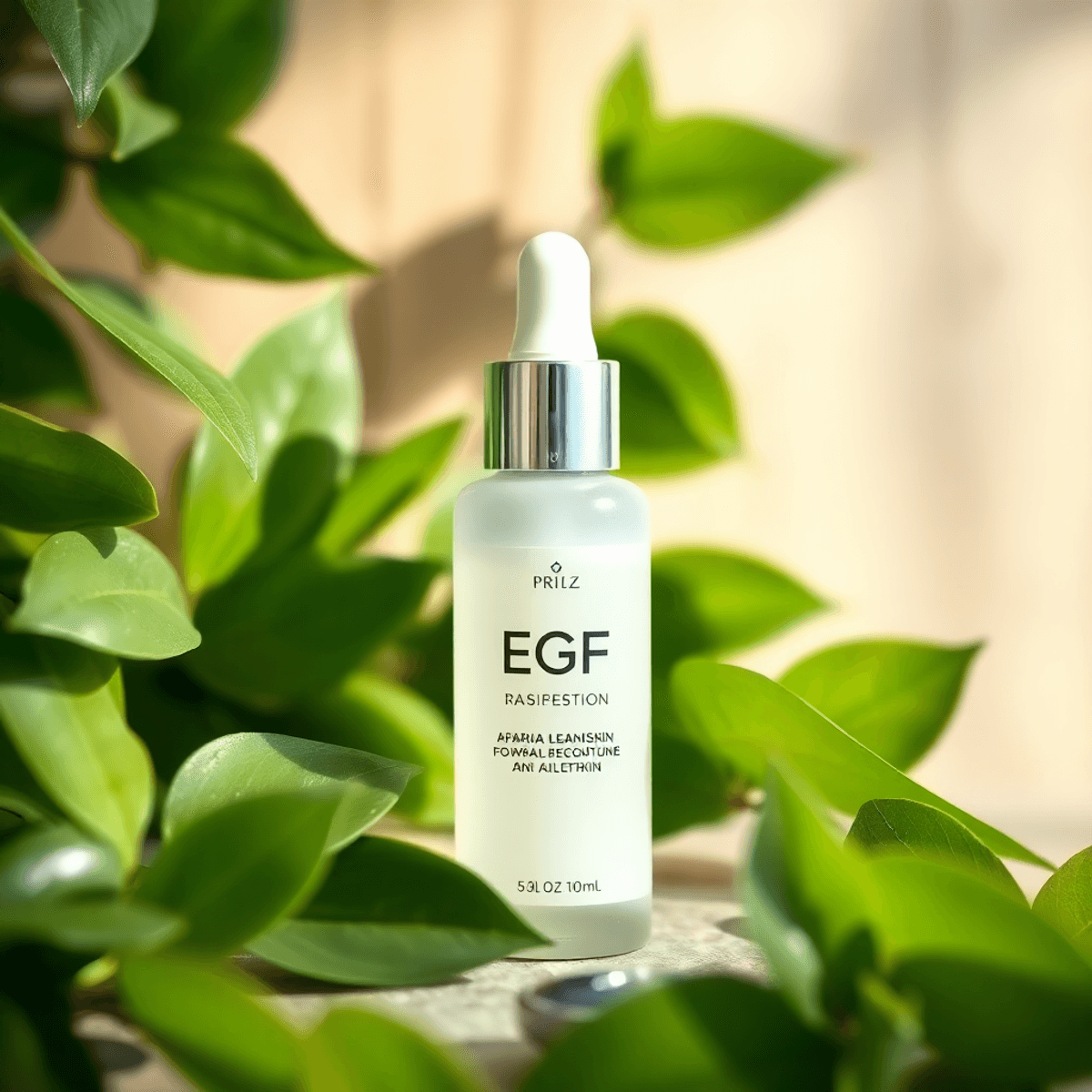
A controlled study in the Journal of Cosmetic Dermatology confirmed that human stem cell conditioned media — which delivers EGF alongside TGF-β, FGF, PDGF, and VEGF — produced statistically significant reductions in wrinkle depth and improvements in skin elasticity over eight weeks (Kim et al., 2020). Bradceuticals’ Gold Mesenchymal Stem Cell Growth Factor Serum delivers EGF as part of the complete human mesenchymal stem cell secretome in a lightweight formula designed for application on damp, dewy skin. This coordinated delivery approach reflects how epidermal growth factor skincare achieves its most powerful results — not through isolated EGF alone, but through the full growth factor cascade that mirrors your body’s native regenerative signaling.
What EGF Does in Your Skin — The Biology Behind Epidermal Growth Factor Skincare
The Receptor Binding Cascade
When EGF from an epidermal growth factor skincare product contacts your skin, it seeks out ErbB1 (EGFR) receptors on keratinocyte and fibroblast cell membranes. Upon binding, the receptor dimerizes and activates its intracellular tyrosine kinase domain, initiating the MAPK/ERK signaling pathway. This cascade upregulates genes responsible for cell proliferation, protein synthesis, and migration — producing three distinct outcomes that define what epidermal growth factor skincare accomplishes:
Accelerated keratinocyte turnover replaces damaged, pigmented, and senescent surface cells with new, properly differentiated ones. This is why improved brightness and texture are the first visible results from epidermal growth factor skincare — typically within two weeks.
Increased fibroblast collagen synthesis rebuilds the structural matrix beneath wrinkles and fine lines. Research from Seoul National University confirmed that mesenchymal stem cell conditioned media containing EGF increased type I collagen production by up to 31% versus untreated controls (Park et al., 2019).
Enhanced wound healing through promoted cell migration and proliferation — making epidermal growth factor skincare uniquely valuable for post-procedure recovery, particularly after microneedling.
Why Aging Skin Needs Exogenous EGF
After age 30, your skin’s endogenous EGF production declines progressively. Fibroblast density drops approximately 1% per year, and remaining fibroblasts become less responsive to the diminishing growth factor signals they receive (Varani et al., 2006). This creates the compounding deficit visible as wrinkles, laxity, and textural roughness. Epidermal growth factor skincare replenishes the EGF supply that aging depletes, reactivating receptor-mediated regeneration that your skin can no longer drive independently.
The Coordinated Secretome — Why Epidermal Growth Factor Skincare Works Best as Part of the Full Growth Factor Cascade
EGF alone is powerful. But the most effective epidermal growth factor skincare delivers EGF within the complete growth factor secretome because regeneration is inherently a multi-signal process (Ferreira et al., 2020).
FGF directly stimulates fibroblasts to produce collagen, elastin, and glycosaminoglycans. While EGF accelerates surface renewal, FGF drives the deep structural rebuilding beneath.
TGF-β modulates inflammation while simultaneously driving collagen deposition. In aging skin, chronic inflammaging suppresses the repair processes that epidermal growth factor skincare is designed to activate. TGF-β clears this inflammatory blockade.
VEGF promotes blood vessel formation that supplies oxygen and nutrients to fibroblasts operating at increased metabolic capacity due to EGF and FGF stimulation.
PDGF coordinates how newly deposited collagen organizes into functional fiber networks rather than disordered deposits.
The reasons why EGF serums lead skin rejuvenation details how EGF functions as the lead signal in this coordinated cascade. The best growth factor serums for youthful skin evaluates which formulations deliver the complete secretome most effectively.
Plant-Derived vs. Human-Derived EGF — The Distinction That Determines Results
Plant-Derived EGF
Bioeffect’s barley-derived EGF represents the most well-known plant-based approach to epidermal growth factor skincare. Genetically modified barley produces a recombinant EGF protein that shares structural similarity with human EGF. This approach offers sustainability advantages and reduced allergenicity risk. Plant stem cell extracts from Swiss apple and grape also appear in products marketed as epidermal growth factor skincare, though these deliver antioxidant polyphenols rather than receptor-binding growth factors. A study confirmed that apple stem cell extract protected cells from oxidative stress (Barbulova et al., 2015) — valuable for preservation but operating through a categorically different mechanism than receptor-mediated EGF signaling.
Human-Derived Conditioned Media
Human mesenchymal stem cell conditioned media delivers EGF alongside the complete growth factor profile — FGF, TGF-β, VEGF, PDGF — in native biological ratios. These proteins bind to human skin cell receptors with native affinity because they evolved within the same biological system. This is why the most dramatic epidermal growth factor skincare results in clinical trials come from human-derived formulations. Bradceuticals’ Gold Mesenchymal Stem Cell Growth Factor Serum delivers this complete human secretome for maximum receptor activation. The best stem cell serums ranked for 2026 compares products across this sourcing distinction.
Clinical Evidence for Epidermal Growth Factor Skincare
Wrinkle Reduction
A 2021 review in Stem Cell Research & Therapy analyzed multiple clinical trials and concluded that 8 to 12 weeks of consistent topical growth factor application — with EGF as a primary active — produced statistically significant improvements in wrinkle depth, skin elasticity, and dermal thickness (Katagiri et al., 2021). These structural changes result from EGF-driven fibroblast activation producing new collagen that fills in volume loss beneath wrinkle troughs.
Photoaging Reversal
UV exposure activates matrix metalloproteinases that degrade collagen while suppressing TGF-β signaling (Quan et al., 2009). Epidermal growth factor skincare counteracts both mechanisms — EGF stimulates replacement collagen production while TGF-β in the complete secretome restores the anti-inflammatory signaling that UV exposure suppresses. The best approaches to treating sun damage details this dual-action photoaging reversal.
Post-Inflammatory Hyperpigmentation
Research in Annals of Dermatology found that stem cell conditioned media containing EGF suppressed melanin synthesis in melanocytes (Seo et al., 2019). This positions epidermal growth factor skincare as uniquely effective for individuals managing both wrinkles and uneven pigmentation simultaneously.
Post-Microneedling Recovery
EGF’s wound healing properties make epidermal growth factor skincare the ideal post-procedure product. Microneedling creates microchannels that increase EGF penetration by up to 300% (Singh & Yadav, 2016). Apply Bradceuticals’ serum to damp skin within one to two minutes post-procedure — never as a gliding serum during treatment. The complete stages of microneedling recovery maps the optimal EGF delivery timing. The healing stages every patient should know provides day-by-day guidance.
How to Build a Routine Around Epidermal Growth Factor Skincare
Morning Protocol
Cleanse with a gentle, pH-balanced wash. Apply your epidermal growth factor skincare product to damp, dewy skin — never bone dry. Damp skin maintains the hydrated tissue state that facilitates receptor accessibility. Use fingertip patting to distribute evenly. Prioritize periorbital area, nasolabial folds, forehead, and neck.
Follow with vitamin C serum — it serves as the essential cofactor for prolyl hydroxylase, the enzyme EGF-stimulated fibroblasts need to assemble structurally stable collagen (Pullar et al., 2017). Layer niacinamide moisturizer for barrier support. Finish with broad-spectrum SPF 30+ — UV-induced matrix metalloproteinase activation degrades the collagen your epidermal growth factor skincare is building.
Evening Protocol
Double cleanse. Apply your epidermal growth factor skincare product to clean, damp skin. Evening application leverages the nocturnal growth hormone peak for synergistic repair. On alternating nights, follow with retinol — it upregulates collagen gene expression through a pathway entirely independent of EGF receptor signaling, creating complementary collagen stimulation. Seal with a ceramide night cream.
Supporting Ingredients That Amplify Epidermal Growth Factor Skincare
Hyaluronic acid creates the hydrated dermal environment that EGF receptor binding requires. Apply after your growth factor serum. The best hyaluronic acid serums for microneedling evaluates pairing formulations.
Niacinamide strengthens the barrier protecting tissue where EGF is actively driving regeneration.
Peptides provide complementary collagen signaling through degradation-fragment mimicry — a pathway independent of EGF receptor binding that reinforces production from a second biological angle.
Results Timeline From Epidermal Growth Factor Skincare
Weeks 1–2: Surface Renewal
Improved brightness and texture as EGF-accelerated keratinocyte turnover produces fresher epidermal cells. Skin feels smoother and more luminous.
Weeks 3–6: Structural Changes Begin
Fine lines soften as new collagen manifests beneath the surface. Skin tone evens as EGF-containing conditioned media modulates melanocyte activity.
Weeks 8–12: Measurable Collagen Gains
Wrinkle depth reduction and elasticity improvement reach statistical significance based on clinical trial timelines. The structural benefits of epidermal growth factor skincare become clearly visible.
Months 4–6: Mature Remodeling
Type III collagen converts to type I collagen. With monthly microneedling sessions, dermal thickness continues increasing. The microneedling healing timeline guides long-term treatment planning.
Safety Profile of Epidermal Growth Factor Skincare
EGF-containing formulations — particularly those using human mesenchymal stem cell conditioned media — include anti-inflammatory cytokines like IL-10 and TGF-β that actively calm reactive skin. Commercial products contain conditioned media or recombinant proteins, not living cells. Side effects are rare and typically limited to mild irritation from preservatives or fragrances in lower-quality formulations.
Epidermal growth factor skincare causes no photosensitivity, no peeling, and no dryness — making it suitable for sensitive skin, rosacea-prone skin, post-procedure application, and year-round use. This tolerability profile positions it as the foundation active that every other product in your routine can layer around without concern for interaction.
Concerns about theoretical cancer cell promotion with topical EGF remain unsubstantiated by current clinical evidence. The large molecular weight of EGF (6,045 Daltons) limits deep penetration through intact skin, and no published study has demonstrated tumorigenic effects from topical epidermal growth factor skincare application in healthy individuals. Choosing products from reputable brands with clinical backing provides additional safety assurance.
Frequently Asked Questions
What is epidermal growth factor skincare? Products containing EGF — a signaling protein that binds to receptors on skin cells, triggering collagen synthesis, accelerated cell turnover, and wound healing. The most effective formulations deliver EGF within the complete growth factor secretome from human mesenchymal stem cell conditioned media.
How is epidermal growth factor skincare different from retinol? Retinol modulates gene expression through nuclear receptor binding, causing irritation and photosensitivity. Epidermal growth factor skincare activates membrane receptors directly with no irritation. They work through independent pathways and produce complementary results on alternating evenings.
Can I use epidermal growth factor skincare on sensitive skin? Yes. Human conditioned media contains anti-inflammatory cytokines that calm reactive skin. Choose fragrance-free formulations. Bradceuticals’ serum is designed for compromised skin types.
How long before epidermal growth factor skincare shows results? Texture and brightness within 1 to 2 weeks. Fine line softening by weeks 4 to 6. Measurable wrinkle reduction at 8 to 12 weeks. Maximum transformation over 4 to 6 months.
Should I combine epidermal growth factor skincare with microneedling? This is the optimal delivery method. Microneedling increases EGF penetration by up to 300% through temporary microchannels, delivering growth factors to dermal fibroblasts at concentrations daily topical use cannot match.
References
- Esquirol-Caussa, J. & Herrero-Vila, E. (2015). EGF applications in dermatology. International Journal of Molecular Sciences. https://pubmed.ncbi.nlm.nih.gov/26370986/
- Kim, Y.J., et al. (2020). Human adipose-derived stem cell conditioned media and skin elasticity. Journal of Cosmetic Dermatology. https://pubmed.ncbi.nlm.nih.gov/31573748/
- Park, B.S., et al. (2019). Adipose-derived stem cells and their secretory factors for skin aging. Dermatologic Surgery. https://pmc.ncbi.nlm.nih.gov/articles/PMC6835893/
- Ferreira, J.R., et al. (2020). Mesenchymal stromal cell secretome. Frontiers in Cell and Developmental Biology. https://pmc.ncbi.nlm.nih.gov/articles/PMC7140425/
- Varani, J., et al. (2006). Decreased collagen production in chronologically aged skin. American Journal of Pathology. https://pubmed.ncbi.nlm.nih.gov/16675963/
- Quan, T., et al. (2009). Matrix-degrading metalloproteinases in photoaging. Journal of Investigative Dermatology. https://pmc.ncbi.nlm.nih.gov/articles/PMC3299230/
- Barbulova, A., et al. (2015). Plant stem cells in cosmetics. Journal of Applied Pharmaceutical Sciences. https://pmc.ncbi.nlm.nih.gov/articles/PMC4740987/
- Katagiri, W., et al. (2021). Clinical applications of stem cell conditioned media. Stem Cell Research & Therapy. https://pmc.ncbi.nlm.nih.gov/articles/PMC7815998/
- Seo, K.Y., et al. (2019). Stem cell conditioned media and melanin regulation. Annals of Dermatology. https://pubmed.ncbi.nlm.nih.gov/33911573/
- Singh, A. & Yadav, S. (2016). Microneedling: Advances and widening horizons. Indian Dermatology Online Journal. https://pmc.ncbi.nlm.nih.gov/articles/PMC5556159/
- Pullar, J.M., et al. (2017). The roles of vitamin C in skin health. Nutrients. https://pmc.ncbi.nlm.nih.gov/articles/PMC3673383/
Disclaimer: This article is for informational purposes only and does not constitute medical advice. Consult a board-certified dermatologist before beginning any new skincare regimen.
Last reviewed: April 2026
About Bradceuticals : Thuy Myers is the founder of Bradceuticals which manufactures and distributes skin care and hair regrowth serums that use growth factors from human stem cells as the catalyst for regeneration. When she is not busy running the business and maintaining blogs, she is continuing her practice as a semiconductor engineer and teaches college engineering. In her free time, she enjoys the beach, working out at the gym and hanging out with her kiddo.