

Hair loss affects roughly 85% of men by age 50 and nearly 40% of women by age 40 — yet most people exhaust topical treatments and supplements before discovering that a laser cap for hair growth addresses the biological root cause that these approaches miss entirely. Low-level laser therapy (LLLT) delivers photons at wavelengths between 620 and 660nm directly to scalp tissue, where they are absorbed by cytochrome c oxidase in the mitochondria of hair follicle cells. This absorption triggers increased ATP production, enhanced nitric oxide release, and improved cellular metabolism — reactivating follicles that have entered premature dormancy and extending the anagen (active growth) phase that determines hair thickness and density. A laser cap for hair growth translates decades of photobiomodulation research into a wearable device you use at home while going about your daily routine.
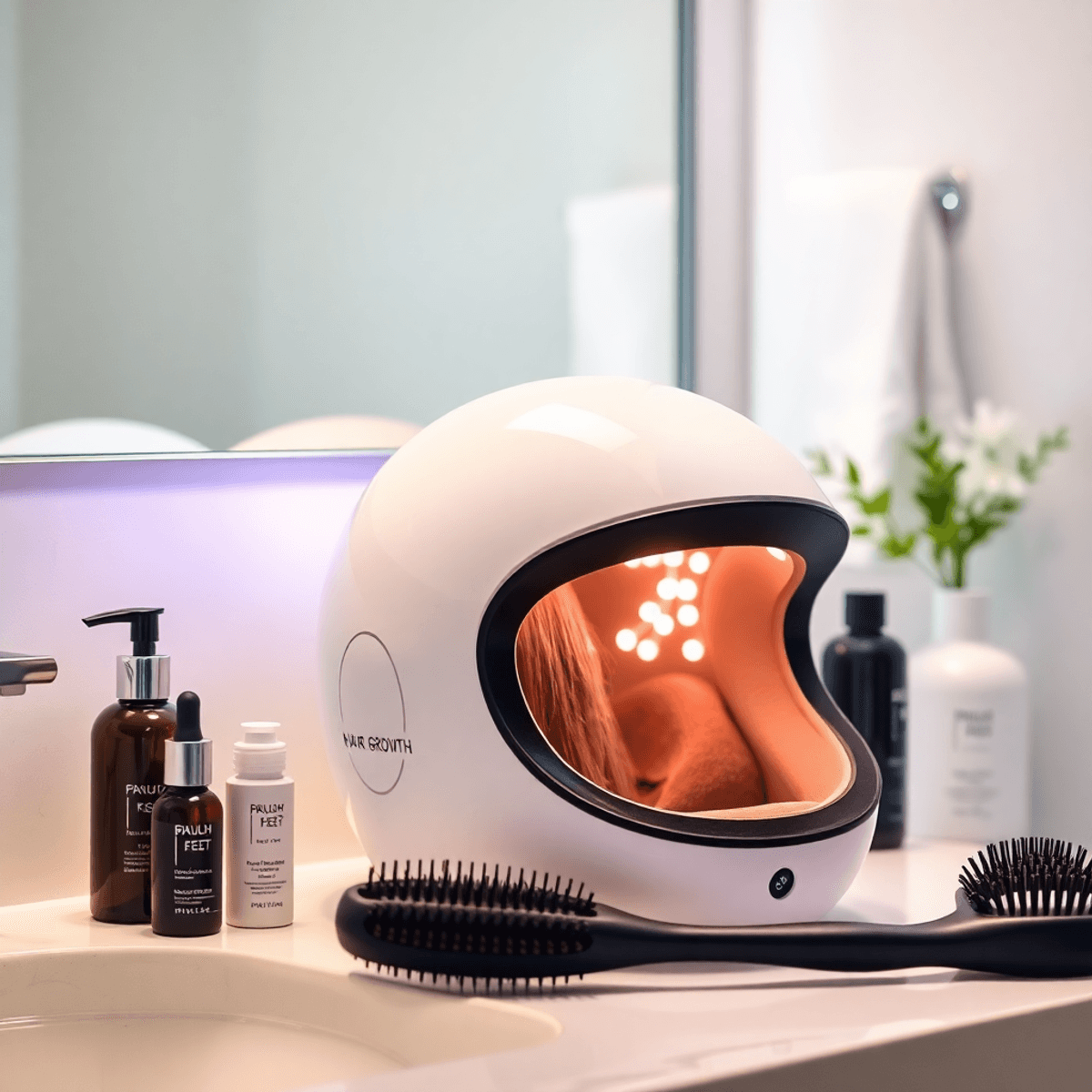
But light therapy alone addresses only one dimension of follicular decline. The most compelling hair regrowth protocols combine a laser cap for hair growth with topical growth factor delivery that provides the biological signaling dormant follicles need to resume protein synthesis. Bradceuticals’ Gold Hair Follicle and Adipose Stem Cell Serum delivers human adipose stem cell conditioned media — containing EGF, FGF, VEGF, and PDGF — directly to the scalp after dermarolling, then followed by red light therapy from your laser cap for hair growth. This three-step protocol — dermarolling to create microchannels, growth factor serum to deliver regenerative signals, then laser therapy to boost cellular energy — creates the most comprehensive follicular reactivation strategy available outside of surgical intervention.
How a Laser Cap for Hair Growth Works at the Cellular Level
Photobiomodulation — The Mechanism
When red light photons from a laser cap for hair growth penetrate 3 to 5mm into scalp tissue, they reach the dermal papilla cells at the base of hair follicles. These photons are absorbed by cytochrome c oxidase — a protein in the mitochondrial electron transport chain — triggering a cascade of cellular responses:
Increased ATP production provides the energy currency that follicular cells need for protein synthesis, cell division, and keratin production. Dormant follicles in the telogen phase lack sufficient energy metabolism to transition back into active growth. A laser cap for hair growth restores the metabolic capacity that reactivates this transition.
Enhanced nitric oxide release vasodilates blood vessels surrounding follicles, increasing oxygen and nutrient delivery to the dermal papilla. This improved microcirculation supplies the building blocks — amino acids, minerals, and vitamins — that active hair growth demands.
Reduced oxidative stress through modulation of reactive oxygen species protects follicular stem cells from the cumulative damage that contributes to miniaturization and eventual follicle death.
Anti-inflammatory effects reduce the perifollicular inflammation that characterizes androgenetic alopecia and contributes to the progressive miniaturization of terminal hairs into vellus hairs.
The Wavelength Window
Not all light wavelengths produce hair growth effects. A laser cap for hair growth operating in the 620 to 660nm red light range provides optimal penetration depth to reach the dermal papilla while delivering sufficient photon energy for cytochrome c oxidase absorption. Some devices also incorporate near-infrared wavelengths (810–850nm) for deeper tissue penetration, though the evidence base for red wavelengths in hair growth is more robust.
Why Hair Falls Out — And How a Laser Cap for Hair Growth Intervenes
The DHT Miniaturization Process
Androgenetic alopecia — the most common form of hair loss — occurs when dihydrotestosterone (DHT) binds to androgen receptors in genetically susceptible follicles. This binding triggers a cascade that shortens the anagen growth phase and gradually shrinks the follicle, producing progressively thinner, shorter hairs until the follicle ceases producing visible hair entirely.
A laser cap for hair growth intervenes by extending the anagen phase through increased cellular energy and improved follicular blood supply. While LLLT does not block DHT directly, the enhanced metabolic environment it creates helps follicles resist the miniaturization signal longer — buying time and maintaining hair density that would otherwise be lost.
The Hair Growth Cycle
Understanding where a laser cap for hair growth acts requires knowledge of the three growth phases:
Anagen (growth phase) lasts 2 to 7 years and determines hair length and thickness. A laser cap for hair growth extends this phase by maintaining the metabolic conditions follicles need to continue active production.
Catagen (transition phase) lasts 2 to 3 weeks as the follicle detaches from its blood supply and begins regressing. LLLT during this phase may help maintain follicular integrity.
Telogen (resting phase) lasts 2 to 4 months before the hair sheds and a new anagen cycle begins — if the follicle has sufficient energy and signaling to restart. A laser cap for hair growth provides the energy boost that helps telogen follicles transition back into active growth.
The Three-Step Protocol — Maximizing Your Laser Cap for Hair Growth
Step 1 — Scalp Dermarolling
Using a 0.25 to 0.5mm derma roller on the scalp creates microchannels that increase topical product absorption. Roll gently across thinning areas in four directions — vertical, horizontal, and both diagonals — with light, even pressure. This step prepares the scalp for growth factor delivery.
Step 2 — Growth Factor Serum Application
Apply Bradceuticals’ Gold Hair Follicle and Adipose Stem Cell Serum to damp scalp immediately after dermarolling. This serum delivers human adipose stem cell conditioned media containing EGF, FGF, VEGF, and PDGF through open microchannels directly to the dermal papilla. These growth factors provide the regenerative signaling that dormant follicles need to resume active hair production — the biological instructions that a laser cap for hair growth alone cannot deliver.
Step 3 — Laser Cap Treatment
After the serum has absorbed for five minutes, apply your laser cap for hair growth for the manufacturer-recommended duration — typically 20 to 30 minutes. The red light therapy enhances cellular metabolism in follicles that have just received fresh growth factor signaling, creating a synergistic effect: growth factors provide the instructions, and laser therapy provides the energy to execute them.
This three-step protocol — performed 3 to 4 times per week — delivers comprehensive follicular support that addresses both the signaling deficit and the energy deficit that drive progressive hair thinning.
Clinical Evidence for Laser Cap for Hair Growth Devices
Published Trial Results
Multiple clinical trials have demonstrated the efficacy of LLLT for hair regrowth. A randomized, double-blind, sham device-controlled trial published in the American Journal of Clinical Dermatology found that subjects using a laser device experienced a statistically significant increase in hair density compared to the control group over 26 weeks. Hair count increases of 20 to 35% have been reported across multiple studies, with the most consistent results occurring in early-to-moderate androgenetic alopecia.
FDA Clearance
Several laser cap for hair growth devices have received FDA 510(k) clearance for the treatment of androgenetic alopecia. This clearance requires manufacturers to demonstrate that their device is substantially equivalent to previously cleared devices in safety and effectiveness — providing a baseline quality assurance for consumers.
Optimal Candidates
A laser cap for hair growth produces the strongest results in individuals with early-to-moderate thinning where follicles are miniaturized but not yet dead. Completely bald areas where follicles have been absent for years are unlikely to respond because there are no viable cells remaining to stimulate. The earlier you begin using a laser cap for hair growth in the thinning process, the more follicles remain available for reactivation.
What to Look for When Choosing a Laser Cap for Hair Growth
Laser Diode Count and Coverage
Higher diode counts generally provide more uniform scalp coverage. A quality laser cap for hair growth should contain at least 80 medical-grade laser diodes distributed to cover the full crown and temporal areas where androgenetic alopecia typically manifests. Some premium devices incorporate over 200 diodes for maximum coverage.
True Laser vs. LED
Medical-grade laser diodes deliver coherent, focused light at precise wavelengths. LEDs produce broader-spectrum, non-coherent light. While both have demonstrated hair growth benefits, laser diodes deliver higher energy density per point of contact. The most effective laser cap for hair growth devices use true laser diodes or a combination of lasers and LEDs.
Comfort and Wearability
You will use this device 3 to 4 times per week for 20 to 30 minutes per session. A laser cap for hair growth should be lightweight, adjustable, and comfortable enough to wear during normal activities — reading, working, watching television. Helmet designs offer maximum coverage while cap designs offer portability and discretion.
Battery Life
Cordless operation allows freedom of movement during treatment. Look for a laser cap for hair growth with battery life sufficient for at least two full sessions between charges.
Tips for Optimal Results From Your Laser Cap for Hair Growth
Clean, Dry Scalp
Apply your laser cap for hair growth to a clean, dry scalp — unless you are following the three-step protocol where the serum is applied first and allowed to absorb. Product buildup, oils, and styling residue can scatter light and reduce the photon dose reaching follicles.
Consistency Over Intensity
Results from a laser cap for hair growth are dose-dependent and cumulative. Skipping sessions resets the metabolic momentum building in stimulated follicles. Most clinical trials showing significant results used devices 3 to 4 times per week consistently for 16 to 26 weeks. Commit to this frequency before evaluating results.
Realistic Timeline
Initial shedding during the first 2 to 4 weeks is normal — this represents telogen hairs being pushed out as follicles transition to anagen. Visible new growth typically begins at 12 to 16 weeks. Meaningful density improvement appears at 20 to 26 weeks. Maximum results from a laser cap for hair growth develop over 6 to 12 months of consistent use.
Combine With Growth Factor Support
A laser cap for hair growth provides energy to follicular cells. Bradceuticals’ Gold Hair Follicle and Adipose Stem Cell Serum provides the growth factor signaling those energized cells need to execute hair production. The combination addresses both dimensions of follicular decline — the approach supported by the strongest clinical rationale for comprehensive hair regrowth. The best LED hair growth helmets with the right protocol details how to structure this combined approach for maximum results.
Frequently Asked Questions
How does a laser cap for hair growth actually regrow hair? Red light at 620–660nm is absorbed by cytochrome c oxidase in follicular cell mitochondria, increasing ATP production, nitric oxide release, and cellular metabolism. This reactivates dormant follicles and extends the anagen growth phase.
How long before I see results from a laser cap for hair growth? Initial shedding at weeks 2 to 4 is normal. Visible new growth at 12 to 16 weeks. Meaningful density improvement at 20 to 26 weeks. Maximum results over 6 to 12 months of consistent use.
Can a laser cap for hair growth work on completely bald areas? LLLT works best on miniaturized but still-viable follicles. Areas that have been completely bald for years typically lack the cellular infrastructure to respond. Early intervention produces the strongest outcomes.
Should I use a laser cap for hair growth with other treatments? Yes. Combining laser therapy with growth factor serum application after scalp dermarolling creates a three-step protocol that addresses both the energy deficit and the signaling deficit driving hair loss. Bradceuticals’ hair serum is designed specifically for this combined approach.
How often should I use a laser cap for hair growth? Most clinical protocols recommend 3 to 4 sessions per week, 20 to 30 minutes per session. Consistency matters more than session length — skipping sessions disrupts the cumulative metabolic benefit.
Are there side effects from a laser cap for hair growth? Side effects are rare and typically limited to mild scalp warmth or tingling during use. LLLT is non-invasive and does not cause burns, scarring, or systemic effects at the power levels used in consumer devices.
Disclaimer: This article is for informational purposes only and does not constitute medical advice. Hair loss has many potential causes. Consult a board-certified dermatologist for personalized diagnosis and treatment recommendations.
Last reviewed: April 2026
About Bradceuticals : Thuy Myers is the founder of Bradceuticals which manufactures and distributes skin care and hair regrowth serums that use growth factors from human stem cells as the catalyst for regeneration. When she is not busy running the business and maintaining blogs, she is continuing her practice as a semiconductor engineer and teaches college engineering. In her free time, she enjoys the beach, working out at the gym and hanging out with her kiddo.