

Microneedling creates the injury. The serum creates the outcome. Yet most people treat the post-procedure step as an afterthought — grabbing whatever moisturizer is closest and wondering why their results plateau after a few sessions. An egf serum for microneedling eliminates that plateau by flooding open microchannels with the exact signaling protein that tells epidermal cells to divide faster, produce more collagen, and repair damage at the cellular level. A systematic review in the Journal of Cutaneous and Aesthetic Surgery confirmed that topical recombinant human EGF reverses photoaging signs including wrinkles, hyperpigmentation, and decreased epidermal thickness (PMC8423211). An egf serum for microneedling does not just support healing — it reprograms how skin rebuilds.
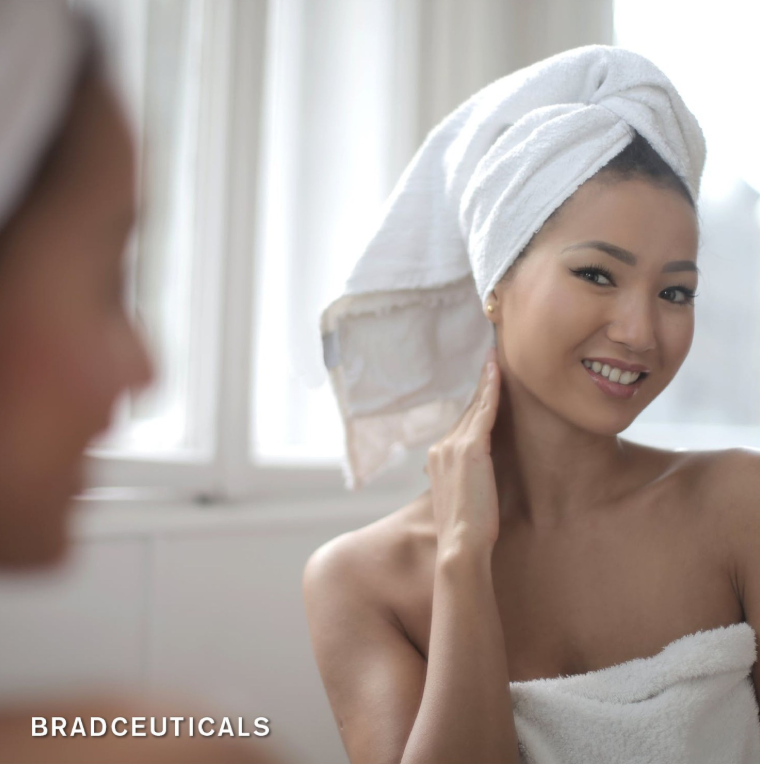
That shift from passive recovery to active regeneration is what makes this combination so clinically compelling. A dermatological review confirmed that topical EGF promotes fibroblast migration, increases both collagen and hyaluronic acid synthesis, and improves the contractility of aged fibroblasts (PMC10333026). Bradceuticals Gold Mesenchymal Stem Cell Growth Factor Serum delivers these growth factors — including EGF — from human mesenchymal stem cell conditioned media, providing the full biological secretome rather than a single isolated protein. Applied to damp, dewy skin immediately after microneedling, it transforms post-procedure downtime into the most productive collagen-building window in the entire skincare calendar.
Why EGF Is the Gold Standard Ingredient in Post-Microneedling Serums
Epidermal growth factor earned its place in dermatology through decades of wound-healing research. EGF is a 53-amino-acid polypeptide that binds to EGFR receptors on keratinocytes and fibroblasts, triggering intracellular cascades that increase DNA synthesis, cell division, and protein production. When delivered through the microchannels created during treatment, an egf serum for microneedling reaches the dermal layer where these receptors are most abundant — producing a response that topical application on intact skin cannot match.
The reason EGF outperforms other popular post-microneedling ingredients is specificity. Hyaluronic acid hydrates. Vitamin C provides antioxidant protection. Niacinamide reduces inflammation. But none of these ingredients can instruct fibroblasts to manufacture new collagen. An egf serum for microneedling delivers the biological instruction that initiates structural rebuilding — the one thing aging skin has progressively lost the ability to do on its own.
Clinical evidence supports this mechanism. Topical application of recombinant human EGF twice daily for eight weeks decreased melasma in 73.4% of participants by reducing melanogenesis-associated protein expression — with no adverse side effects (PMC8423211). That kind of multi-correction capability — addressing pigmentation, texture, and firmness simultaneously — is what makes an egf serum for microneedling the most efficient post-procedure product available.
How Microchannels Unlock the Full Potential of EGF
The stratum corneum blocks any molecule larger than 500 daltons from reaching living tissue. EGF exceeds 6,000 daltons. Under normal conditions, even the highest-quality egf serum for microneedling cannot deliver its active protein past the skin’s outermost barrier. This is the fundamental limitation of all topical growth factor products when applied to intact skin.
Microneedling eliminates that limitation. The thousands of controlled micro-injuries created during treatment open direct pathways into the dermis — bypassing the stratum corneum entirely. These channels remain permeable for two to six hours, creating an extended delivery window during which an egf serum for microneedling can deposit growth factor proteins exactly where fibroblasts and keratinocytes are concentrated.
A randomized controlled trial confirmed that microneedling combined with topical growth factors produced significantly greater improvements in skin texture, firmness, and hydration than microneedling alone (PMC7716740). The combination works because microneedling provides the delivery mechanism and EGF provides the biological instruction — neither achieves its full potential without the other.
The 6 Results an EGF Serum for Microneedling Delivers
Result 1: Accelerated healing with reduced downtime. EGF stimulates keratinocyte proliferation and migration, speeding the closure of micro-injuries while reducing visible redness. Most users of an egf serum for microneedling report redness resolving within 24 hours rather than the typical 48 to 72 hours experienced without growth factor support.
Result 2: Dramatically increased collagen production. EGF signals fibroblasts to synthesize new Type I and Type III collagen — the structural proteins responsible for skin firmness. Histological studies show microneedling alone produces up to 400% increases in collagen deposition at six months (PMC4976400). Adding an egf serum for microneedling amplifies this response by providing exogenous growth factor signaling on top of the body’s endogenous wound-healing cascade.
Result 3: Improved skin texture and pore refinement. Accelerated epidermal turnover replaces damaged, dull surface cells with fresh ones at a faster rate. Within two to four weeks of consistent use, skin texture becomes visibly smoother and pore size decreases as new collagen tightens the dermal matrix beneath the epidermis.
Result 4: Correction of hyperpigmentation and uneven tone. EGF reduces the expression of melanogenesis-associated proteins, which means an egf serum for microneedling actively corrects dark spots and discoloration while the skin is healing from treatment — addressing two concerns in a single post-procedure step.
Result 5: Enhanced hydration and moisture retention. Research demonstrates that EGF increases hyaluronic acid synthesis within the skin (PMC10333026). This endogenous hyaluronic acid production provides sustained hydration from within — a fundamentally different mechanism than the temporary surface moisture provided by topical hyaluronic acid serums.
Result 6: Long-term structural remodeling that compounds over time. Collagen fibers deposited in response to growth factor signaling remain in place for five to seven years. Each microneedling session paired with an egf serum for microneedling adds another layer of structural improvement, producing cumulative results that a single session cannot achieve.
Why Human-Derived EGF Outperforms Plant-Based Alternatives
Not every product labeled as an egf serum for microneedling contains EGF that human skin receptors can actually respond to. Barley-derived EGF — used in several popular products — has a different molecular structure than human EGF. While it can bind to some human receptors, the downstream signaling cascade is weaker and less complete than what human-derived growth factors produce.
Bradceuticals Gold Mesenchymal Stem Cell Growth Factor Serum uses growth factors derived from human bone marrow mesenchymal stem cells — delivering not just EGF but the complete secretome including FGF, TGF-beta, VEGF, PDGF, and HGF. This multi-factor approach mirrors how the body’s own wound-healing system works, providing coordinated regeneration signaling that a single-ingredient product cannot replicate.
How to Apply an EGF Serum for Microneedling Correctly
Complete the final microneedling pass. Immediately dispense the serum onto clean fingertips and press gently across all treated areas while skin remains damp — never bone dry. Use pressing and patting motions exclusively. Allow five to ten minutes for full absorption before applying a fragrance-free moisturizer.
For the first 48 hours, avoid sun exposure, retinoids, AHAs, BHAs, vitamin C, and alcohol-based products. A mineral sunscreen with zinc oxide is the only appropriate UV protection during initial healing. Between sessions, applying the serum twice daily to intact skin maintains growth factor stimulation and supports ongoing collagen synthesis.
Frequently Asked Questions
What is an egf serum for microneedling? An egf serum for microneedling is a topical product containing epidermal growth factor designed to be applied immediately after microneedling, delivering EGF through open microchannels to accelerate healing and maximize collagen production.
How soon after microneedling should the serum be applied? Immediately. Microchannels begin closing within minutes. Applying within the first five minutes ensures maximum EGF delivery to the dermal layer.
Can an egf serum for microneedling be used on intact skin? Yes. Twice-daily application between microneedling sessions maintains growth factor stimulation, though the most dramatic results occur during the post-procedure absorption window when microchannels provide direct dermal access.
How many sessions are needed to see results? Most professionals recommend four to six microneedling sessions spaced four to six weeks apart with an egf serum for microneedling applied at each session. Visible collagen remodeling becomes measurable between three and six months.
Is an egf serum for microneedling safe for sensitive skin? Yes. EGF supports the skin’s natural repair processes rather than causing irritation. A properly formulated post-procedure serum should be fragrance-free and alcohol-free, making it appropriate for sensitized, freshly treated skin.
References
- Miller-Kobisher B, et al. Epidermal Growth Factor in Aesthetics and Regenerative Medicine: Systematic Review. J Cutan Aesthet Surg. 2021;14(2):137-146. (PMC8423211)
- Shin SH, et al. The use of epidermal growth factor in dermatological practice. Int Wound J. 2023;20(6):2414-2423. (PMC10333026)
- Merati M, et al. An Assessment of Microneedling with Topical Growth Factors for Facial Skin Rejuvenation: A Randomized Controlled Trial. J Clin Aesthet Dermatol. 2020;13(11):37-45. (PMC7716740)
- Singh A, Yadav S. Microneedling: Advances and widening horizons. Indian Dermatol Online J. 2016;7(4):244-254. (PMC4976400)
Disclaimer: This article is for informational purposes only and does not constitute medical advice. Consult a qualified dermatologist or healthcare provider before beginning any microneedling protocol. Individual results may vary.
Last Reviewed: April 2026
About Bradceuticals : Thuy Myers is the founder of Bradceuticals which manufactures and distributes skin care and hair regrowth serums that use growth factors from human stem cells as the catalyst for regeneration. When she is not busy running the business and maintaining blogs, she is continuing her practice as a semiconductor engineer and occasionally teaches college engineering. In her free time, she enjoys visiting the beach with her MUCH better half, working out at the gym, and hanging out with her kiddo.