

The “glow” you see on women with luminous skin is NOT makeup, NOT filters, and NOT genetics. It is the visible result of rapidly dividing keratinocytes reflecting light uniformly across a smooth epidermal surface — and understanding how to get glowing skin means understanding the ONE biological process that produces this effect naturally. When EGF binds to receptors on your keratinocytes and triggers accelerated cell turnover, fresh, properly differentiated cells replace the dull, damaged, unevenly pigmented cells sitting on your surface. These new cells reflect light like tiny mirrors arranged in perfect formation. THAT is the glow. And every month you spend without growth factor signaling in your routine, your turnover slows further, your surface dulls further, and the gap between how to get glowing skin and what your mirror shows you widens (Varani et al., 2006).
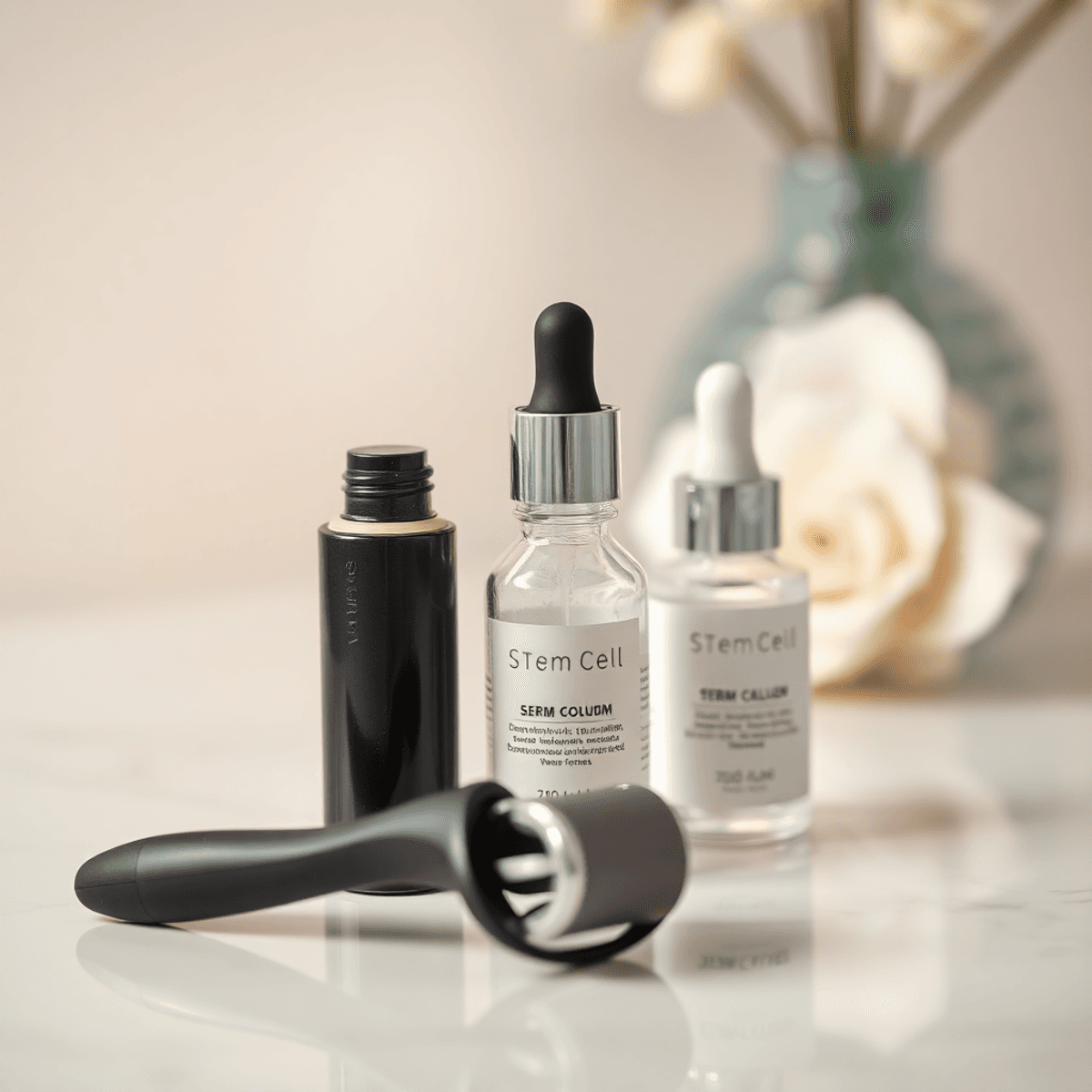
A study in the Journal of Cosmetic Dermatology confirmed what this biology predicts: human adipose-derived stem cell conditioned media — containing the EGF that drives keratinocyte turnover alongside collagen-building FGF, TGF-β, PDGF, and VEGF — produced statistically significant improvements in skin texture and elasticity over just eight weeks (Kim et al., 2020). Bradceuticals’ Gold Mesenchymal Stem Cell Growth Factor Serum delivers the complete human mesenchymal stem cell secretome in a lightweight formula applied to damp, dewy skin twice daily. For any woman serious about how to get glowing skin through biology rather than cosmetic trickery, this is where published science meets visible radiance.
Why Your Skin Looks Dull — The Biology Behind Lost Radiance
Dead Cell Buildup Is Stealing Your Light
How to get glowing skin starts with understanding why yours does not glow now. Your epidermis turns over approximately every 28 days at age 20. By age 40, that cycle stretches to 40 to 50 days. By age 50, even longer. Each additional day that dead, damaged, oxidized keratinocytes sit on your surface is another day they scatter light unevenly instead of reflecting it uniformly. The dullness you see in the mirror is not a lack of skincare — it is a traffic jam of expired cells that your slowing biology can no longer clear efficiently.
Declining EGF Means Declining Turnover
EGF (Epidermal Growth Factor) is the protein responsible for telling keratinocytes to divide — pushing old cells off the surface and replacing them with fresh ones. After age 30, endogenous EGF production declines progressively. Your keratinocytes receive fewer division signals every year. How to get glowing skin at its most fundamental level means replenishing the EGF signal that aging has depleted — restarting the rapid turnover that produces the luminous surface you had naturally in your twenties.
UV Damage Compounds the Problem
UV exposure damages keratinocytes at the DNA level, creating cells that are malformed, irregularly pigmented, and poorly differentiated (Quan et al., 2009)). Even when these cells reach the surface, they reflect light unevenly — creating the blotchy, uneven tone that no amount of exfoliation fully resolves. How to get glowing skin requires replacing these UV-damaged cells with HEALTHY ones through growth factor-driven turnover. The best approaches to treating sun damage details how growth factors address this dual problem.
The 9 Secrets to How to Get Glowing Skin
Secret 1 — Growth Factor Serum as Your Daily Foundation
The fastest biological path to how to get glowing skin is twice-daily application of a human growth factor serum. EGF accelerates keratinocyte division — the process that produces the fresh, light-reflecting surface cells responsible for the glow. Research from Seoul National University confirmed that mesenchymal stem cell conditioned media significantly enhanced cellular renewal (Park et al., 2019)). Bradceuticals’ Gold Mesenchymal Stem Cell Growth Factor Serum delivers EGF alongside FGF, TGF-β, VEGF, and PDGF — the coordinated secretome that drives both surface radiance AND deep structural rebuilding simultaneously (Ferreira et al., 2020)). Apply to damp, dewy skin morning and evening. The reasons why EGF serums lead skin rejuvenation details how EGF specifically drives the glow response.
Secret 2 — Vitamin C Amplifies the Brightness
Vitamin C inhibits tyrosinase — the enzyme that produces melanin — while simultaneously serving as the cofactor fibroblasts need for collagen assembly (Pullar et al., 2017)). For how to get glowing skin, apply vitamin C AFTER your growth factor serum every morning. The growth factors accelerate turnover of dull cells. Vitamin C ensures the NEW cells emerging are brighter and more evenly pigmented. Together they produce radiance neither achieves alone.
Secret 3 — Niacinamide Evens the Tone
Niacinamide inhibits melanosome transfer from melanocytes to keratinocytes — meaning less pigment reaches each new surface cell. For how to get glowing skin with even tone, niacinamide in your moisturizer layer works synergistically with the growth factor and vitamin C layers beneath. Three independent mechanisms converging on the same outcome: brighter, more uniform surface cells.
Secret 4 — Microneedling Creates the Ultimate Glow Catalyst
The most dramatic results in how to get glowing skin come from monthly microneedling combined with growth factor delivery. Microneedling increases growth factor penetration by up to 300% (Singh & Yadav, 2016)). The procedure also triggers a wound healing cascade that independently accelerates turnover. Combined with growth factor serum applied within 60 seconds post-procedure, the compounding turnover effect produces the “microneedling glow” that lasts weeks. The complete stages of microneedling recovery maps this glow timeline. The healing stages every patient should know provides day-by-day guidance.
Secret 5 — Hyaluronic Acid Creates the Dewy Canvas
How to get glowing skin requires hydration as the visible canvas for radiance. Hyaluronic acid draws water into the upper epidermis, creating the plump, dewy surface that reflects light most effectively. Apply AFTER your growth factor serum to maintain the hydrated environment that growth factor receptors also require for optimal binding. The best hyaluronic acid serums for microneedling evaluates formulations optimized for this pairing.
Secret 6 — Exfoliation Clears the Traffic Jam (But Gently)
Chemical exfoliation with gentle AHAs (lactic acid at 5-10%) dissolves the intercellular bonds holding expired keratinocytes on the surface — allowing the fresh cells your growth factors are producing to reach the light-reflecting position faster. For how to get glowing skin, use gentle chemical exfoliation 2 to 3 times weekly as a complement to — not a replacement for — growth factor-driven turnover. Never exfoliate within 7 days of microneedling.
Secret 7 — SPF Protects the Glow You Build
UV exposure damages the fresh keratinocytes your growth factors just produced — creating the same dull, malformed cells you are trying to replace. How to get glowing skin requires daily mineral SPF 30+ to protect the radiant surface your routine builds every day. Every morning without sunscreen undoes a portion of yesterday’s turnover progress.
Secret 8 — Retinol Accelerates Turnover on Alternating Evenings
Retinol promotes keratinocyte turnover through nuclear receptor signaling — an independent pathway from growth factor membrane receptor signaling. How to get glowing skin through maximum turnover stacking means using growth factors twice daily AND retinol on alternating evenings. Two independent turnover signals compounding for faster surface renewal. The microneedling healing timeline guides retinol scheduling. The best stem cell serums ranked for 2026 evaluates growth factor formulations that complement retinol routines.
Secret 9 — Pigmentation Correction Multiplies Radiance
Dark spots and uneven tone scatter light and cancel the glow effect even on well-exfoliated skin. Research found that stem cell conditioned media suppressed melanin synthesis (Seo et al., 2019)). How to get glowing skin comprehensively requires addressing pigmentation alongside turnover — and the complete growth factor secretome does both through a single product. The best growth factor serums for youthful skin evaluates products across this dual-action capability.
The Complete Routine for How to Get Glowing Skin
Morning
Gentle cleanser → Bradceuticals’ Gold Mesenchymal Stem Cell Growth Factor Serum on damp skin → vitamin C serum → niacinamide moisturizer → ceramide cream → mineral SPF 30+.
Evening
Double cleanse → growth factor serum on damp skin → retinol on alternating nights → ceramide night cream. On non-retinol nights, add gentle lactic acid for complementary chemical exfoliation.
Monthly
Microneedling at 0.5–1.0mm → immediate growth factor serum through microchannels → hyaluronic acid → ceramide moisturizer → continue twice-daily protocol for 14 days.
Weekly
Gentle AHA exfoliation 2 to 3 times weekly (NOT within 7 days of microneedling) to accelerate clearance of surface cells being pushed off by growth factor-driven turnover beneath.
Results Timeline for How to Get Glowing Skin
Days 3–7: First subtle brightness appears as the earliest EGF-driven keratinocyte turnover begins replacing surface cells.
Weeks 1–2: Noticeable glow emerges. Skin looks brighter, smoother, and more luminous. This is the earliest and most immediately gratifying result on the journey of how to get glowing skin — the stage where people start noticing.
Weeks 3–6: Glow deepens as turnover fully normalizes. Tone evens as melanocyte modulation reduces pigment irregularity. Texture becomes noticeably refined. A 2021 review confirmed improvements in skin texture at this timeline (Katagiri et al., 2021)).
Weeks 8–12: Maximum radiance as structural collagen improvements add firmness that enhances light reflection across the facial surface. The glow is now both surface-level (turnover) and structural (collagen density). This is when how to get glowing skin produces the full transformation.
Months 4–6: With monthly microneedling, the glow becomes self-sustaining through consistent turnover and increasing dermal density.
Frequently Asked Questions
What is the fastest way for how to get glowing skin? A growth factor serum containing EGF produces visible brightness improvement within 1 to 2 weeks through accelerated keratinocyte turnover. Bradceuticals’ Gold Mesenchymal Stem Cell Growth Factor Serum delivers EGF within the complete secretome for the fastest biological glow response.
Is how to get glowing skin possible without makeup? Yes — the biological glow from growth factor-driven turnover is visible on bare skin. It comes from fresh, properly differentiated keratinocytes reflecting light uniformly — not from shimmer, highlighter, or filters.
How long before how to get glowing skin methods show results? First brightness at days 3 to 7. Noticeable glow at weeks 1 to 2. Full radiance at weeks 8 to 12. Maximum luminosity over 4 to 6 months.
Does how to get glowing skin work for all skin tones? Yes. Growth factor-driven turnover and melanocyte regulation improve radiance across all Fitzpatrick types. For deeper skin tones, the melanin synthesis suppression provides particularly valuable tone evening.
Is how to get glowing skin possible after 50? Absolutely. EGF reactivates keratinocyte turnover regardless of chronological age. The glow response works at any age — it simply requires replenishing the growth factor signal that aging depleted.
References
- Varani, J., et al. (2006). Decreased collagen production in chronologically aged skin. American Journal of Pathology. https://pubmed.ncbi.nlm.nih.gov/16675963/
- Kim, Y.J., et al. (2020). Human adipose-derived stem cell conditioned media and skin elasticity. Journal of Cosmetic Dermatology. https://pubmed.ncbi.nlm.nih.gov/31573748/
- Quan, T., et al. (2009). Matrix-degrading metalloproteinases in photoaging. Journal of Investigative Dermatology. https://pmc.ncbi.nlm.nih.gov/articles/PMC3299230/
- Park, B.S., et al. (2019). Adipose-derived stem cells and their secretory factors for skin aging. Dermatologic Surgery. https://pmc.ncbi.nlm.nih.gov/articles/PMC6835893/
- Ferreira, J.R., et al. (2020). Mesenchymal stromal cell secretome. Frontiers in Cell and Developmental Biology. https://pmc.ncbi.nlm.nih.gov/articles/PMC7140425/
- Singh, A. & Yadav, S. (2016). Microneedling: Advances and widening horizons. Indian Dermatology Online Journal. https://pmc.ncbi.nlm.nih.gov/articles/PMC5556159/
- Seo, K.Y., et al. (2019). Stem cell conditioned media and melanin regulation. Annals of Dermatology. https://pubmed.ncbi.nlm.nih.gov/33911573/
- Katagiri, W., et al. (2021). Clinical applications of stem cell conditioned media. Stem Cell Research & Therapy. https://pmc.ncbi.nlm.nih.gov/articles/PMC7815998/
- Pullar, J.M., et al. (2017). The roles of vitamin C in skin health. Nutrients. https://pmc.ncbi.nlm.nih.gov/articles/PMC3673383/
Disclaimer: This article is for informational purposes only and does not constitute medical advice. Consult a board-certified dermatologist before beginning any new skincare regimen.
Last reviewed: April 2026
About Bradceuticals : Thuy Myers is the founder of Bradceuticals which manufactures and distributes skin care and hair regrowth serums that use growth factors from human stem cells as the catalyst for regeneration. When she is not busy running the business and maintaining blogs, she is continuing her practice as a semiconductor engineer and teaches college engineering. In her free time, she enjoys the beach, working out at the gym and hanging out with her kiddo.