

Microneedling creates thousands of micro-channels that bypass the stratum corneum, temporarily transforming the skin into a high-absorption surface. A comprehensive review in Dermatologic Surgery confirms that these controlled injuries stimulate growth factor release and new collagen formation while preserving the epidermis (PMID: 27755171). Applying hyaluronic acid after microneedling is one of the safest and most effective ways to flood those open channels with intense hydration during the critical healing window.
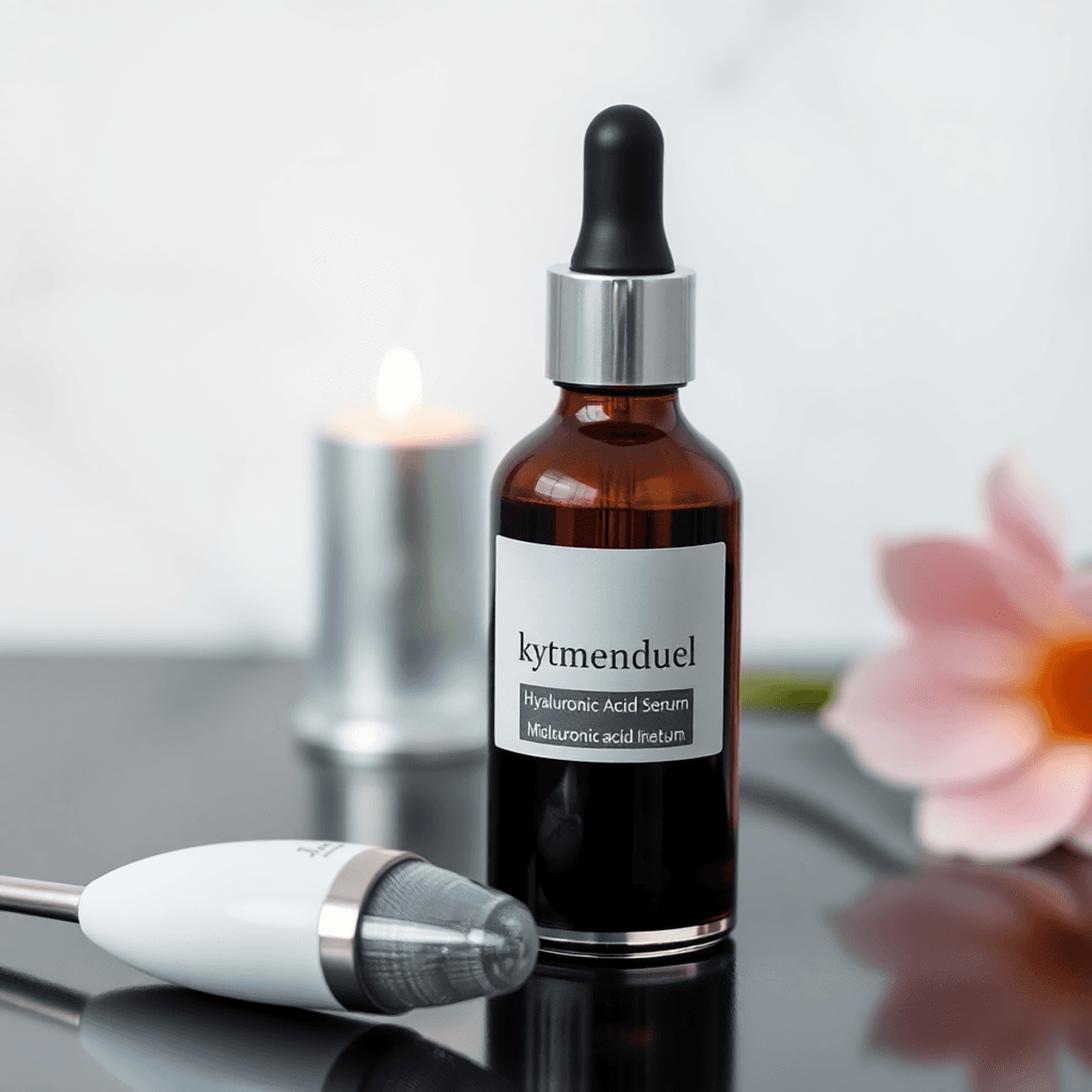
Research confirms that hyaluronic acid delivered through microneedle-created channels achieves significantly enhanced bioavailability thanks to its biocompatibility, biodegradability, and unique viscoelastic properties (PMID: 32036009). Bradceuticals Gold Mesenchymal Stem Cell Growth Factor Serum takes this a step further by combining deep hydration with a full spectrum of mesenchymal stem cell growth factors — including VEGF, TGF-β1, and HGF — that significantly enhance fibroblast proliferation, collagen synthesis, and tissue regeneration (PMC7904527). Applied to damp, dewy skin immediately after your session, it delivers both the moisture and the regenerative signaling your skin needs at the precise moment absorption peaks. See full details at Bradceuticals Gold Mesenchymal Stem Cell Growth Factor Serum.
Why Hyaluronic Acid After Microneedling Works So Well
Hyaluronic acid is a naturally occurring glycosaminoglycan found throughout the skin’s extracellular matrix. It can bind up to 1,000 times its weight in water, making it the most powerful humectant available in skincare. After microneedling, your skin is dehydrated from the controlled trauma, and the open micro-channels create an unprecedented opportunity for deep product penetration.
When you apply hyaluronic acid after microneedling, it fills those channels with moisture at every layer. Low molecular weight hyaluronic acid penetrates into the dermis for deep hydration, while high molecular weight hyaluronic acid forms a protective film on the surface that prevents transepidermal water loss. This dual-depth approach creates the optimal healing environment for fibroblasts to produce new collagen and elastin.
The micro-channels remain open for approximately 15 to 30 minutes post-treatment. Applying hyaluronic acid after microneedling during this window ensures maximum penetration — far beyond what normal topical application can achieve. This is precisely why dermatologists consistently recommend hyaluronic acid as the first product to reach for after every session.
8 Benefits of Hyaluronic Acid After Microneedling
1. Immediate Deep Hydration
The most obvious benefit of hyaluronic acid after microneedling is intense hydration exactly when your skin needs it most. Microneedling temporarily disrupts the skin barrier, leading to increased transepidermal water loss. Hyaluronic acid counteracts this by drawing water into the skin and locking it there. The result is immediate relief from the tightness and dryness that commonly follow a session.
2. Accelerated Wound Healing
Hydrated skin heals faster than dehydrated skin. By maintaining optimal moisture levels in the micro-injured tissue, hyaluronic acid after microneedling supports the wound-healing cascade at every stage — from the initial inflammatory response through proliferation and remodeling. Well-hydrated fibroblasts are more active and produce collagen more efficiently, directly translating to faster recovery. Understanding the complete stages of microneedling recovery helps you appreciate why hydration timing matters so much.
3. Reduced Post-Treatment Redness and Irritation
Hyaluronic acid has natural soothing properties that calm freshly treated skin. Unlike many active ingredients that can aggravate sensitized post-microneedling skin, hyaluronic acid after microneedling provides comfort without any risk of irritation. Its biocompatibility means virtually all skin types tolerate it well, including sensitive and reactive skin.
4. Enhanced Collagen Production Environment
Collagen synthesis requires a hydrated extracellular matrix. When the dermal environment is adequately moisturized, fibroblasts function optimally and produce higher quality collagen fibers. By applying hyaluronic acid after microneedling, you create the biological conditions that maximize the collagen-stimulating effects of the procedure itself. A clinical study demonstrated that topical growth factors combined with microneedling produced a 17.6% improvement in skin texture and 17.3% wrinkle reduction in three months (PMID: 34951101) — and hydration is a critical enabler of those results.
5. Skin Barrier Restoration
Microneedling intentionally compromises your skin barrier to create the micro-channels that enhance product absorption. Hyaluronic acid after microneedling helps restore that barrier faster by reinforcing the skin’s natural moisture-retention mechanisms. High molecular weight hyaluronic acid creates an occlusive-like film that shields the compromised barrier from environmental stressors while the skin heals beneath it.
6. Plumping and Smoothing Effect
The water-binding capacity of hyaluronic acid produces an immediate plumping effect that visibly smooths fine lines and textural irregularities. When applied through open micro-channels, this plumping occurs at a deeper level than standard topical application. Over time, consistent use of hyaluronic acid after microneedling supports long-term improvements in skin volume and surface smoothness.
7. Enhanced Absorption of Subsequent Products
Hyaluronic acid after microneedling creates a hydrated base layer that actually improves the absorption and efficacy of any products applied after it. When you layer a growth factor serum — like Bradceuticals Gold — over a hyaluronic acid base, the moisturized tissue facilitates better distribution and uptake of the growth factors. Think of hyaluronic acid as the primer that optimizes everything you apply next.
8. Safe for All Skin Types
Unlike retinoids, vitamin C, or exfoliating acids — which must be avoided for days after microneedling — hyaluronic acid after microneedling is safe for immediate application on every skin type. It does not sting, does not cause photosensitivity, and does not interact negatively with the wound-healing process. This universal safety profile is why it remains the single most recommended post-microneedling ingredient across dermatology.
Hyaluronic Acid After Microneedling: How to Choose the Right Product
Not all hyaluronic acid serums are created equal for post-microneedling use. When selecting a product to use as your hyaluronic acid after microneedling, look for these qualities.
Multiple Molecular Weights
The best hyaluronic acid serums for post-microneedling recovery contain a blend of low, medium, and high molecular weight hyaluronic acid. Low molecular weight penetrates the micro-channels for deep dermal hydration. High molecular weight stays on the surface for barrier protection. This multi-depth approach ensures your skin receives hydration at every layer. For a detailed product comparison, see our guide to the best hyaluronic acid serums for microneedling.
Clean Formulation
Freshly microneedled skin absorbs everything more deeply — including potential irritants. Your hyaluronic acid after microneedling must be free of fragrance, alcohol, essential oils, dyes, and harsh preservatives. Any of these can cause inflammation or allergic reactions when they penetrate through open micro-channels.
Growth Factor Pairing
While pure hyaluronic acid delivers excellent hydration, combining it with growth factors produces superior results. Research shows that growth factors orchestrate every phase of wound healing (PMID: 19128254), and mesenchymal stem cell conditioned media provides the full regenerative secretome for comprehensive tissue repair (PMC7904527). Bradceuticals Gold Mesenchymal Stem Cell Growth Factor Serum combines deep hydration with the complete growth factor spectrum, eliminating the need to layer separate products.
How to Apply Hyaluronic Acid After Microneedling
Immediately Post-Treatment (0–30 Minutes)
Apply hyaluronic acid after microneedling while your skin is still damp and dewy — not bone dry. The micro-channels are open and absorption is at its peak. Press the serum gently into skin with clean fingertips. Do not rub. If using Bradceuticals Gold alongside a hyaluronic acid serum, apply the growth factor serum first while channels are at maximum openness, then layer hyaluronic acid over it.
First 4 to 12 Hours
Reapply hyaluronic acid after microneedling if your skin feels tight. Follow with a gentle, fragrance-free moisturizer to seal in hydration. Sleep on a clean pillowcase. Avoid touching your face with unwashed hands.
24 to 72 Hours
Continue applying hyaluronic acid after microneedling two to three times daily. Begin using mineral sunscreen (SPF 30+) before any sun exposure. Avoid retinol, AHAs, BHAs, and high-concentration vitamin C during this window. For a complete timeline, see our guide to microneedling healing time stages.
1 Week and Beyond
Most skin has fully healed. Continue hyaluronic acid as part of your daily routine between sessions. Resume your full skincare routine including retinol and exfoliating acids. Apply your growth factor serum daily to maintain collagen-stimulating benefits between microneedling sessions.
What Not to Combine with Hyaluronic Acid After Microneedling
Hyaluronic acid after microneedling is safe on its own and pairs well with growth factors, peptides, niacinamide, and ceramides. However, for at least 24 to 48 hours post-treatment, do not combine it with retinoids or retinol, alpha-hydroxy acids such as glycolic or lactic acid, beta-hydroxy acids such as salicylic acid, high-concentration pure ascorbic acid (above 10%), alcohol-based toners or astringents, or products containing synthetic fragrance or essential oils.
These ingredients can cause excessive irritation, inflammation, or stinging when they penetrate through open micro-channels. Reintroduce them gradually after your skin barrier has fully recovered.
Frequently Asked Questions
Can I use hyaluronic acid after microneedling? Yes. Hyaluronic acid after microneedling is the most recommended post-treatment ingredient by dermatologists. It is safe, non-irritating, biocompatible, and provides the intense hydration your skin needs during recovery.
How soon after microneedling can I apply hyaluronic acid? Immediately. Apply hyaluronic acid after microneedling within the first 15 minutes while micro-channels are still open for maximum absorption.
Can hyaluronic acid be used as a gliding serum during microneedling? Yes. A plain hyaluronic acid serum can serve as a gliding agent during the procedure. However, your most potent active serums — especially growth factor formulations like Bradceuticals Gold — should be reserved for post-treatment application when channel absorption is at its peak.
Is hyaluronic acid enough on its own after microneedling? Hyaluronic acid after microneedling provides excellent hydration, but pairing it with growth factors produces superior results. Growth factors activate the biological repair pathways that hyaluronic acid alone cannot trigger.
What concentration of hyaluronic acid should I use after microneedling? Look for serums containing 1% to 2% hyaluronic acid with multiple molecular weights. Higher concentrations are not necessarily better — formulation quality and molecular weight diversity matter more than raw percentage.
How long should I use hyaluronic acid after microneedling? Continue using hyaluronic acid after microneedling daily for at least one to two weeks post-treatment. Many people incorporate it permanently into their routine for ongoing hydration benefits between sessions.
References
- Hou A, Cohen B, Haimovic A, Elbuluk N. Microneedling: A Comprehensive Review. Dermatol Surg. 2017;43(3):321-339. (PMID: 27755171)
- Zhu J, Tang X, Jia Y, Ho CT, Huang Q. Applications and delivery mechanisms of hyaluronic acid used for topical/transdermal delivery. Int J Pharm. 2020;578:119127. (PMID: 32036009)
- Kim SN, Lee CJ, Nam J, et al. The Effects of Human Bone Marrow-Derived Mesenchymal Stem Cell Conditioned Media on Skin Rejuvenation Characteristics. Int J Stem Cells. 2021;14(1):94-102. (PMC7904527)
- Quinlan DJ, Ghanem AM, Hassan H. Topical growth factors and home-based microneedling for facial skin rejuvenation. J Cosmet Dermatol. 2021;21(8):3469-3478. (PMID: 34951101)
- Barrientos S, Stojadinovic O, Golinko MS, Brem H, Tomic-Canic M. Growth factors and cytokines in wound healing. Wound Repair Regen. 2008;16(5):585-601. (PMID: 19128254)
Disclaimer
This article is for educational and informational purposes only and does not constitute medical advice. Consult a licensed dermatologist or skincare professional before beginning any microneedling regimen. Individual results may vary. Bradceuticals products are not intended to diagnose, treat, cure, or prevent any disease.
Last reviewed: March 2026
About Bradceuticals : Thuy Myers is the founder of Bradceuticals which manufactures and distributes skin care and hair regrowth serums that use growth factors from human stem cells as the catalyst for regeneration. When she is not busy running the business and maintaining blogs, she is continuing her practice as a semiconductor engineer and occasionally teaches college engineering. In her free time, she enjoys the beach, working out at the gym and hanging out with her kiddo Brad.