

The products you apply after microneedling determine whether your skin builds maximum collagen or simply recovers to baseline. Microneedling creates thousands of controlled microchannels that temporarily increase topical absorption by up to 80%, turning the post-procedure window into the highest-value moment in your entire skincare month. The microneedling aftercare products you choose during this window either capitalize on enhanced penetration to deliver regenerative growth factors directly to fibroblasts — or waste it on ingredients that irritate compromised skin and impede healing (Doddaballapur, 2009). Getting this decision right is not optional for anyone serious about results.
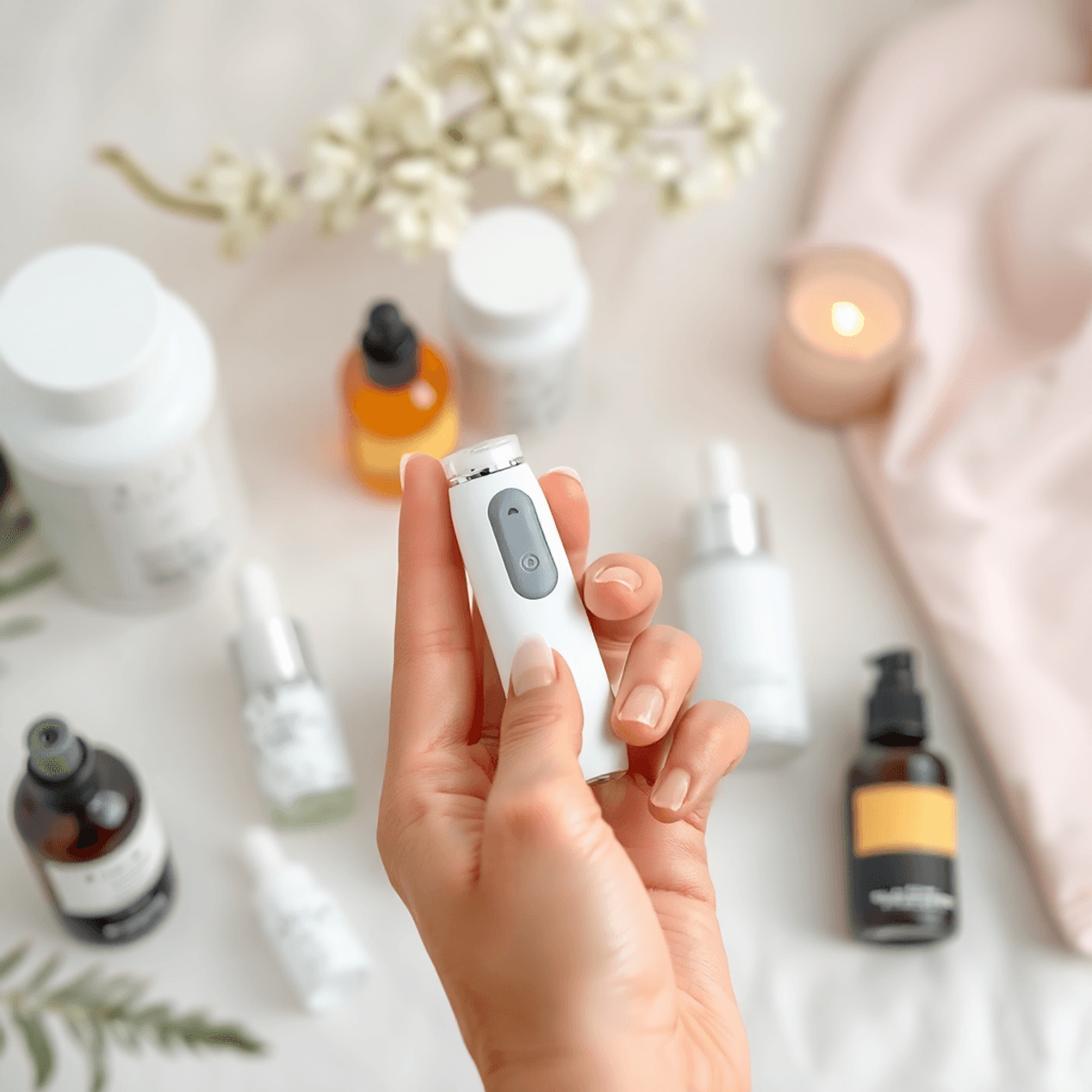
A study in the Journal of Cosmetic Dermatology demonstrated that human adipose-derived stem cell conditioned media applied topically for eight weeks produced statistically significant reductions in wrinkle depth and improvements in elasticity (Kim et al., 2020). When these same growth factors are delivered through open microchannels immediately post-procedure, they bypass the epidermal barrier entirely and reach the dermal fibroblasts where collagen remodeling originates. Bradceuticals’ Gold Mesenchymal Stem Cell Growth Factor Serum is formulated as a cornerstone among microneedling aftercare products — a lightweight concentration of human mesenchymal stem cell conditioned media designed for application on damp, dewy skin immediately post-procedure, never as a gliding serum during treatment.
Why Microneedling Aftercare Products Matter More Than the Procedure Itself
The Absorption Window Closes Fast
Microchannels begin sealing within minutes as the coagulation cascade activates. Applying microneedling aftercare products within the first one to two minutes — while skin is still damp and channels remain open — ensures growth factors, hyaluronic acid, and peptides reach their target receptors in the dermis. Waiting thirty minutes reduces penetration to near-normal topical levels, negating much of the advantage microneedling provides.
Fibroblasts Are in Activation Mode
The controlled injury from microneedling triggers endogenous growth factor release as part of the wound healing response. Supplementing this natural cascade with exogenous growth factors from your microneedling aftercare products amplifies collagen synthesis beyond what the procedure achieves alone. Research from Seoul National University confirmed that mesenchymal stem cell conditioned media boosted type I collagen production by up to 31% in dermal fibroblasts versus untreated controls (Park et al., 2019). Timing this delivery to coincide with fibroblast activation creates a compounding effect.
Wrong Products Cause Real Damage
Freshly microneedled skin has a temporarily compromised barrier. Applying microneedling aftercare products containing retinoids, alpha hydroxy acids, beta hydroxy acids, high-concentration vitamin C, fragrance, or alcohol during the first 48 to 72 hours causes stinging, excessive inflammation, prolonged redness, and potential scarring. The enhanced absorption that makes microneedling powerful also makes ingredient selection critical — irritants penetrate just as deeply as beneficial actives.
The Healing Phases and Which Microneedling Aftercare Products Each Phase Requires
Phase 1 — Hemostasis (Minutes 1–10)
Microchannels fill with platelet-rich blood that initiates clotting. This is the prime application window. Your growth factor serum should be open and ready before the procedure begins. Apply Bradceuticals’ Gold Mesenchymal Stem Cell Growth Factor Serum to damp skin immediately — growth factors begin binding to activated fibroblast and keratinocyte receptors within minutes. Follow with a medium to high molecular weight hyaluronic acid to lock in hydration without irritating raw tissue.
Phase 2 — Inflammatory Response (Days 1–4)
Redness, warmth, and mild swelling are normal as neutrophils and macrophages clear debris. Your microneedling aftercare products during this phase should contain zero fragrance, zero active acids, and zero alcohol. Continue twice-daily application of your growth factor serum and hyaluronic acid. Add a ceramide-rich moisturizer to support barrier reconstruction. Apply broad-spectrum SPF 30 or higher every morning — inflamed skin is acutely vulnerable to UV damage that can trigger post-inflammatory hyperpigmentation. The complete stages of microneedling recovery provides day-by-day guidance through this sensitive phase.
Phase 3 — Proliferation (Days 4–14)
Fibroblasts are actively depositing new type I and type III collagen. Keratinocytes migrate to re-epithelialize the surface. This is when your microneedling aftercare products have the greatest impact on long-term collagen quantity. Continue growth factor serum and hyaluronic acid twice daily. After day seven, reintroduce vitamin C serum in the morning as an antioxidant and collagen synthesis cofactor. Niacinamide can also be added for barrier strengthening and tone correction. The healing stages every patient should know maps exactly when each active is safe to reintroduce.
Phase 4 — Remodeling (Day 14 Onward)
Type III collagen gradually converts to stronger type I collagen over the following weeks. Your full skincare routine can resume, but continuing your core microneedling aftercare products — particularly the growth factor serum — maintains the signaling environment that supports this extended remodeling. Collagen maturation continues for up to 90 days post-procedure, which is why consistent product use between sessions matters as much as the application immediately after treatment.
The Essential Categories of Microneedling Aftercare Products
Growth Factor Serums — The Foundation
Growth factors from human stem cell conditioned media represent the most clinically validated category of microneedling aftercare products. EGF, TGF-β, PDGF, and VEGF each bind to specific fibroblast receptors to trigger collagen synthesis, cell proliferation, and tissue repair. A clinical trial in the International Journal of Molecular Sciences confirmed that topical EGF accelerated re-epithelialization and improved texture in compromised skin (Esquirol-Caussa & Herrero-Vila, 2015). The reasons why EGF serums lead skin rejuvenation explains how this single growth factor drives measurable recovery improvements when delivered through microchannels.
Hyaluronic Acid — Immediate Hydration
Medium to high molecular weight hyaluronic acid provides essential hydration without irritating freshly treated skin. It draws water into the upper dermis and epidermis, preventing the tight, dry sensation common in the first hours post-procedure. Dehydrated skin downregulates growth factor receptor activity, so maintaining hydration directly supports the efficacy of every other active in your microneedling aftercare products lineup.
Ceramide Moisturizers — Barrier Reconstruction
Microneedling temporarily disrupts the lipid barrier that prevents transepidermal water loss. Ceramide-based moisturizers restore this protective layer, sealing growth factors and hyaluronic acid against the skin while preventing environmental irritants from entering through open microchannels. Apply after your serums have absorbed for sixty seconds to create an occlusive seal without blocking penetration.
Mineral Sunscreen — Non-Negotiable Protection
UV exposure on freshly microneedled skin causes accelerated photodamage and post-inflammatory hyperpigmentation. A mineral sunscreen containing zinc oxide or titanium dioxide provides broad-spectrum protection without the chemical filters that can sting compromised skin. This is one of the most overlooked microneedling aftercare products, yet skipping it can undo the collagen gains your entire routine is designed to produce.
Niacinamide — Barrier Support and Tone Correction
Niacinamide (vitamin B3) strengthens the skin barrier, reduces inflammation, and addresses the uneven pigmentation that deeper needle depths can temporarily cause. It is gentle enough for introduction from day one post-procedure and works synergistically with growth factors by maintaining the barrier integrity that supports receptor function.
What to Exclude From Your Microneedling Aftercare Products
Knowing what to avoid is equally important as knowing what to apply. The following ingredients have no place in microneedling aftercare products during the first 48 to 72 hours:
Retinoids accelerate cell turnover through a mechanism that causes peeling and photosensitivity — both dangerous on compromised skin. Reintroduce after day 14.
AHA and BHA acids (glycolic, salicylic, lactic) dissolve intercellular bonds in the stratum corneum. On microneedled skin with an already disrupted barrier, they cause burning, excessive redness, and delayed healing.
High-concentration vitamin C (above 10% L-ascorbic acid) is too acidic for freshly treated skin. Wait until day seven to reintroduce at lower concentrations.
Fragrance and essential oils serve no therapeutic purpose and are among the most common causes of contact irritation on sensitized skin.
Alcohol-based toners strip remaining lipids from an already compromised barrier, increasing transepidermal water loss and inflammation.
The microneedling healing timeline provides specific day-by-day guidance on when each of these actives can safely return to your routine.
Application Technique for Microneedling Aftercare Products
Step 1 — Prepare Before the Procedure
Have all microneedling aftercare products open, dispensed, and within arm’s reach before beginning your session. Every second of delay after the last needle pass reduces absorption through closing microchannels.
Step 2 — Growth Factor Serum on Damp Skin
Apply immediately to skin that is still damp and dewy. Do not towel dry. Do not wait for pinpoint bleeding to stop. The serum travels through open channels alongside the body’s own platelet-rich plasma for maximum dermal delivery.
Step 3 — Hyaluronic Acid Layer
Apply medium to high molecular weight hyaluronic acid over the growth factor serum. This provides hydration that supports receptor activity and prevents the tight, dehydrated sensation that discourages consistent aftercare compliance.
Step 4 — Ceramide Moisturizer Seal
After sixty seconds of serum absorption, apply a fragrance-free ceramide moisturizer. This occlusive layer keeps all actives in contact with the skin and begins barrier reconstruction immediately.
Step 5 — Mineral Sunscreen (Morning Only)
If your procedure was performed during daytime hours, apply mineral SPF as the final step. If performed in the evening, skip sunscreen until the following morning but apply it before any UV exposure.
Step 6 — Repeat Twice Daily for 14 Days
Continue the core sequence — growth factor serum, hyaluronic acid, ceramide moisturizer — morning and evening for the full proliferative phase. This sustained growth factor exposure produces the compounding collagen benefit that distinguishes excellent results from average ones.
Building a Long-Term Strategy With Microneedling Aftercare Products
Most protocols recommend microneedling every four to six weeks. Your microneedling aftercare products should remain part of your daily routine between sessions — not just on procedure days. A 2021 review in Stem Cell Research & Therapy found that consistent application of stem cell conditioned media over 8 to 12 weeks produced cumulative improvements in wrinkle depth, elasticity, and dermal thickness (Katagiri et al., 2021). Daily use maintains elevated growth factor levels that keep fibroblasts in an active state between procedures.
The best stem cell serums ranked for 2026 evaluates which growth factor formulations perform best as both immediate post-procedure and daily maintenance products. For those also addressing pigmentation, research in Annals of Dermatology showed that stem cell conditioned media suppressed melanin synthesis (Seo et al., 2019), making growth factor serums particularly valuable for managing sun damage alongside texture improvement.
Frequently Asked Questions
What are the most important microneedling aftercare products? A growth factor serum, hyaluronic acid, ceramide moisturizer, and mineral sunscreen form the essential core. Bradceuticals’ Gold Mesenchymal Stem Cell Growth Factor Serum provides the growth factor foundation, applied to damp skin immediately post-procedure.
How soon after microneedling should I apply aftercare products? Within the first one to two minutes, while microchannels remain open and skin is still damp. Having products ready before the procedure ensures zero delay.
Can I use my regular skincare products after microneedling? Not immediately. For the first 48 to 72 hours, limit your routine to growth factor serum, hyaluronic acid, ceramide moisturizer, and mineral sunscreen. Reintroduce other actives gradually following the healing timeline.
How long should I use microneedling aftercare products after each session? Continue the core aftercare sequence twice daily for at least 14 days to cover the full proliferative phase. For optimal results, maintain daily use between sessions.
Do I need different microneedling aftercare products for at-home vs. professional treatments? The product categories remain the same — growth factors, hyaluronic acid, ceramides, sunscreen. Professional treatments using deeper needle depths may require a longer exclusion period for retinoids and acids before reintroduction.
References
- Doddaballapur, S. (2009). Microneedling with dermaroller. Journal of Cutaneous and Aesthetic Surgery. https://pmc.ncbi.nlm.nih.gov/articles/PMC2996801/
- Kim, Y.J., et al. (2020). Human adipose-derived stem cell conditioned media and skin elasticity. Journal of Cosmetic Dermatology. https://pubmed.ncbi.nlm.nih.gov/31573748/
- Park, B.S., et al. (2019). Adipose-derived stem cells and their secretory factors for skin aging. Dermatologic Surgery. https://pmc.ncbi.nlm.nih.gov/articles/PMC6835893/
- Esquirol-Caussa, J. & Herrero-Vila, E. (2015). EGF applications in dermatology. International Journal of Molecular Sciences. https://pubmed.ncbi.nlm.nih.gov/26370986/
- Katagiri, W., et al. (2021). Clinical applications of stem cell conditioned media. Stem Cell Research & Therapy. https://pmc.ncbi.nlm.nih.gov/articles/PMC7815998/
- Seo, K.Y., et al. (2019). Stem cell conditioned media and melanin regulation. Annals of Dermatology. https://pubmed.ncbi.nlm.nih.gov/33911573/
Disclaimer: This article is for informational purposes only and does not constitute medical advice. Consult a board-certified dermatologist before beginning any new skincare regimen.
Last reviewed: March 31, 2026
About Bradceuticals : Thuy Myers is the founder of Bradceuticals which manufactures and distributes skin care and hair regrowth serums that use growth factors from human stem cells as the catalyst for regeneration. When she is not busy running the business and maintaining blogs, she is continuing her practice as a semiconductor engineer and occasionally teaches college engineering. In her free time, she enjoys the beach, working out at the gym and hanging out with her kiddo Brad.