

The skincare industry generates endless product launches each year, but stem cell serum for skin stands apart because it operates through a biological mechanism no other category of active ingredient can replicate — paracrine growth factor signaling that instructs fibroblasts to resume collagen and elastin synthesis at rates your aging skin can no longer sustain on its own. Human mesenchymal stem cell conditioned media contains EGF, FGF, TGF-β, VEGF, PDGF, and dozens of supporting cytokines that bind to receptors on your skin cells with native affinity, triggering the same regenerative cascades your body used to maintain youthful structure before age-related decline silenced them (Suh et al., 2019). A stem cell serum for skin built on this conditioned media does not simply hydrate or temporarily plump — it restores the intercellular communication that determines whether your dermis rebuilds or continues thinning.
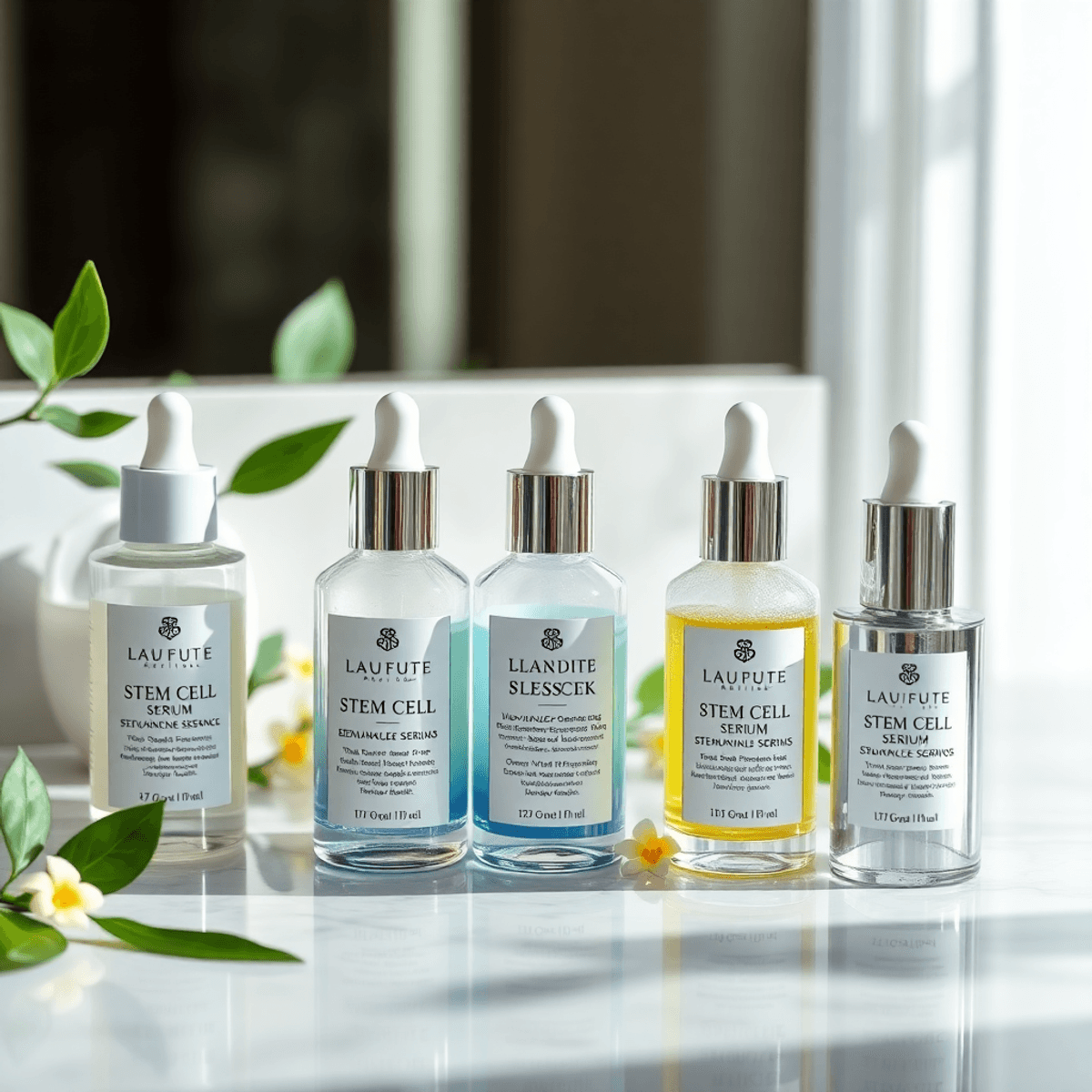
Collection of stem cell serum for skin bottles with dropper caps and botanical accents for advanced anti-aging rejuvenation
stem cell serum for skin, best stem cell skin serum, growth factor serum for skin rejuvenation, stem cell serum anti aging skin, stem cell serum skin repair
The best stem cell serum for skin delivers growth factors that rebuild collagen and reverse visible aging at the cellular level
9 Transformative Stem Cell Serum for Skin Formulas That Redefine Anti-Aging Results in 2026
The skincare industry generates endless product launches each year, but stem cell serum for skin stands apart because it operates through a biological mechanism no other category of active ingredient can replicate — paracrine growth factor signaling that instructs fibroblasts to resume collagen and elastin synthesis at rates your aging skin can no longer sustain on its own. Human mesenchymal stem cell conditioned media contains EGF, FGF, TGF-β, VEGF, PDGF, and dozens of supporting cytokines that bind to receptors on your skin cells with native affinity, triggering the same regenerative cascades your body used to maintain youthful structure before age-related decline silenced them (Suh et al., 2019). A stem cell serum for skin built on this conditioned media does not simply hydrate or temporarily plump — it restores the intercellular communication that determines whether your dermis rebuilds or continues thinning.
A controlled study in the Journal of Cosmetic Dermatology confirmed that human adipose-derived stem cell conditioned media applied topically for eight weeks produced statistically significant reductions in wrinkle depth and improvements in skin elasticity compared to placebo (Kim et al., 2020). These results reflect actual structural remodeling in the dermis — not the temporary effects that hyaluronic acid or peptides alone provide. Bradceuticals’ Gold Mesenchymal Stem Cell Growth Factor Serum delivers this complete secretome in a lightweight formula designed for application on damp, dewy skin — the optimal delivery state for growth factor absorption whether applied as part of a daily routine or immediately after microneedling through open microchannels where it reaches dermal fibroblasts at concentrations that surface application alone cannot match.
What Makes a Stem Cell Serum for Skin Different From Every Other Anti-Aging Product
The Paracrine Signaling Advantage
Most anti-aging products work through a single mechanism. Retinol binds to nuclear retinoic acid receptors to increase cell turnover. Vitamin C serves as a collagen synthesis cofactor. Peptides mimic collagen fragments to indirectly stimulate production. A stem cell serum for skin delivers the complete growth factor environment that fibroblasts require to function at full capacity — the same multi-signal approach your body uses to orchestrate tissue repair naturally.
Research from Seoul National University demonstrated that mesenchymal stem cell conditioned media increased type I collagen production by up to 31% in dermal fibroblasts versus untreated controls (Park et al., 2019). This increase comes from coordinated multi-growth-factor signaling — not from any single isolated protein. A stem cell serum for skin containing the complete secretome delivers EGF for keratinocyte renewal, FGF for direct fibroblast activation, TGF-β for anti-inflammatory collagen driving, VEGF for vascular support, and PDGF for organized tissue remodeling — all in their native biological ratios.
Why Aging Skin Loses Its Regenerative Capacity
After age 30, fibroblast density in the dermis declines approximately 1% per year, and remaining fibroblasts become progressively less responsive to regenerative signals (Varani et al., 2006). Simultaneously, the skin’s own production of EGF, FGF, and other cytokines diminishes. A stem cell serum for skin replenishes the exogenous growth factor supply that aging depletes — reactivating the collagen production machinery your skin already possesses but can no longer drive at full capacity without external signaling support.
Human-Derived vs. Plant-Based: The Distinction That Determines Results
This is the most important distinction in the entire stem cell serum for skin category. Understanding it protects you from spending premium prices on products that cannot deliver what their marketing implies.
Human-Derived Conditioned Media
Human mesenchymal stem cell conditioned media contains growth factors that bind to your skin cell receptors with native affinity because the signals and targets evolved within the same biological system. When EGF from human conditioned media encounters a keratinocyte receptor, the binding event and downstream cascade match what the cell expects from its own endogenous production. A stem cell serum for skin built on human conditioned media delivers genuine regenerative capability — measurable collagen synthesis increases supported by published peer-reviewed research.
Plant-Derived Stem Cell Extracts
Plant stem cell extracts from Swiss apple, grape, edelweiss, and argan produce metabolites that protect plant tissue from environmental stress. These extracts deliver polyphenolic antioxidants and anti-inflammatory compounds that meaningfully reduce oxidative damage to existing collagen. A study confirmed that apple stem cell extract shielded cells from oxidative stress (Barbulova et al., 2015).
However, plant growth factors cannot bind to human fibroblast receptors. They cannot initiate collagen-synthesis signaling cascades. A plant-based stem cell serum for skin provides antioxidant protection — valuable for preservation — but it operates through a categorically different mechanism than human-derived formulations. The best stem cell serums ranked for 2026 compares products across this critical sourcing distinction.
Key Ingredients That Support a Stem Cell Serum for Skin
Hyaluronic Acid — The Hydration Foundation
Growth factor receptor binding requires aqueous conditions. Hyaluronic acid maintains the hydrated tissue environment that keeps receptors accessible and functional. Medium to high molecular weight hyaluronic acid applied after your stem cell serum for skin creates the aqueous dermal environment that collagen synthesis requires. The best hyaluronic acid serums for microneedling evaluates formulations that pair most effectively with growth factors.
Niacinamide — Barrier Protection
Niacinamide strengthens the lipid barrier, reduces post-inflammatory redness, and inhibits melanin transfer. It protects the structural environment where growth factors from your stem cell serum for skin are actively driving collagen synthesis — making it an ideal supporting ingredient in your moisturizer layer.
Peptides — Complementary Collagen Signaling
Copper peptides and palmitoyl tripeptide-1 stimulate collagen through pathways independent of growth factor receptor binding. Including peptides alongside your stem cell serum for skin creates layered collagen-building instructions from multiple biological angles.
Vitamin C — Collagen Synthesis Cofactor
Vitamin C serves as an essential cofactor for prolyl hydroxylase — the enzyme required for stable collagen triple-helix formation. Fibroblasts stimulated by growth factors in your stem cell serum for skin require adequate vitamin C to translate increased production into structurally sound collagen fibers (Pullar et al., 2017). Apply vitamin C in the morning after your growth factor serum.
How to Apply a Stem Cell Serum for Skin Correctly
Morning Protocol
Cleanse with a gentle, pH-balanced wash. Apply your stem cell serum for skin to damp, dewy facial skin — never bone dry. Use fingertip patting to distribute evenly. Prioritize periorbital area, nasolabial folds, forehead lines, and neck. Follow with vitamin C serum, niacinamide moisturizer, and broad-spectrum SPF 30+. UV-induced matrix metalloproteinase activation degrades the collagen your stem cell serum for skin is working to build — making daily sunscreen non-negotiable.
Evening Protocol
Double cleanse to remove sunscreen and environmental debris. Apply your stem cell serum for skin to clean, damp skin. Evening application leverages the nocturnal growth hormone peak that creates a synergistic window for repair. On alternating nights, apply retinol after the serum has absorbed for two minutes — retinol upregulates collagen gene expression through a pathway complementary to growth factor receptor signaling. Seal with a ceramide-rich night cream.
Post-Microneedling Protocol
Microneedling creates microchannels that increase growth factor penetration by up to 300% (Singh & Yadav, 2016). Apply Bradceuticals’ Gold Mesenchymal Stem Cell Growth Factor Serum to damp skin within the first one to two minutes post-procedure — never as a gliding serum during treatment. Follow with hyaluronic acid and ceramide moisturizer. Skip retinoids, acids, and fragrance for 48 to 72 hours. The complete stages of microneedling recovery maps the optimal product schedule for each healing phase. The healing stages every patient should know provides day-by-day reintroduction guidance.
Results Timeline — What a Stem Cell Serum for Skin Delivers Over Time
Weeks 1–2: Hydration and Radiance
The earliest changes involve improved hydration and a subtle glow as EGF-accelerated keratinocyte turnover produces a fresher epidermal surface. Skin feels smoother and more supple. These are the first visible indicators that your stem cell serum for skin is activating cellular renewal.
Weeks 3–6: Texture and Tone Improvement
Fine lines begin softening as new collagen deposition manifests beneath the surface. Skin tone becomes more even as growth factor signaling modulates melanocyte activity. Research in Annals of Dermatology found that stem cell conditioned media suppressed melanin synthesis (Seo et al., 2019), explaining the pigmentation correction visible at this stage. For those also addressing sun damage, this dual action makes a stem cell serum for skin particularly effective.
Weeks 8–12: Structural Collagen Changes
A 2021 review in Stem Cell Research & Therapy confirmed that 8 to 12 weeks of consistent growth factor application produced statistically significant improvements in wrinkle depth, skin elasticity, and dermal thickness (Katagiri et al., 2021). This is when the structural benefits of your stem cell serum for skin become clearly measurable — reduced wrinkle depth, improved firmness, enhanced bounce-back when pressed.
Months 4–6: Mature Remodeling
Type III collagen converts to stronger type I collagen. With monthly microneedling sessions added, dermal thickness continues increasing. The combination of enhanced microchannel delivery and daily topical stem cell serum for skin application accelerates results beyond what either approach achieves alone. The reasons why EGF serums lead skin rejuvenation details the long-term benefits of sustained growth factor exposure.
Safety Profile of a Stem Cell Serum for Skin
Human mesenchymal stem cell conditioned media contains anti-inflammatory cytokines including IL-10 and TGF-β that actively calm reactive skin. Commercial formulations contain conditioned media or extracts — not living cells. Side effects are rare and typically limited to mild irritation from preservatives or fragrances in lower-quality products.
When choosing a stem cell serum for skin, prioritize formulations that specify their conditioned media source, eliminate fragrance and unnecessary preservatives, and provide clinical references supporting their formulation. The best growth factor serums for youthful skin evaluates products across these quality indicators.
Authenticity Verification
Purchase from authorized retailers and verified brand websites. Check ingredient lists for specified growth factor sources — vague “stem cell extract” without biological origin details suggests trace amounts included for label positioning rather than therapeutic concentrations. A quality stem cell serum for skin lists conditioned media or growth factors among the first five INCI ingredients.
Frequently Asked Questions
What does a stem cell serum for skin actually do? It delivers growth factors — EGF, FGF, TGF-β, VEGF, PDGF — that signal fibroblasts to produce more collagen and elastin, accelerate keratinocyte turnover for fresher surface cells, modulate chronic inflammation, and support the extracellular matrix that maintains skin structure and firmness.
How is a stem cell serum for skin different from retinol? Retinol modulates gene expression indirectly through nuclear receptor binding. A stem cell serum for skin delivers proteins that directly activate receptor-mediated cellular responses — proliferation, migration, and collagen synthesis. They work through completely different pathways and produce complementary results when combined on alternating evenings.
Can I use a stem cell serum for skin on sensitive or reactive skin? Yes. Human conditioned media contains anti-inflammatory cytokines that actively calm reactive skin. Choose fragrance-free formulations. Bradceuticals’ serum is formulated for application on compromised skin, making it appropriate for sensitive types.
How long before I see results from a stem cell serum for skin? Hydration and radiance within 1 to 2 weeks. Texture and tone improvement by weeks 4 to 6. Measurable wrinkle reduction and elasticity gains at 8 to 12 weeks. Maximum structural transformation over 4 to 6 months of consistent twice-daily application.
Should I use a stem cell serum for skin with microneedling? This is the optimal delivery method. Microneedling every 4 to 6 weeks with your stem cell serum for skin applied through open channels immediately post-treatment delivers growth factors at concentrations that daily topical use cannot match. The microneedling healing timeline guides optimal post-procedure application.
Are plant stem cell serums as effective as human-derived formulations? Plant extracts provide antioxidant protection but cannot bind to human fibroblast receptors or initiate collagen synthesis. For structural anti-aging through collagen induction, human stem cell conditioned media delivers the biological signaling that plant extracts cannot replicate.
References
- Suh, A., et al. (2019). Adipose-derived mesenchymal stem cell secretome. International Journal of Molecular Sciences. https://pmc.ncbi.nlm.nih.gov/articles/PMC6835901/
- Kim, Y.J., et al. (2020). Human adipose-derived stem cell conditioned media and skin elasticity. Journal of Cosmetic Dermatology. https://pubmed.ncbi.nlm.nih.gov/31573748/
- Park, B.S., et al. (2019). Adipose-derived stem cells and their secretory factors for skin aging. Dermatologic Surgery. https://pmc.ncbi.nlm.nih.gov/articles/PMC6835893/
- Varani, J., et al. (2006). Decreased collagen production in chronologically aged skin. American Journal of Pathology. https://pubmed.ncbi.nlm.nih.gov/16675963/
- Barbulova, A., et al. (2015). Plant stem cells in cosmetics. Journal of Applied Pharmaceutical Sciences. https://pmc.ncbi.nlm.nih.gov/articles/PMC4740987/
- Katagiri, W., et al. (2021). Clinical applications of stem cell conditioned media. Stem Cell Research & Therapy. https://pmc.ncbi.nlm.nih.gov/articles/PMC7815998/
- Seo, K.Y., et al. (2019). Stem cell conditioned media and melanin regulation. Annals of Dermatology. https://pubmed.ncbi.nlm.nih.gov/33911573/
- Singh, A. & Yadav, S. (2016). Microneedling: Advances and widening horizons. Indian Dermatology Online Journal. https://pmc.ncbi.nlm.nih.gov/articles/PMC5556159/
- Pullar, J.M., et al. (2017). The roles of vitamin C in skin health. Nutrients. https://pmc.ncbi.nlm.nih.gov/articles/PMC3673383/
Disclaimer: This article is for informational purposes only and does not constitute medical advice. Consult a board-certified dermatologist before beginning any new skincare regimen.
Last reviewed: April 2026
About Bradceuticals : Thuy Myers is the founder of Bradceuticals which manufactures and distributes skin care and hair regrowth serums that use growth factors from human stem cells as the catalyst for regeneration. When she is not busy running the business and maintaining blogs, she is continuing her practice as a semiconductor engineer and teaches college engineering. In her free time, she enjoys the beach, working out at the gym and hanging out with her kiddo.