

The best serums for microneedling aren’t defined by marketing claims — they’re defined by what happens at the molecular level the moment the needles lift. Microneedling creates temporary micro-channels through the stratum corneum, the skin’s primary barrier, allowing hydrophilic and large-molecular-weight actives to cross directly into the dermis — a route that is essentially unavailable to these same molecules on untouched skin. (PMC11993440) Four sessions of microneedling spaced one month apart have been shown histologically to produce up to a 400% increase in collagen and elastin deposition at six months post-treatment. (PMC4976400) Selecting the right best serums for microneedling is what determines whether those results reach their ceiling or fall short of it.
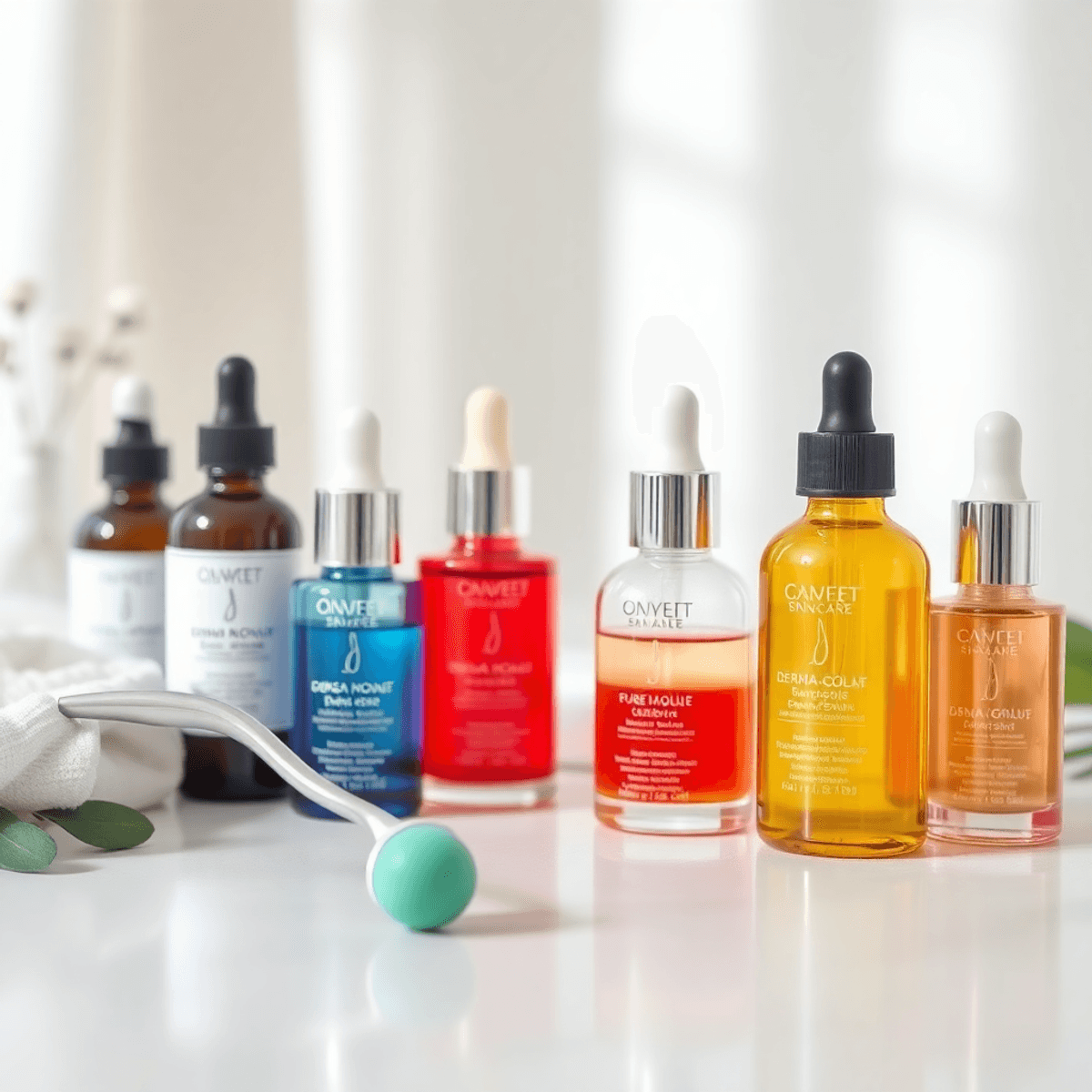
The Bradceuticals Gold Mesenchymal Stem Cell Growth Factor Serum was built for exactly this protocol. Its stem cell-derived growth factors, peptides, and regenerative cytokines are applied to damp, dewy skin immediately post-microneedling — never to dry skin, never during the procedure — where the open micro-channels deliver them straight into the dermis while the healing cascade is actively running. Standalone results are real. Post-microneedling results are on another level. Pair them and the difference compounds with every session.
Why the Best Serums for Microneedling Outperform Regular Skincare
The science behind why serums for microneedling perform differently than standard topical application comes down to molecular access. The stratum corneum blocks most molecules above 500 Daltons from penetrating intact skin. Growth factors, peptides, and higher molecular weight HA fractions all exceed this threshold — under normal conditions they cannot meaningfully reach the dermis. Microneedling eliminates this barrier temporarily, creating micro-conduits that allow large macromolecules to travel through the skin and reach the dermal layers where collagen remodeling is actively occurring. (PMC9024532)
A randomized controlled trial confirmed this advantage directly: adding growth factor serum post-microneedling produced significantly greater improvements in skin texture and hydration than microneedling alone, with VISIA imaging confirming superior outcomes across all measured parameters in the growth factor group. (PMC7716740) This is the clinical foundation for the best serums for microneedling category — the procedure creates the access, and the serum capitalizes on it.
The 7 Best Serums for Microneedling Ranked by Evidence
1. Stem Cell Growth Factor Serum: The Most Regenerative of the Best Serums for Microneedling
Mesenchymal stem cell-derived conditioned media is the most biologically comprehensive of all the best serums for microneedling. It delivers a broad complex of growth factors — including EGF, VEGF, and PDGF — alongside anti-inflammatory cytokines and extracellular matrix proteins that regulate collagen synthesis, accelerate tissue repair, and suppress excessive post-procedural inflammation simultaneously. (PMC7716740) A randomized split-face study further confirmed that microneedling combined with stem cell conditioned media produced measurably superior skin brightness, texture, and rejuvenation compared to microneedling with saline alone. (PMC9171013)
The Bradceuticals Gold Mesenchymal Stem Cell Growth Factor Serum is applied post-microneedling only, to damp, dewy skin, using a light tapping motion. It is never used as a gliding serum. For a full ranked breakdown of this category, see 7 Best Stem Cell Serums for Microneedling.
2. Hyaluronic Acid Serum: The Most Broadly Appropriate of the Best Serums for Microneedling
Hyaluronic acid is a glycosaminoglycan naturally present in the dermal extracellular matrix and among the most clinically supported best serums for microneedling recovery. A randomized clinical study of 60 patients found that applying HA post-microneedling produced significantly faster healing, reduced bruising, and a higher proportion of “good” to “very good” improvement ratings compared to microneedling without HA. (PMC10833484) HA plays a direct role in wound healing by creating the physiological conditions in the extracellular matrix needed for fibroblast proliferation, migration, and collagen organization. (PMC10833484)
Multi-weight HA formulas deliver the broadest benefit — high molecular weight HA forms a protective surface film while low molecular weight fractions penetrate deeper for anti-inflammatory and structural support. Applied to damp, dewy skin immediately after treatment, HA is appropriate for every skin type including the most sensitive. For top-ranked options in this category, see 5 Best Hyaluronic Acid Serums to Use with Microneedling.
3. EGF Serum: The Best Serums for Microneedling That Accelerate Surface Healing
Epidermal growth factor plays a central role in wound healing by regulating keratinocyte survival, proliferation, migration, and differentiation — all of which are directly relevant to skin recovery after microneedling. (PMC10333026) EGF’s molecular weight makes transdermal delivery challenging under normal conditions, but microneedling solves this by creating direct pathways into the dermis where EGF receptors are expressed on fibroblasts and endothelial cells. (PMC10333026) A double-blind randomized controlled split-face trial found that a cross-linked HA microneedle patch containing EGF produced measurable improvements in hydration, photodamage scoring, and wrinkle appearance compared to HA alone. (PMC7992733)
For the full science behind this ingredient, 10 Reasons Why EGF Serums Are the Best for Skin Rejuvenation covers the clinical evidence in depth.
4. Peptide Serum: Best Serums for Microneedling That Extend Collagen Signaling
Peptides are among the most targeted of the best serums for microneedling for sustained collagen support. Signal peptides stimulate fibroblasts to upregulate collagen and elastin synthesis, carrier peptides deliver wound-healing trace elements like copper, and enzyme inhibitor peptides slow the matrix metalloproteinases that break down newly formed collagen. (PMC11762834) Copper Tripeptide-1 (GHK-Cu) is among the most studied of these, participating directly in enzymatic tissue repair and wound healing processes at the dermal level. (PMC11762834)
Used consistently between microneedling sessions, quality peptide serums for microneedling extend the collagen induction signal initiated by the procedure and contribute to more organized, denser dermal architecture over a full treatment series. See 10 Best Growth Factor Serums for Youthful Skin for ranked options in the growth factor and peptide category.
5. Ceramide Serum: Best Serums for Microneedling That Protect the Healing Barrier
Ceramides are lipids native to the stratum corneum that maintain barrier integrity and moisture retention. As best serums for microneedling in the recovery window, they serve a critical role: the same barrier disruption that makes post-microneedling serum absorption so effective also creates temporary vulnerability to moisture loss and environmental irritants. Ceramide serums for microneedling counter this by reinforcing the barrier as it heals, sustaining the hydration delivered by other actives, and reducing transepidermal water loss during the days immediately following treatment. Applied to damp, dewy skin, ceramide formulas are most effective when combined with HA as a complementary layer to seal in surface moisture while deeper layers rebuild.
6. Niacinamide Serum: Best Serums for Microneedling for Calming Redness and Inflammation
Niacinamide is one of the most evidence-supported best serums for microneedling for managing post-procedural sensitivity. Topical application stabilizes epidermal barrier function, stimulates ceramide synthesis, and demonstrates measurable anti-inflammatory effects across multiple skin conditions including acne, rosacea, and irritant-induced inflammation. (PubMed 17147561) At the dermal level, niacinamide promotes fibroblast collagen synthesis and inhibits the matrix metalloproteinases responsible for collagen degradation. (PMC8389214) This dual action — calming surface inflammation while simultaneously supporting collagen formation — makes it uniquely suited to the 24 to 72 hours post-procedure when skin is at peak sensitivity.
7. Vitamin C Serum: Best Serums for Microneedling for Long-Term Brightening
Vitamin C rounds out the best serums for microneedling category as a long-term brightening and collagen-support strategy rather than an immediate post-procedure active. As a direct cofactor in enzymatic collagen synthesis and a potent antioxidant that neutralizes UV-induced oxidative stress, it complements the structural work that microneedling initiates. The critical caveat: high-concentration vitamin C is too stimulating for freshly needled skin with a compromised barrier. It should be reintroduced 48 to 72 hours post-procedure and used consistently in the weeks between sessions. Always apply to damp, dewy skin. For related guidance on correcting cumulative pigmentation damage, 7 Proven Ways to Treat Sun-Damaged Skin provides additional context.
Key Ingredients to Look For in the Best Serums for Microneedling
Not all serums for microneedling are formulated equally. When evaluating products in this category, these are the ingredient markers that separate the best serums for microneedling from generic skincare:
Growth factors and cytokines — the most advanced actives for post-microneedling use, with clinical trial evidence supporting their superiority over microneedling alone.
Hyaluronic acid (multi-weight) — clinically validated for post-procedure healing support, wound healing, and extracellular matrix organization.
EGF — directly regulates the keratinocyte and fibroblast activity central to post-microneedling tissue repair.
Peptides (signal + carrier) — extend collagen induction and support wound healing at the enzymatic level.
Niacinamide — multi-mechanism anti-inflammatory and barrier support, ideal in the immediate recovery window.
Ceramides — barrier reinforcement and moisture sealing post-procedure.
Avoid retinoids, AHAs, BHAs, and high-concentration vitamin C in the immediate post-procedure window. These actives are too stimulating for temporarily compromised skin and can interfere with the healing cascade rather than support it.
How to Apply the Best Serums for Microneedling for Maximum Results
Correct application technique extracts the full value from every serum for microneedling in your protocol. Always apply the best serums for microneedling to damp, dewy skin — never to skin that is completely dry. Moisture on the surface supports absorption and helps prevent product from sitting on top rather than penetrating. Use a gentle tapping or pressing motion rather than rubbing, which can disrupt the micro-channels and irritate the treated tissue.
When layering multiple best serums for microneedling, begin with the thinnest consistency — typically the growth factor serum or HA serum — and work toward heavier formulations. Seal the final layer with a gentle fragrance-free moisturizer to minimize moisture loss during the healing phase. For a detailed timeline of recovery phases and what your skin needs at each stage, 7 Complete Stages of Microneedling Recovery Time is a practical reference.
Building a Full Protocol Around the Best Serums for Microneedling
The best serums for microneedling deliver compounding results across a full treatment series. A complete protocol looks like this: stem cell growth factor serum applied to damp skin immediately post-procedure; HA serum for ongoing hydration support during recovery; niacinamide serum in the first 72 hours for barrier calming; peptide and ceramide serums reintroduced during the week following treatment for continued collagen signaling and moisture protection; vitamin C serum added back between sessions for long-term brightening and antioxidant coverage.
Collagen deposited after each session matures and reorganizes over months, meaning the full benefit of a series is greater than any individual treatment. The best serums for microneedling maintain the regenerative environment that makes each session build on the last. For an expanded comparison of options in the stem cell category, 7 Proven Best Stem Cell Serums Ranked for 2026 provides additional detail.
Frequently Asked Questions About the Best Serums for Microneedling
What are the best serums for microneedling overall? Stem cell growth factor serums are the most scientifically supported best serums for microneedling, followed by hyaluronic acid for hydration and EGF for accelerated surface repair. The most effective protocol layers all three — growth factor serum applied immediately post-procedure, HA for ongoing hydration, and EGF to accelerate re-epithelialization.
When should I apply the best serums for microneedling? Immediately after your session, while micro-channels are open and skin is still damp. This is the window of maximum absorption for high-molecular-weight actives that cannot otherwise penetrate the intact stratum corneum.
Can any of the best serums for microneedling cause irritation? Retinoids, AHAs, BHAs, and high-concentration vitamin C should not be used as serums for microneedling in the immediate post-procedure window. They are too stimulating for temporarily compromised skin. The best serums for microneedling in the recovery phase — growth factors, HA, niacinamide, ceramides — are all formulated to support healing rather than challenge it.
How many sessions do I need before the best serums for microneedling make a visible difference? Histological studies document up to a 400% increase in collagen and elastin at six months following four sessions one month apart. (PMC4976400) The best serums for microneedling amplify and extend that result with every session.
Are the best serums for microneedling safe for sensitive skin? Hyaluronic acid, niacinamide, ceramides, and properly formulated growth factor serums are all appropriate for sensitive skin. Avoid anything with fragrance, alcohol, retinoids, or exfoliating acids in the immediate post-procedure window.
Do I need different best serums for microneedling between sessions versus on treatment day? Yes. On treatment day, prioritize growth factor serums, HA, and niacinamide on damp skin immediately post-procedure. Between sessions, reintroduce peptides, ceramides, and vitamin C to maintain the collagen-building environment. The best serums for microneedling used consistently between sessions compound the structural improvements from each treatment.
References
- Physiological Mechanisms and Therapeutic Applications of Microneedling: A Narrative Review. PMC11993440. https://pmc.ncbi.nlm.nih.gov/articles/PMC11993440/
- Microneedling: Advances and Widening Horizons. PMC4976400. https://pmc.ncbi.nlm.nih.gov/articles/PMC4976400/
- An Assessment of Microneedling with Topical Growth Factors: A Randomized Controlled Trial. PMC7716740. https://pmc.ncbi.nlm.nih.gov/articles/PMC7716740/
- Efficacy of Microneedling Combined With Mesenchymal Stem Cells Conditioned Media. PMC9171013. https://pmc.ncbi.nlm.nih.gov/articles/PMC9171013/
- Comparative Evaluation of Microneedling Alone Versus Microneedling with Hyaluronic Acid. PMC10833484. https://pmc.ncbi.nlm.nih.gov/articles/PMC10833484/
- The Use of Epidermal Growth Factor in Dermatological Practice. PMC10333026. https://pmc.ncbi.nlm.nih.gov/articles/PMC10333026/
- Anti-Wrinkle Efficacy of Cross-Linked HA Microneedle Patch with EGF. PMC7992733. https://pmc.ncbi.nlm.nih.gov/articles/PMC7992733/
- Peptides: Emerging Candidates for the Prevention and Treatment of Skin Senescence. PMC11762834. https://pmc.ncbi.nlm.nih.gov/articles/PMC11762834/
- Mechanistic Basis and Clinical Evidence for the Applications of Nicotinamide. PMC8389214. https://pmc.ncbi.nlm.nih.gov/articles/PMC8389214/
- Nicotinic Acid/Niacinamide and the Skin. PubMed 17147561. https://pubmed.ncbi.nlm.nih.gov/17147561/
- Microneedles in Action: Microneedling and Microneedles-Assisted Transdermal Delivery. PMC9024532. https://pmc.ncbi.nlm.nih.gov/articles/PMC9024532/
Disclaimer: This article is for educational purposes only and does not constitute medical advice. Always consult a licensed dermatologist or skincare professional before beginning any microneedling or serum protocol. Individual results vary.
Last reviewed: March 2026
About Bradceuticals : Thuy Myers is the founder of Bradceuticals which manufactures and distributes skin care and hair regrowth serums that use growth factors from human stem cells as the catalyst for regeneration. When she is not busy running the business and maintaining blogs, she is continuing her practice as a semiconductor engineer and teaches college engineering. In her free time, she enjoys the beach, working out at the gym and hanging out with her kiddo.