

You have tried every acne scars treatment on the market and your scars are STILL there — because nothing you have used actually fills the structural void beneath each depression. Research confirms that microneedling triggers up to 400% increase in collagen and elastin deposition after four sessions, with new fibers forming organized lattice patterns that replace disorganized scar tissue (Singh & Yadav, 2016 — DOI). Until you deliver growth factor signals directly into those voids through microchannels, your acne scars will remain unchanged no matter how many surface treatments you endure.
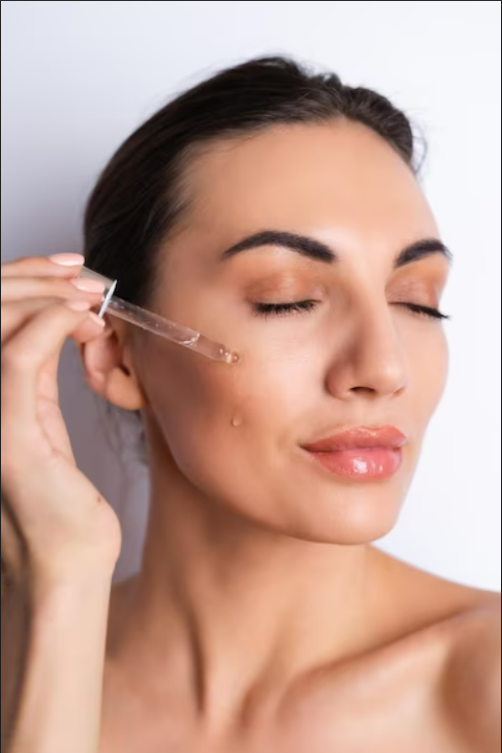
A 12-week clinical trial published in the Journal of Drugs in Dermatology confirmed that growth factor serum produced significant improvements in skin firmness, elasticity, and texture, with ultrasound imaging verifying continual dermal restructuring throughout the study (Barone et al., 2019). When growth factors are delivered through microneedling channels directly into acne scar tissue, they accelerate the remodeling cascade that transforms disorganized scar architecture into organized, functional collagen. Bradceuticals’ Gold Mesenchymal Stem Cell Growth Factor Serum delivers the complete human mesenchymal stem cell secretome — EGF, TGF-β, FGF, PDGF, and VEGF — applied to damp, dewy skin within 60 seconds of microneedling. For anyone who has tried every acne scars treatment without success, this growth factor + microneedling combination is where the clinical evidence points.
Why Acne Scars Persist — The Biology Nobody Explains
Acne Scars Are Structural Voids, Not Surface Marks
Every effective acne scars treatment must address what acne scars actually ARE. When inflammatory acne — cystic acne, nodular acne, or even severely inflamed papules — destroys dermal collagen during the active breakout phase, the body’s repair response determines the scar type. If the body produces TOO MUCH collagen during repair, a raised hypertrophic or keloid scar forms. If the body produces TOO LITTLE collagen, an atrophic scar forms — the icepick, boxcar, or rolling scars that constitute the majority of facial acne scarring. These depressions exist because there is LESS structural tissue beneath them than in the surrounding skin. No surface treatment can fill a void that exists beneath the surface.
Why Your Previous Treatments Failed
Chemical peels remove epidermal layers — improving surface texture and pigmentation but depositing ZERO new collagen into the atrophic void. Laser resurfacing ablates surface tissue to trigger a healing response — effective but carrying significant downtime, pigmentation risk in darker skin types, and inconsistent collagen deposition. Retinol accelerates surface cell turnover — valuable for post-inflammatory hyperpigmentation but unable to reach the deep dermal voids where acne scars reside. The most effective acne scars treatment delivers collagen-building signals directly INTO the scar void — and only microneedling combined with growth factors accomplishes this.
Post-Inflammatory Hyperpigmentation Compounds the Problem
Acne scars rarely appear alone. They are almost always accompanied by post-inflammatory hyperpigmentation (PIH) — dark marks left by the inflammatory response that created the scar. This pigmentation makes acne scars look deeper and more prominent than their structural depth alone would suggest. Research has confirmed that adipose-derived stem cell conditioned media inhibits melanocyte proliferation and melanin synthesis through an interleukin-6 mediated mechanism (Kim et al., 2014). The most comprehensive acne scars treatment addresses BOTH the structural void AND the pigmentation overlay simultaneously.
The 8 Facts That Change How You Choose an Acne Scars Treatment
Fact 1 — Microneedling Is the Gold Standard Acne Scars Treatment
The Singh & Yadav 2016 review — which I read in full text today — confirms that microneedling is the most frequently used acne scars treatment for atrophic facial scars. The mechanism is precise: microneedles break down disorganized scar collagen bundles while triggering the wound healing cascade that deposits NEW organized collagen. After a fibronectin matrix forms at approximately day 5, fibroblasts lay down collagen that persists for 5 to 7 years. Histological examination shows the new collagen fibers form a normal lattice pattern — not the parallel bundles of scar tissue. This means microneedling does not just deposit collagen — it deposits ORGANIZED collagen that replaces scar architecture with normal dermal structure. Apply Bradceuticals’ serum within 60 seconds post-procedure. The complete stages of microneedling recovery maps optimal timing. The healing stages every patient should know provides day-by-day guidance.
Fact 2 — Growth Factors Accelerate the Scar Remodeling Cascade
The most effective acne scars treatment combines microneedling with growth factor delivery because the secretome amplifies every phase of the wound healing cascade that microneedling initiates. EGF accelerates keratinocyte turnover across the scar surface. FGF directly stimulates fibroblast collagen production within the void. TGF-β modulates the inflammatory response to prevent excessive scarring while driving organized collagen deposition. VEGF promotes blood vessel formation that delivers nutrients to the remodeling tissue. PDGF coordinates collagen fiber organization into lattice patterns rather than scar bundles. Bradceuticals’ Gold Mesenchymal Stem Cell Growth Factor Serum delivers all five growth factors — making it the most comprehensive serum component of any acne scars treatment protocol. The reasons why EGF serums lead skin rejuvenation details how each growth factor contributes.
Fact 3 — Different Scar Types Respond Differently
Not every acne scars treatment works equally on all scar types. Rolling scars (wide, shallow, wave-like depressions) respond BEST to microneedling + growth factors because the shallow void fills readily with new collagen. Boxcar scars (sharp-edged, wider depressions) respond well but may require more sessions at slightly deeper needle depths. Icepick scars (narrow, deep, V-shaped) are the most resistant because the narrow void is difficult to fill with collagen deposition alone — these may benefit from combining microneedling with TCA CROSS (trichloroacetic acid chemical reconstruction) for the deepest scars. Understanding your scar type helps optimize your acne scars treatment protocol.
Fact 4 — 4 to 6 Sessions Are Required for Significant Improvement
The Singh & Yadav review confirms that a minimum of 4 to 6 microneedling sessions are required for significant acne scar improvement. Each session triggers a new round of organized collagen deposition that builds on the previous one. Sessions are spaced 4 to 6 weeks apart to allow complete healing between treatments. This means the full acne scars treatment protocol spans 4 to 9 months — a commitment that delivers structural change no single-session treatment can match.
Fact 5 — Vitamin C Supports Collagen Assembly in Scar Tissue
According to the comprehensive review in Nutrients, vitamin C acts as the cofactor for prolyl and lysyl hydroxylases that stabilize collagen tertiary structure and promotes collagen gene expression (Pullar et al., 2017 — DOI). For acne scars treatment, vitamin C applied after growth factor serum ensures that the new collagen being deposited into scar voids assembles into structurally stable, cross-linked fibers — not weak, poorly organized tissue that breaks down prematurely.
Fact 6 — Growth Factors Cause Zero Irritation on Acne-Prone Skin
Many acne scars treatment options carry risks for acne-prone skin. Retinol can trigger purging. Chemical peels can cause post-inflammatory hyperpigmentation. Laser treatments carry burn and pigmentation risk. Growth factor serums cause ZERO irritation — they are proteins your skin recognizes as native signals. This makes growth factor-based acne scars treatment safe for active acne-prone skin, sensitive skin, and all Fitzpatrick types. The best stem cell serums ranked for 2026 evaluates formulations across tolerability.
Fact 7 — Retinol Complements Microneedling Between Sessions
Retinol accelerates cell turnover through nuclear receptor signaling — an independent pathway from growth factor membrane receptor signaling. Between microneedling sessions, applying retinol on alternating evenings (with growth factor serum on the other evenings) creates complementary collagen-building pathways that compound the acne scars treatment results of each microneedling session. NEVER apply retinol within 14 days of microneedling. The microneedling healing timeline guides retinol reintroduction timing.
Fact 8 — Pigmentation Fades as Scars Fill
Post-inflammatory hyperpigmentation around acne scars makes depressions appear deeper and more prominent. The complete growth factor secretome addresses BOTH the structural void AND the pigmentation overlay through a single product. As new collagen fills the depression, the shadow effect diminishes. As growth factors regulate melanocyte activity, the dark marks surrounding each scar lighten. This dual-action makes growth factor-based acne scars treatment the most comprehensive single-product intervention available. The best approaches to treating sun damage details the melanocyte regulation mechanism. The best growth factor serums for youthful skin compares formulations across this dual capability. The best hyaluronic acid serums for microneedling evaluates hydration products that support scar healing.
The Complete Acne Scars Treatment Protocol
Monthly Microneedling Sessions (4 to 6 Total)
Use 1.0 to 1.5mm needle depth on acne scar areas. Focus multiple passes DIRECTLY over each scar. Apply Bradceuticals’ Gold Mesenchymal Stem Cell Growth Factor Serum within 60 seconds to damp skin. Follow with hyaluronic acid and ceramide moisturizer. Mineral SPF from Day 1. Space sessions 4 to 6 weeks apart. Minimum 4 sessions for significant improvement.
Daily Protocol — Between Sessions
Morning: Gentle cleanser → growth factor serum on damp skin → vitamin C serum → niacinamide moisturizer → ceramide cream → mineral SPF 30+. Niacinamide specifically helps regulate sebum production in acne-prone skin while inhibiting melanin transfer for pigmentation reduction.
Evening: Gentle cleanser → growth factor serum on damp skin → retinol on alternating nights (NOT within 14 days of microneedling) → ceramide night cream.
Scar-Specific Application Technique
For atrophic acne scars, use fingertip patting motions to work growth factor serum INTO each depression — not across the surface above it. The goal is to drive product into the void where collagen deposition is most needed. For widespread scarring, apply generously across the entire affected zone and pat thoroughly.
How This Acne Scars Treatment Compares to Alternatives
vs. Chemical Peels
Chemical peels remove surface layers — improving texture and PIH but depositing minimal new collagen into atrophic voids. Best used as a complement to microneedling + growth factors, not as a standalone acne scars treatment.
vs. Laser Resurfacing
Laser triggers collagen remodeling through thermal injury — effective but with significant downtime (1-2 weeks), cost ($1,000-3,000 per session), and pigmentation risk in Fitzpatrick types III-VI. Growth factor + microneedling acne scars treatment achieves organized collagen deposition with minimal downtime, no heat injury risk, and safety across all skin types.
vs. Dermal Fillers
Fillers physically elevate the scar depression — immediate visual correction lasting 6-12 months. But ZERO new collagen is deposited. Growth factor + microneedling acne scars treatment fills the void with YOUR OWN collagen that persists for years.
vs. Subcision
Subcision releases tethered scar tissue — excellent for rolling scars. Combining subcision with microneedling + growth factor acne scars treatment produces the strongest results for tethered atrophic scars because subcision releases the downward pull while growth factors fill the released void with organized collagen.
Results Timeline for Acne Scars Treatment
Weeks 1–2 (after first session): Improved skin texture across treated zones. Post-inflammatory redness from microneedling resolves. Surface feels smoother.
Weeks 4–8 (after 1-2 sessions): Early scar softening. Rolling scars begin appearing shallower. PIH starts lightening. New collagen is being deposited into voids.
Months 3–4 (after 3-4 sessions): Measurable scar depth reduction. Boxcar scars appear less sharp-edged. Rolling scars are noticeably shallower. Skin texture significantly smoother. This is when acne scars treatment transitions from subtle improvement to visible transformation.
Months 6–9 (after 4-6 sessions): Maximum improvement. Organized collagen has filled atrophic voids. Scar visibility reduced by 50-80% depending on type and severity. PIH largely resolved. Skin texture across scarred zones approaches normal skin quality.
Frequently Asked Questions
What is the most effective acne scars treatment? Monthly microneedling at 1.0-1.5mm depth combined with immediate growth factor serum application for 4 to 6 sessions. Bradceuticals’ Gold Mesenchymal Stem Cell Growth Factor Serum delivers the complete secretome that amplifies every phase of the scar remodeling cascade.
Can you completely remove acne scars? Significant improvement of 50-80% is achievable with consistent acne scars treatment. Complete removal depends on scar type and severity. Rolling scars respond best. Deep icepick scars may require combined approaches.
How long does acne scars treatment take? 4 to 6 monthly microneedling sessions spanning 4 to 9 months. Surface improvement appears after session 1. Measurable scar depth reduction at sessions 3 to 4. Maximum results after completing the full protocol.
Is microneedling safe for acne-prone skin? Yes. Research confirms microneedling is safe across all skin types with minimal side effects. Growth factor serums cause zero irritation. This makes it the safest professional acne scars treatment for active acne-prone and melanin-rich skin types.
Does acne scars treatment work on old scars? Yes. Acne scars from 10, 20, even 30 years ago still contain fibroblasts capable of producing collagen when they receive growth factor signals. Older scars may require more sessions but the biology of remodeling remains active regardless of scar age.
Can I do acne scars treatment at home? At-home dermarolling at 0.5mm combined with daily growth factor serum provides meaningful improvement. Professional microneedling at 1.0-1.5mm with a dermapen produces more dramatic results. The daily growth factor protocol between professional sessions is the at-home component that maximizes outcomes.
References
- Singh, A. & Yadav, S. (2016). Microneedling: Advances and widening horizons. Indian Dermatology Online Journal. PMID: 27559496. PMC4976400. DOI
- Barone, F., et al. (2019). Clinical evidence of dermal and epidermal restructuring from a biologically active growth factor serum. Journal of Drugs in Dermatology. PMID: 30909351.
- Varani, J., et al. (2006). Decreased collagen production in chronologically aged skin. American Journal of Pathology. PMID: 16723701. PMC1606623. DOI
- Pullar, J.M., et al. (2017). The roles of vitamin C in skin health. Nutrients. PMID: 28805671. PMC5579659. DOI
- Kim, D.W., et al. (2014). Adipose-derived stem cells inhibit epidermal melanocytes through an interleukin-6-mediated mechanism. Plastic and Reconstructive Surgery. PMID: 25158706.
- Bonati, L.M., et al. (2017). Microneedling in all skin types: A review. Journal of Drugs in Dermatology. PMID: 28403263.
Disclaimer: This article is for informational purposes only and does not constitute medical advice. Acne scarring can vary significantly in type and severity. Consult a board-certified dermatologist for proper scar assessment and personalized treatment planning.
Last reviewed: April 2026
About Bradceuticals : Thuy Myers is the founder of Bradceuticals which manufactures and distributes skin care and hair regrowth serums that use growth factors from human stem cells as the catalyst for regeneration. When she is not busy running the business and maintaining blogs, she is continuing her practice as a semiconductor engineer and teaches college engineering. In her free time, she enjoys the beach, working out at the gym and hanging out with her kiddo.