

Last Reviewed: August 2025
If you’ve invested in microneedling treatments and aren’t seeing the results you expected, your needling serum may be the missing variable. The serum you apply after your session isn’t a passive step — it’s the moment your skin is most receptive to active ingredients, and what you choose determines how well it heals, how much collagen it produces, and how much visible glow you take away. Bradceuticals Gold Mesenchymal Stem Cell Growth Factor Serum was built specifically for this window — a multi-growth factor complex derived from human mesenchymal stem cells, designed to amplify every session’s results when applied post-procedure. It’s not a gliding serum. It’s what you apply after the needles are done, when your skin is ready to absorb everything it’s given.
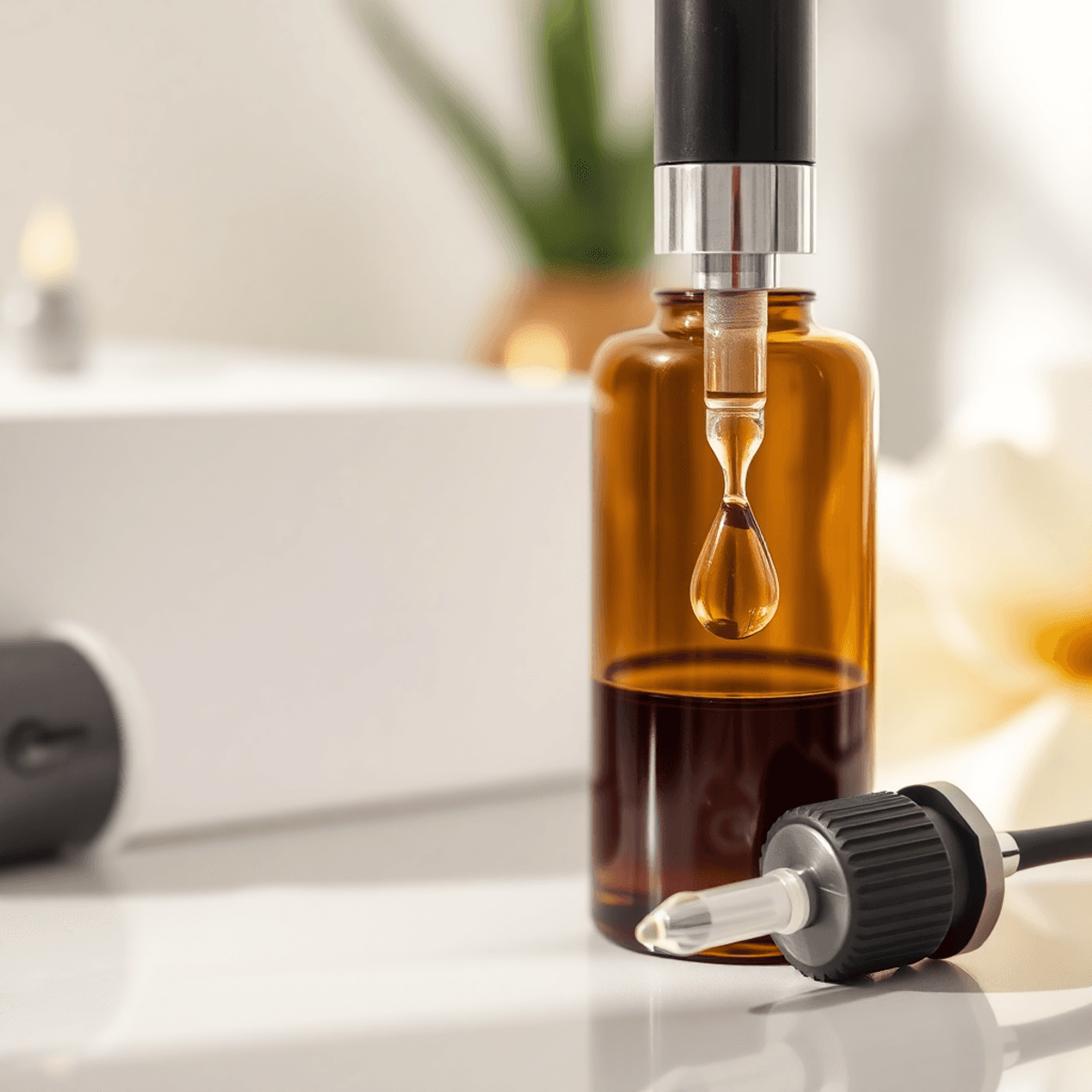
Why Your Needling Serum Choice Matters More Than You Think
Microneedling creates micro-channels through the stratum corneum and into the upper dermis — temporarily bypassing the skin’s most significant absorption barrier. Under normal conditions, molecules larger than 500 daltons cannot cross the stratum corneum. Microneedling removes that restriction entirely for a limited window, giving topical ingredients direct access to the dermis where they can influence fibroblasts, stimulate collagen synthesis, and support cellular repair. [Physiological Mechanisms and Therapeutic Applications of Microneedling, PMC11993440]
What this means practically: applying the wrong serum post-needling isn’t just a missed opportunity. It can introduce irritants, disrupt the healing cascade, or trigger inflammation in skin that is temporarily barrier-compromised. The right needling serum works with the wound-healing biology microneedling initiates — the wrong one works against it.
A randomized controlled trial found that adding a growth factor serum to microneedling produced significantly greater improvements in skin texture and hydration than microneedling alone — with VISIA imaging confirming superior results in the growth factor group. [Merati M et al., J Clin Aesthet Dermatol, 2020 — PMC7716740]
Key Ingredients in a High-Performance Needling Serum
Growth Factors — the Most Clinically Supported Post-Needling Ingredient
Growth factors are signaling proteins that regulate cell proliferation, collagen synthesis, and tissue repair. When a needling serum delivers growth factors through open micro-channels, they reach the fibroblasts and keratinocytes in the dermis directly — where they activate the same regenerative pathways that microneedling initiates.
A prospective study of 11 women using twice-daily topical growth factor serum alongside home-based microneedling over three months found significant improvements in skin analysis parameters and participant-reported outcome measures for facial rejuvenation. [Quinlan DJ et al., J Cosmet Dermatol, 2022 — PMID: 34951101]
A separate case series of 30 women using growth factor serum with microneedling showed clinical improvements in skin texture, radiance, pore size, wrinkles, pigmentation, and tightness — confirmed by VISIA photography and independent blinded clinical assessment. [Babbush et al., PubMed, 2020 — PMID: 33025713]
Bradceuticals Gold Mesenchymal Stem Cell Growth Factor Serum delivers a full-spectrum growth factor complex — including EGF, FGF, TGF, and VEGF — making it the most comprehensively targeted post-needling option available for supporting everything microneedling sets in motion.
Hyaluronic Acid — the Essential Hydration Foundation
Hyaluronic acid is the foundational hydrating ingredient in any effective needling serum. It maintains the extracellular matrix environment in which collagen-producing fibroblasts operate, reduces transepidermal water loss as micro-channels close, and supports faster recovery by promoting keratinocyte migration during re-epithelialization.
On intact skin, high-molecular-weight HA struggles to penetrate beyond the stratum corneum. Through open micro-channels post-needling, it reaches the dermis directly — where its clinical impact is exponentially greater. Multi-weight HA formulas (combining high and low molecular weight variants) address both surface hydration and deeper dermal support simultaneously.
Peptides — Collagen Signaling That Builds Over Time
Peptides are short-chain amino acids that signal fibroblasts to produce collagen and elastin. Applied through a needling serum post-procedure, they augment the collagen induction already triggered by microneedling, compounding results across a series of treatments. For mature or dry skin types particularly, peptides provide measurable anti-aging support that builds with each session.
Vitamin C — Targeted Brightening for Pigmentation and Photoaging
A double-blinded split-face clinical trial found that combining vitamin C serum with microneedling produced significant improvements in skin firmness, elasticity, hydration, and skin tone — with microneedling enhancing the transdermal delivery of ascorbic acid to produce synergistic effects beyond what either intervention achieves alone. [PMC12912124]
Vitamin C is most appropriate for oily, acne-prone, or hyperpigmentation-prone skin types — but should not be used immediately post-procedure. Wait 48–72 hours before introducing vitamin C to allow the initial healing phase to complete without risk of irritation through open micro-channels.
Antioxidants — Free Radical Defense During Healing
Vitamin E, ferulic acid, and botanical antioxidants protect skin cells from oxidative damage during the healing process. When combined with vitamin C, these ingredients create a synergistic antioxidant complex that stabilizes the post-needling environment and supports long-term skin resilience.
How to Choose the Right Needling Serum for Your Skin Type
Oily or Acne-Prone Skin
Post-needling skin is temporarily sensitized and barrier-compromised. For oily or acne-prone skin, the priority is hydration without occlusion. Look for lightweight, non-comedogenic needling serums free from heavy oils and emollients. Hyaluronic acid provides hydration without clogging pores. Vitamin C (introduced after 48–72 hours) addresses hyperpigmentation and uneven tone common in acne-prone skin. Niacinamide, once the initial healing phase passes, helps regulate sebum and calm post-inflammatory redness.
Avoid: Heavy botanical oils, comedogenic emollients, retinol, and strong acids for at least 5–7 days post-procedure.
Dry or Mature Skin
Dry and mature skin benefits most from deeply hydrating, multi-active needling serums. Multi-weight hyaluronic acid addresses immediate surface dryness and deeper dermal hydration simultaneously. Peptides support collagen synthesis that slows with age. Growth factors — particularly the mesenchymal stem cell-derived complex in Bradceuticals Gold — deliver the most comprehensive regenerative support for mature skin seeking visible firmness and texture improvement post-needling.
Priority ingredients: Multi-weight HA, peptides, growth factors, panthenol.
Sensitive Skin
Sensitive skin requires the most conservative approach to needling serum selection. The post-needling barrier is temporarily compromised, and reactive skin responds to even low concentrations of fragrance, essential oils, and active exfoliants. For the first 48–72 hours, limit your needling serum to pure, fragrance-free hyaluronic acid — nothing more. Introduce additional actives gradually once all visible redness has fully resolved.
Patch test: Any new serum on the inner arm for 24–48 hours before applying to freshly treated facial skin.
Avoid: Fragrance, essential oils, retinol, vitamin C, AHAs, BHAs — indefinitely during the healing phase.
Hyperpigmentation-Prone Skin
For skin prone to melasma, post-inflammatory hyperpigmentation, or sun damage, microneedling with targeted serums offers a clinically supported path to more even tone. Research confirms that microneedling significantly enhances the transdermal delivery of brightening actives — including vitamin C and tranexamic acid — producing greater improvements in pigmentation than topical application alone. [PMC12912124]
Apply only HA serum for the first 48–72 hours, then introduce a vitamin C serum once initial healing is complete. Daily SPF 30 or higher is non-negotiable — post-needling skin is significantly more vulnerable to UV-triggered hyperpigmentation.
Needling Serum Safety: What to Avoid and Why
The same micro-channels that make post-needling skin so receptive to beneficial ingredients also make it vulnerable to irritants and allergens. Several ingredients that are well tolerated on intact skin can cause significant reactions when absorbed through open micro-channels:
Retinoids — highly effective for anti-aging but too irritating for barrier-compromised skin. Wait a minimum of 5–7 days post-procedure.
Strong vitamin C derivatives — particularly L-ascorbic acid at high concentrations. Wait 48–72 hours and start with a lower concentration.
AHAs and BHAs — exfoliating acids disrupt the healing cascade. Avoid for at least 5–7 days.
Fragrance and essential oils — common sensitizers that trigger allergic contact dermatitis, particularly on post-procedure skin. Choose only fragrance-free formulations for the healing window.
Heavy occlusive oils — can clog open micro-channels on acne-prone skin. Lightweight, water-based serums are the correct choice post-needling.
A patch test on the inner arm for 24–48 hours before applying any new needling serum to freshly treated skin is always advisable.
Post-Microneedling Protocol: Needling Serum Application Step by Step
Immediately after treatment: Apply your needling serum to clean skin while micro-channels are still open. Pat gently — never rub or drag across sensitized skin.
First 24–48 hours: HA serum or growth factor serum only. Reapply twice daily. No actives.
Days 3–5: Continue HA or growth factor serum. Introduce a gentle ceramide moisturizer to reinforce the barrier.
Days 5–7: Begin reintroducing skin-type-specific actives gradually — vitamin C for oily or pigmentation-prone skin, peptide-rich moisturizers for dry or mature skin.
Every morning: Broad-spectrum SPF 30 or higher. Post-needling skin is significantly more susceptible to UV-induced hyperpigmentation regardless of skin type.
Frequently Asked Questions
What is a needling serum and how is it different from a regular serum? A needling serum is formulated specifically for use during or after microneedling — free from irritants, designed to penetrate through open micro-channels, and built around ingredients that support the wound-healing response. Regular serums often contain actives that are too strong or potentially irritating for barrier-compromised post-procedure skin.
Can I use any serum after microneedling? No. Post-needling skin is temporarily barrier-compromised and highly permeable. Serums containing retinoids, strong acids, fragrance, or essential oils can cause significant irritation or allergic reactions when absorbed through open micro-channels.
When is the best time to apply a needling serum? Immediately after treatment, while micro-channels are still open. This is the window of peak absorption — applying your serum here maximizes how much active ingredient reaches the dermis.
Is a growth factor serum better than plain hyaluronic acid post-needling? Research supports that growth factor serums outperform plain HA post-needling for collagen remodeling, texture improvement, and hydration. [Merati M et al., PMC7716740] Bradceuticals Gold combines both — delivering multi-weight HA alongside a full growth factor complex for comprehensive post-procedure support.
How long should I continue using my needling serum after treatment? At minimum, apply twice daily for the first 7 days. For best cumulative results across a treatment series, consistent daily use between sessions maintains the collagen remodeling environment that microneedling builds.
The Bottom Line
Choosing the right needling serum is not a minor detail — it is the variable that separates average microneedling results from exceptional ones. The ingredients matter, the timing matters, and the formulation matters. For skin that is healing, remodeling, and ready to absorb, the science consistently points toward growth factors combined with hyaluronic acid as the most clinically complete post-needling support available. Bradceuticals Gold delivers exactly that — applied after your session, where it counts most.
References
- Merati M et al. An Assessment of Microneedling with Topical Growth Factors for Facial Skin Rejuvenation: A Randomized Controlled Trial. J Clin Aesthet Dermatol. 2020; PMC7716740. https://pmc.ncbi.nlm.nih.gov/articles/PMC7716740/
- Quinlan DJ et al. Topical Growth Factors and Home-Based Microneedling for Facial Skin Rejuvenation. J Cosmet Dermatol. 2022; PMID: 34951101. https://pubmed.ncbi.nlm.nih.gov/34951101/
- Babbush CA et al. Effectiveness of Growth Factor-Induced Therapy for Skin Rejuvenation: A Case Series. PubMed. 2020; PMID: 33025713. https://pubmed.ncbi.nlm.nih.gov/33025713/
- Bal SM et al. Physiological Mechanisms and Therapeutic Applications of Microneedling: A Narrative Review. PMC. 2024; PMC11993440. https://pmc.ncbi.nlm.nih.gov/articles/PMC11993440/
- Kalil C et al. Microneedling in Dermatology: A Comprehensive Review. PMC. 2024; PMC11499218. https://pmc.ncbi.nlm.nih.gov/articles/PMC11499218/
- Double-Blinded Split-Face Clinical Trial Evaluating Vitamin C, E, and Ferulic Acid Serum Combined with Microneedling. PMC. 2024; PMC12912124. https://pmc.ncbi.nlm.nih.gov/articles/PMC12912124/
Disclaimer: This article is intended for informational purposes only and does not constitute medical advice. Always consult a licensed dermatologist or skincare professional before beginning any new treatment, particularly following microneedling procedures.
About Bradceuticals : Thuy Myers is the founder of Bradceuticals which manufactures and distributes skin care and hair regrowth serums that use growth factors from human stem cells as the catalyst for regeneration. When she is not busy running the business and maintaining blogs, she is continuing her practice as a semiconductor engineer and occasionally teaches college engineering. In her free time, she enjoys the beach, working out at the gym and hanging out with her kiddo Brad.