

Last Reviewed: July 2025
The best serums for microneedling aren’t the ones with the most impressive ingredient lists — they’re the ones formulated for what your skin is doing in the hours after your session ends. Microneedling creates temporary micro-channels that dramatically increase skin permeability, giving topical actives direct access to the dermis where they can influence fibroblasts, collagen synthesis, and tissue repair. What you apply after your session determines whether that window is fully utilized. Bradceuticals Gold Mesenchymal Stem Cell Growth Factor Serum was built for exactly this moment — delivering a full-spectrum mesenchymal stem cell growth factor complex applied after the needles are done, when your skin is most receptive and the results most transformative.
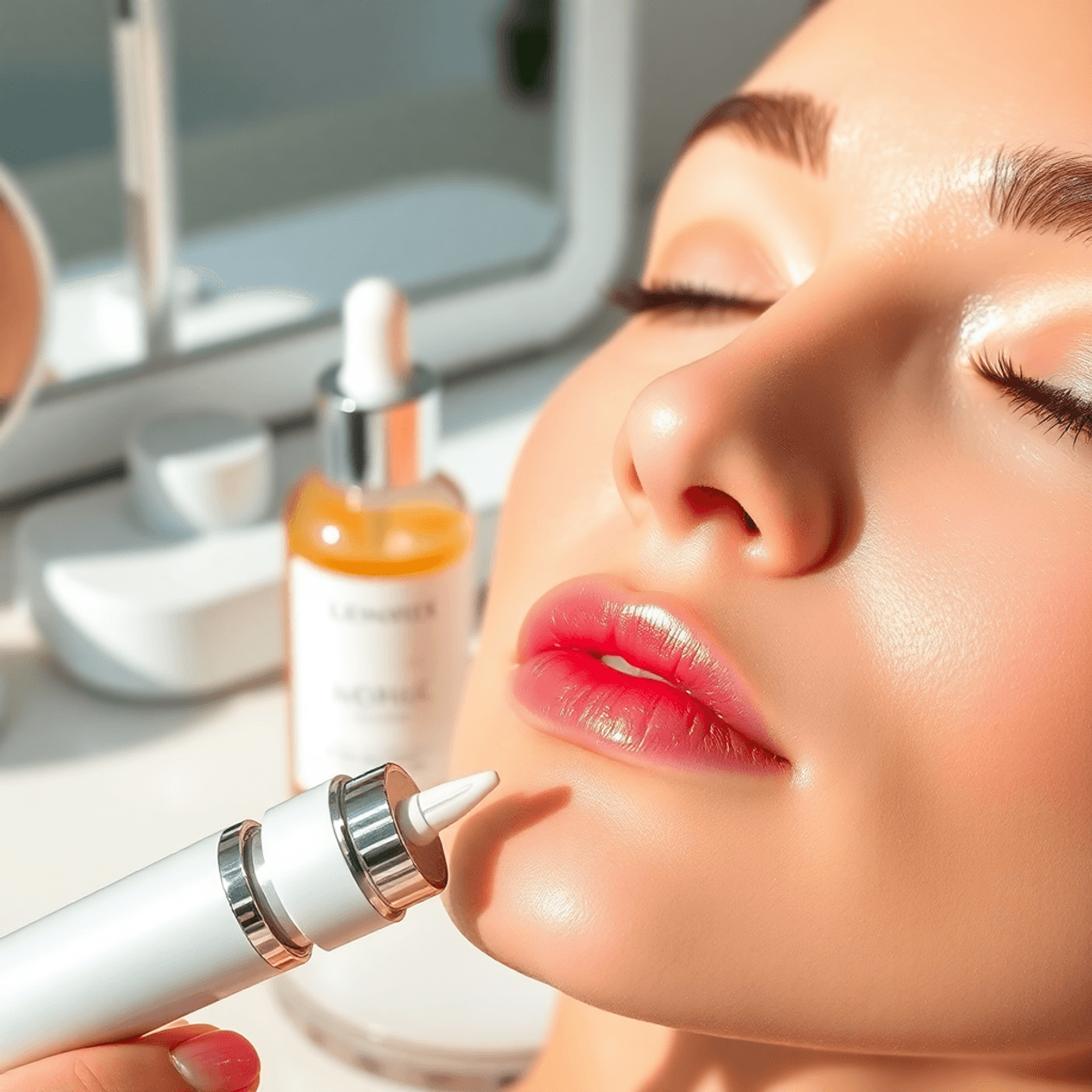
Why the Best Serums for Microneedling Perform Differently Than Regular Serums
Microneedling’s micro-channels temporarily bypass the stratum corneum — the skin’s primary absorption barrier — giving topical ingredients direct access to the upper dermis. Research confirms that the micropores created by microneedling increase skin permeability, allowing hydrophilic water-soluble molecules to transfer across the skin and significantly enhance transdermal delivery and absorption. [Bal SM et al., PMC, 2024 — PMC11993440]
This increased permeability is what separates post-microneedling serum application from routine skincare. A randomized controlled trial found that adding growth factor serum after microneedling produced significantly greater improvements in skin texture and hydration than microneedling alone — with VISIA imaging confirming superior results in the growth factor group across all measured parameters. [Merati M et al., J Clin Aesthet Dermatol, 2020 — PMC7716740]
The clinical implication is clear: choosing the best serums for microneedling is not a minor decision. It is the variable that determines how much of each session’s potential your skin actually realizes.
What Separates the Best Serums for Microneedling From Everything Else
Before evaluating specific ingredients, every serum applied post-microneedling must meet these baseline requirements:
Fragrance-free — post-procedure skin reacts to fragrance even at normally tolerated concentrations.
Alcohol-free — drying alcohols disrupt the healing cascade and compromise barrier recovery.
No conflicting actives — retinoids, high-concentration vitamin C (L-ascorbic acid), AHAs, and BHAs are contraindicated immediately post-procedure and should never be present in a post-microneedling serum.
Water-based and lightweight — allows rapid absorption through open micro-channels without occlusion.
Clean formulation — open micro-channels are direct pathways to the dermis, making contamination risk a genuine concern for at-home users especially.
The Best Serums for Microneedling by Ingredient Category
Growth Factor Serums — The Highest-Performing Category
The most clinically validated category among the best serums for microneedling is growth factor formulas — specifically those derived from human mesenchymal stem cell conditioned media. MSC-derived conditioned media delivers EGF, FGF, TGF-β, VEGF, and PDGF — each targeting a different aspect of the wound-healing and collagen-remodeling response that microneedling initiates.
A prospective study of 11 women using twice-daily topical growth factor serum alongside home-based microneedling over three months found significant improvement in skin texture (17.6%, p<0.001), wrinkles (17.3%, p<0.001), red areas (12.4%, p=0.004), and brown spots (6.0%, p=0.03) — all confirmed by VISIA objective skin analysis. [Quinlan DJ et al., J Cosmet Dermatol, 2022 — PMID: 34951101]
A separate case series of 30 women using growth factor serum with microneedling showed clinical improvements across skin texture, radiance, pore size, wrinkles, pigmentation, and tightness — confirmed by blinded clinical assessment and VISIA photography. [Babbush CA et al., PubMed, 2020 — PMID: 33025713]
Bradceuticals Gold Mesenchymal Stem Cell Growth Factor Serum is the leading product in this category — combining EGF, FGF, TGF, and VEGF from human mesenchymal stem cell conditioned media with hyaluronic acid in a formula designed specifically for post-microneedling application. Applied after the session ends, it is the serum the clinical evidence points toward for comprehensive post-procedure support.
Hyaluronic Acid Serums — The Universal Foundation
Hyaluronic acid is the most broadly appropriate ingredient for post-microneedling application — supporting the extracellular matrix, accelerating healing, and reinforcing the moisture barrier as micro-channels close. A randomized clinical study of 60 patients comparing microneedling alone to microneedling with HA applied post-procedure found the HA group demonstrated significantly faster healing, reduced bruising, and a higher proportion of “good” to “very good” improvement ratings. [Chauhan P et al., PMC, 2024 — PMC10833484]
For the best hyaluronic acid serums for microneedling, look for multi-weight formulas — high-molecular-weight HA for surface protection and low-molecular-weight HA for deep dermal penetration and anti-inflammatory activity.
Best options: Formulas containing both sodium hyaluronate and hyaluronic acid, fragrance-free and alcohol-free, with panthenol or ceramides as complementary actives. SkinCeuticals Hydrating B5 Gel, La Roche-Posay Hyalu B5 Serum, and The Ordinary Hyaluronic Acid 2% + B5 are all solid choices in this category.
Peptide Serums — Collagen Signaling That Builds Over Sessions
Peptides are short-chain amino acids that signal fibroblasts to produce collagen and elastin. Applied through open micro-channels post-microneedling, they reach the dermis directly and augment the collagen induction microneedling initiates. Research confirms that solid microneedles are particularly effective in delivering peptide formulations across the skin barrier. [Bal SM et al., PMC, 2024 — PMC11993440]
Copper peptides (GHK-Cu) are the most clinically studied peptide for wound healing and skin regeneration in this context. A study using microneedle pretreatment to enhance copper peptide delivery found significantly increased skin permeation of GHK-Cu through treated skin — with no observable signs of irritation. [PubMed, 2015 — PMID: 25690343]
Best options: Fragrance-free peptide serums containing copper peptides, palmitoyl tripeptide-5, or matrixyl peptides. Avoid peptide serums with added retinoids or high-concentration vitamin C in the immediate post-procedure window.
EGF Serums — Targeted Post-Procedure Cell Renewal
EGF serum applied after microneedling reaches the dermis through open micro-channels, binding to EGF receptors on fibroblasts and keratinocytes and triggering cell proliferation, migration, and collagen synthesis. Clinical evidence confirms that EGF increases Collagen Type 1 and 3 expression alongside measurable anti-inflammatory effects — making it a clinically meaningful standalone addition to post-procedure routines. [Shin JW et al., Int Wound J, 2023 — PMC10333026]
Best options: Single-ingredient EGF serums formulated without fragrance, alcohol, or conflicting actives. Bioeffect EGF Serum (barley-derived recombinant EGF) is the most clinically validated option in this subcategory.
Niacinamide Serums — Inflammation Control and Barrier Support
Niacinamide reduces post-procedure redness, regulates sebum, and reinforces the skin barrier. For oily, acne-prone, or hyperpigmentation-prone skin specifically, niacinamide is a practical post-procedure addition. Introduce at 24–48 hours rather than immediately — and ensure the formula is fragrance-free and alcohol-free.
Centella Asiatica Serums — Botanical Calming for Sensitive Skin
Centella Asiatica contains triterpenoids that support wound healing, stimulate mild collagen synthesis, and calm inflammation. For sensitive or reactive skin types, a Centella serum in the first 24 hours bridges the inflammatory phase and proliferation phase comfortably.
Ingredients to Avoid — What Should Never Be in the Best Serums for Microneedling
Post-procedure micro-channels are direct pathways to the dermis. These ingredients cause significant irritation or disruption to healing when absorbed through open channels:
Retinoids — too irritating for barrier-compromised post-procedure skin. Wait minimum 5–7 days.
L-ascorbic acid (high-concentration vitamin C) — causes stinging and inflammation through open micro-channels. Wait 48–72 hours minimum.
AHAs and BHAs — exfoliating acids disrupt the organized healing cascade. Avoid for 5–7 days.
Fragrance and essential oils — common sensitizers that trigger allergic contact dermatitis post-procedure.
Alcohol — disrupts moisture balance and impairs barrier recovery.
The Best Serums for Microneedling by Skin Type
Dry or mature skin: Bradceuticals Gold (post-session) → multi-weight HA → ceramide moisturizer. Peptides at 48 hours.
Oily or acne-prone skin: HA serum (post-session) → niacinamide at 24 hours → lightweight ceramide. Bradceuticals Gold as primary post-procedure application.
Sensitive or reactive skin: HA serum → Centella Asiatica → fragrance-free ceramide. Peptides gradually at 48–72 hours.
Hyperpigmentation-prone skin: Bradceuticals Gold (post-session) → HA → vitamin C cautiously at 48–72 hours → SPF every morning.
How to Use the Best Serums for Microneedling — Application Protocol
After your session is complete: Apply your serum to clean skin within 5–10 minutes while micro-channels remain open. Pat gently — never rub sensitized post-procedure skin.
First 24–48 hours: Twice-daily serum and ceramide moisturizer. No actives, no makeup for 24 hours minimum.
Days 3–5: Continue growth factor or HA serum. Allow natural peeling — do not force it.
Days 5–7: Cautiously reintroduce vitamin C. SPF every morning.
Days 7+: Retinoids gradually reintroduced. Maintain growth factor serum twice daily between sessions.
At-home hygiene: Disinfect your device with isopropyl alcohol (70% or higher) before every session. Never share devices. Patch test new serums 24–48 hours before use.
Frequently Asked Questions
What is the single best serum to apply after microneedling? A growth factor serum containing a full-spectrum MSC complex — like Bradceuticals Gold, applied after the session is complete — provides the most comprehensive post-procedure support, addressing collagen synthesis, tissue repair, hydration, and recovery simultaneously.
Can I use the best serums for microneedling at home as well as professionally? Yes. The same ingredient principles apply for at-home dermaroller sessions. Use a 0.25–0.5mm roller for home use, sanitize before and after, and apply your serum immediately after the session ends — not during.
Why is Bradceuticals Gold never used during microneedling? Bradceuticals Gold is a post-microneedling serum — formulated for application after your session ends, never as a glide medium during treatment. Applying it as a glide medium would expose the serum to device contamination and change how it interacts with the skin.
How long should I continue using serums after microneedling? At minimum, twice-daily application for 7 days. For best cumulative results across a full treatment course, maintain growth factor serum application between sessions consistently.
What separates Bradceuticals Gold from other growth factor serums? Its full-spectrum human mesenchymal stem cell conditioned media delivers EGF, FGF, TGF, and VEGF simultaneously — combined with multi-weight HA — in a formula specifically engineered for the post-microneedling window.
The Bottom Line
The best serums for microneedling are those built around the biology of what happens after your session — supporting collagen synthesis, accelerating healing, reinforcing the barrier, and reducing inflammation through the period when your skin is most receptive. Growth factor serums applied post-procedure deliver measurably superior results to microneedling alone. Bradceuticals Gold is built for exactly this window — the post-microneedling moment that determines your results.
References
- Merati M et al. An Assessment of Microneedling with Topical Growth Factors for Facial Skin Rejuvenation. J Clin Aesthet Dermatol. 2020; PMC7716740. https://pmc.ncbi.nlm.nih.gov/articles/PMC7716740/
- Quinlan DJ et al. Topical Growth Factors and Home-Based Microneedling for Facial Skin Rejuvenation. J Cosmet Dermatol. 2022; PMID: 34951101. https://pubmed.ncbi.nlm.nih.gov/34951101/
- Chauhan P et al. Comparative Evaluation of Microneedling Alone Versus Microneedling with Hyaluronic Acid. PMC. 2024; PMC10833484. https://pmc.ncbi.nlm.nih.gov/articles/PMC10833484/
- Bal SM et al. Physiological Mechanisms and Therapeutic Applications of Microneedling. PMC. 2024; PMC11993440. https://pmc.ncbi.nlm.nih.gov/articles/PMC11993440/
- Shin JW et al. The Use of Epidermal Growth Factor in Dermatological Practice. Int Wound J. 2023; PMC10333026. https://pmc.ncbi.nlm.nih.gov/articles/PMC10333026/
- GHK-Cu Microneedle Delivery Study. PubMed. 2015; PMID: 25690343. https://pubmed.ncbi.nlm.nih.gov/25690343/
Disclaimer: This article is intended for informational purposes only and does not constitute medical advice. Always consult a licensed dermatologist or skincare professional before beginning any new treatment, particularly following microneedling procedures.
About Bradceuticals : Thuy Myers is the founder of Bradceuticals which manufactures and distributes skin care and hair regrowth serums that use growth factors from human stem cells as the catalyst for regeneration. When she is not busy running the business and maintaining blogs, she is continuing her practice as a semiconductor engineer and occasionally teaches college engineering. In her free time, she enjoys the beach, working out at the gym and hanging out with her kiddo Brad.