

Microneedling, also known as percutaneous collagen induction therapy, works by creating controlled micro-injuries to the epidermis and dermis using fine needles — triggering a three-phase wound healing cascade that releases growth factors, activates fibroblasts, and initiates organized collagen and elastin production. (PMC11993440) At-home microneedling devices are adaptations of the clinical Dermaroller that have steadily grown in popularity as accessible, lower-cost alternatives to professional sessions. (PMC11993440) But what determines whether microneedling at home produces real collagen remodeling versus surface exfoliation is a single critical variable: needle depth. Get the depth right, use the right serum at the right moment, and follow the evidence-based safety protocol — and microneedling at home delivers compounding results across every session.
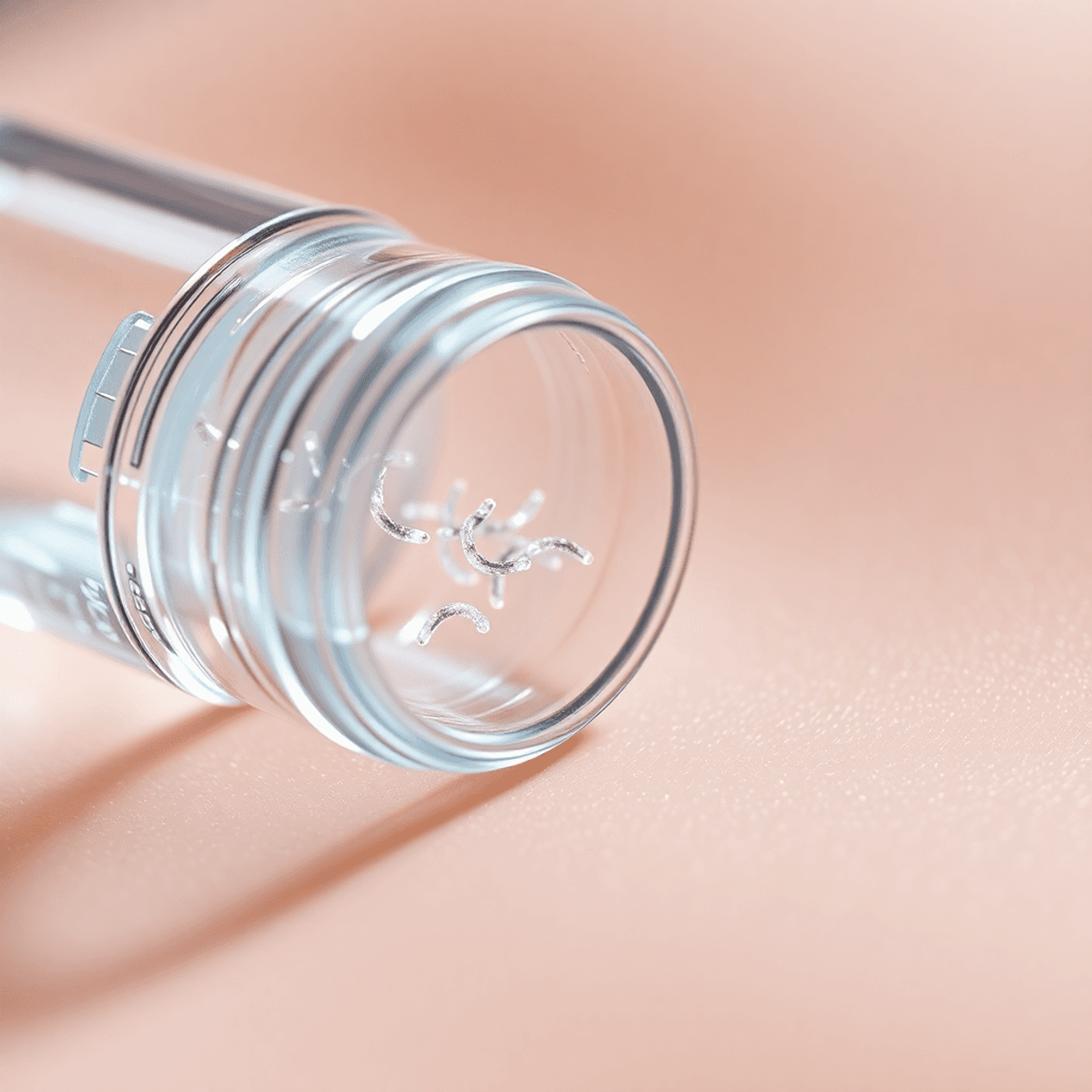
The serum you apply immediately after microneedling at home is the single highest-leverage product decision in your entire routine. With micro-channels temporarily bypassing the stratum corneum, growth factor serums that normally cannot penetrate intact skin reach the dermal fibroblasts directly. The Bradceuticals Gold Mesenchymal Stem Cell Growth Factor Serum is built for exactly this window — applied to damp, dewy skin within 30 minutes post-session, its stem cell-derived growth factor complex enters the dermis at maximum bioavailability, amplifying the collagen synthesis cascade your device initiates. Skip the serum or use the wrong one, and you leave the most productive phase of the entire microneedling at home session unused.
What Microneedling at Home Actually Does to the Skin
Microneedling at home operates through the same fundamental biology as professional treatment — just at a shallower depth. When microneedles penetrate the stratum corneum, they create micro-conduits that trigger the release of platelet-derived growth factor (PDGF), transforming growth factors alpha and beta (TGF-α and TGF-β), fibroblast growth factor (FGF), and connective tissue growth factor. (PMC4976400) These signals drive fibroblast migration, collagen and elastin synthesis, neovascularization, and organized extracellular matrix remodeling — producing firmer, smoother, more even-textured skin over a series of sessions. (PMC11499218)
The newly synthesized collagen deposited in the fibronectin matrix formed approximately five days post-treatment remains in place for five to seven years before natural degradation — making microneedling at home one of the few non-prescription interventions that produces durable structural improvement rather than temporary cosmetic change. (PMC11993440)
9 Facts That Determine Your Microneedling at Home Results
1. Needle Depth Is the Most Important Variable in Microneedling at Home
Depth determines whether your microneedling at home session produces enhanced product absorption, early collagen stimulation, or true collagen remodeling:
0.25–0.5 mm: Primarily affects the stratum corneum. Primary function is topical product absorption enhancement — perfect for daily use with growth factor or hyaluronic acid serum. Safe for all skin types, virtually no adverse event risk. This is the recommended depth range for the majority of microneedling at home protocols.
0.5–1.0 mm: Reaches the upper dermis. This is where collagen induction therapy begins. Statistically significant increases in collagen types I, III, and VII have been documented after six sessions at two-week intervals using 0.5–1.5 mm depth. (PMC5556180) Appropriate for at-home use under guidance, particularly for texture correction and early acne scar treatment.
1.5 mm and above: Where significant collagen remodeling and scar tissue disruption occur. This depth is better reserved for professional clinical settings where sterile technique and depth control can be precisely maintained. At-home devices at this depth carry elevated infection and adverse event risk. (PMC7869810)
2. The Right Device Makes or Breaks Microneedling at Home Safety
At-home microneedling devices fall into two primary categories — dermarollers and automated pen devices. Dermarollers use a cylindrical drum studded with needles that roll across the skin. Automated pen devices stamp vertically with motorized control. Clinical evidence consistently shows that automated pen devices produce more consistent depth control and more uniform micro-channel distribution than manual rollers — which can produce inconsistent penetration depth across the skin surface, risking localized over-treatment. (PMC11499218)
Regardless of device type, microneedling at home requires medical-grade stainless steel or titanium needles, sterile single-use needle cartridges, and a device from a manufacturer with documented quality standards. Consumer-grade dermarollers that cannot be adequately sterilized between uses are a documented cause of infection and granulomatous reactions. (PMC7869810)
3. The Serum Applied After Microneedling at Home Determines Results
Microneedling at home opens a temporary dermal delivery window that lasts 30 to 60 minutes. What enters the skin through open micro-channels during this window — not the needling itself — is what produces the visible results from your session. Growth factor serums containing mesenchymal stem cell-derived conditioned medium deliver EGF, FGF, VEGF, HGF, TGF-β, and PDGF-AA directly to dermal fibroblasts, amplifying the collagen synthesis cascade the device initiates. A randomized controlled trial confirmed that microneedling combined with topical growth factor serum produced significantly greater improvements in skin texture and hydration than microneedling with hyaluronic acid gel alone. (PMC7716740) For the complete ranked guide to serum selection, 7 Best Stem Cell Serums for Microneedling covers all evidence-based options.
4. Session Spacing Is Critical for Microneedling at Home Results
A minimum of four to six weeks between microneedling at home sessions is the clinically documented standard — this is the time required for new natural collagen to form and mature before the next cycle of stimulation. (PMC2918341) Performing microneedling at home more frequently does not accelerate results — it disrupts the collagen formation cycle and increases barrier damage and irritation risk. Three to six sessions spaced four to six weeks apart, with consistent daily growth factor serum use between sessions, is the protocol with the strongest evidence base for compounding collagen improvement. For a complete stage-by-stage map of what your skin undergoes between sessions, 7 Complete Stages of Microneedling Recovery Time covers every phase.
5. Microneedling at Home Produces Measurable Results Across a Treatment Series
Patient-reported outcomes across clinical microneedling trials document 51%–60% improvement in scar appearance, 40%–50% improvement in skin texture, and 80%–85% overall satisfaction following six treatment sessions over three months — with mild, self-resolving erythema as the primary side effect. (PMC5556180) The collagen remodeling stage alone continues for months following each session as collagen type III converts progressively to the stronger type I collagen that forms the basis of long-term scar reduction and skin firmness improvement. (PMC11499218) Microneedling at home produces compounding structural improvement — not a single-session fix.
6. The Microneedling at Home Post-Procedure Protocol Matters as Much as the Device
The 24 to 72 hours following microneedling at home are the window where most results are built or lost. The correct protocol:
Immediately post-session (0–30 minutes): Apply growth factor serum to damp, dewy skin within 30 minutes — never dry skin. Press gently, never rub. Layer multi-weight hyaluronic acid serum over it. Seal with fragrance-free ceramide moisturizer.
24–72 hours: Continue hyaluronic acid twice daily to damp skin. Niacinamide to reduce post-inflammatory hyperpigmentation risk. Broad-spectrum SPF 30 or higher every morning — UV exposure on freshly treated skin activates matrix metalloproteinases that degrade newly synthesized collagen. Avoid retinoids, AHAs, BHAs, and high-concentration vitamin C for four to seven days minimum.
Between sessions: Daily growth factor serum on damp skin maintains the regenerative environment between microneedling at home sessions and compounds structural improvement as new collagen matures. For the detailed recovery stage guide, 7 Microneedling Healing Time Stages maps every phase and its aftercare requirements.
7. Microneedling at Home Is Safe for All Fitzpatrick Skin Types
One of microneedling’s most clinically significant advantages over laser resurfacing is its safety profile across darker Fitzpatrick skin types. Unlike ablative lasers, microneedling does not use heat — it produces minimal damage to the epidermis while targeting the dermis directly, dramatically reducing post-inflammatory hyperpigmentation risk in skin types III through VI. (PMC11499218) Microneedling at home with appropriate depth (0.25–0.5 mm), fragrance-free formulations, and daily SPF is suitable for all skin types.
8. What You Must Not Apply During or Immediately After Microneedling at Home
The enhanced dermal permeability that makes microneedling at home so effective for growth factor delivery also makes the wrong ingredient potentially harmful. The following are contraindicated in the immediate post-procedure window:
Retinoids — too stimulating for temporarily compromised skin barrier. Hold for four to seven days.
High-concentration vitamin C — causes burning through open micro-channels. Reintroduce at 48–72 hours as barrier restores.
AHAs and BHAs — interfere with the wound healing cascade. Avoid entirely for the first week.
Fragrance and alcohol — pro-inflammatory when delivered through open micro-channels. Non-negotiable exclusions from every serum used with microneedling at home.
Unverified products — applying products not formulated for post-procedure use through open micro-channels is a documented cause of granulomatous reactions and contact dermatitis. (PMC7869810)
9. Microneedling at Home Works Best as Part of a Complete Skin Protocol
Microneedling at home performs at its clinical ceiling when integrated into a complete daily protocol — not used in isolation. The evidence-based approach: daily growth factor serum morning and evening on damp skin between sessions maintains continuous fibroblast signaling. Consistent SPF prevents UV-driven collagen degradation from reversing treatment gains. Retinoids reintroduced four to seven days post-session on alternating evenings provide synergistic collagen support during the inter-session window. Hyaluronic acid serum applied to damp skin before moisturizer supports the ECM scaffold that organized collagen formation requires. For a complete breakdown of the complementary serum stack, 10 Best Growth Factor Serums for Youthful Skin covers the full evidence-based protocol.
Microneedling at Home for Specific Skin Concerns
Acne scars: 0.5–1.0 mm depth, six sessions at four to six week intervals, growth factor serum post-procedure. Clinical evidence confirms statistically significant collagen type I, III, and VII increases and objective scar improvement at three months. (PMC4509584)
Fine lines and wrinkles: 0.25–0.5 mm for daily product delivery enhancement; 0.5–1.0 mm for collagen induction targeting wrinkle depth. Combined with growth factor serum, microneedling at home produces measurable improvements in skin texture, hydration, and firmness. (PMC7716740)
Skin texture and pore size: 0.25–0.5 mm depth, twice weekly maximum, hyaluronic acid and growth factor serum post-procedure. Improved epidermal barrier function has been documented as a consistent post-treatment biophysical outcome. (PMC11993440)
Hyperpigmentation: 0.25–0.5 mm with niacinamide and vitamin C serum introduced at 48–72 hours. Microneedling at home enhances transdermal delivery of brightening actives while the mechanical collagen stimulation supports even-toned skin architecture. For more on treating pigmentation-related concerns, 7 Proven Ways to Treat Sun Damaged Skin covers the complete treatment approach.
Frequently Asked Questions About Microneedling at Home
How often should I do microneedling at home? Every four to six weeks for collagen-induction sessions at 0.5 mm depth or above. For 0.25 mm daily-use devices designed solely for product absorption, more frequent use is appropriate — follow device manufacturer guidance.
What needle depth is safe for microneedling at home? 0.25–0.5 mm for daily use. 0.5–1.0 mm for collagen induction, performed every four to six weeks. Depths of 1.5 mm and above are better reserved for professional settings with sterile technique and depth control.
What is the best serum for microneedling at home? Growth factor serum containing mesenchymal stem cell-derived conditioned medium applied to damp skin within 30 minutes post-session — followed by hyaluronic acid serum and sealed with fragrance-free moisturizer. Never use fragrance, alcohol, retinoids, AHAs, or BHAs in the immediate post-procedure window.
Can microneedling at home cause infection? With proper sterilization, single-use needle cartridges, and fragrance-free, clinically appropriate serums, infection risk at 0.25–0.5 mm depth is minimal. Using consumer-grade non-sterile devices or applying unverified products through open micro-channels is the primary infection and adverse reaction risk factor. (PMC7869810)
Is microneedling at home worth it? For consistent collagen support between professional sessions, texture improvement, and maximized serum absorption, yes — when performed at the correct depth with an appropriate device and the right post-procedure serum protocol.
References
- Physiological Mechanisms and Therapeutic Applications of Microneedling: A Narrative Review. PMC11993440. https://pmc.ncbi.nlm.nih.gov/articles/PMC11993440/
- Microneedling in Dermatology: A Comprehensive Review. PMC11499218. https://pmc.ncbi.nlm.nih.gov/articles/PMC11499218/
- Review of Applications of Microneedling in Dermatology. PMC5556180. https://pmc.ncbi.nlm.nih.gov/articles/PMC5556180/
- Microneedling: Advances and Widening Horizons. PMC4976400. https://pmc.ncbi.nlm.nih.gov/articles/PMC4976400/
- A Systematic Review Examining the Potential Adverse Effects of Microneedling. PMC7869810. https://pmc.ncbi.nlm.nih.gov/articles/PMC7869810/
- Microneedling with Dermaroller. PMC2918341. https://pmc.ncbi.nlm.nih.gov/articles/PMC2918341/
- An Assessment of Microneedling with Topical Growth Factors: A Randomized Controlled Trial. PMC7716740. https://pmc.ncbi.nlm.nih.gov/articles/PMC7716740/
- Microneedling Therapy for Atrophic Acne Scars: An Objective Evaluation. PMC4509584. https://pmc.ncbi.nlm.nih.gov/articles/PMC4509584/
Disclaimer: This article is for educational purposes only and does not constitute medical advice. Always consult a licensed dermatologist before beginning any microneedling protocol, particularly for active skin conditions. Individual results vary.
Last reviewed: March 2026
About Bradceuticals : Thuy Myers is the founder of Bradceuticals which manufactures and distributes skin care and hair regrowth serums that use growth factors from human stem cells as the catalyst for regeneration. When she is not busy running the business and maintaining blogs, she is continuing her practice as a semiconductor engineer and occasionally teaches college engineering. In her free time, she enjoys the beach, working out at the gym and hanging out with her kiddo Brad.