

Acne scars form when inflammatory breakouts damage collagen in the dermis, leaving behind disorganized tissue that creates visible depressions, raised areas, or textural irregularities on the skin’s surface. Microneedling for acne scars works by creating controlled micro-injuries that trigger the body’s wound-healing cascade, breaking down scar tissue and stimulating replacement with new, organized collagen. A comprehensive review in Dermatologic Surgery confirms that percutaneous collagen induction triggers growth factor release and new collagen formation while preserving the epidermis (PMID: 27755171). Understanding which scar types respond best — and what realistic outcomes look like — helps you set proper expectations before beginning treatment.
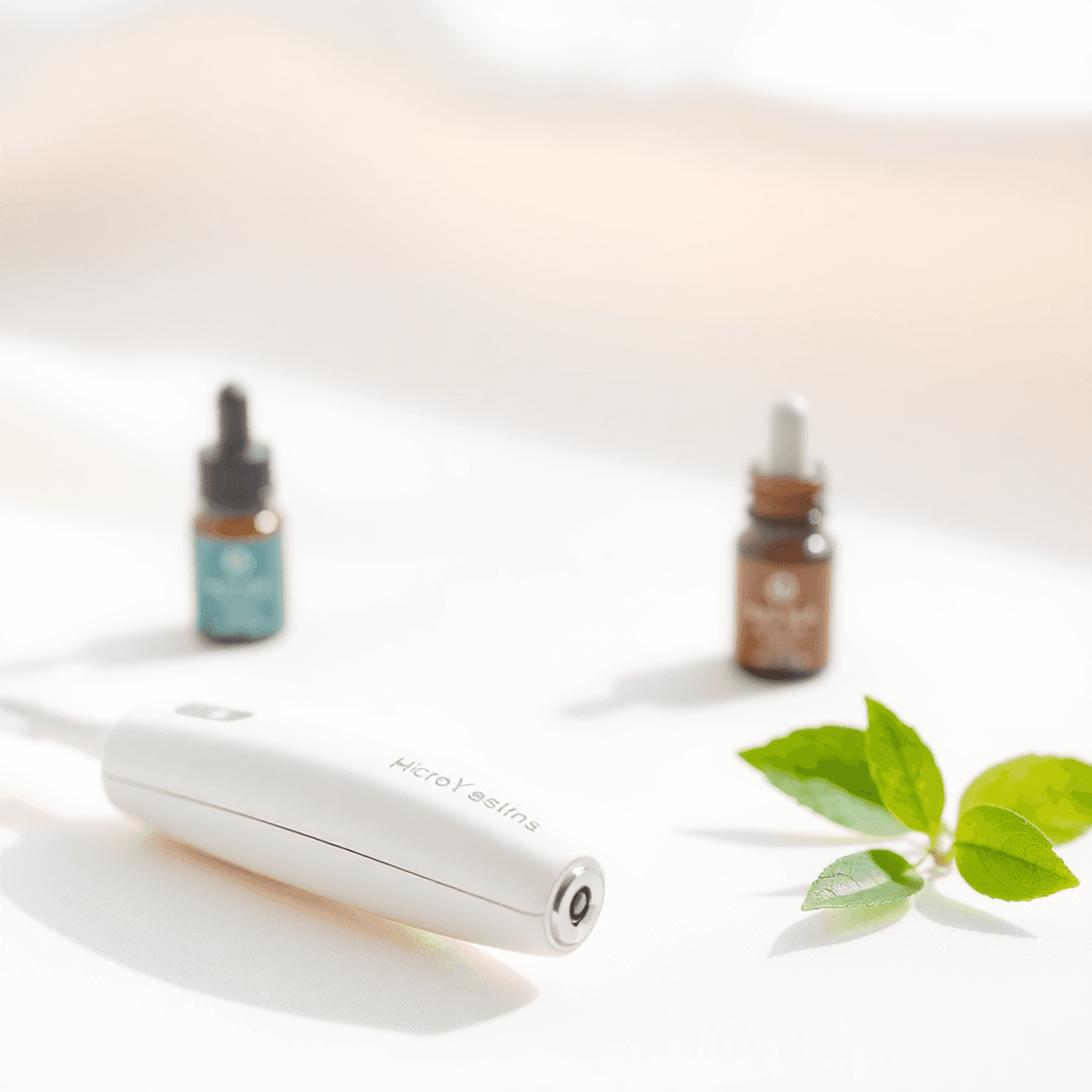
Research on percutaneous collagen induction confirms that microneedling increases gene expression for collagen type I, collagen type III, and growth factors like VEGF and EGF, with new collagen fiber bundles becoming thicker and more organized in the treated dermis (PMID: 20413357). Bradceuticals Gold Mesenchymal Stem Cell Growth Factor Serum delivers the full mesenchymal stem cell secretome — including concentrated VEGF, TGF-β1, and HGF — through open micro-channels immediately after treatment, amplifying the collagen-rebuilding cascade at the exact moment your skin needs repair signals most. Applied to damp, dewy skin right after your microneedling for acne scars session, it provides the biological raw materials that transform controlled injury into organized, scar-replacing collagen. See full details at Bradceuticals Gold Mesenchymal Stem Cell Growth Factor Serum.
Why Microneedling for Acne Scars Works
Acne scars are fundamentally a collagen problem. During inflammatory acne, the body’s immune response damages collagen fibers in the dermis. When the inflammation resolves, the repair process often produces either too little collagen (creating atrophic/depressed scars) or too much collagen (creating hypertrophic/raised scars). The resulting tissue lacks the organized structure of healthy skin, creating visible scarring.
Microneedling for acne scars addresses this directly by creating thousands of new controlled injuries within the scar tissue. Each micro-injury triggers a fresh wound-healing response — inflammation, proliferation, and remodeling — that progressively replaces the disorganized scar collagen with new, properly structured fibers. Growth factors released during this process orchestrate every phase of repair (PMID: 19128254).
Over multiple sessions, microneedling for acne scars gradually fills in depressions, softens edges, and normalizes texture as the cumulative collagen production remodels the scarred dermis. This is why microneedling for acne scars requires patience and consistency — each session adds another layer of collagen remodeling on top of the previous one.
Types of Acne Scars and How Microneedling Addresses Each
Not all acne scars respond equally to microneedling. Understanding your scar type helps set realistic expectations for your microneedling for acne scars results.
Rolling Scars
Rolling scars are broad, shallow depressions with smooth, sloping edges that give the skin a wave-like appearance. They result from fibrous bands tethering the epidermis to deeper structures. Microneedling for acne scars is highly effective for rolling scars because the controlled micro-injuries break these fibrous bands while stimulating new collagen that fills in the shallow depressions. Rolling scars typically show the most dramatic improvement with microneedling.
Boxcar Scars
Boxcar scars are wider depressions with sharply defined vertical edges — resembling small rectangular indentations. They result from inflammatory acne destroying collagen in a defined area. Microneedling for acne scars works well for shallow to moderate boxcar scars, where new collagen production gradually raises the depressed floor of the scar. Deeper boxcar scars may require combination treatment with subcision or filler alongside microneedling for optimal results.
Ice Pick Scars
Ice pick scars are narrow, deep, V-shaped pits that extend into the dermis — often resembling puncture wounds. These are the most challenging scar type for microneedling for acne scars because their extreme depth and narrow profile make it difficult for new collagen to fill the entire defect. While microneedling can soften ice pick scars and improve their appearance, complete resolution typically requires more aggressive interventions like TCA cross (chemical reconstruction) or punch excision. Microneedling for acne scars can then serve as a follow-up treatment to refine the overall texture.
Hypertrophic and Keloid Scars
Hypertrophic scars are raised, thickened areas that remain within the boundaries of the original wound. Keloid scars extend beyond the original wound margins. Microneedling for acne scars should be approached with caution for these scar types — particularly keloids, as the micro-injuries could theoretically trigger additional abnormal collagen production in keloid-prone individuals. Always consult a board-certified dermatologist before using microneedling for acne scars if you have a history of keloid formation.
Post-Inflammatory Hyperpigmentation (PIH)
While not technically a scar, dark spots left by healed acne are a common concern addressed alongside microneedling for acne scars. The accelerated cell turnover from microneedling helps fade PIH by pushing pigmented cells to the surface more quickly. Combining microneedling with niacinamide — which inhibits melanosome transfer — can enhance pigmentation improvement. For niacinamide guidance, see our article on niacinamide after microneedling.
11 Results You Can Expect from Microneedling for Acne Scars
1. Progressive Scar Depth Reduction
The most significant benefit of microneedling for acne scars is gradual reduction in scar depth. New collagen produced during the remodeling phase progressively fills in depressed scars from below. Clinical evidence shows that growth factor application over six months reduces wrinkle depth by 25–33%, with ultrastructural analysis confirming actual new collagen formation (PMID: 18569263). Scar tissue follows a similar remodeling trajectory — each session builds more collagen beneath the scar.
2. Smoother Overall Texture
Microneedling for acne scars improves overall skin texture beyond just the scars themselves. The accelerated cell turnover and new collagen production create a smoother, more refined surface across the entire treated area. A clinical study found that topical growth factors combined with microneedling produced a 17.6% improvement in skin texture in three months (PMID: 34951101).
3. Softened Scar Edges
Sharp scar edges — particularly on boxcar scars — soften as new collagen forms along the transition zones between scarred and healthy tissue. Microneedling for acne scars blurs these harsh boundaries over multiple sessions, creating a more gradual transition that makes scars less visually prominent.
4. Improved Skin Firmness Around Scars
As new collagen production extends beyond the immediate scar site, the surrounding skin becomes firmer and more supportive. This lifting effect around the scar margins reduces the visual contrast between scarred and unscarred areas, making microneedling for acne scars effective even for scars that do not fully resolve.
5. Reduced Post-Inflammatory Hyperpigmentation
Microneedling for acne scars accelerates cell turnover, which helps fade dark spots left by healed acne. The combination of new cell production and proper sun protection gradually replaces pigmented surface cells with fresh, evenly toned tissue.
6. Refined Pore Appearance
Enlarged pores often accompany acne scarring. The new collagen produced during microneedling for acne scars firms the tissue around pore openings, making them appear visually smaller and less prominent.
7. Enhanced Product Absorption
The micro-channels created during microneedling for acne scars dramatically enhance the absorption of post-treatment serums. Research confirms that active ingredients delivered through micro-channels achieve significantly enhanced bioavailability (PMID: 32036009). This means your growth factor serum reaches the dermal layer where scar remodeling is actively occurring.
8. Breaking of Fibrous Bands
Rolling scars are caused by fibrous bands that tether the epidermis to deeper tissue. The vertical stamping action of a professional microneedling pen physically breaks these bands, releasing the skin and allowing it to lift. Combined with new collagen filling in from below, microneedling for acne scars can significantly improve rolling scar appearance over multiple sessions.
9. Normalized Collagen Organization
Scar tissue contains disorganized collagen fibers arranged in parallel bundles rather than the basket-weave pattern of healthy skin. Research confirms that percutaneous collagen induction produces thicker, more organized collagen bundles (PMID: 20413357). Over time, microneedling for acne scars gradually replaces the chaotic scar collagen with more normally structured tissue.
10. Cumulative Improvement Across Sessions
Microneedling for acne scars produces compounding results. Each session adds new collagen remodeling on top of the previous session’s work. Most dermatologists recommend three to six sessions spaced four to six weeks apart, with patients typically seeing meaningful scar improvement at the three-to-six-month mark of consistent treatment.
11. Long-Lasting Structural Changes
Unlike temporary cosmetic treatments that mask scarring, microneedling for acne scars produces genuine structural changes in the dermis. The new collagen created during the remodeling process is permanent — it does not dissolve or dissipate over time. Maintenance sessions can continue building on these structural improvements for progressive long-term refinement.
How Many Sessions of Microneedling for Acne Scars Are Needed?
Most professionals recommend three to six microneedling for acne scars sessions as a starting treatment course, spaced four to six weeks apart. However, the number of sessions needed depends on scar severity, scar type, needle depth, and individual healing response.
Mild rolling scars: Three to four sessions may produce noticeable improvement.
Moderate boxcar and rolling scars: Four to six sessions typically produce meaningful results.
Severe or deep scarring: Six or more sessions may be needed, potentially combined with other treatments like subcision or TCA cross.
After completing an initial treatment course, maintenance sessions every three to six months can continue building on the collagen improvements and provide ongoing refinement. Consult a board-certified dermatologist for a personalized treatment plan based on your specific scar profile.
Optimal Needle Depth for Microneedling for Acne Scars
The needle depth used during microneedling for acne scars directly impacts results.
0.5 mm: Suitable for mild surface texture issues and PIH. Stimulates some collagen production but may be insufficient for moderate to deep scarring.
1.0 mm: The most commonly used depth for facial acne scarring. Reaches the mid-dermis where scar collagen resides. Produces meaningful collagen remodeling while maintaining a reasonable recovery timeline.
1.5–2.0 mm: Reserved for deeper scars, particularly on thicker skin areas like the cheeks. Produces more aggressive collagen remodeling but requires longer recovery and carries higher risk of side effects. Should only be performed by licensed professionals.
2.0–2.5 mm: Used for severe scarring in clinical settings only. Maximum collagen stimulation with the longest recovery timeline. For a detailed recovery guide by depth, see our article on microneedling recovery time.
Best Serums to Use After Microneedling for Acne Scars
The serum you apply immediately after microneedling for acne scars determines how effectively your skin converts the controlled injury into organized new collagen.
Growth Factor Serums
Growth factors orchestrate every phase of wound healing and are the most impactful post-treatment category for scar remodeling. Bradceuticals Gold Mesenchymal Stem Cell Growth Factor Serum delivers the complete mesenchymal stem cell secretome — including magnesium ascorbyl phosphate, sodium hyaluronate, palmitoyl oligopeptide, palmitoyl tetrapeptide-7, acetyl hexapeptide-8, and panthenol — through open micro-channels at peak absorption. Apply to damp, dewy skin within the first 15 minutes after your session.
Hyaluronic Acid
Hyaluronic acid provides deep hydration that supports fibroblast activity during the collagen production phase. Apply alongside or after your growth factor serum. For product options, see our guide on hyaluronic acid serums for microneedling.
Niacinamide
Niacinamide calms inflammation, strengthens the barrier, and prevents post-inflammatory hyperpigmentation — making it especially valuable for acne-prone patients undergoing microneedling for acne scars. Apply after your growth factor serum and hyaluronic acid have absorbed.
What to Avoid
After microneedling for acne scars, avoid retinol, AHAs, BHAs, fragrance, alcohol, and essential oils for at least 48 to 72 hours. These can intensify inflammation through open channels. For a complete guide on product timing, see our article on microneedling healing stages.
Who Is a Good Candidate for Microneedling for Acne Scars?
Microneedling for acne scars may be appropriate for individuals with atrophic (depressed) acne scars including rolling and boxcar types, post-inflammatory hyperpigmentation from healed acne, mild to moderate textural irregularities, and acne that is fully healed with no active breakouts in the treatment area.
Microneedling for acne scars may not be appropriate for individuals with active acne or pustules in the treatment area, a history of keloid scarring, active skin infections, rosacea flare-ups, or those using isotretinoin (Accutane) within the past six months.
This list is not exhaustive. Always consult a board-certified dermatologist for a thorough evaluation before beginning microneedling for acne scars. A qualified provider can assess your scar type, recommend the appropriate treatment plan, and determine whether combination therapies would enhance your results.
Frequently Asked Questions
Does microneedling for acne scars actually work? Yes. Clinical evidence confirms that microneedling stimulates new collagen formation that gradually fills in depressed scars and normalizes skin texture. Results are progressive and cumulative over multiple sessions. Rolling and boxcar scars respond most favorably.
How long does it take to see results from microneedling for acne scars? Early texture improvements appear within two to four weeks. Meaningful scar depth reduction typically develops over two to three months. Full results from a complete treatment course emerge over three to six months as collagen matures and remodels.
Is microneedling for acne scars painful? Most providers apply topical numbing cream before treatment. With numbing, most patients describe the sensation as mild pressure or vibration. Deeper treatments for severe scarring may produce more discomfort. Post-treatment, the skin feels similar to a mild sunburn for 24 to 72 hours.
Can microneedling for acne scars make scars worse? When performed correctly by a qualified professional at appropriate depths, microneedling for acne scars is generally considered safe. However, microneedling over active acne, using excessive pressure, or treating keloid-prone skin can potentially worsen outcomes. Professional evaluation before treatment is essential.
How much does microneedling for acne scars cost? Professional microneedling sessions typically range from $200 to $700 per session, depending on provider, location, and treatment area. A full course of three to six sessions represents a total investment of $600 to $4,200. Consult providers in your area for specific pricing.
Can I do microneedling for acne scars at home? At-home devices with shorter needles (0.25–0.5 mm) can provide mild texture improvement and enhanced product absorption. However, meaningful scar remodeling typically requires depths of 1.0 mm or greater, which should only be performed by licensed professionals. For at-home safety guidance, see our guide on microneedling at home.
What is the best serum after microneedling for acne scars? Growth factor serums deliver the strongest scar-remodeling support. Bradceuticals Gold Mesenchymal Stem Cell Growth Factor Serum provides the full growth factor spectrum alongside stable vitamin C, peptides, hyaluronic acid, and panthenol — a comprehensive post-treatment formulation designed to maximize collagen production during the critical healing window.
References
- Hou A, Cohen B, Haimovic A, Elbuluk N. Microneedling: A Comprehensive Review. Dermatol Surg. 2017;43(3):321-339. (PMID: 27755171)
- Aust MC, Reimers K, Kaplan HM, et al. Percutaneous collagen induction — regeneration in place of cicatrisation? J Plast Reconstr Aesthet Surg. 2011;64(1):97-107. (PMID: 20413357)
- Kim SN, Lee CJ, Nam J, et al. The Effects of Human Bone Marrow-Derived Mesenchymal Stem Cell Conditioned Media on Skin Rejuvenation Characteristics. Int J Stem Cells. 2021;14(1):94-102. (PMC7904527)
- Quinlan DJ, Ghanem AM, Hassan H. Topical growth factors and home-based microneedling for facial skin rejuvenation. J Cosmet Dermatol. 2021;21(8):3469-3478. (PMID: 34951101)
- Hussain M, Phelps R, Goldberg DJ. Clinical, histologic, and ultrastructural changes after use of human growth factor and cytokine skin cream. J Cosmet Laser Ther. 2008;10(2):104-109. (PMID: 18569263)
- Zhu J, Tang X, Jia Y, Ho CT, Huang Q. Applications and delivery mechanisms of hyaluronic acid used for topical/transdermal delivery. Int J Pharm. 2020;578:119127. (PMID: 32036009)
- Barrientos S, Stojadinovic O, Golinko MS, Brem H, Tomic-Canic M. Growth factors and cytokines in wound healing. Wound Repair Regen. 2008;16(5):585-601. (PMID: 19128254)
Disclaimer
This article is for educational and informational purposes only and does not constitute medical advice, diagnosis, or treatment. Acne scarring varies significantly in type, depth, and severity, and individual responses to microneedling differ based on skin type, scar characteristics, treatment parameters, and aftercare. Microneedling for acne scars carries inherent risks including but not limited to infection, scarring, hyperpigmentation, and allergic reactions. Always consult a board-certified dermatologist or qualified skincare professional before beginning any microneedling treatment for acne scars. Do not microneedle over active acne, infections, or inflamed skin. Individual results may vary. Bradceuticals products are not intended to diagnose, treat, cure, or prevent any disease. The information in this article should not be used as a substitute for professional medical advice.
Last reviewed: March 2026
About Bradceuticals : Thuy Myers is the founder of Bradceuticals which manufactures and distributes skin care and hair regrowth serums that use growth factors from human stem cells as the catalyst for regeneration. When she is not busy running the business and maintaining blogs, she is continuing her practice as a semiconductor engineer and occasionally teaches college engineering. In her free time, she enjoys the beach, working out at the gym and hanging out with her kiddo Brad.