

Knowing what serum to use after microneedling is more clinically significant than most people realize — and the reason comes down to timing and molecular access. Microneedling creates micro-channels through the stratum corneum that temporarily increase skin permeability, allowing hydrophilic molecules that normally cannot cross the skin barrier to penetrate directly into the dermis. (PMC11993440) Approximately five days post-procedure, a fibronectin matrix forms from β-fibroblasts that determines the deposition of new collagen — collagen that remains in place for five to seven years. (PMC11993440) The serums applied in the immediate post-procedure window directly influence the quality of this collagen deposition. Understanding what serum to use after microneedling is not a cosmetic preference — it is a clinical decision with measurable consequences for your results.
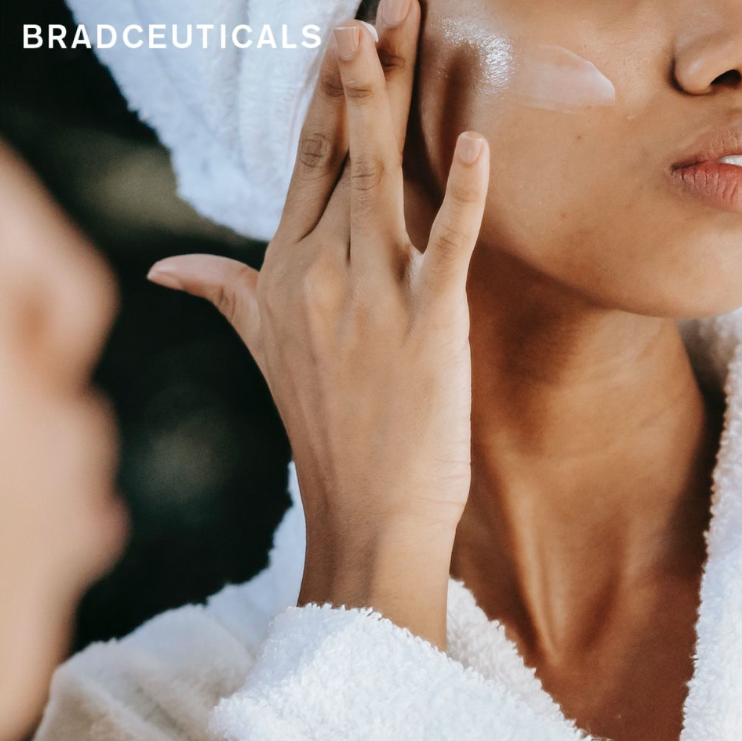
The Bradceuticals Gold Mesenchymal Stem Cell Growth Factor Serum is the definitive answer to what serum to use after microneedling for anyone prioritizing regenerative results. Applied to damp, dewy skin immediately post-procedure — never dry skin, never used as a gliding serum during the procedure — its stem cell-derived growth factors, EGF, peptides, and regenerative cytokines enter the dermis directly through open micro-channels while the healing cascade is running at full capacity. The results it produces as a standalone are real. As a post-microneedling serum applied at the right moment, they compound with every session.
Why What Serum to Use After Microneedling Matters More Than the Procedure Itself
The question of what serum to use after microneedling matters because your skin moves through three distinct healing phases following treatment — and what you apply at each phase determines your outcome, not just your comfort level.
Inflammation phase (0–48 hours): The wound healing cascade is activated. TGF, PDGF, and CTAP are released from platelets and neutrophils, triggering the production of collagen, elastin, and glycosaminoglycans. (PMC11993440) The barrier is temporarily compromised. Skin permeability is at its maximum, making this the highest-value window for applying the right serum — and the highest-risk window for applying the wrong one.
Proliferation phase (days 3–14): Fibroblasts migrate to the wound site and begin laying down type III collagen and elastin. The barrier progressively restores but remains more permeable than normal.
Remodeling phase (weeks to months): Type III collagen converts to stronger type I collagen. This is the phase where results become visible — and it continues for up to six months after each session. (PMC4976400)
Knowing what serum to use after microneedling at each of these phases is what separates a protocol that captures the procedure’s full potential from one that merely completes the appointment.
7 Answers to What Serum to Use After Microneedling by Goal and Skin Type
1. What Serum to Use After Microneedling for Maximum Regeneration: Stem Cell Growth Factor Serum
The most clinically supported answer to what serum to use after microneedling for overall regeneration is a mesenchymal stem cell-derived growth factor serum. These serums deliver a broad complex of growth factors — EGF, FGF-2, VEGF, PDGF-AA, and GM-CSF — alongside anti-inflammatory cytokines and extracellular matrix proteins that direct the collagen synthesis microneedling initiates. A randomized controlled trial found that adding growth factor serum to a standard microneedling protocol produced significantly greater improvements in skin texture and hydration than microneedling alone, confirmed by VISIA imaging. (PMC7716740) A 2022 randomized split-face study confirmed that microneedling combined with mesenchymal stem cell conditioned media produced superior skin brightness, texture, and pore size versus microneedling with saline. (PMC9171013)
Apply the Bradceuticals Gold Mesenchymal Stem Cell Growth Factor Serum immediately after treatment to damp, dewy skin using a gentle tapping motion. For a ranked comparison of options in this category, 7 Best Stem Cell Serums for Microneedling covers the full landscape.
2. What Serum to Use After Microneedling for Hydration: Hyaluronic Acid Serum
The foundational answer to what serum to use after microneedling for every skin type is hyaluronic acid. HA is a glycosaminoglycan naturally present in the dermal extracellular matrix that participates in every stage of wound healing — from forming the scaffold that guides fibroblast migration during inflammation to supporting collagen organization during remodeling. (PMC12452154) A randomized study of 60 patients comparing microneedling alone to microneedling with HA found the HA group demonstrated faster healing, reduced bruising, and significantly higher “good” to “very good” improvement ratings. (PMC10833484)
When choosing what serum to use after microneedling for hydration, prioritize multi-weight formulas — high molecular weight HA for surface barrier protection and low molecular weight HA for deeper dermal penetration and fibroblast activation. Apply to damp skin immediately post-procedure. For top-ranked options, see 5 Best Hyaluronic Acid Serums to Use with Microneedling.
3. What Serum to Use After Microneedling for Scar Reduction: EGF Serum
The targeted answer to what serum to use after microneedling for acne scars, surgical scars, and post-inflammatory hyperpigmentation is an EGF serum. Epidermal growth factor regulates keratinocyte proliferation, migration, and differentiation — all central to re-epithelialization after microneedling. A three-month topical application of EGF-containing serum produced measurable improvements in brown pigmentation, skin texture, pore size, and wrinkles in women with photoaged skin. (PMC10333026) EGF also stimulates organized collagen production while downregulating TGF-beta1, which drives pro-fibrotic scarring — making it one of the most biologically targeted answers to what serum to use after microneedling for scar remodeling specifically. For the complete evidence base, 10 Reasons Why EGF Serums Are the Best for Skin Rejuvenation covers the research in depth.
4. What Serum to Use After Microneedling for Sensitive Skin: Niacinamide Serum
For sensitive, reactive, or rosacea-prone skin, the answer to what serum to use after microneedling centers on niacinamide. Topical vitamin B3 stabilizes epidermal barrier function, stimulates ceramide synthesis, reduces pro-inflammatory cytokines including TNF-α and IL-6, and demonstrates measurable anti-inflammatory effects across multiple dermatological conditions. (PMC8389214) At the dermal level, niacinamide promotes fibroblast collagen synthesis while inhibiting the matrix metalloproteinases that degrade newly formed collagen — making it an active healing ingredient, not merely a soothing one. (PubMed 17147561) Its tolerability across all skin types makes niacinamide one of the safest answers to what serum to use after microneedling in the first 24 to 72 hours when sensitivity peaks.
5. What Serum to Use After Microneedling for Aging Skin: Peptide Serum
For anti-aging goals, the answer to what serum to use after microneedling extends beyond the treatment day to the inter-session protocol. Peptides signal fibroblasts to upregulate collagen and elastin synthesis, with signal peptides triggering new ECM production, carrier peptides delivering wound-healing trace elements like copper, and enzyme inhibitor peptides slowing the matrix metalloproteinases that degrade newly formed collagen. (PMC11762834) Applied through open micro-channels immediately post-procedure and used consistently between sessions, peptide serums extend the collagen induction signal across the full treatment series. For ranked options, 10 Best Growth Factor Serums for Youthful Skin provides a comprehensive breakdown.
6. What Serum to Use After Microneedling for Oily and Acne-Prone Skin: Niacinamide + Zinc
For oily and acne-prone skin types, what serum to use after microneedling requires balancing post-procedure inflammation management with sebum regulation and pore refinement. Niacinamide combined with zinc addresses all three — niacinamide calms the inflammatory response, supports barrier recovery, and inhibits melanin transfer that drives post-inflammatory hyperpigmentation, while zinc supports the wound-healing enzymatic processes and has a calming effect on sebaceous activity. This pairing is appropriate immediately after treatment and appropriate throughout the recovery week for this skin type.
7. What Serum to Use After Microneedling for Long-Term Brightening: Vitamin C Serum
For pigmentation correction and long-term brightening, what serum to use after microneedling is vitamin C — but with strict timing. High-concentration vitamin C is too potent for freshly needled skin with a compromised barrier and will cause burning on open micro-channels. The correct protocol: hold vitamin C for 48 to 72 hours post-procedure, then reintroduce on damp skin as the barrier restores. Between sessions, consistent vitamin C use neutralizes UV-induced oxidative stress, inhibits melanin synthesis, and directly supports the enzymatic collagen synthesis that microneedling initiates. For guidance on correcting accumulated sun damage between sessions, 7 Proven Ways to Treat Sun-Damaged Skin covers the evidence in detail.
What Serum to Use After Microneedling: The Complete Phase-by-Phase Protocol
Understanding what serum to use after microneedling at each recovery phase captures the procedure’s full value across the entire healing timeline.
Immediately post-procedure (0–30 minutes, micro-channels open): Apply stem cell growth factor serum to damp, dewy skin using a gentle tapping motion. Follow with multi-weight HA serum. Seal with a gentle fragrance-free moisturizer. This is the highest-value window — what serum to use after microneedling in this phase determines how much of the procedure’s regenerative potential is captured.
First 24–72 hours: Niacinamide serum for barrier support and inflammation calming. HA twice daily. Avoid retinoids, AHAs, BHAs, and high-concentration vitamin C entirely — these are the wrong answer to what serum to use after microneedling in this phase regardless of skin type.
Days 3–7: Introduce ceramide serum to reinforce barrier recovery and lock in hydration as micro-channels close. Continue HA and niacinamide. Broad-spectrum SPF 30 or higher every morning without exception — post-microneedling skin has heightened UV sensitivity that can trigger hyperpigmentation on freshly remodeled tissue.
Week 2 onward (inter-session maintenance): Reintroduce peptides, vitamin C, and any other active serums. This is the phase where what serum to use after microneedling shifts from recovery support to collagen maintenance — sustaining the regenerative environment as newly deposited collagen matures. For a complete timeline breakdown, 7 Complete Stages of Microneedling Recovery Time maps every phase and its aftercare requirements.
What NOT to Use After Microneedling: The Wrong Answer to What Serum to Use
Just as important as knowing what serum to use after microneedling is knowing what to avoid. The enhanced skin permeability that makes the right serum so effective makes the wrong ingredient potentially harmful.
Retinoids are too stimulating for temporarily compromised skin. Discontinue 24 to 48 hours before treatment and reintroduce only after full healing — typically four to seven days.
AHAs and BHAs interfere with the healing cascade and exacerbate post-procedure sensitivity. Never the right answer to what serum to use after microneedling in the immediate post-procedure window.
Fragrance and alcohol — both can cause inflammation when introduced through open micro-channels. Fragrance-free, alcohol-free formulations are the appropriate standard for what serum to use after microneedling at every phase of recovery.
High-concentration vitamin C — hold until 48 to 72 hours post-procedure.
Frequently Asked Questions About What Serum to Use After Microneedling
What serum to use after microneedling for first-time patients? Hyaluronic acid is the safest and most broadly appropriate starting point. Add a growth factor or stem cell serum once you have confirmed your skin tolerates the procedure without adverse reaction.
What serum to use after microneedling immediately versus days later? Immediately: growth factor serum plus hyaluronic acid on damp skin. Days 2–3: niacinamide and ceramide serums. Day 4 onward: begin reintroducing peptides and vitamin C gradually.
Can I use my regular serum as the answer to what serum to use after microneedling? Only if it contains no retinoids, AHAs, BHAs, fragrance, alcohol, or high-concentration vitamin C. Most regular serums are not formulated for post-procedure use. Dedicated post-microneedling serums are the correct answer to what serum to use after microneedling in the immediate recovery window.
What serum to use after microneedling to reduce redness fastest? Niacinamide is the most evidence-supported ingredient for reducing post-procedure redness and inflammation. Applied to damp skin within the first 24 hours, it accelerates the transition from the inflammatory to the proliferative healing phase.
What serum to use after microneedling if I have dark skin or hyperpigmentation concerns? Niacinamide is the safest immediate answer for hyperpigmentation-prone skin — it inhibits melanin transfer and reduces the inflammatory signals that trigger post-inflammatory hyperpigmentation. Introduce vitamin C carefully from day 3 onward. Avoid anything that could trigger further inflammation in the immediate post-procedure window.
References
- Physiological Mechanisms and Therapeutic Applications of Microneedling: A Narrative Review. PMC11993440. https://pmc.ncbi.nlm.nih.gov/articles/PMC11993440/
- Microneedling: Advances and Widening Horizons. PMC4976400. https://pmc.ncbi.nlm.nih.gov/articles/PMC4976400/
- An Assessment of Microneedling with Topical Growth Factors: A Randomized Controlled Trial. PMC7716740. https://pmc.ncbi.nlm.nih.gov/articles/PMC7716740/
- Efficacy of Microneedling Combined With Mesenchymal Stem Cells Conditioned Media. PMC9171013. https://pmc.ncbi.nlm.nih.gov/articles/PMC9171013/
- Comparative Evaluation of Microneedling Alone Versus Microneedling with Hyaluronic Acid. PMC10833484. https://pmc.ncbi.nlm.nih.gov/articles/PMC10833484/
- The Use of Epidermal Growth Factor in Dermatological Practice. PMC10333026. https://pmc.ncbi.nlm.nih.gov/articles/PMC10333026/
- Effects of Hyaluronic Acid on Skin at the Cellular Level: A Systematic Review. PMC12452154. https://pmc.ncbi.nlm.nih.gov/articles/PMC12452154/
- Peptides: Emerging Candidates for the Prevention and Treatment of Skin Senescence. PMC11762834. https://pmc.ncbi.nlm.nih.gov/articles/PMC11762834/
- Mechanistic Basis and Clinical Evidence for the Applications of Nicotinamide. PMC8389214. https://pmc.ncbi.nlm.nih.gov/articles/PMC8389214/
- Nicotinic Acid/Niacinamide and the Skin. PubMed 17147561. https://pubmed.ncbi.nlm.nih.gov/17147561/
- Microneedling in Dermatology: A Comprehensive Review. PMC11499218. https://pmc.ncbi.nlm.nih.gov/articles/PMC11499218/
Disclaimer: This article is for educational purposes only and does not constitute medical advice. Always consult a licensed dermatologist or skincare professional before beginning any microneedling or serum protocol. Individual results vary.
Last reviewed: March 2026
About Bradceuticals : Thuy Myers is the founder of Bradceuticals which manufactures and distributes skin care and hair regrowth serums that use growth factors from human stem cells as the catalyst for regeneration. When she is not busy running the business and maintaining blogs, she is continuing her practice as a semiconductor engineer and occasionally teaches college engineering. In her free time, she enjoys visiting the beach with her MUCH better half, working out at the gym, and hanging out with her kiddo.