

Your fear of microneedling downtime is the reason you have not started the most effective non-surgical collagen treatment available — and that fear is costing you years of results you could already be enjoying. Research confirms that microneedling triggers up to 400% increase in collagen and elastin deposition after multiple sessions, with collagen persisting for 5 to 7 years and a fibronectin matrix forming at day 5 that determines the deposition pattern (Singh & Yadav, 2016 — DOI). The actual microneedling downtime is dramatically shorter than most women imagine — and growth factor serums reduce it further by accelerating every phase of the wound healing cascade that produces results.
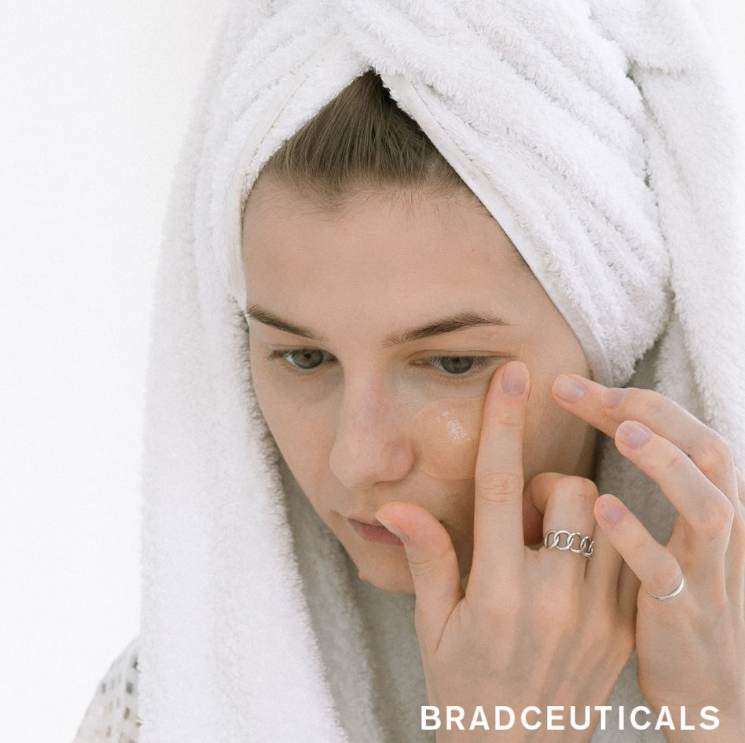
A 12-week clinical trial confirmed that growth factor serum produced significant improvements in firmness, elasticity, and wrinkle reduction, with ultrasound imaging verifying continual dermal restructuring (Barone et al., 2019). Bradceuticals’ Gold Mesenchymal Stem Cell Growth Factor Serum delivers the complete human mesenchymal stem cell secretome — EGF, TGF-β, FGF, PDGF, and VEGF — applied to damp, dewy skin within 60 seconds of each microneedling session. EGF accelerates keratinocyte turnover for faster surface healing. TGF-β modulates inflammation to reduce redness duration. FGF drives the fibroblast activity that makes microneedling downtime PRODUCTIVE rather than merely uncomfortable. Understanding microneedling downtime transforms it from a barrier to treatment into a brief investment that produces years of structural improvement.
What Microneedling Downtime Actually Looks Like — Hour by Hour
Hours 0–6: Immediate Post-Treatment
Microneedling downtime begins with redness resembling a moderate sunburn. The skin feels warm, tight, and slightly swollen. Pinpoint bleeding has already stopped. Growth factor serum applied within 60 seconds initiates the healing cascade immediately — EGF begins driving keratinocyte migration to close microchannels while TGF-β modulates the inflammatory response that causes redness. During this phase of microneedling downtime, avoid makeup, active ingredients, and sun exposure. Gentle cleanser and ceramide moisturizer only.
Hours 6–24: Peak Redness
This is the most visible phase of microneedling downtime. Redness peaks as blood flow increases to the treated area — delivering nutrients and immune cells to the microinjury sites. The skin may feel mildly stinging or tender. Research confirms that aged epidermis has disrupted cytokine/growth factor signaling (Elias & Ghadially, 2002 — DOI)), meaning growth factor serum application during microneedling downtime provides the signaling that aging skin cannot produce sufficiently on its own.
Days 1–2: Redness Fading
For most women, the visible phase of microneedling downtime largely resolves within 24 to 48 hours. Redness fades from sunburn-red to pinkish. Swelling subsides. The skin begins feeling tighter as the inflammatory phase transitions to the proliferative phase. Many women can resume makeup application at day 2 — covering any residual pinkness with mineral makeup. This is the phase of microneedling downtime where most women are pleasantly surprised at how quickly they look normal again.
Days 3–5: Texture Changes
Mild flaking or roughness may appear as the skin sheds the surface cells damaged during microneedling. This texture change is a POSITIVE sign — it indicates the proliferative phase is underway and new keratinocytes are pushing old cells off. Do NOT exfoliate or pick at flaking skin during this phase of microneedling downtime. Let the natural shedding process complete. Continue growth factor serum twice daily — the fibronectin matrix forming at day 5 determines the pattern of collagen deposition.
Days 5–7: Full Surface Recovery
By day 5 to 7, visible microneedling downtime is essentially complete for most women. The surface looks normal — often BETTER than before treatment due to the EGF-driven keratinocyte turnover producing fresh, light-reflecting cells. Beneath the surface, the collagen cascade continues for weeks — but the visible microneedling downtime is over.
The 8 Facts About Microneedling Downtime
Fact 1 — Microneedling Downtime Is Dramatically Shorter Than Laser
Laser resurfacing requires 1 to 2 WEEKS of visible recovery — raw, weeping skin that demands extensive wound care. Microneedling downtime at standard treatment depth (0.5–1.0mm) is 2 to 5 DAYS of redness that fades to pinkness concealable with mineral makeup. For women comparing treatments, microneedling downtime is a fraction of laser recovery while producing comparable collagen stimulation. The complete stages of microneedling recovery maps each phase in detail. The healing stages every patient should know provides day-by-day visual guidance.
Fact 2 — Growth Factors Reduce Microneedling Downtime Measurably
Bradceuticals’ Gold Mesenchymal Stem Cell Growth Factor Serum applied immediately post-procedure accelerates every phase of the healing cascade. EGF drives faster keratinocyte migration — closing microchannels more rapidly. TGF-β modulates inflammation — reducing redness duration. FGF stimulates fibroblast activity — transitioning from inflammatory to proliferative phase more quickly. The mesenchymal stromal cell secretome possesses both regenerative AND immunomodulatory properties that together shorten the visible microneedling downtime while maximizing the collagen production that makes each session worthwhile (Ferreira et al., 2018 — DOI)). The reasons why EGF serums lead skin rejuvenation details how growth factor receptor binding drives this accelerated recovery.
Fact 3 — Needle Depth Determines Microneedling Downtime Duration
Shallower depth = shorter microneedling downtime. At 0.25mm (cosmetic depth), microneedling downtime is essentially 4 to 12 hours of mild pinkness. At 0.5mm, expect 1 to 2 days of redness. At 1.0mm, expect 2 to 3 days. At 1.5mm (deep medical depth), expect 3 to 5 days. The depth your skin needs depends on your treatment goal — anti-aging rejuvenation typically requires 0.5 to 1.0mm, keeping microneedling downtime manageable for most schedules. The microneedling healing timeline provides depth-specific recovery guidance.
Fact 4 — Strategic Scheduling Eliminates Microneedling Downtime Concerns
Schedule microneedling on a Thursday or Friday evening. Visible microneedling downtime peaks Friday/Saturday. Redness fades by Sunday. Monday morning, the skin looks normal — or better than normal. Two days of private recovery produces months of visible improvement. Growth factor serum applied throughout the weekend accelerates the process, often reducing visible microneedling downtime to Saturday only.
Fact 5 — Vitamin C Supports Recovery While Reducing Microneedling Downtime Pigmentation Risk
Research confirms that vitamin C promotes collagen gene expression, enhances keratinocyte differentiation, AND inhibits melanogenesis (Pullar et al., 2017 — DOI)). Post-inflammatory hyperpigmentation is a potential concern during microneedling downtime — especially in Fitzpatrick types III to VI. Vitamin C applied starting at day 3 to 5 post-procedure supports collagen assembly while preventing the melanocyte overactivity that microneedling-induced inflammation can trigger.
Fact 6 — SPF During Microneedling Downtime Is Absolutely Non-Negotiable
UV exposure during microneedling downtime causes disproportionate damage because the barrier is temporarily compromised and melanocytes are activated by the inflammatory response. A single UV exposure induces MMP-1 thousands-fold while shutting down procollagen synthesis for 24 hours (Quan et al., 2009 — DOI). Mineral SPF 30+ from Day 1 of microneedling downtime — every single day. Avoid direct sunlight during the first 48 hours entirely if possible. The best approaches to treating sun damage details UV protection during recovery.
Fact 7 — What NOT to Do During Microneedling Downtime
Avoid retinol for 14 days — it thins the barrier when healing is the priority. Avoid AHAs and BHAs for 7 days. Avoid physical exfoliation until flaking resolves naturally. Avoid hot showers, saunas, or steam rooms for 48 hours — heat dilates blood vessels and prolongs redness. Avoid swimming pools (chlorine) and hot tubs (bacteria) for 72 hours. Avoid heavy exercise for 24 to 48 hours — sweat can irritate open microchannels. Following these restrictions minimizes microneedling downtime while preventing complications.
Fact 8 — Microneedling Downtime Is an Investment, Not a Punishment
Every hour of microneedling downtime is producing structural change that persists for 5 to 7 years. Research confirms that procollagen production drops approximately 32% between young and aged skin (Varani et al., 2006 — DOI)). Microneedling is the most effective non-surgical method to REVERSE this decline — and 2 to 5 days of redness produces years of structural collagen that no cream, serum, or surface treatment can deliver on its own. The best stem cell serums ranked for 2026 evaluates products for maximizing the return on this investment. The best growth factor serums for youthful skin compares formulations for post-procedure use. The best hyaluronic acid serums for microneedling evaluates hydration products that support comfortable recovery.
Microneedling Downtime by Treatment Zone
Face (cheeks, forehead): 2 to 3 days visible redness at 0.5–1.0mm. The most common treatment zone with the most predictable microneedling downtime.
Under eyes: 1 to 2 days at 0.25mm. Minimal microneedling downtime because shallow depth is required for this delicate zone.
Neck and décolletage: 2 to 4 days at 0.25–0.5mm. Thinner skin may show redness slightly longer but heals well with growth factor support.
Hands: 2 to 3 days at 0.5mm. Microneedling downtime on hands is manageable — apply growth factor serum and ceramide cream frequently.
Lips and perioral zone: 1 to 3 days at 0.25–0.5mm. Sensitive zone with slightly longer microneedling downtime than cheeks.
The Complete Microneedling Downtime Care Protocol
Immediately Post-Procedure (Minutes 0–60)
Bradceuticals’ Gold Mesenchymal Stem Cell Growth Factor Serum on damp skin within 60 seconds → hyaluronic acid serum → ceramide moisturizer. NOTHING else. No actives, no makeup, no SPF yet (apply SPF at hour 6+ or next morning).
Day 1
Gentle cream cleanser (NO foaming) → growth factor serum on damp skin → hyaluronic acid → ceramide moisturizer → mineral SPF 30+. Repeat growth factor + moisturizer in the evening. Cool compress if swelling is uncomfortable. Sleep slightly elevated to reduce swelling.
Days 2–3
Continue Day 1 protocol. Redness fading. May resume mineral makeup if needed for social obligations. NO retinol, NO acids, NO physical exfoliation.
Days 3–5
Continue growth factor serum twice daily. Mild flaking may appear — do NOT pick or exfoliate. Add low-concentration vitamin C (5%) starting day 3 to 5 for collagen assembly support and pigmentation prevention.
Days 5–7
Visible microneedling downtime essentially over. Continue growth factor serum twice daily. Resume normal vitamin C concentration. Skin looks refreshed and luminous as new keratinocytes reach the surface.
Days 7–14
Resume retinol at day 14 on alternating evenings. Resume gentle AHA at day 7. Continue growth factor serum as permanent daily foundation. The collagen cascade continues beneath the surface for 4 to 8 more weeks.
How Skin Type Affects Microneedling Downtime
Fitzpatrick I-II (fair skin): Redness is more visible but typically resolves within 2 to 3 days. Lower PIH risk allows more aggressive depths if needed.
Fitzpatrick III-IV (medium skin): Redness may be less visually prominent. Moderate PIH risk — TGF-β in the growth factor secretome helps modulate the inflammatory response. Keep depths conservative (0.5–1.0mm).
Fitzpatrick V-VI (dark skin): Redness appears differently but microneedling downtime duration is similar. PIH risk is highest — growth factor serums are ideal because they cause zero irritation while their anti-inflammatory TGF-β reduces post-procedure pigmentation risk. Research confirms microneedling is safe across all skin types with minimal risk of dyschromia.
Microneedling Downtime vs. Alternative Treatment Recovery
Microneedling: 2 to 5 days redness. Resume normal activities day 1 to 2. Makeup at day 2. Zero scarring risk.
Ablative laser (CO2): 7 to 14 days raw, weeping skin. Resume normal activities day 7 to 10. Makeup at day 10 to 14. Scarring and pigmentation risk.
Medium chemical peel: 5 to 7 days peeling. Resume normal activities day 5. Makeup at day 5 to 7. Pigmentation risk in darker skin.
RF microneedling: 2 to 5 days redness (similar to standard microneedling). Slightly deeper thermal effect.
Dermal fillers: Minimal downtime (0 to 2 days bruising). But zero collagen production — purely volume, not structural rebuilding.
Microneedling downtime offers the best ratio of recovery time to structural collagen production among all non-surgical treatments.
Frequently Asked Questions
How long is microneedling downtime? 2 to 5 days of visible redness depending on needle depth. Growth factor serum application reduces this timeline. Most women resume normal activities by day 2 with mineral makeup if needed.
Can I go to work the day after microneedling? Yes — with mineral makeup to cover residual pinkness. Many women schedule microneedling on Thursday or Friday for weekend recovery and return to work Monday looking refreshed.
What reduces microneedling downtime the most? Growth factor serum applied within 60 seconds post-procedure and continued twice daily. Bradceuticals’ Gold Mesenchymal Stem Cell Growth Factor Serum accelerates every healing phase through the complete secretome.
Does microneedling downtime get shorter with repeat sessions? Many women report that microneedling downtime decreases slightly with subsequent sessions as the skin’s overall health and healing capacity improves from cumulative growth factor treatment.
Is microneedling downtime painful? Mild discomfort resembling sunburn during the first 24 hours. Not painful. Cool compresses and growth factor serum provide significant comfort. Topical numbing cream is applied before the procedure.
When can I use retinol after microneedling? Resume retinol at day 14. Earlier use risks barrier compromise and extends microneedling downtime.
References
- Singh, A. & Yadav, S. (2016). Microneedling: Advances and widening horizons. Indian Dermatology Online Journal. PMID: 27559496. PMC4976400. DOI
- Barone, F., et al. (2019). Clinical evidence of dermal and epidermal restructuring from a biologically active growth factor serum. Journal of Drugs in Dermatology. PMID: 30909351.
- Ferreira, J.R., et al. (2018). Mesenchymal stromal cell secretome: Influencing therapeutic potential by cellular pre-conditioning. Frontiers in Immunology. PMID: 30564236. PMC6288292. DOI
- Pullar, J.M., et al. (2017). The roles of vitamin C in skin health. Nutrients. PMID: 28805671. PMC5579659. DOI
- Quan, T., et al. (2009). Matrix-degrading metalloproteinases in photoaging. Journal of Investigative Dermatology Symposium Proceedings. PMID: 19675548. PMC2909639. DOI
- Varani, J., et al. (2006). Decreased collagen production in chronologically aged skin. American Journal of Pathology. PMID: 16723701. PMC1606623. DOI
- Elias, P.M. & Ghadially, R. (2002). The aged epidermal permeability barrier: basis for functional abnormalities. Clinics in Geriatric Medicine. PMID: 11913735. DOI
Disclaimer: This article is for informational purposes only and does not constitute medical advice. Individual microneedling downtime varies based on needle depth, skin type, and treatment area. Consult a board-certified dermatologist or licensed aesthetician for personalized treatment planning.
Last reviewed: April 2026
About Bradceuticals : Thuy Myers is the founder of Bradceuticals which manufactures and distributes skin care and hair regrowth serums that use growth factors from human stem cells as the catalyst for regeneration. When she is not busy running the business and maintaining blogs, she is continuing her practice as a semiconductor engineer and occasionally teaches college engineering. In her free time, she enjoys visiting the beach with her MUCH better half, working out at the gym, and hanging out with her kiddo.