

Every “firming” cream you have ever used created the ILLUSION of tighter skin for a few hours while the actual structural collapse beneath your surface continued unchecked. Learning how to tighten skin on face requires understanding one brutal biological fact: facial laxity is not a surface problem. It is a dermal architecture failure where collagen and elastin fibers have degraded below the threshold needed to resist gravity. Your skin is not loose because it needs moisture — it is loose because the scaffolding holding it up is disappearing at approximately 1% per year after age 30 (Varani et al., 2006). Truly learning how to tighten skin on face means rebuilding that scaffolding from the inside — not temporarily inflating the surface with ingredients that wash off tonight.
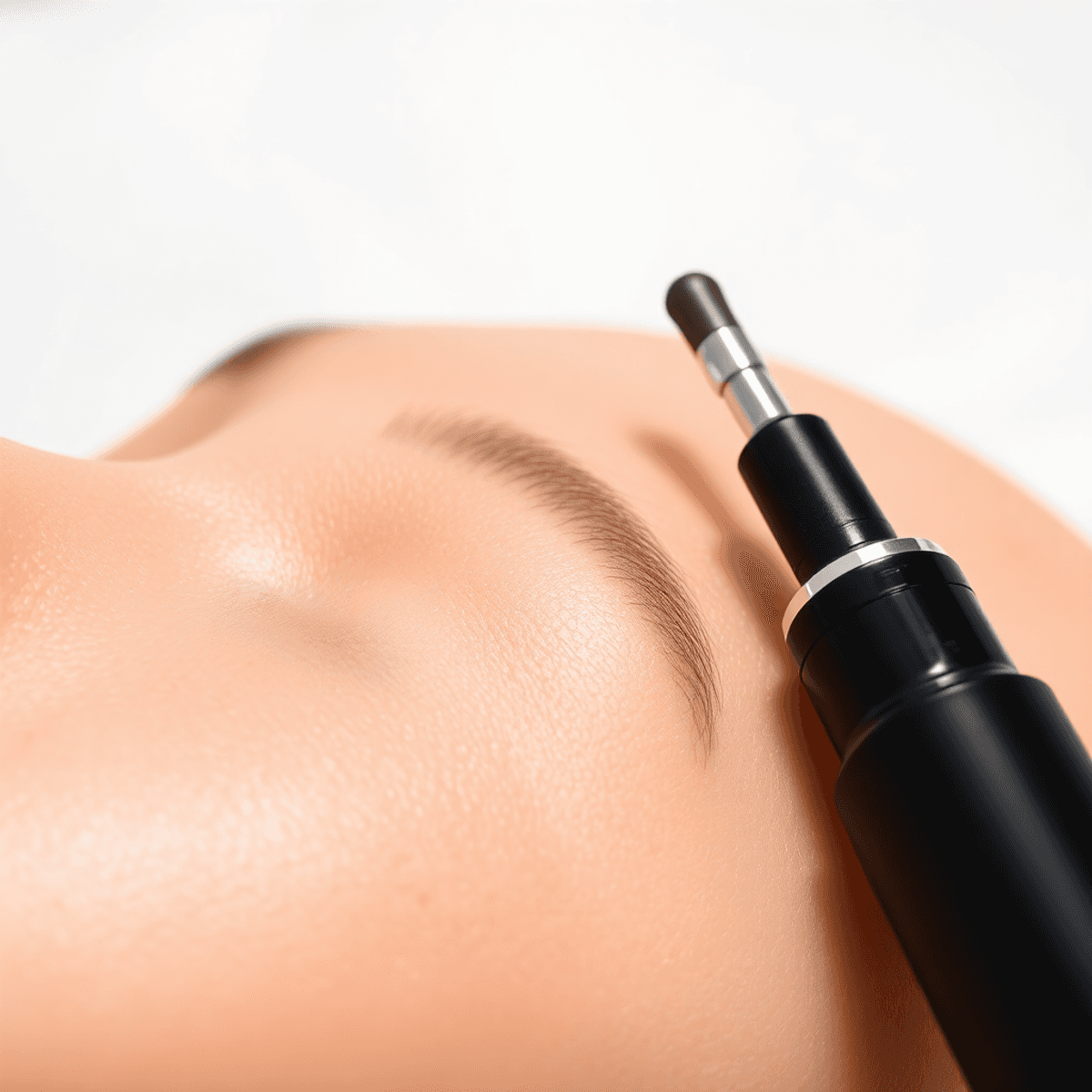
The clinical evidence shows exactly what works. A study in the Journal of Cosmetic Dermatology confirmed that human adipose-derived stem cell conditioned media produced statistically significant elasticity improvement and wrinkle depth reduction over just eight weeks (Kim et al., 2020). Elasticity improvement IS skin tightening — measured by how quickly tissue rebounds after being stretched. Bradceuticals’ Gold Mesenchymal Stem Cell Growth Factor Serum delivers the complete human mesenchymal stem cell secretome — EGF, TGF-β, FGF, PDGF, and VEGF — the growth factors that instruct fibroblasts to produce the collagen AND elastin that structurally tighten facial skin from the dermal layer. Applied to damp, dewy skin twice daily, this is where the science of how to tighten skin on face meets the product that delivers it.
Why Facial Skin Loses Firmness — The Biology You Must Understand
The Collagen-Elastin Dual Decline
Understanding how to tighten skin on face begins with understanding WHY it loosened. Two proteins determine facial firmness: collagen provides structural density and resistance to compression, while elastin provides bounce-back — the ability to snap into place after being stretched by gravity, facial expressions, or sleep position. Both decline with age. Collagen production drops while matrix metalloproteinases increase degradation. Elastin fibers fragment and lose their recoil capacity. The result is skin that sags, droops, and hangs where it once held firm.
UV Damage Accelerates the Timeline
UV exposure activates matrix metalloproteinases that degrade existing collagen and elastin while suppressing TGF-β signaling that would stimulate replacement production (Quan et al., 2009)). Women who spent decades with inadequate sun protection face an accelerated version of this decline — making how to tighten skin on face an even more urgent intervention. The best approaches to treating sun damage details how growth factors address both photoaging and chronological aging simultaneously.
Gravity Never Stops
Unlike wrinkles that form from repetitive muscle contraction, laxity results from continuous gravitational force pulling on tissue that no longer has adequate structural support. How to tighten skin on face must counteract this constant downward pull by rebuilding the internal scaffolding strong enough to resist it — not by applying surface products that fight gravity with temporary film-forming agents.
The 9 Methods That Actually Teach You How to Tighten Skin on Face
Method 1 — Growth Factor Serum as Your Daily Foundation
The most impactful daily approach to how to tighten skin on face is a human growth factor serum applied twice daily. Research from Seoul National University confirmed that mesenchymal stem cell conditioned media increased type I collagen production by up to 31% in dermal fibroblasts (Park et al., 2019)). Bradceuticals’ Gold Mesenchymal Stem Cell Growth Factor Serum delivers EGF, FGF, TGF-β, VEGF, and PDGF — the coordinated secretome that drives both collagen AND elastin production through receptor-mediated fibroblast activation (Ferreira et al., 2020)). Apply to damp, dewy skin morning and evening. This daily growth factor exposure maintains elevated fibroblast activity that rebuilds structural density over 8 to 12 weeks. The reasons why EGF serums lead skin rejuvenation details how EGF specifically drives the cellular renewal component of tightening.
Method 2 — Monthly Microneedling for Enhanced Delivery
The most dramatic results in how to tighten skin on face come from combining growth factor serums with monthly microneedling. Microneedling creates microchannels that increase growth factor penetration by up to 300% (Singh & Yadav, 2016)). Growth factors like EGF (6,045 Daltons) cannot penetrate intact skin efficiently — microneedling solves this delivery problem entirely. Apply Bradceuticals’ serum within 60 seconds post-procedure to damp skin — never as a gliding product. The complete stages of microneedling recovery maps the optimal delivery timeline. The healing stages every patient should know provides day-by-day post-procedure guidance.
Method 3 — Retinol on Alternating Evenings
Retinol upregulates collagen gene expression through nuclear retinoic acid receptors — an independent pathway from growth factor membrane receptor signaling. For how to tighten skin on face through multiple biological angles, alternating growth factor serum and retinol evenings creates redundant collagen-building instructions from two completely separate cascades. Start at 0.25% concentration and increase gradually to minimize the peeling and photosensitivity retinol causes. Never apply retinol on microneedling days or within the first 14 days post-procedure.
Method 4 — Vitamin C as the Collagen Assembly Cofactor
Vitamin C serves as the essential cofactor for prolyl hydroxylase — the enzyme fibroblasts need to cross-link procollagen into structurally stable, tensile collagen fibers (Pullar et al., 2017)). Without adequate vitamin C, the collagen your growth factors stimulate cannot assemble into the tight-knit architecture that produces facial firmness. For how to tighten skin on face, apply vitamin C serum every morning after your growth factor serum — providing the construction material that complements the construction instructions.
Method 5 — Mineral Sunscreen Every Single Day
UV exposure is the number one accelerant of the collagen and elastin degradation causing facial laxity. Every approach to how to tighten skin on face is undermined without daily mineral SPF 30+. Zinc oxide and titanium dioxide physically block UV photons from reaching dermal tissue where matrix metalloproteinases would otherwise degrade the collagen you are building. This is not optional — it is the protective foundation every tightening strategy depends on.
Method 6 — Hyaluronic Acid for Receptor Optimization
Growth factor receptor binding requires hydrated tissue conditions. Dehydrated dermis downregulates receptor accessibility — reducing the collagen output of every growth factor in your serum. For how to tighten skin on face, apply hyaluronic acid AFTER your growth factor serum to maintain the aqueous environment that maximizes receptor binding efficiency. The best hyaluronic acid serums for microneedling evaluates formulations optimized for this pairing.
Method 7 — Peptides for Complementary Signaling
Peptides like palmitoyl tripeptide-1 mimic collagen degradation fragments that signal fibroblasts to increase production — a mechanism independent of growth factor receptor binding. For how to tighten skin on face through maximum pathway stacking, adding peptides creates a third biological signal (alongside growth factors and retinol) all converging on the same outcome: more collagen and elastin production from your fibroblasts.
Method 8 — Ceramide Moisturizer for Barrier Protection
The barrier protecting your rebuilding dermis must remain intact for collagen and elastin to accumulate properly. Ceramide moisturizers restore the intercellular lipid matrix that prevents transepidermal water loss and environmental irritant entry. For how to tighten skin on face long-term, apply ceramide cream as the final step before sunscreen — sealing all actives against the skin while protecting the tissue beneath.
Method 9 — Consistency Over Intensity
The most common failure in how to tighten skin on face is inconsistency. A 2021 review confirmed that measurable elasticity improvement required 8 to 12 weeks of consistent growth factor application (Katagiri et al., 2021)). Skin tightening is cumulative — each day of growth factor exposure adds to the collagen and elastin reserve. Skipping days resets the momentum. The women who achieve the most dramatic results in how to tighten skin on face are the ones who maintain their protocol without interruption through the full biological timeline.
The Complete Daily Protocol for How to Tighten Skin on Face
Morning
Gentle cleanser → growth factor serum on damp skin → vitamin C serum → niacinamide moisturizer → ceramide cream → mineral SPF 30+.
Evening
Double cleanse → growth factor serum on damp skin → retinol on alternating nights → ceramide night cream.
Monthly
Microneedling at 0.5–1.0mm → immediate growth factor serum application through microchannels → hyaluronic acid → ceramide moisturizer → continue twice-daily protocol for 14 days. The microneedling healing timeline provides complete scheduling guidance. The best stem cell serums ranked for 2026 evaluates which formulations serve best for both daily and post-procedure use.
Results Timeline for How to Tighten Skin on Face
Weeks 1–2: Improved texture and hydration — skin feels smoother and more supple as EGF-driven keratinocyte turnover replaces damaged surface cells.
Weeks 3–6: Early firmness improvement. Fine lines soften. Tone evens as growth factors modulate melanocyte activity. Research found that stem cell conditioned media suppressed melanin synthesis (Seo et al., 2019)).
Weeks 8–12: Measurable elasticity improvement and wrinkle depth reduction. Skin bounces back faster when pressed. Jawline appears more defined. This is when the structural answer to how to tighten skin on face becomes visible. The best growth factor serums for youthful skin evaluates products against these clinical benchmarks.
Months 4–6: Type III collagen matures to type I. Maximum structural tightening. With monthly microneedling, dermal thickness and elastin density continue increasing.
Frequently Asked Questions
What is the fastest way for how to tighten skin on face? Monthly microneedling combined with daily growth factor serum application produces the most rapid results — measurable elasticity improvement at 8 to 12 weeks. No topical-only approach matches the results of microchannel-enhanced growth factor delivery.
Does the best approach to how to tighten skin on face require surgery? No. Growth factor serums combined with microneedling produce measurable firmness improvement without surgery, injections, or downtime beyond the 5 to 7 day post-microneedling recovery.
What is the best product for how to tighten skin on face? A human growth factor serum containing the complete mesenchymal stem cell secretome. Bradceuticals’ Gold Mesenchymal Stem Cell Growth Factor Serum delivers EGF, FGF, TGF-β, VEGF, and PDGF for coordinated collagen and elastin rebuilding.
How long before how to tighten skin on face methods show results? Early firmness at weeks 3 to 6. Measurable elasticity improvement at 8 to 12 weeks. Maximum structural tightening over 4 to 6 months.
Is how to tighten skin on face possible for sensitive skin? Yes. Human conditioned media contains anti-inflammatory cytokines that calm reactive skin. Growth factor products cause zero irritation, photosensitivity, or peeling.
References
- Varani, J., et al. (2006). Decreased collagen production in chronologically aged skin. American Journal of Pathology. https://pubmed.ncbi.nlm.nih.gov/16675963/
- Kim, Y.J., et al. (2020). Human adipose-derived stem cell conditioned media and skin elasticity. Journal of Cosmetic Dermatology. https://pubmed.ncbi.nlm.nih.gov/31573748/
- Quan, T., et al. (2009). Matrix-degrading metalloproteinases in photoaging. Journal of Investigative Dermatology. https://pmc.ncbi.nlm.nih.gov/articles/PMC3299230/
- Park, B.S., et al. (2019). Adipose-derived stem cells and their secretory factors for skin aging. Dermatologic Surgery. https://pmc.ncbi.nlm.nih.gov/articles/PMC6835893/
- Ferreira, J.R., et al. (2020). Mesenchymal stromal cell secretome. Frontiers in Cell and Developmental Biology. https://pmc.ncbi.nlm.nih.gov/articles/PMC7140425/
- Singh, A. & Yadav, S. (2016). Microneedling: Advances and widening horizons. Indian Dermatology Online Journal. https://pmc.ncbi.nlm.nih.gov/articles/PMC5556159/
- Katagiri, W., et al. (2021). Clinical applications of stem cell conditioned media. Stem Cell Research & Therapy. https://pmc.ncbi.nlm.nih.gov/articles/PMC7815998/
- Seo, K.Y., et al. (2019). Stem cell conditioned media and melanin regulation. Annals of Dermatology. https://pubmed.ncbi.nlm.nih.gov/33911573/
- Pullar, J.M., et al. (2017). The roles of vitamin C in skin health. Nutrients. https://pmc.ncbi.nlm.nih.gov/articles/PMC3673383/
Disclaimer: This article is for informational purposes only and does not constitute medical advice. Consult a board-certified dermatologist before beginning any new skincare regimen.
Last reviewed: April 2026
About Bradceuticals : Thuy Myers is the founder of Bradceuticals which manufactures and distributes skin care and hair regrowth serums that use growth factors from human stem cells as the catalyst for regeneration. When she is not busy running the business and maintaining blogs, she is continuing her practice as a semiconductor engineer and teaches college engineering. In her free time, she enjoys the beach, working out at the gym and hanging out with her kiddo.