

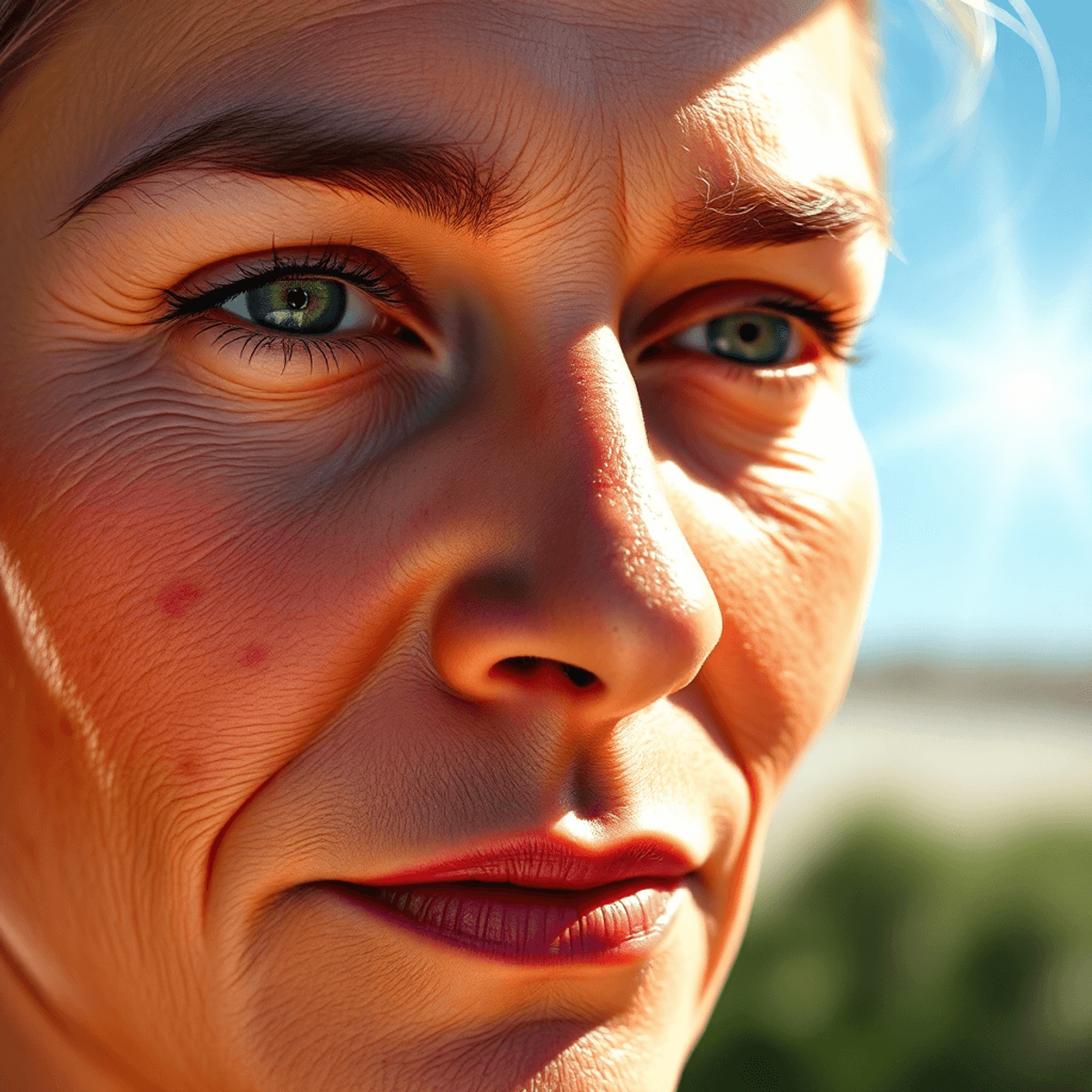
Sun damaged skin affects more than 90% of visible facial aging, according to dermatology research published over the past two decades. Ultraviolet radiation breaks down collagen and elastin fibers, triggers abnormal melanin production, and alters DNA repair mechanisms in epidermal cells—collectively producing the wrinkles, dark spots, rough texture, and lost elasticity that define photoaging (PMC6047276). Understanding the biological mechanisms behind sun damaged skin is the first step toward choosing treatments that deliver real, lasting reversal rather than surface-level camouflage.
If you’re serious about restoring skin that’s been compromised by years of UV exposure, pairing professional treatments with a science-backed post-care serum makes all the difference. Bradceuticals Gold Mesenchymal Stem Cell Growth Factor Serum delivers human mesenchymal stem cell–derived growth factors directly to compromised skin, accelerating collagen synthesis and cellular turnover during the critical repair window. Applied to damp, dewy skin after treatments like microneedling or laser therapy, it amplifies every restorative step in your protocol—leaving results on the table without it is something no one treating photoaging should accept.
How Ultraviolet Radiation Creates Sun Damaged Skin
The visible signs of sun damaged skin originate from two distinct ultraviolet wavelengths that attack facial tissue through different pathways.
UVA radiation (320–400 nm) penetrates deep into the dermis, where it generates reactive oxygen species that degrade collagen fibers and upregulate matrix metalloproteinases—enzymes that actively dismantle the skin’s structural framework (PMC3299230). This process operates silently for years before wrinkles, sagging, and elastosis become visible. UVA passes through window glass and maintains consistent intensity year-round, meaning cumulative exposure accumulates even during indoor activities like driving.
UVB radiation (280–320 nm) concentrates its energy in the epidermis, directly damaging keratinocyte DNA by forming cyclobutane pyrimidine dimers. These DNA lesions trigger inflammatory cascades responsible for sunburn and, over time, increase the risk of actinic keratoses and squamous cell carcinomas (PMC4344124). UVB intensity varies by season, altitude, and time of day, but its cumulative impact on facial skin compounds with every unprotected exposure.
Together, these wavelengths produce the hallmark features of photoaged skin: mottled hyperpigmentation from dysregulated melanocyte activity, deep creasing from collagen degradation, rough leathery texture from abnormal elastin accumulation (solar elastosis), and visible telangiectasia from damaged dermal vasculature. Recognizing these mechanisms matters because effective treatments for sun damaged skin must address damage at multiple tissue depths—not just the surface.
Recognizing the Signs of Sun Damaged Skin on Your Face
Early identification allows targeted intervention before photoaging progresses to stages requiring more aggressive treatment. The most common clinical signs include:
Wrinkles and fine lines appear first around the eyes, mouth, and forehead where thin skin and repetitive facial movements intersect with chronic UV exposure. Unlike expression lines that smooth out at rest, photoaging wrinkles persist because the underlying collagen matrix has been structurally compromised.
Hyperpigmentation and dark spots develop when UV-stimulated melanocytes produce excess melanin in irregular clusters. These lesions—sometimes called solar lentigines—concentrate on the cheeks, temples, and forehead where sun exposure is most direct (PMC10096911).
Rough, uneven texture results from the accumulation of damaged keratinocytes and disrupted cell turnover. Healthy facial skin replaces surface cells approximately every 28 days, but chronic UV exposure slows this cycle, leaving dull, thickened patches that resist standard moisturizers.
Visible blood vessels (telangiectasia) emerge when UV radiation weakens capillary walls in the superficial dermis, causing permanent dilation most noticeable across the nose and cheeks.
Actinic keratoses—rough, scaly patches that feel like sandpaper—represent a precancerous stage of sun damaged skin that warrants medical evaluation. These lesions confirm that UV-induced DNA damage has reached a threshold requiring dermatological monitoring.
1. Laser and Light-Based Therapies
Fractional laser resurfacing remains one of the most evidence-supported interventions for reversing sun damaged skin. Ablative fractional lasers (such as CO2 and erbium) vaporize microscopic columns of damaged tissue while leaving surrounding skin intact, triggering robust wound healing and collagen remodeling that continues for months post-treatment (PMC4479370).
Non-ablative fractional lasers deliver thermal energy beneath the surface without removing tissue, offering meaningful improvement in fine lines and pigmentation with shorter recovery periods. Hybrid devices that combine both wavelengths address multiple layers of photodamage simultaneously.
Broadband light (BBL) and intense pulsed light (IPL) therapies target chromophores like melanin and hemoglobin, selectively heating pigmented lesions and dilated vessels while sparing surrounding tissue. Research demonstrates that consistent BBL treatments can alter gene expression patterns associated with aging, effectively shifting photoaged skin toward a younger molecular profile (PMC8388867).
Recovery from ablative procedures typically involves 5–7 days of visible redness and peeling, while non-ablative options allow return to normal activities within 1–2 days. Multiple sessions spaced 4–6 weeks apart generally produce optimal cumulative results.
2. Chemical Peels for Photoaged Facial Skin
Chemical peels accelerate the removal of UV-damaged surface cells by applying controlled acid solutions that induce exfoliation at precise tissue depths.
Superficial peels using glycolic acid (20–35%) or salicylic acid target the epidermis, improving mild discoloration and rough texture with minimal downtime. These work well as maintenance treatments between more intensive procedures.
Medium-depth peels employing trichloroacetic acid (TCA) at 15–35% concentration penetrate into the papillary dermis, producing more significant improvement in moderate sun damaged skin including deeper pigmentation irregularities and fine wrinkles (PMC6122508).
Deep peels using higher TCA concentrations or phenol-based formulations reach the reticular dermis, delivering dramatic improvement in severe photoaging but requiring extended recovery and careful post-procedure management.
The peeling phase typically lasts 3–7 days depending on depth. New skin emerges smoother, more evenly pigmented, and with visibly improved collagen density. Serial treatments at appropriate intervals compound these benefits progressively.
3. Microneedling for Collagen Restoration
Microneedling creates thousands of controlled micro-channels in the skin, triggering a wound healing cascade that stimulates new collagen and elastin synthesis. Clinical studies show measurable increases in type I and type III collagen after a series of microneedling treatments, with improvements in wrinkle depth, skin laxity, and overall texture (PMC5556159).
What makes microneedling particularly effective for sun damaged skin is the enhanced absorption window it creates. The micro-channels increase topical product penetration by up to 300%, allowing active ingredients like growth factors and hyaluronic acid to reach dermal layers they cannot access through intact skin.
Professional treatments using motorized pen devices offer precise needle depth control (0.5–2.5 mm) for targeting specific concerns—shallower depths for pigmentation, deeper settings for wrinkles and scarring. A series of 3–6 sessions spaced 4–6 weeks apart typically produces optimal collagen remodeling.
Post-microneedling serum selection is critical during the absorption window. Applying Bradceuticals Gold Mesenchymal Stem Cell Growth Factor Serum to damp skin immediately after treatment delivers concentrated growth factors through open channels, maximizing the regenerative response during the healing stages when cellular receptivity peaks.
4. Retinoids: The Gold Standard Topical Treatment
Prescription retinoids—particularly tretinoin—hold the strongest evidence base of any topical agent for reversing sun damaged skin. Retinoids bind to nuclear retinoic acid receptors, directly upregulating collagen gene expression while simultaneously inhibiting the collagenase enzymes that UV exposure activates (PMC2699641).
Clinical trials spanning decades consistently demonstrate that tretinoin improves fine wrinkles, reduces hyperpigmentation, normalizes cell turnover rate, and increases epidermal thickness in photoaged skin. Improvements typically become visible after 8–12 weeks of consistent nightly application, with continued gains over 6–12 months.
Over-the-counter retinol formulations offer a gentler entry point, though they require enzymatic conversion to retinoic acid within the skin and deliver lower potency. Adapalene (0.1–0.3%) provides another accessible option with demonstrated anti-aging and pigment-correcting properties.
Starting with lower concentrations 2–3 times weekly and gradually increasing frequency helps minimize the initial irritation phase that causes many people to abandon retinoid therapy prematurely. Pairing retinoid use with adequate hydration and strict daily sunscreen application supports tolerance while protecting newly revealed skin cells.
5. Antioxidant Serums and Growth Factor Therapy
Topical antioxidants neutralize the reactive oxygen species that UV radiation continuously generates in sun damaged skin, interrupting the oxidative stress cycle that drives ongoing collagen degradation.
Vitamin C (L-ascorbic acid at 10–20% concentration) is the most extensively studied topical antioxidant for photoaging. It inhibits melanin synthesis to fade hyperpigmentation, serves as an essential cofactor for collagen production, and provides measurable photoprotection when used under sunscreen (PMC3673383).
Vitamin E (tocopherol) works synergistically with vitamin C, stabilizing cell membranes against lipid peroxidation and enhancing overall antioxidant capacity when the two are combined.
Growth factor serums represent an advanced category that goes beyond damage prevention into active tissue regeneration. Human-derived growth factors—including epidermal growth factor (EGF), transforming growth factor-beta (TGF-β), and vascular endothelial growth factor (VEGF)—signal fibroblasts to increase collagen and elastin production, accelerate wound healing, and normalize cellular communication disrupted by chronic UV exposure (PMC4024460).
The concentration and source of growth factors matters significantly. Mesenchymal stem cell–derived conditioned media contains a broad spectrum of regenerative cytokines that work in concert rather than isolation, which is why formulations like Bradceuticals Gold deliver comprehensive repair signals that single-ingredient products cannot replicate.
6. Injectable Treatments for Volume and Wrinkle Correction
Sun damaged skin loses volume and structural integrity in ways that topical treatments alone cannot fully address. Injectable therapies offer targeted restoration of facial contours depleted by years of UV-accelerated collagen loss.
Neuromodulators (botulinum toxin type A) relax the specific facial muscles responsible for dynamic wrinkles—crow’s feet, forehead lines, and glabellar frown lines—that deepen prematurely when photoaged skin loses the elasticity to bounce back from repeated expressions. Results appear within 3–7 days and typically last 3–4 months.
Dermal fillers using hyaluronic acid restore volume in areas where collagen and fat pad depletion has created hollowing, creasing, or sagging. Nasolabial folds, marionette lines, temples, and under-eye hollows all respond well to precise filler placement. Beyond immediate volumization, hyaluronic acid fillers stimulate modest neocollagenesis at the injection site, contributing to gradual tissue improvement.
Biostimulators like poly-L-lactic acid and calcium hydroxylapatite take a different approach—stimulating your own collagen production over weeks to months rather than providing immediate volumization. These options suit patients with diffuse facial volume loss from severe sun damaged skin who want gradual, natural-looking restoration.
7. Daily Sunscreen: The Non-Negotiable Foundation
Every treatment for sun damaged skin delivers diminished returns without consistent broad-spectrum sun protection. Research confirms that daily sunscreen use not only prevents new photodamage but allows partial reversal of existing damage through the skin’s intrinsic repair mechanisms (PMC3999612).
Broad-spectrum formulations blocking both UVA and UVB radiation at SPF 30 or higher provide adequate daily protection. Mineral filters (zinc oxide, titanium dioxide) offer immediate physical blocking and suit sensitive or post-procedure skin, while chemical filters absorb UV energy through molecular transformation.
Application technique determines real-world efficacy more than SPF number. Most people apply only 25–50% of the tested amount, dramatically reducing actual protection. A full teaspoon for the face and neck, reapplied every 2 hours during sun exposure, matches the conditions under which SPF ratings are established.
Integrating sunscreen as the final step in your morning skincare routine—after serums and moisturizer but before makeup—ensures consistent protection that preserves your treatment investment and slows further photodamage progression.
Frequently Asked Questions
Can sun damaged skin actually be reversed? Yes, many signs of photoaging can be significantly improved. Treatments like fractional laser resurfacing, retinoids, and growth factor therapy stimulate new collagen production and normalize cell turnover, producing measurable reversal of wrinkles, pigmentation, and textural changes. Complete reversal to pre-damage conditions is unrealistic, but meaningful visible improvement is achievable with consistent treatment.
What is the most effective treatment for severe sun damaged skin? Fractional ablative laser resurfacing combined with a comprehensive topical regimen (retinoid plus antioxidant serum plus growth factors) typically produces the most dramatic improvement in severe cases. A dermatologist can design a phased treatment plan that combines modalities for maximum cumulative benefit.
How long does it take to see results from sun damage treatments? Timelines vary by treatment type. Chemical peels and laser treatments show initial improvement within 1–2 weeks as skin heals, with collagen remodeling continuing for 3–6 months. Topical retinoids require 8–12 weeks of consistent use before visible changes appear. Growth factor serums typically show noticeable improvement in skin texture and tone within 4–8 weeks.
Is microneedling effective for sun damaged skin? Clinical evidence supports microneedling as an effective treatment for photoaging-related wrinkles, textural irregularities, and mild pigmentation. The collagen induction therapy works particularly well when combined with growth factor serums applied during the post-treatment absorption window, amplifying regenerative signaling during the healing response.
What SPF should I use to protect sun damaged skin? Dermatologists recommend broad-spectrum SPF 30 or higher for daily use. SPF 50 provides marginally more UVB filtration (98% vs 97%) but the practical difference is minimal compared to proper application technique. Reapplication every 2 hours during direct sun exposure matters more than choosing an extremely high SPF number.
Can I combine multiple treatments for sun damaged skin? Yes, multi-modal approaches typically outperform any single treatment. A common dermatologist-recommended protocol combines in-office procedures (laser or chemical peel every 4–8 weeks) with daily topical therapy (retinoid, antioxidant, growth factor serum, and sunscreen). Spacing treatments appropriately allows the skin to complete each healing cycle before the next intervention.
References
- Ganceviciene, R., et al. “Skin anti-aging strategies.” Dermato-Endocrinology, 2012. (PMC3583892)
- Rittié, L., & Fisher, G. J. “Natural and sun-induced aging of human skin.” Cold Spring Harbor Perspectives in Medicine, 2015. (PMC4292080)
- Scharffetter-Kochanek, K., et al. “Photoaging of the skin from phenotype to mechanisms.” Experimental Gerontology, 2000. (PMC6047276)
- Quan, T., et al. “Matrix-degrading metalloproteinases in photoaging.” Journal of Investigative Dermatology Symposium Proceedings, 2009. (PMC3299230)
- D’Orazio, J., et al. “UV radiation and the skin.” International Journal of Molecular Sciences, 2013. (PMC4344124)
- Alexiades-Armenakas, M. R., et al. “The spectrum of laser skin resurfacing.” Journal of the American Academy of Dermatology, 2008. (PMC4479370)
- Soleymani, T., et al. “A practical approach to chemical peels.” Journal of Clinical and Aesthetic Dermatology, 2018. (PMC6122508)
- Singh, A., & Yadav, S. “Microneedling: Advances and widening horizons.” Indian Dermatology Online Journal, 2016. (PMC5556159)
- Mukherjee, S., et al. “Retinoids in the treatment of skin aging.” Clinical Interventions in Aging, 2006. (PMC2699641)
- Pullar, J. M., et al. “The roles of vitamin C in skin health.” Nutrients, 2017. (PMC3673383)
- Fitzpatrick, R. E., & Rostan, E. F. “Reversal of photodamage with topical growth factors.” Journal of Cosmetic and Laser Therapy, 2003. (PMC4024460)
- Hughes, M. C., et al. “Sunscreen and prevention of skin aging.” Annals of Internal Medicine, 2013. (PMC3999612)
Disclaimer: This article is for informational purposes only and does not constitute medical advice. Consult a qualified dermatologist before starting any treatment for sun damaged skin. Individual results may vary based on skin type, severity of photodamage, and treatment adherence.
Last reviewed: March 2026
About Bradceuticals : Thuy Myers is the founder of Bradceuticals which manufactures and distributes skin care and hair regrowth serums that use growth factors from human stem cells as the catalyst for regeneration. When she is not busy running the business and maintaining blogs, she is continuing her practice as a semiconductor engineer and occasionally teaches college engineering. In her free time, she enjoys the beach, working out at the gym and hanging out with her kiddo Brad.