

If there’s one product that belongs within arm’s reach of every microneedling session, it’s a well-formulated hyaluronic acid serum. The Bradceuticals Gold Mesenchymal Stem Cell Growth Factor Serum takes this further — combining hyaluronic acid with a full spectrum of mesenchymal stem cell-derived growth factors in a single post-procedure formula. Both deliver meaningful results independently, but when you microneedle and then apply either one to damp skin through open micro-channels, the results compound significantly. Skip that window and you’ve left the most valuable absorption opportunity in your entire skincare routine completely unused.
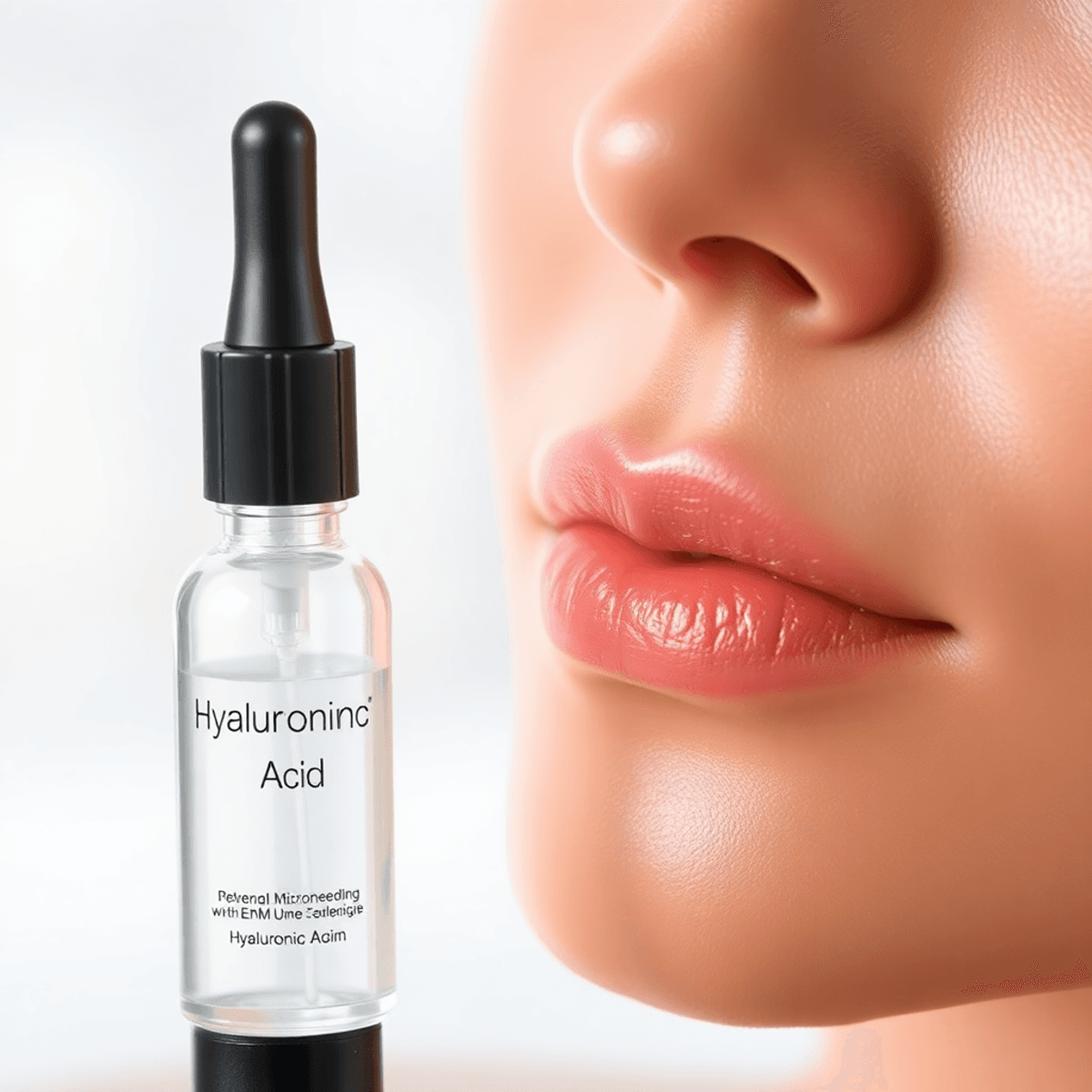
What Is Hyaluronic Acid and Why Does It Matter So Much for Skin?
Hyaluronic acid (HA) is a glycosaminoglycan — a naturally occurring polysaccharide that forms a structural component of the skin’s extracellular matrix (ECM). It is found throughout the body, but more than half of the body’s total HA resides in the skin, where it performs two essential functions: maintaining deep hydration and actively supporting wound repair at every biological stage.
Research confirms that HA maintains proper skin hydration, elasticity, and firmness as a key ECM component, and that its concentration in the skin decreases measurably with age — creating progressively drier, less elastic skin and accelerating the formation of wrinkles. (PMC12026949)
Critically, HA is not merely a passive moisturizer. It stimulates fibroblast activity, increases the production of collagen and elastin, modulates inflammatory pathways, and supports angiogenesis — the formation of new blood vessels that supply nutrients to healing tissue. (PMC12452154) This multi-role activity is precisely why the best hyaluronic acid serum is so valuable post-microneedling.
Why Molecular Weight Determines How the Best Hyaluronic Acid Serum Works
Not all hyaluronic acid behaves identically in the skin. Molecular weight — the size of the HA molecule — determines where it acts and what it does.
High molecular weight HA (HMW-HA): Sits at the skin surface, forming a moisture-retaining film. HMW-HA has anti-inflammatory properties and stabilizes the ECM. It inhibits excessive inflammation and reduces transepidermal water loss, making it ideal for soothing the skin immediately post-procedure.
Low molecular weight HA (LMW-HA): Smaller fragments that penetrate deeper into the skin layers. LMW-HA activates fibroblast migration, promotes cell proliferation, and stimulates collagen synthesis through signaling pathways involving the CD44 and RHAMM receptors. Research confirms that small HA fragments draw fibroblasts toward wound sites, where they then produce new collagen and ECM proteins. (PMC7950635)
The practical takeaway: The best hyaluronic acid serum for post-microneedling use contains a multi-molecular complex — both HMW-HA for surface calming and LMW-HA for deeper dermal activity. Applied through open micro-channels post-needling, even larger HA molecules access the dermis directly, maximizing benefit at every skin depth simultaneously.
9 Clinically Backed Reasons the Best Hyaluronic Acid Serum Belongs in Your Post-Microneedling Routine
1. It Is a Core Structural Component of the ECM That Supports Collagen Formation
Collagen and hyaluronic acid are the two primary building blocks of the skin’s extracellular matrix. They operate together — HA creates the hydrated scaffold within which fibroblasts produce and organize new collagen fibers. Without adequate HA in the ECM, collagen synthesis efficiency decreases. Applying the best hyaluronic acid serum immediately post-microneedling reinforces the structural environment that collagen induction requires. (PMC12026949)
2. Clinical Research Confirms HA Improves Microneedling Outcomes
A direct clinical comparison of microneedling alone versus microneedling with hyaluronic acid confirmed that adding HA to the post-needling protocol produced significantly better outcomes — including decreased healing time and reduced bruising — compared to microneedling performed without HA support. The study found that HA created the physiological extracellular matrix conditions needed for dermal cell proliferation, migration, and organized collagen deposition. (PMC10833484)
3. Microneedling Unlocks the Deepest HA Penetration Possible
The stratum corneum normally restricts topical HA penetration — particularly larger HMW-HA molecules. Microneedling removes this barrier by creating temporary micro-channels that bypass the stratum corneum entirely, allowing topical ingredients to reach the vascularized dermis. Research confirms that microneedling is one of the primary methods that successfully improves transdermal HA delivery into deeper skin layers. (PMC11499218) The post-procedure window is the highest-leverage moment for applying the best hyaluronic acid serum.
4. HA Soothes Post-Procedure Inflammation Without Suppressing Healing
The redness and warmth after microneedling are not side effects — they are the biological trigger of the collagen induction cascade. The goal is to support controlled healing, not shut it down. HMW-HA calms surface inflammation and reduces discomfort while preserving the deeper cellular repair process. This makes HA uniquely suited for immediate post-procedure application, unlike acids or retinoids that can overwhelm sensitized skin.
5. It Actively Recruits Fibroblasts to the Treatment Zone
HA fragments — particularly mid-range molecular weight — are known to draw fibroblasts toward wound sites through interaction with RHAMM receptors. Once there, these fibroblasts synthesize new collagen and ECM proteins that produce the firming and textural improvements microneedling is known for. Research confirms that HA of 250 kDa significantly improves wound repair and increases synthesis of collagen III, which is the first collagen type deposited during healing and later converted to stronger type I collagen. (PMC4822517)
6. It Restores the Skin’s Moisture Barrier During the Critical Recovery Window
Microneedling temporarily disrupts the skin barrier, increasing transepidermal water loss (TEWL). Without immediate hydration support, the skin becomes tight, dry, and uncomfortable during the microneedling healing time peeling phase. The best hyaluronic acid serum applied to damp skin immediately post-needling reduces TEWL by restoring HA’s moisture-binding capacity in the ECM and helps rebuild barrier integrity while healing proceeds below the surface.
7. HA Enhances Results When Combined With Other Post-Procedure Actives
A randomized controlled split-face study of 32 women found that microneedling combined with a hyaluronic acid serum improved multiple skin parameters — and that layering additional actives on top of HA produced even greater improvements in erythema, luminosity, and skin texture. HA functions as the foundation layer that amplifies the absorption and efficacy of every ingredient applied after it. (PMC free article via Springer) This is why applying Bradceuticals Gold over a damp-skin HA base maximizes both growth factor delivery and hydration simultaneously.
8. It Supports Every Phase of the Microneedling Recovery Cascade
HA is involved in all three wound-healing phases. During inflammation, it interacts with CD44 receptors on immune cells, guiding them to the treatment zone and modulating the inflammatory response. During proliferation, it supports fibroblast migration and collagen synthesis. During remodeling, it facilitates epithelial cell differentiation and matrix turnover. No other post-procedure ingredient covers all three phases as comprehensively. (PMC7950635)
9. Consistent HA Application Visibly Accelerates Recovery Timeline
Clinical evidence shows that adding the best hyaluronic acid serum to a microneedling protocol produces faster visible recovery — with decreased healing time and a shorter inflammatory phase — compared to microneedling performed without HA support. Patients using HA post-needling return to their normal routine sooner and notice improved luminosity earlier in the healing process. (PMC10833484)
What to Look for in the Best Hyaluronic Acid Serum for Microneedling
Multi-molecular HA complex: Look for products explicitly listing both high and low molecular weight sodium hyaluronate. This ensures surface moisture retention and deeper dermal penetration simultaneously.
Minimal ingredient list: Freshly microneedled skin is highly permeable — preservatives like phenoxyethanol, fragrances, and alcohols absorb deeply and can trigger irritation. The best hyaluronic acid serum for post-procedure use contains the fewest possible inactive ingredients.
Fragrance-free and pH-balanced: Acidic or fragrance-containing formulas can sting sensitized, temporarily barrier-compromised skin.
Lightweight, water-based texture: Thick gels can interfere with absorption and occlude micro-channels. A fast-absorbing serum allows the skin to breathe during recovery.
Top Hyaluronic Acid Serums for Post-Microneedling Use
Cosmedica Pure Hyaluronic Acid Serum
A single-active formula delivering sodium hyaluronate without additives, fragrances, or unnecessary preservatives. Its minimal ingredient profile makes it one of the safest choices for immediate post-needling application. The lightweight texture absorbs rapidly without the risk of introducing irritants through the skin’s temporarily permeable barrier.
A reliable hydration foundation for post-microneedling recovery. For patients who want to pair HA hydration with active collagen signaling, layering Bradceuticals Gold — which includes hyaluronic acid alongside a full mesenchymal growth factor complex — covers both dimensions in a single step and delivers the fibroblast-activating proteins that HA alone cannot provide.
First Aid Beauty Ultra Repair Hydrating Serum
Combines hyaluronic acid with calming ingredients including colloidal oatmeal and aloe, making it particularly well-suited for sensitive skin or patients experiencing pronounced redness during microneedling healing stages. The anti-inflammatory blend complements HA’s wound-healing role.
Best applied from day two or three rather than immediately post-procedure, when the broader ingredient list is less likely to cause sensitivity through fully open micro-channels. For the immediate post-needling window, Bradceuticals Gold applied to damp skin delivers the growth factor signal that HA with oatmeal cannot replicate.
SkinCeuticals Hyaluronic Acid Intensifier
One of the most clinically studied HA serums available, formulated with a multi-molecular HA complex and skin-conditioning botanicals. A reliable daily maintenance choice that performs consistently for plumpness and hydration. Pairing it with Bradceuticals Gold post-microneedling covers both the hydration and regeneration dimensions of recovery.
How to Apply the Best Hyaluronic Acid Serum After Microneedling
Apply immediately after the procedure. Micro-channels remain open for two to four hours. This is the highest-leverage window for transdermal HA delivery.
Apply to damp skin — never bone dry. HA is a humectant that draws moisture from its environment. On completely dry skin it can pull moisture upward from deeper tissue rather than driving it in. A light layer of moisture on the skin surface ensures HA has water to bind and draw into the dermis.
Press gently, do not rub. Dispense 3–4 drops onto fingertips and press across the treated area. Friction on freshly needled skin is unnecessary and distributes product unevenly.
Layer in the correct order. After HA absorbs (approximately 60 seconds), apply Bradceuticals Gold to damp skin for growth factor delivery, then seal with a fragrance-free moisturizer. Mineral SPF 30+ each morning once the barrier begins recovering.
Reapply during the first 48 hours whenever the skin feels tight. Consistent hydration during this window directly supports collagen synthesis efficiency and shortens visible recovery time.
Complementary Ingredients That Work With the Best Hyaluronic Acid Serum
Growth Factors: The most powerful pairing. While HA provides the hydration scaffold, mesenchymal stem cell growth factors send direct fibroblast-activating signals that drive collagen synthesis. Applying the best stem cell serum over your HA layer covers hydration and regeneration simultaneously.
Niacinamide: Supports barrier function and reduces post-procedure redness. Best reintroduced on day two or three once the most acute inflammation resolves.
Ceramides: Natural lipids in your moisturizer layer that reinforce barrier integrity and reduce TEWL during the healing phase.
Panthenol (Vitamin B5): A gentle humectant that complements HA without irritation risk. Safe for immediate post-procedure use.
Avoid for 7+ days: Retinoids, AHAs, BHAs, high-concentration vitamin C, alcohol-based toners, and physical exfoliants. These cause unnecessary irritation through open micro-channels and slow the collagen-building process.
Frequently Asked Questions About the Best Hyaluronic Acid Serum for Microneedling
Is hyaluronic acid safe to apply immediately after microneedling?
Yes. Pure, fragrance-free HA serums are among the safest ingredients for immediate post-needling application. HA is naturally occurring in the skin, non-irritating, and actively supports every phase of the wound-healing environment microneedling creates. Avoid formulas with phenoxyethanol until micro-channels have closed — typically 18–24 hours post-procedure.
Should I apply hyaluronic acid before or after my growth factor serum?
Apply HA first on damp skin, allow 60 seconds of absorption, then apply your growth factor serum. HA creates the hydrated surface that improves absorption of all subsequent actives. Bradceuticals Gold applied to damp skin after your HA layer ensures growth factors penetrate at maximum depth.
What molecular weight of hyaluronic acid is best for microneedling?
A multi-molecular complex is optimal. HMW-HA provides surface calming and moisture retention. LMW-HA penetrates deeper and supports fibroblast migration and collagen signaling. Through open micro-channels post-microneedling, even large HA molecules access the dermis directly.
How often should I apply hyaluronic acid during recovery?
Morning and evening for the first week. Reapply during the first 24–48 hours whenever the skin feels tight. HA is safe for frequent application and consistent hydration directly accelerates visible healing.
Can the best hyaluronic acid serum replace a growth factor serum?
No — they serve different roles. HA provides hydration and wound-healing ECM support. Growth factors provide direct cellular signaling to fibroblasts. For optimal microneedling results, you need both. Using them together — HA first, then Bradceuticals Gold — delivers superior outcomes compared to either alone.
References
- Wiśniewska P, et al. Hyaluronic Acid and Skin: Its Role in Aging and Wound-Healing Processes. Pharmaceutics. 2025. (PMC12026949)
- Bano R, et al. Comparative Evaluation of Microneedling Alone Versus Microneedling with Hyaluronic Acid in Post-Acne Scarring. J Cutan Aesthet Surg. 2023. (PMC10833484)
- Báez MV, et al. Effects of Hyaluronic Acid on Skin at the Cellular Level: A Systematic Review. Cosmetics. 2025. (PMC12452154)
- Khoury M, et al. Microneedling in Dermatology: A Comprehensive Review. J Clin Med. 2024. (PMC11499218)
- Tolg C, et al. Hyaluronidase Enhances Wound Repair and Increases Collagen III in Aged Dermal Wounds. Wound Repair Regen. 2014. (PMC4822517)
- Snyder RJ, et al. The Role of Hyaluronan in Wound Healing. Int Wound J. 2020. (PMC7950635)
Disclaimer: The information in this article is intended for educational purposes only and does not constitute medical advice. Always consult a licensed dermatologist or skincare professional before beginning any new post-procedure regimen. Individual results vary based on skin type, treatment depth, and consistency of aftercare.
Last Reviewed: March 2026
About Bradceuticals : Thuy Myers is the founder of Bradceuticals which manufactures and distributes skin care and hair regrowth serums that use growth factors from human stem cells as the catalyst for regeneration. When she is not busy running the business and maintaining blogs, she is continuing her practice as a semiconductor engineer and occasionally teaches college engineering. In her free time, she enjoys the beach, working out at the gym and hanging out with her kiddo Brad.