

Microneedling doesn’t end when the needles stop. The micro-channels created during treatment temporarily bypass the stratum corneum — the skin’s primary absorption barrier — giving topical actives direct access to the dermis where fibroblasts, collagen synthesis, and tissue repair actually happen. What you apply as your serum after microneedling in the minutes following your session determines how much of that biological window you actually use. A randomized controlled trial confirmed precisely this: the group that received growth factor serum after microneedling showed significantly greater improvements in skin texture and hydration than the control group, confirmed by VISIA imaging across every measured parameter. (PMC7716740) The procedure opens the door. The right serum after microneedling determines what walks through it.
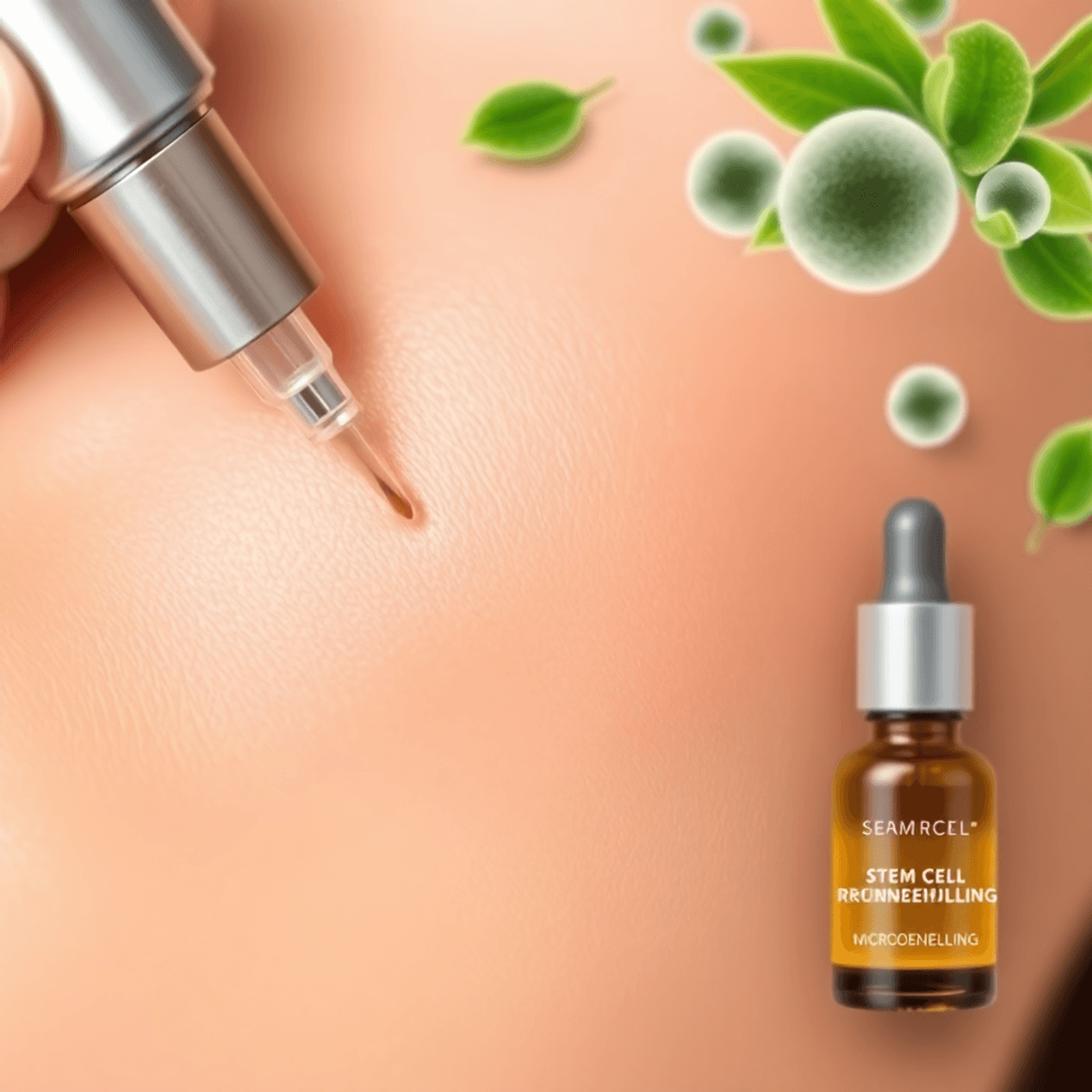
The Bradceuticals Gold Mesenchymal Stem Cell Growth Factor Serum was built for exactly this post-procedure moment. Delivering a full-spectrum mesenchymal stem cell growth factor complex — EGF, FGF, TGF-β, VEGF, and PDGF in the biological ratios skin cells recognize — it’s applied to damp, dewy skin within minutes of completing your session, never during as a gliding serum. Used as a standalone daily serum, it delivers genuine anti-aging results. Used as your serum after microneedling on damp skin while channels are open, those results compound into something fundamentally different.
Why the Right Serum After Microneedling Outperforms Your Regular Skincare
Understanding what makes a post-procedure serum different from your everyday routine starts with understanding what microneedling does to skin’s permeability. The micropores created by the needles increase skin permeability and dramatically enhance transdermal delivery of topical agents applied post-procedure — allowing water-soluble molecules that would normally be blocked by the stratum corneum to reach the dermis directly. (PMC11499218)
This creates both an opportunity and a vulnerability. The best serum after microneedling must capitalize on this absorption window with ingredients that support healing and collagen synthesis — while being formulated without fragrance, alcohol, harsh preservatives, or sensitizing actives that would cause irritation through the temporarily compromised barrier.
Research on hyaluronic acid, growth factors, EGF, and peptides applied post-microneedling consistently demonstrates superior outcomes compared to microneedling alone. Multiple studies with combined microneedling and topical growth factor treatment have shown significant improvements in skin texture, fine lines, wrinkles, pigmentation, acne scarring, and epidermal thickness — outcomes that microneedling alone does not achieve at the same level. (PMC7716740) Your serum after microneedling is not an afterthought — it is the second half of the treatment.
Understanding the Healing Phases: When to Apply Which Serum After Microneedling
The skin heals in overlapping phases after microneedling, and aligning your serum after microneedling protocol with these phases produces superior results compared to using a single product throughout recovery.
Immediate post-procedure (first 30 minutes): Micro-channels are maximally open. This is the most valuable window for your growth factor or hyaluronic acid serum after microneedling. Apply to damp skin within minutes of completing the session using gentle pressing motions.
Days one through three (inflammatory phase): The skin is most sensitive. Continue growth factor and hyaluronic acid serums twice daily. Avoid all retinoids, exfoliating acids, fragrance, and alcohol. Gentle cleansing only.
Days three through seven (early proliferative phase): Fibroblasts are actively producing collagen. Continue your primary serum after microneedling twice daily. Begin introducing niacinamide if tolerated. Apply broad-spectrum SPF every morning.
Days seven through fourteen: Most skin types can reintroduce vitamin C (stable derivative forms, not low-pH L-ascorbic acid) and gradually return to a fuller routine. Maintain your growth factor serum to sustain the collagen remodeling signal.
The 5 Most Effective Serum After Microneedling Choices by Ingredient
1. Mesenchymal Stem Cell Growth Factor Serum — The Most Complete Serum After Microneedling
The most clinically comprehensive serum after microneedling category delivers human mesenchymal stem cell conditioned media — a full-spectrum growth factor secretome that skin cells use to coordinate repair. MSC conditioned media contains EGF, FGF, TGF-β, VEGF, PDGF, and HGF simultaneously, addressing every dimension of the healing response initiated by microneedling from a single application. Research confirms that MSC conditioned media produces statistically significant increases in Collagen I and III and elastin in treated skin while reducing matrix metalloproteinases that break down dermal structure. (PMC11518787)
Applied through open micro-channels post-microneedling, these growth factor molecules — which under normal circumstances cannot penetrate the stratum corneum — reach the fibroblast-rich dermis directly. This is why a randomized split-face study found that subjects who received microneedling plus MSC conditioned media showed significantly greater improvements in skin brightness, wrinkle depth, pore size, and elasticity compared to microneedling alone. (PMC9171013)
Bradceuticals Gold Mesenchymal Stem Cell Growth Factor Serum is formulated specifically for this context. Apply to damp, dewy skin — never bone dry — within minutes of completing your session.
Best for: All skin types, all needle depths, post-professional and post-at-home microneedling. Key ingredients: MSC conditioned media, hyaluronic acid. Timing: Immediately post-procedure on damp skin; twice daily for 72 hours, then continue daily.
2. Hyaluronic Acid Serum — The Universal Post-Procedure Serum After Microneedling
Hyaluronic acid is the most universally appropriate serum after microneedling for any skin type at any treatment depth. HA creates the hydrated extracellular matrix environment that collagen synthesis requires, soothes the post-procedure tightness and dryness, and reinforces the moisture barrier as micro-channels close. A randomized clinical study of 60 patients found that the group receiving microneedling with hyaluronic acid applied post-procedure showed significantly faster healing, reduced bruising, and a higher proportion of “good” to “very good” improvement ratings than the microneedling-only group. (PMC10833484)
For the most effective hyaluronic acid serum after microneedling, choose multi-weight formulas — high molecular weight HA for surface protection and reduction of water loss, and low molecular weight HA for deeper dermal support. SkinCeuticals Hydrating B5 Gel (HA plus panthenol), La Roche-Posay Hyalu B5 Serum (dual-weight HA plus madecassoside), and The Ordinary Hyaluronic Acid 2% + B5 are all fragrance-free, alcohol-free options consistently recommended in professional post-procedure protocols. For an in-depth comparison of hyaluronic acid serums for microneedling, our full guide covers the category.
Best for: All skin types, especially dry, dehydrated, or sensitive. Timing: Apply immediately post-procedure on damp skin. What to avoid: HA serums containing phenoxyethanol or fragrance — these cause irritation through open channels.
3. EGF Serum — The Precision Repair Serum After Microneedling
Epidermal growth factor is a 6-kilodalton polypeptide that binds to receptors on fibroblasts and keratinocytes, accelerating cell proliferation, migration, and collagen synthesis. Under normal circumstances, EGF’s molecular size limits its dermal penetration — but applied as a serum after microneedling while micro-channels are open, it reaches its target receptors directly. Research confirms that recombinant human EGF increases TGF-β1, elastin, and Collagen types I and III expression while simultaneously reducing pro-inflammatory markers — one of the most biologically complete single-ingredient options for post-procedure recovery. (PMC10333026)
Clinical studies on EGF-containing serums report significant improvements in brown spotting, skin texture, pore size, and wrinkles compared to baseline — with enhanced effects when applied to skin with compromised barrier function, such as post-microneedling. (PMC8423211) EGF serums are particularly well-suited as a serum after microneedling for those targeting scar reduction, hyperpigmentation, and accelerated surface renewal.
Best for: Acne scars, uneven tone, fine lines, aging skin. Timing: Apply to damp skin immediately post-procedure.
4. Peptide Serum — The Collagen-Amplifying Serum After Microneedling
Peptides are short-chain amino acids that serve as biological signaling molecules, instructing fibroblasts to produce collagen and elastin. Applied as a serum after microneedling through open micro-channels, they reach the dermis directly and augment the collagen induction the procedure initiates — working synergistically with the wound-healing cascade rather than simply adding hydration. Research confirms that microneedle pretreatment significantly increases skin permeation of copper peptides (GHK-Cu), one of the most clinically studied peptides for wound healing and skin regeneration. (PMC11993440)
Look for formulations containing copper peptides, palmitoyl tripeptide-5, or matrixyl complexes — all fragrance-free and without sensitizing additives. Peptide serums layer effectively after a growth factor or HA serum as part of a comprehensive post-procedure protocol.
Best for: Aging skin, firmness improvement, scar remodeling. Timing: Can be layered after lighter growth factor or HA serums have absorbed.
5. Niacinamide and Ceramide Serums — The Recovery-Support Serum After Microneedling
Niacinamide (vitamin B3) reduces post-procedure redness, regulates sebum, strengthens the skin barrier, and helps prevent post-inflammatory hyperpigmentation — making it a practical serum after microneedling for oily, acne-prone, or hyperpigmentation-prone skin types. Ceramides, which make up approximately 50% of the skin’s barrier structure, help rebuild the temporarily disrupted barrier as micro-channels close — reducing transepidermal water loss and preventing the flaking and extended downtime that can follow treatment.
One timing note: niacinamide can occasionally cause mild flushing when applied directly to freshly needled skin. Consider introducing it 12 to 24 hours post-procedure rather than immediately following the session. Ceramide serums and moisturizers — particularly formulas combining ceramides with HA — are best used as a follow-up layer after your primary growth factor or HA serum has absorbed.
Best for: All skin types during recovery; particularly oily, sensitive, and barrier-compromised skin. Timing: Niacinamide from day one to seven; ceramides as a follow-up layer immediately post-procedure.
What to Absolutely Avoid as a Serum After Microneedling
The open micro-channels that make any serum after microneedling so effective also make post-needled skin temporarily vulnerable to actives that are normally well-tolerated. For at least five to seven days following your session:
Retinoids and retinol dramatically increase sensitivity through open channels — hold off for a minimum of seven days, then reintroduce gradually.
Exfoliating acids (AHAs and BHAs) risk causing inflammation and post-inflammatory hyperpigmentation on compromised skin. Avoid for at least five to seven days.
Vitamin C as L-ascorbic acid has a low pH that causes stinging and irritation through open micro-channels. Wait 48 hours minimum and introduce stable derivative forms first.
Fragrance and alcohol are avoidable irritants in any serum after microneedling and should be absent from any post-procedure product.
Makeup should be avoided for at least 24 hours — open channels significantly increase the risk of bacterial contamination.
How to Apply Your Serum After Microneedling for Maximum Absorption
Apply to damp skin — always. Moisture on the skin surface enhances absorption of all serum ingredients and reduces the potential for stinging through open channels. Never apply any serum after microneedling to bone-dry skin.
Apply within minutes — the highest-leverage serum after microneedling application happens as close to the end of the session as possible. Do not wait.
Use clean hands and gentle patting motions — never rub or drag across freshly needled skin. Press the serum into the skin using light, even pressure.
Layer thinnest to thickest — if applying multiple serums, start with the lightest consistency (growth factor serum) and follow with heavier formulations (ceramide moisturizer).
Apply twice daily for 72 hours — micro-channels remain partially open and the skin’s regenerative activity is elevated for days post-procedure. Consistent twice-daily application of your serum after microneedling sustains the biological signals that drive cumulative improvement.
For a complete breakdown of how your skin heals after each session, our guide to the stages of microneedling recovery walks through the full healing timeline and what to apply at each phase.
Choosing the Right Serum After Microneedling for Your Skin Type
Aging or mature skin: Growth factor serum plus hyaluronic acid — the combination that most directly addresses the collagen synthesis and moisture goals of an aging skin protocol.
Oily or acne-prone skin: Growth factor serum in a lightweight base, followed by niacinamide (after 24 hours) to control sebum and prevent post-treatment breakouts.
Dry or dehydrated skin: Multi-weight hyaluronic acid serum applied to damp skin, followed by a ceramide moisturizer to lock in hydration and rebuild the barrier.
Sensitive or reactive skin: Centella Asiatica serum as an immediate first step, followed by fragrance-free HA. Introduce growth factors gradually once the skin has stabilized.
Hyperpigmentation-prone skin: EGF serum plus niacinamide (after 24 hours) — the combination most directly addresses the pigmentation risk alongside collagen support.
Frequently Asked Questions
What is the single best serum after microneedling? A mesenchymal stem cell growth factor serum applied to damp skin immediately post-procedure provides the most comprehensive post-needling support — addressing collagen synthesis, tissue repair, hydration, and recovery from a single application. Hyaluronic acid is the most universally appropriate complement for all skin types.
When should I apply my serum after microneedling? Within minutes of completing the session, on damp skin while micro-channels are fully open. This first application is the highest-leverage moment of the entire treatment protocol.
Can I use vitamin C as my serum after microneedling? Not immediately. Wait a minimum of 48 hours before reintroducing vitamin C, and opt for stable derivative forms rather than L-ascorbic acid in low-pH formulas. Reintroduce gradually to confirm tolerance.
How often should I apply serum after microneedling? Twice daily for the first 72 hours post-procedure, then continue daily use to maintain the collagen remodeling signal through the extended healing window.
Is Bradceuticals Gold used as a gliding serum during microneedling? No. Bradceuticals Gold is a post-procedure serum only, applied to damp skin after the session is complete. It should never be used during microneedling as a gliding medium.
References
- Merati M, et al. An Assessment of Microneedling with Topical Growth Factors for Facial Skin Rejuvenation: A Randomized Controlled Trial. J Clin Aesthet Dermatol. 2020. (PMC7716740)
- Chauhan P, et al. Comparative Evaluation of Microneedling Alone Versus Microneedling with Hyaluronic Acid in Post-Acne Scarring. J Cutan Aesthet Surg. 2023. (PMC10833484)
- Liang X, et al. Efficacy of Microneedling Combined With MSC Conditioned Media in Skin Brightness and Rejuvenation. Front Med. 2022. (PMC9171013)
- Kalil C, et al. Microneedling in Dermatology: A Comprehensive Review. PMC. 2024. (PMC11499218)
- Shin JW, et al. The Use of Epidermal Growth Factor in Dermatological Practice. Int Wound J. 2023. (PMC10333026)
- Taub A. Regenerative Topical Skincare: Stem Cells and Exosomes. Front Med. 2024. (PMC11518787)
Disclaimer: This article is for educational purposes only and does not constitute medical advice. Consult a licensed dermatologist or skincare professional before beginning any post-microneedling skincare protocol, particularly if you have sensitive skin, active skin conditions, or are undergoing professional treatments.
Last Reviewed: March 2026
About Bradceuticals : Thuy Myers is the founder of Bradceuticals which manufactures and distributes skin care and hair regrowth serums that use growth factors from human stem cells as the catalyst for regeneration. When she is not busy running the business and maintaining blogs, she is continuing her practice as a semiconductor engineer and occasionally teaches college engineering. In her free time, she enjoys the beach, working out at the gym and hanging out with her kiddo Brad.