

Ultraviolet radiation degrades collagen through a well-documented biological mechanism: UV exposure triggers matrix metalloproteinases (MMPs) — enzymes that actively break down collagen fibers in the dermis. Research confirms that chronic UV-B exposure induces MMP-1 production in keratinocytes, directly causing collagen degradation and the structural breakdown that manifests as wrinkles, sagging, and textural irregularities (PMC5037728). Understanding how to repair sun damaged skin starts with understanding this collagen destruction cycle — and choosing treatments that rebuild what UV has broken down.
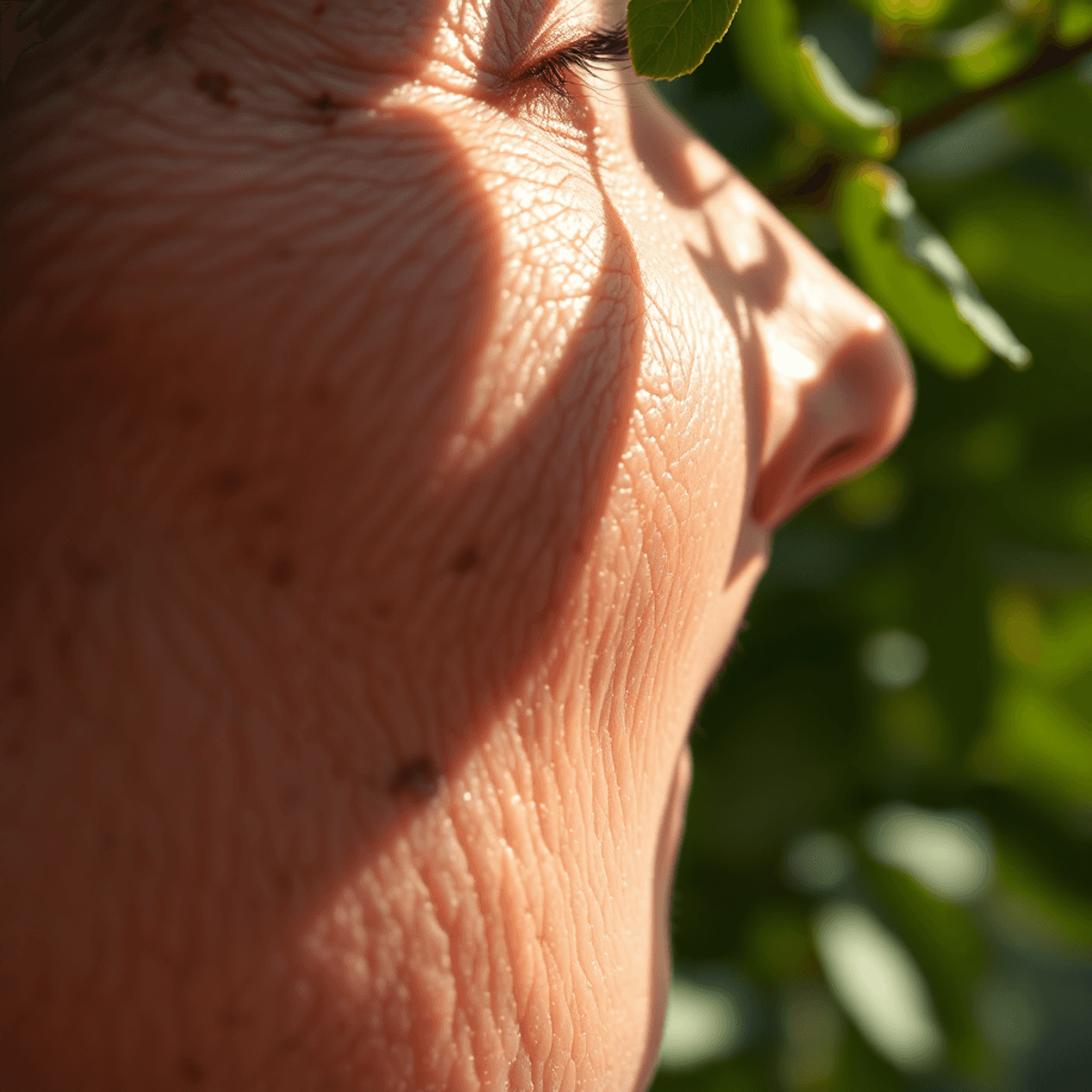
A review in Cell Communication and Signaling found that stem cell-derived exosomes restore skin function by decreasing MMP expression, increasing collagen and elastin production, and modulating signaling pathways disrupted by photoaging (PMC10785444). Bradceuticals Gold Mesenchymal Stem Cell Growth Factor Serum harnesses mesenchymal stem cell growth factor technology — delivering concentrated VEGF, TGF-β1, HGF, and other regenerative signaling molecules that promote fibroblast proliferation and extracellular matrix production (PMC7904527). Applied to damp, dewy skin daily, it provides the biological repair signals needed to rebuild from within. See full details at Bradceuticals Gold Mesenchymal Stem Cell Growth Factor Serum.
What Sun Damage Does to Your Skin at the Cellular Level
Before exploring how to repair sun damaged skin, it helps to understand exactly what UV radiation does beneath the surface. The damage is not just cosmetic — it is structural.
UVA rays penetrate deep into the dermis, generating reactive oxygen species that degrade collagen and elastin fibers. UVB rays primarily affect the epidermis, causing direct DNA damage to keratinocytes and triggering inflammatory cascades. Together, they activate MMPs that systematically dismantle your skin’s structural framework while suppressing new collagen synthesis.
This is why sun damaged skin looks the way it does: fine lines from collagen loss, dark spots from dysregulated melanin production, rough texture from impaired cell turnover, and loss of firmness from degraded elastin. Every visible sign traces back to specific biological mechanisms. Learning how to repair sun damaged skin means knowing which treatments address which pathways — and layering them strategically for maximum recovery.
7 Proven Methods: How to Repair Sun Damaged Skin
1. Growth Factor Serums
Growth factor serums are the most direct approach when learning how to repair sun damaged skin at the cellular level. These formulations deliver signaling proteins — including EGF, TGF-β, VEGF, and PDGF — that orchestrate every phase of tissue repair (PMID: 19128254).
Clinical research shows that topical growth factor application reduces periorbital wrinkles by 33% and perioral wrinkles by 25% over six months, with ultrastructural analysis confirming actual new collagen formation (PMID: 18569263). For anyone asking how to repair sun damaged skin effectively, growth factor serums should be the cornerstone of the recovery protocol because they address the root cause — depleted repair signaling — rather than treating symptoms alone.
Bradceuticals Gold Mesenchymal Stem Cell Growth Factor Serum delivers the full growth factor secretome from mesenchymal stem cells, providing the multi-protein repair cascade your skin needs to counteract UV-induced collagen degradation.
2. Vitamin C (Ascorbic Acid)
Vitamin C is a required cofactor in collagen synthesis — your skin cannot produce stable collagen without adequate ascorbic acid present. It also neutralizes the free radicals that UV radiation generates, protecting remaining collagen from further oxidative damage.
Evidence-based reviews confirm that retinol and antioxidant agents such as vitamin C positively act on collagen biosynthesis through multiple mechanisms, making them cornerstone ingredients for managing photoaged skin (PMID: 19657604). For how to repair sun damaged skin with vitamin C, look for stable formulations at 10% to 20% concentration and apply in the morning under sunscreen for both repair and prevention. Vitamin C is one of the most accessible answers to how to repair sun damaged skin on a budget.
3. Retinoids
Retinoids are among the most thoroughly researched ingredients for how to repair sun damaged skin. Research from the University of Michigan demonstrates that topical retinol significantly increases epidermal thickness, stimulates fibroblast activity, and boosts production of type I collagen, fibronectin, and elastin (PMC5136519).
Prescription tretinoin delivers the strongest results, while over-the-counter retinol provides a gentler alternative. Both accelerate cell turnover, fade dark spots, and stimulate collagen — directly countering the three hallmarks of photoaging. Start with low concentrations and increase gradually. Always use sunscreen when incorporating retinoids, as they increase photosensitivity. Retinoids remain one of the most proven answers to how to repair sun damaged skin over time.
4. Microneedling with Growth Factors
Microneedling creates controlled micro-injuries that trigger your skin’s collagen-remodeling cascade — essentially forcing the body to rebuild what UV radiation destroyed. When combined with topical growth factors, results are significantly amplified.
A clinical study found that topical growth factors paired with microneedling produced a 17.6% improvement in skin texture and a 17.3% reduction in wrinkles in three months (PMID: 34951101). For how to repair sun damaged skin through microneedling, apply a growth factor serum like Bradceuticals Gold to damp skin immediately after your session while micro-channels are open. See our complete guide to microneedling recovery stages for optimal timing.
Consult a licensed dermatologist before beginning any microneedling regimen. Professional guidance ensures the treatment is appropriate for your skin type and damage level.
5. Chemical Peels
Chemical peels remove damaged outer layers of skin, forcing accelerated cell turnover that reveals fresher, less photodamaged tissue. For how to repair sun damaged skin with peels, there are three depth options.
Superficial peels using alpha-hydroxy acids target the outermost epidermis for mild sun damage and light dark spots. Medium-depth peels using trichloroacetic acid address moderate wrinkles and more pronounced hyperpigmentation. Deep peels using phenol are reserved for severe photoaging and require significant recovery time.
Chemical peels should always be performed by or under the guidance of a licensed skincare professional. Post-peel skin is highly photosensitive, making diligent sunscreen use mandatory. For those exploring how to repair sun damaged skin through professional treatments, chemical peels offer a well-established option.
6. Laser and Light Therapy
Laser treatments target sun damage through controlled thermal energy that stimulates collagen remodeling at depths topical products cannot reach. Fractional lasers create microscopic treatment zones, triggering wound healing while leaving surrounding tissue intact.
Intense pulsed light therapy specifically targets melanin deposits responsible for dark spots — a common concern for those learning how to repair sun damaged skin on the face. Multiple sessions are typically required and results are cumulative.
Laser therapies carry risks including hyperpigmentation, scarring, and burns if performed incorrectly. Always seek treatment from a board-certified dermatologist. These treatments are not appropriate for all skin types — professional consultation is essential. For those weighing how to repair sun damaged skin with professional interventions, laser therapy offers powerful but higher-risk results.
7. Daily Sunscreen (Prevention as Repair)
Daily broad-spectrum sunscreen is one of the most effective strategies for how to repair sun damaged skin. UV exposure actively undermines every repair treatment you apply — degrading new collagen, triggering new MMP production, and generating fresh free radical damage. Without sun protection, your repair efforts are constantly being reversed.
Use SPF 30 or higher mineral sunscreen daily, even on cloudy days. Reapply every two hours during extended outdoor exposure. Pair sunscreen with antioxidant-rich products and growth factor serums for a comprehensive defense-and-repair protocol. Sunscreen is the non-negotiable foundation of how to repair sun damaged skin effectively.
Building a Sun Damage Repair Routine
Understanding how to repair sun damaged skin is only valuable if you put the right products in the right order.
Morning Routine
Cleanse with a gentle cleanser. Apply vitamin C serum (10–20%) to damp skin. Follow with Bradceuticals Gold Mesenchymal Stem Cell Growth Factor Serum for growth factor delivery. Apply moisturizer. Finish with broad-spectrum SPF 30+ mineral sunscreen. This morning sequence addresses how to repair sun damaged skin through both active treatment and daily protection.
Evening Routine
Cleanse thoroughly. Apply retinoid (start with low concentration). Follow with a hyaluronic acid serum for overnight hydration. Seal with a nourishing moisturizer.
Weekly Enhancement
If using an at-home microneedling device (consult your dermatologist first), perform sessions every two to four weeks. Apply Bradceuticals Gold to damp skin immediately post-treatment. See our guide to microneedling healing time for recovery expectations.
Monthly Professional Treatments
Depending on damage level and budget, professional treatments such as chemical peels, laser therapy, or in-office microneedling every four to six weeks can accelerate results. For an overview of how EGF serums complement professional treatments, see our detailed guide.
How Long Does It Take to Repair Sun Damaged Skin?
Setting realistic expectations matters. How to repair sun damaged skin is a long-term commitment, not a quick fix. Surface-level improvements like hydration and reduced roughness can appear within weeks. Meaningful wrinkle reduction, dark spot fading, and collagen rebuilding typically require three to six months of consistent treatment. Deeper structural remodeling continues for months beyond that.
Consistency is the single most important factor when figuring out how to repair sun damaged skin. Every day you apply growth factors, vitamin C, and sunscreen, you shift the balance from degradation to repair. The results compound over time.
Frequently Asked Questions
Can you actually repair sun damaged skin? Yes. While complete reversal of decades of UV exposure may not be possible, research confirms that targeted treatments stimulate new collagen formation, fade dark spots, and improve texture. How to repair sun damaged skin comes down to consistent, evidence-based treatments over months.
What is the best product for sun damaged skin? Growth factor serums address the root cause of photoaging. Bradceuticals Gold Mesenchymal Stem Cell Growth Factor Serum provides the full growth factor secretome for comprehensive repair. Vitamin C and retinoids are essential complementary ingredients.
How to repair sun damaged skin on the face? Combine daily vitamin C and growth factor serum with nightly retinoid use. Apply broad-spectrum sunscreen every morning. Consider professional treatments for accelerated results. Always consult a licensed dermatologist for personalized guidance on how to repair sun damaged skin specific to your concerns.
Does microneedling help sun damaged skin? Yes. Microneedling stimulates collagen remodeling and enhances absorption of repair-focused serums. Combined with growth factors, clinical research shows significant improvements in texture, wrinkles, and overall quality.
How long does it take to see improvement? Expect early improvements in hydration and texture within two to four weeks. Wrinkle reduction and dark spot fading typically become visible at three to six months. Consistent daily treatment is essential when learning how to repair sun damaged skin.
Can you repair sun damaged skin naturally? Topical ingredients like vitamin C, retinol, and growth factors all work with your body’s natural repair mechanisms. While the formulations are science-backed, the processes they activate — collagen synthesis, cell turnover, antioxidant defense — are entirely natural biological functions. Understanding how to repair sun damaged skin means supporting these natural processes with the right ingredients.
References
- Jung H, Lee EH, Lee TH, Cho MH. Isosakuranetin Suppresses UV-B-Induced MMP-1 Expression and Collagen Degradation. Int J Mol Sci. 2016;17(9):1449. (PMC5037728)
- Hajialiasgary Najafabadi A, Soheilifar MH, Masoudi-Khoram N. Exosomes in skin photoaging: biological functions and therapeutic opportunity. Cell Commun Signal. 2024;22(1):32. (PMC10785444)
- Kim SN, Lee CJ, Nam J, et al. The Effects of Human Bone Marrow-Derived Mesenchymal Stem Cell Conditioned Media on Skin Rejuvenation Characteristics. Int J Stem Cells. 2021;14(1):94-102. (PMC7904527)
- Hussain M, Phelps R, Goldberg DJ. Clinical, histologic, and ultrastructural changes after use of human growth factor and cytokine skin cream. J Cosmet Laser Ther. 2008;10(2):104-109. (PMID: 18569263)
- Shao Y, He T, Fisher GJ, Voorhees JJ, Quan T. Retinol anti-ageing properties in naturally aged human skin in vivo. Int J Cosmet Sci. 2017;39(1):56-65. (PMC5136519)
- Quinlan DJ, Ghanem AM, Hassan H. Topical growth factors and home-based microneedling for facial skin rejuvenation. J Cosmet Dermatol. 2021;21(8):3469-3478. (PMID: 34951101)
- Barrientos S, Stojadinovic O, Golinko MS, Brem H, Tomic-Canic M. Growth factors and cytokines in wound healing. Wound Repair Regen. 2008;16(5):585-601. (PMID: 19128254)
- Pavicic T, Steckmeier S, Kerscher M, Korting HC. Evidence-based cosmetics: concepts and applications in photoaging and xerosis. Wien Klin Wochenschr. 2009;121(13-14):431-439. (PMID: 19657604)
Disclaimer
This article is for educational and informational purposes only and does not constitute medical advice, diagnosis, or treatment. Sun damage can increase the risk of skin cancer and other serious conditions. Always consult a board-certified dermatologist for professional evaluation and personalized treatment recommendations. Individual results may vary. Bradceuticals products are not intended to diagnose, treat, cure, or prevent any disease. The information in this article should not be used as a substitute for professional medical advice.
Last reviewed: March 2026
About Bradceuticals : Thuy Myers is the founder of Bradceuticals which manufactures and distributes skin care and hair regrowth serums that use growth factors from human stem cells as the catalyst for regeneration. When she is not busy running the business and maintaining blogs, she is continuing her practice as a semiconductor engineer and occasionally teaches college engineering. In her free time, she enjoys the beach, working out at the gym and hanging out with her kiddo Brad.