

The serum you pair with your derma roller determines whether the procedure delivers transformative results or simply creates temporary irritation that fades without lasting improvement. Dermarolling creates hundreds of controlled microchannels per square centimeter of treated skin, temporarily increasing topical absorption by up to 80% (Doddaballapur, 2009). The right derma roller serum exploits this absorption window to deliver growth factors, hyaluronic acid, and peptides directly to the dermal fibroblasts where collagen remodeling originates. The wrong product — anything containing fragrance, retinoids, or active acids — penetrates just as deeply but triggers excessive inflammation that undermines healing rather than supporting it.
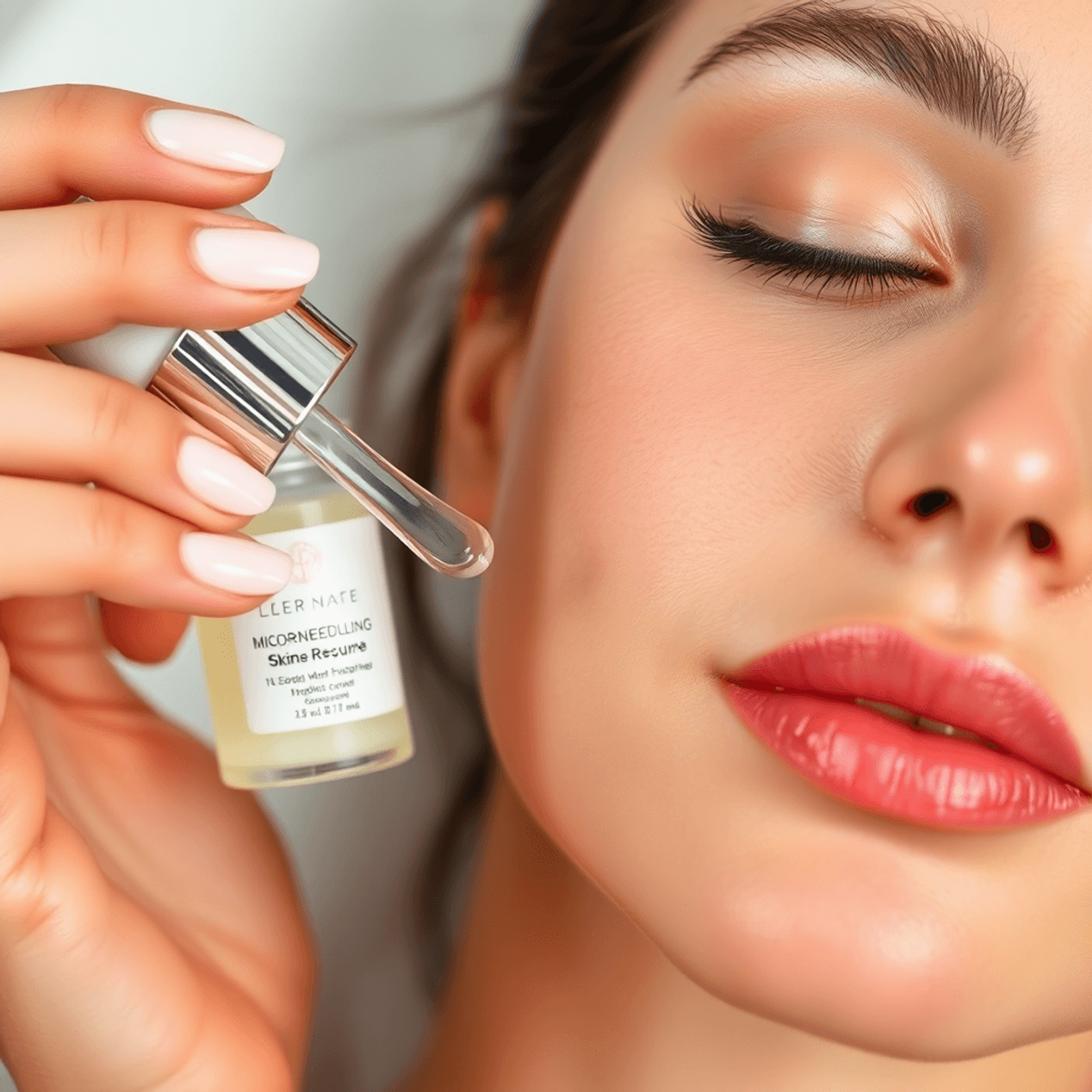
Clinical evidence has moved the conversation beyond generic hydration. A study in the Journal of Cosmetic Dermatology demonstrated that human adipose-derived stem cell conditioned media applied topically for eight weeks produced statistically significant reductions in wrinkle depth and improvements in skin elasticity (Kim et al., 2020). When this same category of growth factors is delivered through microchannels created by a derma roller, they bypass the stratum corneum entirely and reach target receptors on fibroblasts within minutes. Bradceuticals’ Gold Mesenchymal Stem Cell Growth Factor Serum is formulated as a derma roller serum — a lightweight concentration of human mesenchymal stem cell conditioned media designed for application on damp, dewy skin immediately after rolling, never as a gliding product during the procedure itself.
Why Your Derma Roller Serum Is the Most Important Variable in Your Results
Microchannels Create a Direct Delivery Route
A derma roller with 0.25mm to 1.0mm needles creates punctures that reach from the stratum corneum into the upper dermis depending on needle length. These channels remain open for roughly 10 to 15 minutes before the coagulation cascade seals them. Every second of that window represents peak absorption opportunity for your derma roller serum. Applying within the first one to two minutes — while skin is still damp from the procedure — ensures maximum growth factor delivery to the exact layer where collagen synthesis occurs.
Fibroblasts Are Primed to Respond
The controlled injury from dermarolling activates fibroblasts and triggers release of endogenous growth factors as part of the wound healing cascade. Supplementing this natural response with exogenous growth factors from your derma roller serum amplifies collagen output beyond what the procedure generates alone. Research from Seoul National University confirmed that mesenchymal stem cell conditioned media increased type I collagen production by up to 31% in dermal fibroblasts versus untreated controls (Park et al., 2019). This compounding effect — endogenous plus exogenous growth factor signaling — is what separates excellent dermarolling outcomes from mediocre ones.
The Wrong Serum Causes Real Harm
Enhanced absorption works both ways. A derma roller serum containing alcohol, fragrance, essential oils, glycolic acid, salicylic acid, or retinol penetrates deep into compromised skin and causes burning, prolonged redness, excessive inflammation, and potential scarring. The barrier is temporarily absent — irritants reach living tissue without the protective filtration that intact skin normally provides. Ingredient selection is not a preference when choosing a derma roller serum — it is a safety requirement.
The Healing Timeline and Which Derma Roller Serum Actives Each Phase Needs
Phase 1 — Hemostasis (Minutes 1–10)
Microchannels fill with platelet-rich blood that begins the clotting process. This is your prime application window. Have your derma roller serum dispensed and ready before you begin rolling. Apply Bradceuticals’ Gold Mesenchymal Stem Cell Growth Factor Serum to damp skin immediately — EGF, TGF-β, and PDGF begin binding to activated receptors within minutes. Layer medium to high molecular weight hyaluronic acid on top for immediate hydration that prevents the tight, dry sensation common in the first hour.
Phase 2 — Inflammatory Response (Days 1–4)
Redness and mild swelling signal that neutrophils and macrophages are clearing debris and initiating repair. Your derma roller serum during this phase must contain zero fragrance, zero acids, and zero alcohol. Continue twice-daily growth factor serum and hyaluronic acid. Add a ceramide moisturizer to support barrier reconstruction. Apply mineral SPF 30+ every morning — inflamed skin is acutely photosensitive. The complete stages of microneedling recovery provides detailed day-by-day guidance through this critical phase.
Phase 3 — Proliferation (Days 4–14)
Fibroblasts are actively depositing new collagen while keratinocytes migrate to re-epithelialize the surface. This phase determines your long-term collagen quantity, making consistent derma roller serum application essential. Continue growth factors and hyaluronic acid twice daily. After day seven, reintroduce vitamin C serum in the morning as a collagen synthesis cofactor and antioxidant. Niacinamide can be added for barrier support and tone correction. The healing stages every patient should know maps exactly when each active is safe to reintroduce.
Phase 4 — Remodeling (Day 14 Onward)
Type III collagen gradually converts to stronger type I collagen. Your full routine can resume, but continuing your core derma roller serum between sessions maintains the growth factor environment that supports this extended remodeling — which continues for up to 90 days post-procedure. The microneedling healing timeline details this extended recovery window.
Essential Derma Roller Serum Categories Ranked by Clinical Impact
1. Growth Factor Serums — The Foundation
Growth factors from human stem cell conditioned media represent the most evidence-backed category of derma roller serum. EGF, TGF-β, PDGF, and VEGF each bind to specific fibroblast receptors to trigger collagen synthesis, cell proliferation, and tissue repair. A clinical trial in the International Journal of Molecular Sciences confirmed that topical EGF accelerated re-epithelialization and improved texture in compromised skin (Esquirol-Caussa & Herrero-Vila, 2015). The reasons why EGF serums lead skin rejuvenation details how this growth factor drives measurable improvements when delivered through microchannels.
2. Hyaluronic Acid — Critical Hydration Support
Medium to high molecular weight hyaluronic acid provides essential hydration without irritating freshly rolled skin. It draws water into the upper dermis and epidermis, preventing dehydration that downregulates growth factor receptor activity. Every other active in your derma roller serum performs better when the skin is properly hydrated — making hyaluronic acid the essential supporting player.
3. Peptide Serums — Collagen Signal Amplification
Peptides like palmitoyl tripeptide-1 mimic collagen fragments to indirectly stimulate fibroblast activity. When delivered through microchannels alongside growth factors, peptides provide a complementary signaling pathway that reinforces collagen production from a different angle. This layered approach makes peptides a valuable addition to any derma roller serum protocol.
4. Ceramide Moisturizers — Barrier Reconstruction
Dermarolling temporarily disrupts the lipid barrier. Ceramide-based moisturizers applied after your derma roller serum has absorbed for sixty seconds restore this protective layer, sealing actives against the skin while preventing environmental irritants from entering through open channels.
5. Mineral Sunscreen — Mandatory Protection
UV exposure on freshly rolled skin accelerates photodamage and triggers post-inflammatory hyperpigmentation. Mineral sunscreen with zinc oxide or titanium dioxide provides broad-spectrum protection without the chemical filters that sting compromised skin. Skipping this step undoes the collagen gains your entire derma roller serum routine is designed to produce.
What Does Not Belong in a Derma Roller Serum
Retinoids cause peeling and photosensitivity on intact skin — on barrier-compromised skin they cause burning, excessive inflammation, and delayed healing. Reintroduce after day 14.
AHA and BHA acids dissolve intercellular bonds in the stratum corneum. On freshly rolled skin with an already disrupted barrier, they cause intense stinging and prolonged redness.
High-concentration vitamin C (above 10% L-ascorbic acid) is too acidic for skin without an intact barrier. Wait until day seven for reintroduction at moderate concentrations.
Fragrance and essential oils serve no therapeutic purpose in a derma roller serum and are leading causes of contact irritation on sensitized skin.
Alcohol-based products strip residual lipids from the compromised barrier, increasing transepidermal water loss and inflammation.
Application Technique for Your Derma Roller Serum
Step 1 — Prepare Everything Before Rolling
Have your derma roller serum open and dispensed before starting the procedure. Every second of delay after the last pass reduces absorption through closing microchannels.
Step 2 — Apply to Damp Skin Immediately
The moment rolling is complete, apply a generous layer of your derma roller serum to skin that is still damp. Do not towel dry. Do not wait for pinpoint bleeding to stop. The serum enters microchannels alongside the body’s own platelet-rich plasma.
Step 3 — Pat Gently, Never Rub
Use clean fingertips to pat the serum across all treated areas. Rubbing creates lateral friction on compromised tissue and distributes product unevenly. Patting ensures even coverage with minimal mechanical irritation.
Step 4 — Layer Hyaluronic Acid
Apply medium to high molecular weight hyaluronic acid over the growth factor serum. This hydration layer supports receptor activity and prevents the dehydration that reduces efficacy of every other active.
Step 5 — Seal With Ceramide Moisturizer
After sixty seconds of serum absorption, apply a fragrance-free ceramide moisturizer. This occlusive layer keeps all actives in contact with the skin and begins barrier reconstruction.
Step 6 — Continue Twice Daily for 14 Days
Maintain the core sequence — derma roller serum, hyaluronic acid, ceramide moisturizer — morning and evening for the full proliferative phase. Sustained growth factor exposure during days 4 through 14 produces the compounding collagen benefit that separates excellent results from average ones.
Between Sessions — Why Daily Derma Roller Serum Use Matters
Most dermarolling protocols recommend sessions every four to six weeks. Your derma roller serum should remain part of your daily routine between sessions. A 2021 review in Stem Cell Research & Therapy found that consistent application of stem cell conditioned media over 8 to 12 weeks produced cumulative improvements in wrinkle depth, elasticity, and dermal thickness (Katagiri et al., 2021). Using growth factors only on rolling days wastes the sustained signaling benefit that drives long-term structural improvement.
The best stem cell serums ranked for 2026 evaluates products that perform as both immediate post-procedure and daily maintenance serums. For those also addressing pigmentation, research in Annals of Dermatology showed that stem cell conditioned media suppressed melanin synthesis (Seo et al., 2019), making growth factor formulations valuable for managing sun damage alongside texture improvement.
At-Home Dermarolling Safety Essentials
Needle Length Selection
For at-home use, 0.25mm to 0.5mm needle lengths are safe for self-administration. These depths reach the epidermis and upper dermis without risk of scarring. Lengths above 0.5mm should be reserved for professional settings with proper numbing and sterile conditions.
Hygiene Protocol
Sanitize your derma roller with 70% isopropyl alcohol before and after every use. Replace the roller head every 8 to 10 sessions — dull needles cause tearing rather than clean punctures, increasing inflammation and scarring risk. Never share your derma roller.
Rolling Technique
Apply even, light pressure. Roll in four directions — vertical, horizontal, and both diagonals — across each treatment zone. Avoid rolling over active acne, open wounds, or inflamed skin. Three to four passes per direction is sufficient for at-home needle lengths.
Frequently Asked Questions
What is the best derma roller serum for beginners? A growth factor serum paired with hyaluronic acid provides the safest and most effective starting combination. Bradceuticals’ Gold Mesenchymal Stem Cell Growth Factor Serum is formulated specifically for post-procedure application on freshly treated skin.
How soon after dermarolling should I apply my serum? Within one to two minutes while microchannels remain open and skin is damp. Having your derma roller serum ready before the procedure ensures zero delay.
Can I use vitamin C as my derma roller serum? Not in the first seven days. Standard vitamin C concentrations are too acidic for barrier-compromised skin. Reintroduce after day seven as a morning antioxidant layer.
How often should I dermaroll at home? With 0.25mm needles, every one to two weeks is safe. With 0.5mm needles, space sessions three to four weeks apart. Always allow complete healing before the next session.
Is a derma roller serum different from a regular face serum? Yes. A derma roller serum must be free of fragrance, retinoids, active acids, and alcohol. It should contain growth factors or hyaluronic acid as primary actives — ingredients that support healing rather than exfoliate or irritate compromised skin.
References
- Doddaballapur, S. (2009). Microneedling with dermaroller. Journal of Cutaneous and Aesthetic Surgery. https://pmc.ncbi.nlm.nih.gov/articles/PMC2996801/
- Kim, Y.J., et al. (2020). Human adipose-derived stem cell conditioned media and skin elasticity. Journal of Cosmetic Dermatology. https://pubmed.ncbi.nlm.nih.gov/31573748/
- Park, B.S., et al. (2019). Adipose-derived stem cells and their secretory factors for skin aging. Dermatologic Surgery. https://pmc.ncbi.nlm.nih.gov/articles/PMC6835893/
- Esquirol-Caussa, J. & Herrero-Vila, E. (2015). EGF applications in dermatology. International Journal of Molecular Sciences. https://pubmed.ncbi.nlm.nih.gov/26370986/
- Katagiri, W., et al. (2021). Clinical applications of stem cell conditioned media. Stem Cell Research & Therapy. https://pmc.ncbi.nlm.nih.gov/articles/PMC7815998/
- Seo, K.Y., et al. (2019). Stem cell conditioned media and melanin regulation. Annals of Dermatology. https://pubmed.ncbi.nlm.nih.gov/33911573/
Disclaimer: This article is for informational purposes only and does not constitute medical advice. Consult a board-certified dermatologist before beginning any new skincare regimen.
Last reviewed: March 31, 2026
About Bradceuticals : Thuy Myers is the founder of Bradceuticals which manufactures and distributes skin care and hair regrowth serums that use growth factors from human stem cells as the catalyst for regeneration. When she is not busy running the business and maintaining blogs, she is continuing her practice as a semiconductor engineer and occasionally teaches college engineering. In her free time, she enjoys the beach, working out at the gym and hanging out with her kiddo Brad.