

The difference between clinical grade microneedling serum and consumer skincare marketed for microneedling comes down to three measurable variables: growth factor concentration, formulation purity, and delivery architecture designed for microchannel penetration rather than intact barrier application. Microneedling creates hundreds of controlled punctures per square centimeter that increase topical absorption by up to 80% (Doddaballapur, 2009). This enhanced absorption window transforms product selection from a preference into a clinical decision — what enters those channels reaches living dermal tissue without the filtration that intact skin normally provides. A clinical grade microneedling serum is engineered for this reality, delivering verified growth factor concentrations through vehicles optimized for microchannel delivery while eliminating every ingredient that could compromise healing in barrier-disrupted skin.
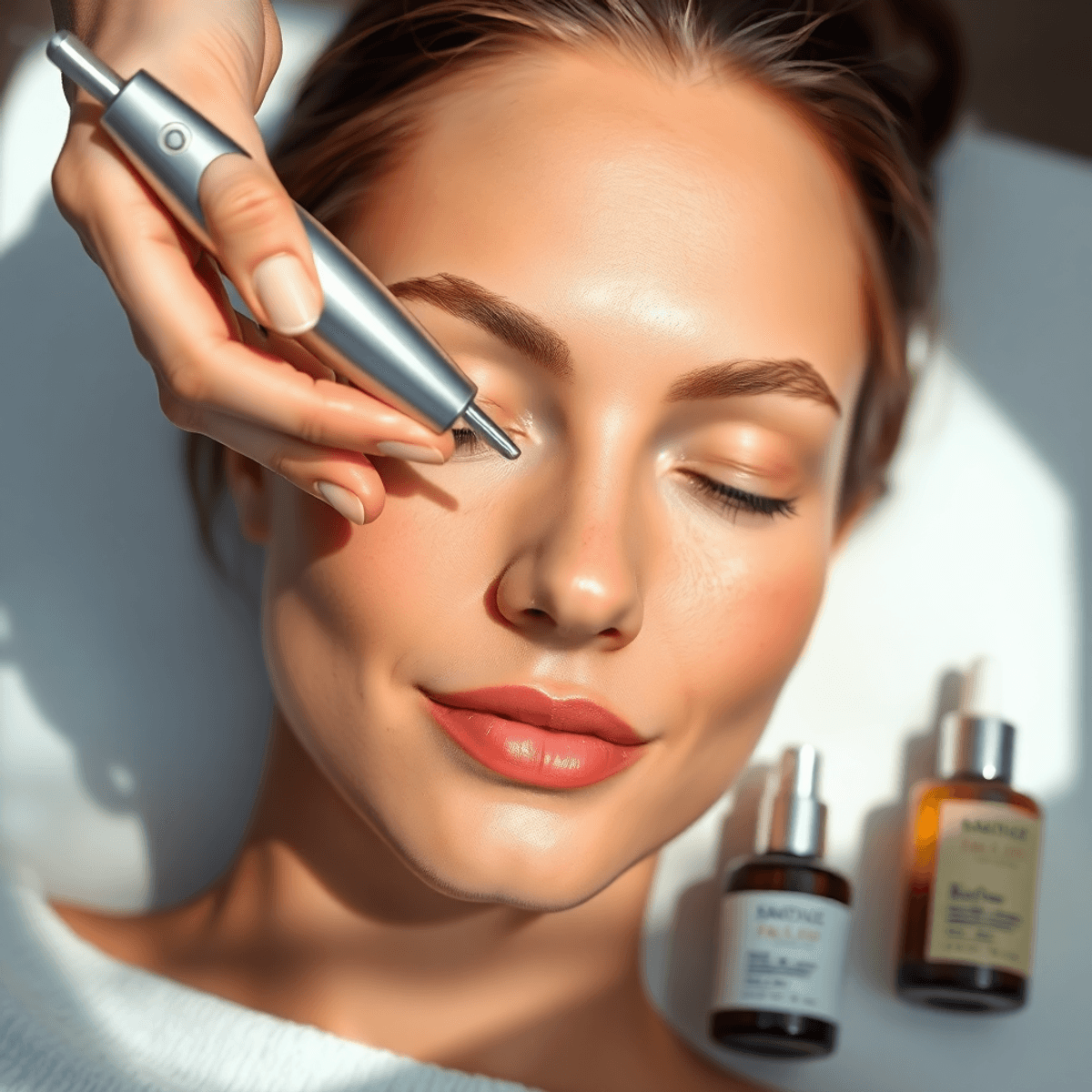
The clinical evidence validates this distinction. A study in the Journal of Cosmetic Dermatology demonstrated that human adipose-derived stem cell conditioned media applied topically produced statistically significant reductions in wrinkle depth and improvements in elasticity over eight weeks (Kim et al., 2020). When this category of growth factors is delivered through open microchannels immediately post-procedure, they bypass the stratum corneum entirely and reach fibroblast receptors at concentrations that weeks of surface application cannot achieve. Bradceuticals’ Gold Mesenchymal Stem Cell Growth Factor Serum is formulated as a clinical grade microneedling serum — concentrating the complete human mesenchymal stem cell secretome into a lightweight formula applied to damp, dewy skin immediately post-procedure, never used as a gliding product during treatment.
What Defines a Clinical Grade Microneedling Serum
Verified Growth Factor Concentration
Consumer serums frequently list “stem cell extract” without specifying biological source, extraction method, or measurable growth factor activity. A clinical grade microneedling serum specifies whether conditioned media comes from adipose-derived, bone-marrow-derived, or mesenchymal stem cells — and the formulation preserves bioactive growth factor integrity through manufacturing, storage, and delivery. Clinical trials demonstrating collagen induction and wrinkle reduction consistently use adipose-derived or mesenchymal sources at concentrations sufficient to trigger fibroblast receptor activation (Kim et al., 2020).
Research from Seoul National University confirmed that mesenchymal stem cell conditioned media increased type I collagen production by up to 31% in dermal fibroblasts versus untreated controls (Park et al., 2019). A clinical grade microneedling serum delivers growth factors at the concentrations that generated these published results — not the trace amounts that consumer products include for label positioning.
Formulation Purity for Barrier-Compromised Skin
The enhanced absorption that makes microneedling powerful means every ingredient in your serum reaches living tissue. A clinical grade microneedling serum eliminates fragrance, alcohol, essential oils, active acids, and unnecessary preservatives because each of these causes measurable irritation when delivered through open microchannels. Consumer serums formulated for intact skin routinely contain these ingredients because the stratum corneum filters their impact. Remove that barrier through microneedling and the same ingredients cause burning, prolonged redness, and healing delays.
Delivery Architecture for Microchannels
Standard retail serums optimize for penetration through intact skin — they contain penetration enhancers and emulsifier systems designed for the stratum corneum. A clinical grade microneedling serum takes a fundamentally different approach, assuming the barrier is temporarily absent and optimizing for clean delivery through aqueous microchannels. Lightweight, water-based vehicles maintain active ingredient mobility rather than trapping growth factors in occlusive matrices on the skin surface.
The Growth Factor Profile in a Clinical Grade Microneedling Serum
EGF — Epidermal Renewal
EGF binds to ErbB1 receptors on keratinocytes, accelerating proliferation that resurfaces treated skin with fresh, undamaged cells. A clinical trial in the International Journal of Molecular Sciences confirmed that topical EGF improved re-epithelialization and texture in compromised skin (Esquirol-Caussa & Herrero-Vila, 2015). The reasons why EGF serums lead skin rejuvenation details how this growth factor drives measurable recovery when delivered at clinical concentrations through microchannels.
FGF — Direct Fibroblast Activation
FGF stimulates the cells responsible for collagen and elastin synthesis. In a clinical grade microneedling serum, FGF reaches fibroblasts through open microchannels at concentrations that surface application through intact skin cannot achieve — producing the firmness and wrinkle reduction improvements that define clinical-level results.
TGF-β — Anti-Inflammatory Collagen Driver
TGF-β serves a dual function uniquely valuable in post-microneedling skin: modulating the inflammatory phase to prevent excessive redness while simultaneously driving collagen deposition during the proliferative phase. This dual action makes TGF-β one of the most important components of any clinical grade microneedling serum.
PDGF and VEGF — Tissue Organization and Vascular Support
PDGF coordinates how newly deposited collagen organizes into structured fiber networks rather than disordered deposits. VEGF promotes the blood vessel formation that supplies oxygen and nutrients to fibroblasts actively producing collagen. Without adequate vascular support, even well-stimulated fibroblasts cannot sustain the metabolic demands of intensive collagen production.
Supporting Ingredients That Amplify Clinical Grade Results
Hyaluronic Acid — Hydration for Receptor Activity
Medium to high molecular weight hyaluronic acid (800–1,500 kDa) creates the hydrated dermal environment that growth factor receptor binding requires. Dehydrated tissue downregulates receptor accessibility, reducing the efficacy of every growth factor in your clinical grade microneedling serum. Apply hyaluronic acid as the second layer immediately after the growth factor serum. The best hyaluronic acid serums for microneedling evaluates formulations optimized for microchannel delivery.
Peptides — Complementary Collagen Pathways
Copper peptides and palmitoyl tripeptide-1 stimulate collagen through mechanisms independent of growth factor receptor binding. Including peptides alongside a clinical grade microneedling serum creates layered collagen-building instructions that reinforce production from multiple biological angles.
Niacinamide — Barrier Reconstruction
Niacinamide strengthens the lipid barrier that microneedling temporarily disrupts, reduces post-inflammatory redness, and inhibits melanin transfer. Safe for inclusion from Day 1 post-procedure, it protects the healing environment where growth factors are actively driving collagen synthesis.
Ceramide Moisturizer — Occlusive Seal
Applied after the clinical grade microneedling serum and hyaluronic acid have absorbed for sixty seconds, a ceramide moisturizer seals actives against the skin while restoring the lipid barrier that prevents transepidermal water loss and environmental irritant entry.
What Does Not Belong in a Clinical Grade Microneedling Serum Protocol
Retinoids — Cause peeling and photosensitivity on intact skin. Through open microchannels, they cause burning and delayed healing. Reintroduce after Day 14.
AHA and BHA acids — Dissolve intercellular bonds in an already disrupted barrier. Reserve for between-session maintenance after Day 7.
Vitamin C above 10% — Too acidic for barrier-compromised skin during the first seven days. Reintroduce as a morning antioxidant and collagen cofactor after Day 7.
Fragrance and essential oils — No clinical value and leading causes of contact irritation on sensitized skin. Their presence in any serum marketed as clinical grade is a red flag.
Hydrolyzed collagen — Cannot integrate into dermal collagen networks. Provides surface hydration only. A clinical grade microneedling serum delivers the growth factor signals that instruct fibroblasts to produce new collagen from within.
The microneedling healing timeline provides day-by-day guidance on when each active can safely re-enter your routine.
Application Protocol for Clinical Grade Microneedling Serum
Step 1 — Prepare Before the Procedure
Have your clinical grade microneedling serum open and dispensed before beginning. The absorption window begins closing within minutes of the last needle pass.
Step 2 — Apply to Damp Skin Within One to Two Minutes
The moment the procedure is complete, apply Bradceuticals’ Gold Mesenchymal Stem Cell Growth Factor Serum to skin that is still damp. Growth factors enter open microchannels alongside the body’s own platelet-rich plasma. The complete stages of microneedling recovery maps the optimal delivery timing for each healing phase.
Step 3 — Pat Gently, Never Rub
Use clean fingertips to pat the clinical grade microneedling serum across all treated areas. Rubbing creates lateral friction on compromised tissue and distributes product unevenly.
Step 4 — Layer Hyaluronic Acid
Apply medium to high molecular weight hyaluronic acid over the growth factor serum to lock in hydration and create the aqueous environment for continued receptor binding.
Step 5 — Seal With Ceramide Moisturizer
After sixty seconds of absorption, apply a fragrance-free ceramide moisturizer to create an occlusive seal.
Step 6 — Mineral Sunscreen (Morning Procedures)
Apply mineral SPF 30+ with zinc oxide or titanium dioxide. UV exposure on freshly treated skin activates matrix metalloproteinases that degrade the collagen your clinical grade microneedling serum is working to build.
Step 7 — Continue Twice Daily for 14 Days
Maintain the core sequence through the full proliferative phase when fibroblasts are most actively depositing new collagen. The healing stages every patient should know details the biological events at each phase and when additional actives can be reintroduced.
Clinical Grade vs. Consumer Grade — Why Results Differ
A 2021 review in Stem Cell Research & Therapy analyzed trials involving topical stem cell conditioned media and concluded that consistent application at adequate concentrations over 8 to 12 weeks produced statistically significant improvements in wrinkle depth, elasticity, and dermal thickness (Katagiri et al., 2021). Consumer products containing diluted growth factors or plant-based substitutes did not generate these clinical outcomes.
Plant stem cell extracts from Swiss apple, grape, and argan deliver antioxidant protection — a study confirmed that apple stem cell extract shielded cells from oxidative stress (Barbulova et al., 2015). These are legitimate supporting ingredients. However, plant cells do not produce EGF, FGF, TGF-β, or any human-compatible growth factor. A clinical grade microneedling serum built on human mesenchymal stem cell conditioned media delivers the biological signaling that plant extracts cannot replicate. The best stem cell serums ranked for 2026 compares products across this critical sourcing distinction.
Choosing Clinical Grade by Skin Type
Sensitive and Rosacea-Prone Skin
Human mesenchymal stem cell conditioned media contains anti-inflammatory cytokines including IL-10 and TGF-β that actively calm reactive skin. A clinical grade microneedling serum with these components is inherently better tolerated than consumer formulations containing fragrance or botanical irritants. Pair with niacinamide for additional barrier support.
Hyperpigmentation-Prone Skin
Research in Annals of Dermatology found that stem cell conditioned media suppressed melanin synthesis in melanocytes (Seo et al., 2019). For Fitzpatrick types III–VI at higher risk for post-inflammatory hyperpigmentation, a clinical grade microneedling serum with growth factors plus niacinamide addresses both collagen building and pigmentation protection. The best approaches to treating sun damage details this dual-action benefit.
Mature Skin
After age 30, fibroblast density declines approximately 1% per year and remaining fibroblasts become less responsive to endogenous growth signals (Varani et al., 2006). Mature skin benefits most from a clinical grade microneedling serum because the higher growth factor concentration compensates for reduced receptor sensitivity — reactivating the collagen production machinery that aging progressively silences.
Between Sessions — Daily Clinical Grade Serum Maintenance
Your clinical grade microneedling serum should remain part of your daily routine between treatments. Most protocols recommend microneedling every four to six weeks. Fibroblasts that receive consistent growth factor signaling between sessions maintain higher metabolic activity than those left without stimulation. Using growth factors only on procedure days wastes the sustained signaling benefit that drives cumulative collagen accumulation.
Daily routine between sessions: gentle cleanser → clinical grade microneedling serum on damp skin → vitamin C (morning, after Day 7) → niacinamide moisturizer → SPF 30+. Evening: gentle cleanser → growth factor serum → retinol (alternating nights after Day 14) → ceramide night cream. The best growth factor serums for youthful skin evaluates formulations that serve as both post-procedure and daily maintenance products.
Frequently Asked Questions
What makes a clinical grade microneedling serum different from regular serums? Higher verified growth factor concentrations from specified biological sources, formulation purity eliminating all potential irritants, and delivery architecture optimized for microchannel penetration rather than intact barrier application.
Is a clinical grade microneedling serum worth the investment? Clinical trials demonstrating measurable collagen increases used professional-concentration growth factors. The microneedling procedure creates a unique absorption opportunity — using a consumer-grade product during that window wastes the enhanced penetration that makes the procedure valuable.
Can I use a clinical grade microneedling serum daily without microneedling? Yes. Daily application delivers growth factors through normal epidermal absorption. Results build more gradually but produce cumulative improvements in wrinkle depth, elasticity, and skin thickness based on 8 to 12 week clinical data.
How do I verify that a serum is truly clinical grade? Look for specified conditioned media source, absence of fragrance and active acids, clinical references supporting the formulation, and concentration indicators — growth factors listed in the first five INCI ingredients indicate therapeutic levels rather than trace amounts.
How soon after microneedling should I apply a clinical grade serum? Within one to two minutes while microchannels remain open and skin is damp. Having the product ready before the procedure ensures zero delay in growth factor delivery.
References
- Doddaballapur, S. (2009). Microneedling with dermaroller. Journal of Cutaneous and Aesthetic Surgery. https://pmc.ncbi.nlm.nih.gov/articles/PMC2996801/
- Kim, Y.J., et al. (2020). Human adipose-derived stem cell conditioned media and skin elasticity. Journal of Cosmetic Dermatology. https://pubmed.ncbi.nlm.nih.gov/31573748/
- Park, B.S., et al. (2019). Adipose-derived stem cells and their secretory factors for skin aging. Dermatologic Surgery. https://pmc.ncbi.nlm.nih.gov/articles/PMC6835893/
- Esquirol-Caussa, J. & Herrero-Vila, E. (2015). EGF applications in dermatology. International Journal of Molecular Sciences. https://pubmed.ncbi.nlm.nih.gov/26370986/
- Barbulova, A., et al. (2015). Plant stem cells in cosmetics. Journal of Applied Pharmaceutical Sciences. https://pmc.ncbi.nlm.nih.gov/articles/PMC4740987/
- Katagiri, W., et al. (2021). Clinical applications of stem cell conditioned media. Stem Cell Research & Therapy. https://pmc.ncbi.nlm.nih.gov/articles/PMC7815998/
- Varani, J., et al. (2006). Decreased collagen production in chronologically aged skin. American Journal of Pathology. https://pubmed.ncbi.nlm.nih.gov/16675963/
- Seo, K.Y., et al. (2019). Stem cell conditioned media and melanin regulation. Annals of Dermatology. https://pubmed.ncbi.nlm.nih.gov/33911573/
Disclaimer: This article is for informational purposes only and does not constitute medical advice. Consult a board-certified dermatologist before beginning any new skincare regimen.
Last reviewed: April 2026
About Bradceuticals : Thuy Myers is the founder of Bradceuticals which manufactures and distributes skin care and hair regrowth serums that use growth factors from human stem cells as the catalyst for regeneration. When she is not busy running the business and maintaining blogs, she is continuing her practice as a semiconductor engineer and teaches college engineering. In her free time, she enjoys the beach, working out at the gym and hanging out with her kiddo.