

You are spending hundreds of dollars on facials that fade in a week — while a stem cell microneedling facial rebuilds the actual structural foundation of your skin for months. The difference is not subtle. Traditional facials hydrate the surface and exfoliate dead cells. A stem cell microneedling facial creates thousands of microchannels that deliver human growth factors directly to the dermal fibroblasts responsible for producing collagen and elastin — the two proteins that determine whether your skin looks 30 or 50 (Doddaballapur, 2009). If you have been investing in skincare without seeing structural change, a stem cell microneedling facial is likely the missing piece your routine desperately needs.
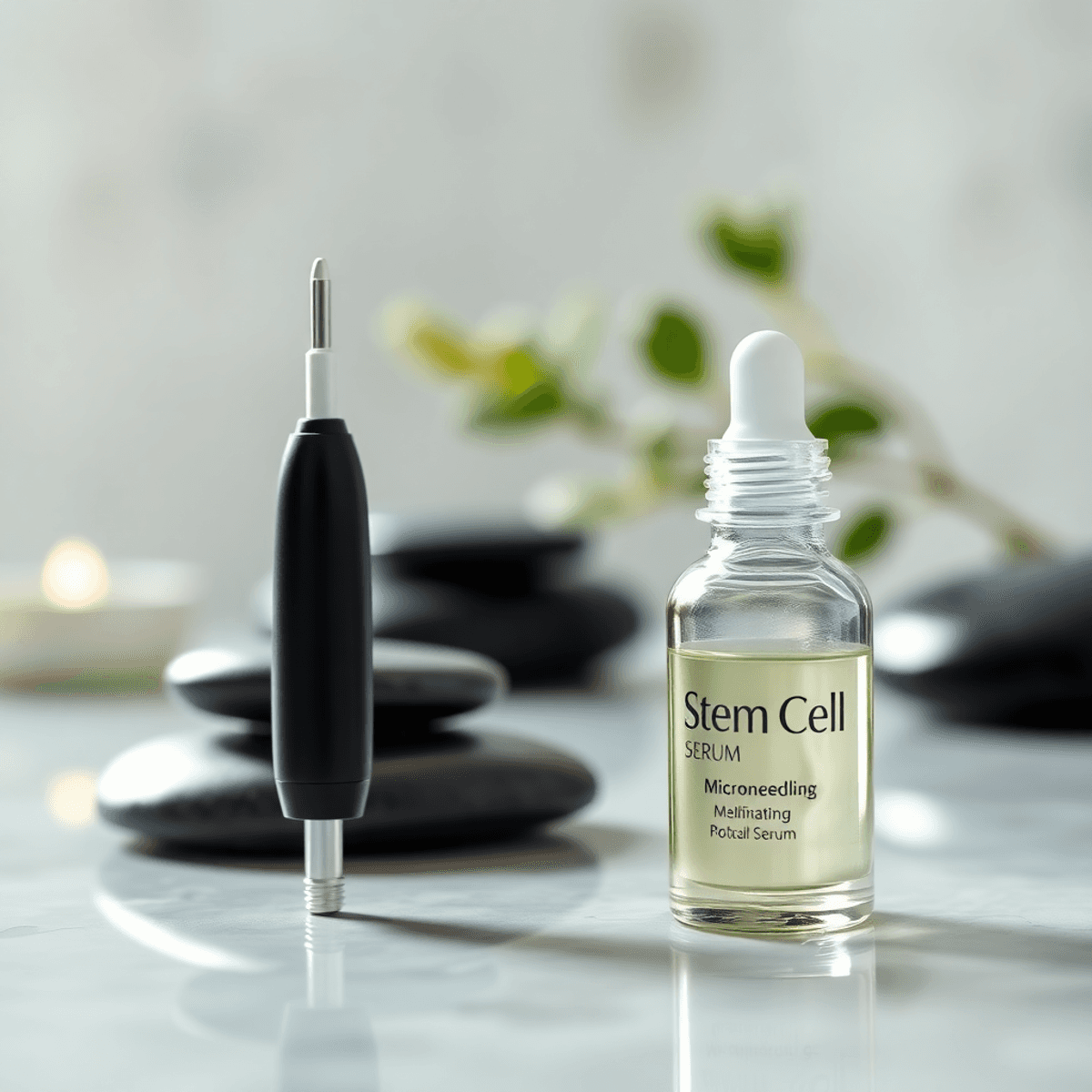
Research confirms the biological mechanism behind this transformation. A study in the Journal of Cosmetic Dermatology found that human adipose-derived stem cell conditioned media applied topically produced statistically significant wrinkle depth reduction and elasticity improvement over eight weeks (Kim et al., 2020). When those same growth factors are delivered through microchannels during a stem cell microneedling facial, they bypass the stratum corneum entirely and reach fibroblasts at concentrations that months of surface application cannot achieve. Bradceuticals’ Gold Mesenchymal Stem Cell Growth Factor Serum is engineered for exactly this delivery method — a lightweight human mesenchymal stem cell secretome containing EGF, TGF-β, PDGF, FGF, and VEGF, applied to damp, dewy skin immediately after the microneedling phase of your stem cell microneedling facial, never as a gliding product during needling.
What Makes a Stem Cell Microneedling Facial Different From Everything Else
Traditional Facials Only Touch the Surface
Standard facials — even luxury ones — work on the epidermis. They cleanse, exfoliate, extract, and hydrate the outermost layer of skin. The improvements are real but temporary because no active ingredient reaches the dermis where collagen architecture determines wrinkle depth, firmness, and elasticity. A stem cell microneedling facial fundamentally changes this equation by creating direct pathways to the dermal layer and flooding it with the growth factor signals that aging fibroblasts have stopped receiving on their own.
Microneedling Alone Leaves Potential on the Table
Microneedling without growth factors triggers collagen induction through the wound healing cascade — but the fibroblasts activated by the procedure only produce collagen at the rate their diminished growth factor environment allows. After age 30, fibroblast density declines approximately 1% per year and endogenous growth factor production drops progressively (Varani et al., 2006). A stem cell microneedling facial supplements these declining signals with exogenous EGF, FGF, TGF-β, VEGF, and PDGF — amplifying collagen output by up to 31% versus microneedling alone (Park et al., 2019).
The Synergy Is the Secret
A stem cell microneedling facial combines three biological advantages simultaneously: the collagen induction trigger from controlled micro-injury, the enhanced absorption pathway through open microchannels, and the complete growth factor secretome that provides the regenerative instructions activated fibroblasts need to produce collagen at maximum capacity. No other single treatment delivers all three in one session.
The Step-by-Step Stem Cell Microneedling Facial Protocol
Step 1 — Cleansing and Preparation
Your stem cell microneedling facial begins with thorough double cleansing to remove makeup, sunscreen, and sebum. Clean skin ensures that no barrier exists between the microneedling device and the epidermis, and that no contaminants enter microchannels during the procedure. A numbing cream containing 5% lidocaine may be applied 20 to 30 minutes before needling for comfort at deeper needle depths.
Step 2 — Microneedling
Using a professional dermapen or medical-grade device, the practitioner creates controlled microchannels across the full facial surface. Needle depth varies by zone — 0.5mm around the delicate periorbital area, 1.0 to 1.5mm across cheeks, forehead, and jawline where thicker dermis allows deeper penetration. The device moves in systematic passes — vertical, horizontal, and diagonal — ensuring uniform channel distribution across all treatment areas.
Step 3 — Immediate Growth Factor Delivery
This is the defining moment of a stem cell microneedling facial. Within the first one to two minutes after the last needle pass — while microchannels remain open and skin is still damp — apply Bradceuticals’ Gold Mesenchymal Stem Cell Growth Factor Serum across the full facial surface using gentle patting motions. Growth factors flood open channels and bind to activated fibroblast receptors in the dermis. This delivery method achieves concentrations that weeks of topical surface application cannot match — the reason a stem cell microneedling facial produces results that daily serum use alone cannot replicate.
Step 4 — Hyaluronic Acid Hydration Layer
Apply medium to high molecular weight hyaluronic acid over the growth factor serum. This creates the hydrated tissue environment that growth factor receptor binding requires — dehydrated tissue downregulates receptor accessibility and reduces the efficacy of every active in your stem cell microneedling facial protocol. The best hyaluronic acid serums for microneedling evaluates formulations optimized for this pairing.
Step 5 — Ceramide Barrier Seal
After sixty seconds of serum absorption, apply a fragrance-free ceramide moisturizer. This occlusive layer seals growth factors and hyaluronic acid against the skin while beginning barrier reconstruction — the protective first step of your post-facial recovery.
Step 6 — Mineral Sunscreen (Daytime Procedures)
Apply mineral SPF 30+ with zinc oxide or titanium dioxide. UV exposure on freshly treated skin triggers post-inflammatory hyperpigmentation and activates the matrix metalloproteinases that degrade the collagen your stem cell microneedling facial is designed to build.
What Happens in Your Skin After a Stem Cell Microneedling Facial
Hours 0–24: The Inflammatory Ignition
Neutrophils and macrophages flood microchannel sites, clearing debris and releasing cytokines that recruit fibroblasts. Your face appears red and flushed — resembling a sunburn. This inflammation IS the healing process. Growth factors from your stem cell microneedling facial are already bound to fibroblast receptors, amplifying the regenerative signal beyond what the wound healing cascade produces alone. The complete stages of microneedling recovery maps this critical phase in detail.
Days 2–5: Construction Begins
Redness fades. Dryness and peeling appear as the damaged outer layer sheds. Beneath the surface, fibroblasts are actively depositing new type I and type III collagen — fueled by the growth factors delivered during your stem cell microneedling facial. Continue twice-daily growth factor serum application to sustain the elevated signaling environment. Do not pick at peeling skin. The healing stages every patient should know guides you through this transition.
Days 6–14: The Glow and Beyond
Peeling resolves. Skin appears smoother, brighter, and more even-toned. The “stem cell microneedling facial glow” emerges as fresh keratinocytes reflect light uniformly. Beneath the surface, collagen construction continues at elevated rates. After Day 7, reintroduce vitamin C as a collagen synthesis cofactor (Pullar et al., 2017). After Day 14, add retinol on alternating evenings for complementary collagen gene expression. The microneedling healing timeline provides the full active reintroduction schedule.
Weeks 4–12: Structural Transformation
A 2021 review in Stem Cell Research & Therapy confirmed that 8 to 12 weeks of consistent growth factor application produced statistically significant improvements in wrinkle depth, skin elasticity, and dermal thickness (Katagiri et al., 2021). This is when the full impact of your stem cell microneedling facial becomes measurable — reduced wrinkle depth, improved firmness, enhanced bounce-back, visibly tighter contours.
The Growth Factors That Power a Stem Cell Microneedling Facial
Understanding what each growth factor contributes explains why a stem cell microneedling facial outperforms isolated ingredient treatments (Ferreira et al., 2020).
EGF accelerates keratinocyte proliferation — producing the brightness and texture improvements visible within two weeks of your stem cell microneedling facial. The reasons why EGF serums lead skin rejuvenation details this mechanism.
FGF directly stimulates fibroblasts to synthesize collagen and elastin — the structural proteins that determine wrinkle depth and firmness. FGF is the most important growth factor in any stem cell microneedling facial targeting laxity and aging.
TGF-β modulates inflammation while driving collagen deposition — addressing both the cause of structural decline (inflammaging) and the consequence (collagen loss) simultaneously.
VEGF promotes blood vessel formation that supplies oxygen and nutrients to fibroblasts operating at increased metabolic capacity after your stem cell microneedling facial.
PDGF coordinates how newly deposited collagen organizes into structured fiber networks — the difference between smooth firmness and disordered texture.
Human-Derived vs. Plant-Based Stem Cell Microneedling Facial Products
Not all products marketed for a stem cell microneedling facial contain the same category of actives. Human mesenchymal stem cell conditioned media delivers growth factors that bind to your skin cell receptors with native affinity — producing the collagen increases documented in clinical trials.
Plant stem cell extracts from Swiss apple, grape, and argan deliver antioxidant polyphenols that protect existing collagen from oxidative damage. A study confirmed apple stem cell extract shielded cells from oxidative stress (Barbulova et al., 2015). However, plant growth factors cannot bind to human fibroblast receptors or initiate collagen synthesis cascades. For a stem cell microneedling facial designed to maximize new collagen production through open microchannels, human-derived conditioned media provides the biological signaling plant extracts cannot replicate. The best stem cell serums ranked for 2026 compares products across this sourcing distinction.
Between Sessions — Maintaining Your Stem Cell Microneedling Facial Results
A stem cell microneedling facial is typically performed every 4 to 6 weeks. Between sessions, daily growth factor serum application maintains the elevated fibroblast signaling that sustains collagen production throughout the remodeling phase — which continues for 60 to 90 days after each treatment.
Daily routine between sessions: gentle cleanser → Bradceuticals’ growth factor serum on damp skin → vitamin C (morning) → niacinamide moisturizer → SPF 30+. Evening: gentle cleanser → growth factor serum → retinol (alternating nights) → ceramide night cream.
For those also addressing pigmentation, research in Annals of Dermatology found that stem cell conditioned media suppressed melanin synthesis (Seo et al., 2019). This makes daily growth factor application between stem cell microneedling facial sessions valuable for both collagen building and pigmentation correction. The best approaches to treating sun damage details this dual-action benefit.
Frequently Asked Questions
What is a stem cell microneedling facial? A treatment that combines microneedling — creating controlled microchannels in the skin — with application of human stem cell growth factors through those channels. This delivers regenerative proteins directly to dermal fibroblasts, amplifying collagen production beyond what either treatment achieves alone.
How is a stem cell microneedling facial different from a regular facial? Traditional facials work on the skin surface. A stem cell microneedling facial creates pathways to the dermis and delivers growth factors that signal fibroblasts to produce new collagen — producing structural changes that last months rather than surface hydration that fades in days.
How often should I get a stem cell microneedling facial? Every 4 to 6 weeks for optimal cumulative results. Each session builds on the collagen foundation established by the previous one. Most treatment plans recommend 3 to 6 sessions for maximum transformation.
Does a stem cell microneedling facial hurt? Numbing cream applied 20 to 30 minutes before the procedure minimizes discomfort. Most patients describe the sensation as mild pressure with occasional prickling. The treatment is well-tolerated at standard facial needle depths.
What should I avoid after a stem cell microneedling facial? Retinoids, AHA/BHA acids, fragrance, alcohol, makeup, exercise, and direct sun exposure for the first 48 to 72 hours. The best growth factor serums for youthful skin evaluates products designed for safe post-procedure application.
How long before I see results from a stem cell microneedling facial? Improved texture and glow within 1 to 2 weeks. Fine line softening by weeks 4 to 6. Measurable wrinkle reduction and firmness improvement at 8 to 12 weeks. Maximum structural transformation over 4 to 6 months of consistent treatment.
References
- Doddaballapur, S. (2009). Microneedling with dermaroller. Journal of Cutaneous and Aesthetic Surgery. https://pmc.ncbi.nlm.nih.gov/articles/PMC2996801/
- Kim, Y.J., et al. (2020). Human adipose-derived stem cell conditioned media and skin elasticity. Journal of Cosmetic Dermatology. https://pubmed.ncbi.nlm.nih.gov/31573748/
- Varani, J., et al. (2006). Decreased collagen production in chronologically aged skin. American Journal of Pathology. https://pubmed.ncbi.nlm.nih.gov/16675963/
- Park, B.S., et al. (2019). Adipose-derived stem cells and their secretory factors for skin aging. Dermatologic Surgery. https://pmc.ncbi.nlm.nih.gov/articles/PMC6835893/
- Ferreira, J.R., et al. (2020). Mesenchymal stromal cell secretome. Frontiers in Cell and Developmental Biology. https://pmc.ncbi.nlm.nih.gov/articles/PMC7140425/
- Barbulova, A., et al. (2015). Plant stem cells in cosmetics. Journal of Applied Pharmaceutical Sciences. https://pmc.ncbi.nlm.nih.gov/articles/PMC4740987/
- Katagiri, W., et al. (2021). Clinical applications of stem cell conditioned media. Stem Cell Research & Therapy. https://pmc.ncbi.nlm.nih.gov/articles/PMC7815998/
- Seo, K.Y., et al. (2019). Stem cell conditioned media and melanin regulation. Annals of Dermatology. https://pubmed.ncbi.nlm.nih.gov/33911573/
- Pullar, J.M., et al. (2017). The roles of vitamin C in skin health. Nutrients. https://pmc.ncbi.nlm.nih.gov/articles/PMC3673383/
Disclaimer: This article is for informational purposes only and does not constitute medical advice. Consult a board-certified dermatologist before beginning any new skincare or aesthetic treatment.
Last reviewed: April 2026
About Bradceuticals : Thuy Myers is the founder of Bradceuticals which manufactures and distributes skin care and hair regrowth serums that use growth factors from human stem cells as the catalyst for regeneration. When she is not busy running the business and maintaining blogs, she is continuing her practice as a semiconductor engineer and teaches college engineering. In her free time, she enjoys the beach, working out at the gym and hanging out with her kiddo.