

You have been microneedling for wrinkles for months — enduring the redness, the peeling, the downtime — and your lines look barely different. That is not because microneedling for wrinkles does not work. It is because you are missing the variable that determines whether each session builds transformative collagen or barely moves the needle: what you push through those microchannels in the 60 seconds after your last pass. Microneedling for wrinkles creates the collagen induction trigger and opens the delivery pathway — but without growth factor signals arriving through those channels to activated fibroblasts, your skin produces collagen at whatever diminished rate your aging biology allows on its own (Doddaballapur, 2009). You did the hard part. You skipped the part that makes it count.
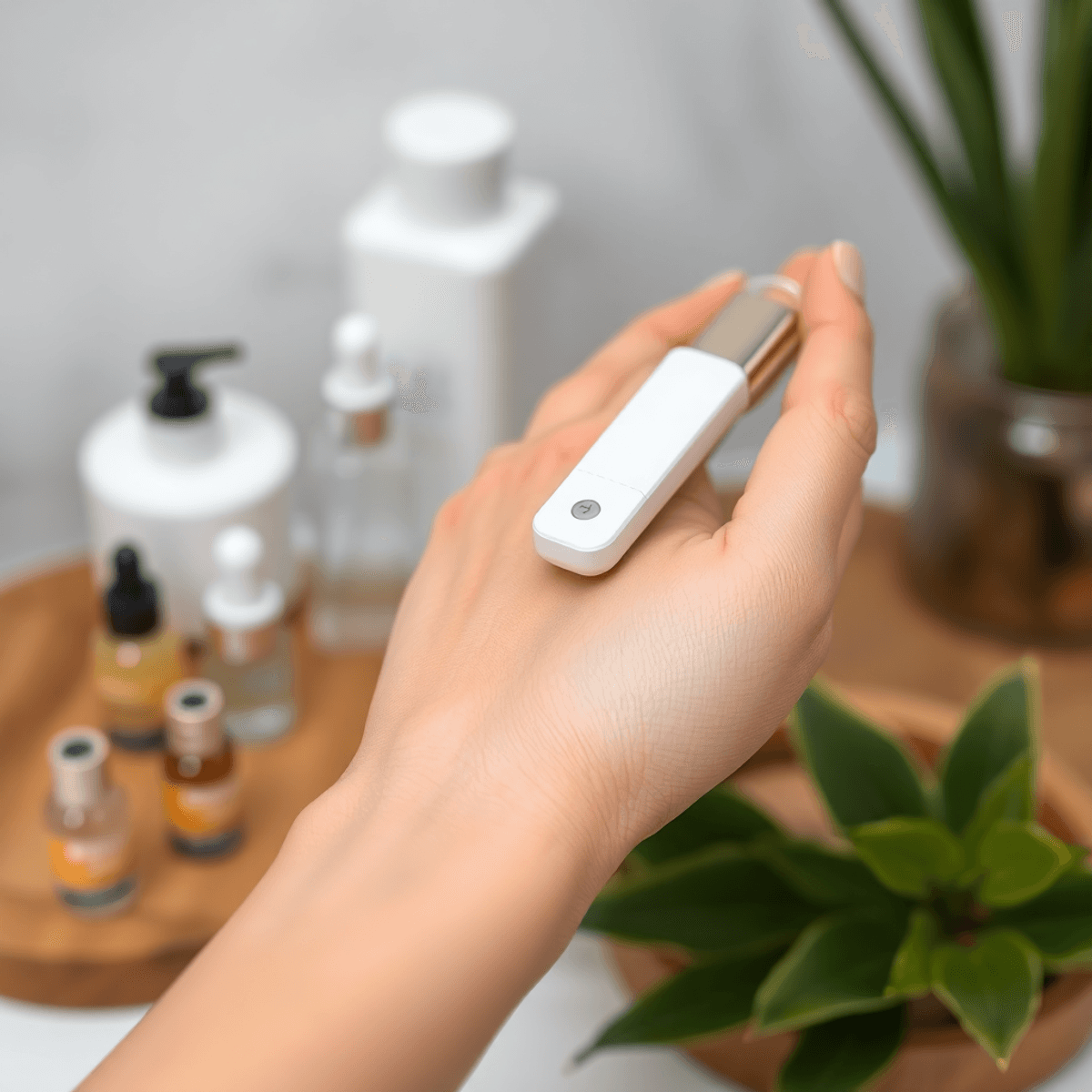
A study in the Journal of Cosmetic Dermatology quantified exactly what effective microneedling for wrinkles requires: human adipose-derived stem cell conditioned media applied consistently produced statistically significant wrinkle depth reduction and elasticity improvement over eight weeks (Kim et al., 2020). When those growth factors enter microchannels within minutes post-procedure, they reach fibroblasts at concentrations that months of surface application cannot achieve. Bradceuticals’ Gold Mesenchymal Stem Cell Growth Factor Serum is engineered for exactly this — delivering the complete human mesenchymal stem cell secretome containing EGF, TGF-β, FGF, PDGF, and VEGF to damp, dewy skin the instant microneedling for wrinkles ends. Never as a gliding product during the procedure.
How Microneedling for Wrinkles Actually Eliminates Lines
The Biology of Wrinkle Formation
Wrinkles are not surface imperfections — they are structural collagen deficits. Every wrinkle on your face marks a location where dermal collagen has degraded below the threshold needed to support the overlying epidermis. The skin folds into the gap. After age 30, fibroblast density declines approximately 1% annually, and endogenous growth factor production drops progressively (Varani et al., 2006). UV exposure accelerates this through matrix metalloproteinase activation that degrades existing collagen while suppressing new production (Quan et al., 2009). Microneedling for wrinkles reverses this by triggering NEW collagen deposition that fills the structural deficit from beneath.
The Three-Part Mechanism
Microneedling for wrinkles works through three simultaneous biological mechanisms:
Wound healing cascade activation: Controlled micro-injuries trigger platelet aggregation, endogenous growth factor release, and fibroblast recruitment. These fibroblasts shift from dormant to active metabolic states — primed for collagen production.
Enhanced absorption pathway: Microchannels bypass the stratum corneum barrier entirely, allowing growth factors (at 6,045+ Daltons, far exceeding the 500-Dalton passive limit) to reach dermal fibroblasts at therapeutic concentrations. Microneedling for wrinkles increases product penetration by up to 300% (Singh & Yadav, 2016).
Amplified fibroblast response: When exogenous growth factors arrive through microchannels and bind to already-activated fibroblasts, the collagen production response compounds beyond what either microneedling or growth factors achieve independently. Research from Seoul National University confirmed that mesenchymal stem cell conditioned media increased type I collagen production by up to 31% (Park et al., 2019)).
The 9 Truths About Microneedling for Wrinkles
Truth 1 — Microneedling for Wrinkles Without Growth Factors Is Half a Treatment
The procedure creates the trigger and the pathway. Growth factors provide the instructions. Microneedling for wrinkles with hyaluronic acid alone delivers hydration through microchannels — zero collagen-building signal. You hydrated your dermis while your fibroblasts waited for instructions that never arrived. The reasons why EGF serums lead skin rejuvenation explains why growth factor signaling through microchannels produces dramatically stronger results.
Truth 2 — The Complete Secretome Outperforms Any Single Active
The best results from microneedling for wrinkles come from the complete growth factor cascade — not isolated EGF or a single peptide. Regeneration is a coordinated multi-signal process (Ferreira et al., 2020)). EGF accelerates surface renewal. FGF drives deep collagen production. TGF-β modulates inflammation while depositing collagen. VEGF builds the blood vessel supply chain. PDGF organizes collagen architecture. Bradceuticals’ serum delivers all five in native ratios — maximizing the collagen output from every microneedling for wrinkles session.
Truth 3 — Needle Depth Determines Which Wrinkles Respond
Not all wrinkles respond to the same needle depth. Fine lines (crow’s feet, perioral lines) respond to 0.5mm. Moderate wrinkles (forehead lines, nasolabial folds) require 1.0mm. Deep wrinkles (glabellar lines, severe nasolabial folds) need 1.5mm under professional supervision. Using superficial depths for deep wrinkles is the most common reason microneedling for wrinkles underperforms. The complete stages of microneedling recovery maps recovery timelines by depth.
Truth 4 — Results Require 8 to 12 Weeks to Manifest
Microneedling for wrinkles triggers collagen deposition that takes weeks to accumulate and months to mature. A 2021 review confirmed that measurable wrinkle depth reduction required 8 to 12 weeks of consistent growth factor application (Katagiri et al., 2021)). Evaluating microneedling for wrinkles at week 2 — when only surface renewal is visible — leads to premature abandonment before structural changes reach measurable levels.
Truth 5 — Consistency Between Sessions Matters as Much as the Procedure
Microneedling for wrinkles is typically performed every 4 to 6 weeks. What you do BETWEEN sessions determines your cumulative outcome. Daily growth factor serum application maintains elevated fibroblast activity throughout the remodeling phase. Using growth factors only on procedure days forfeits the sustained signaling that compounds session over session. The best stem cell serums ranked for 2026 evaluates formulations designed for both post-procedure and daily maintenance use.
Truth 6 — The Wrong Products Double Your Downtime
Retinoids applied on the day of microneedling for wrinkles cause burning and delayed healing. AHA/BHA acids dissolve immature tissue. High-concentration vitamin C at pH 2.5 stings and triggers post-inflammatory hyperpigmentation. These products extend a 5-day surface recovery to 10+ days while compromising collagen quality. The healing stages every patient should know provides day-by-day product reintroduction guidance.
Truth 7 — UV Exposure Degrades What You Build
Every microneedling for wrinkles session builds collagen. UV exposure activates matrix metalloproteinases that break it down. Skipping mineral sunscreen during the healing phase allows UV to degrade newly deposited collagen before it matures. Mineral SPF 30+ from Day 1 is non-negotiable. The best approaches to treating sun damage details why UV protection during recovery is critical for wrinkle-targeted protocols.
Truth 8 — Multiple Sessions Produce Compounding Results
Microneedling for wrinkles is not a one-session treatment. Each session builds collagen on the foundation the previous session established. Clinical protocols for wrinkle reduction typically recommend 3 to 6 sessions spaced 4 to 6 weeks apart. The most dramatic wrinkle transformation develops over 4 to 6 months of consistent treatment with daily growth factor support between sessions. The microneedling healing timeline guides long-term scheduling.
Truth 9 — Complementary Actives Multiply Your Results
Microneedling for wrinkles produces the strongest outcomes when combined with supporting actives through independent pathways. Vitamin C as a collagen assembly cofactor (Pullar et al., 2017)). Retinol on alternating evenings starting Day 14 for complementary nuclear receptor signaling. Niacinamide for barrier strengthening. Hyaluronic acid for hydration. The best hyaluronic acid serums for microneedling evaluates hydration products optimized for pairing with microneedling for wrinkles protocols. The best growth factor serums for youthful skin compares formulations across concentration and sourcing.
The Microneedling for Wrinkles Protocol
Before the Procedure
Have Bradceuticals’ Gold Mesenchymal Stem Cell Growth Factor Serum dispensed and within reach. The absorption window closes within minutes.
During the Procedure
Using a professional dermapen or at-home derma roller at appropriate depth for your wrinkle severity, treat the full facial surface in systematic passes. Four directions — vertical, horizontal, both diagonals.
Immediately Post-Procedure (Within 60 Seconds)
Apply growth factor serum to damp skin. Pat gently. Growth factors enter open microchannels alongside platelet-rich plasma. Layer hyaluronic acid. Seal with ceramide moisturizer. Mineral SPF 30+ if daytime.
Days 1–14
Continue twice-daily growth factor serum application. Add vitamin C after Day 7. Retinol at Day 14 on alternating evenings. Avoid retinoids, acids, fragrance, and alcohol during the first week.
Between Sessions
Maintain daily growth factor serum. Resume full anti-aging routine. Plan next microneedling for wrinkles session at the 4 to 6 week mark.
Results Timeline for Microneedling for Wrinkles
Weeks 1–2: Improved texture and brightness — EGF-driven keratinocyte turnover.
Weeks 3–6: Fine lines soften. Tone evens. Research found stem cell conditioned media suppressed melanin synthesis (Seo et al., 2019).
Weeks 8–12: Measurable wrinkle depth reduction and elasticity improvement — the structural payoff of microneedling for wrinkles.
Months 4–6: Type III collagen matures to type I. Maximum structural transformation with consistent monthly sessions and daily growth factor support.
Frequently Asked Questions
Does microneedling for wrinkles actually work? Yes. Clinical trials demonstrate statistically significant wrinkle depth reduction when microneedling is combined with growth factor application over 8 to 12 weeks. The procedure triggers collagen induction; growth factors amplify the production response.
How many sessions of microneedling for wrinkles do I need? 3 to 6 sessions for fine to moderate wrinkles. Deep wrinkles may require additional sessions at deeper needle depths under professional supervision.
What is the best serum for microneedling for wrinkles? A complete human mesenchymal stem cell secretome containing EGF, FGF, TGF-β, VEGF, and PDGF. Bradceuticals’ Gold Mesenchymal Stem Cell Growth Factor Serum delivers this coordinated growth factor profile for maximum collagen output.
How deep should I needle for microneedling for wrinkles? 0.5mm for fine lines. 1.0mm for moderate wrinkles. 1.5mm for deep wrinkles under professional guidance.
How long before microneedling for wrinkles shows results? Texture within 2 weeks. Fine line softening by weeks 4 to 6. Measurable wrinkle reduction at 8 to 12 weeks. Maximum transformation over 4 to 6 months.
References
- Doddaballapur, S. (2009). Microneedling with dermaroller. Journal of Cutaneous and Aesthetic Surgery. https://pmc.ncbi.nlm.nih.gov/articles/PMC2996801/
- Kim, Y.J., et al. (2020). Human adipose-derived stem cell conditioned media and skin elasticity. Journal of Cosmetic Dermatology. https://pubmed.ncbi.nlm.nih.gov/31573748/
- Varani, J., et al. (2006). Decreased collagen production in chronologically aged skin. American Journal of Pathology. https://pubmed.ncbi.nlm.nih.gov/16675963/
- Quan, T., et al. (2009). Matrix-degrading metalloproteinases in photoaging. Journal of Investigative Dermatology. https://pmc.ncbi.nlm.nih.gov/articles/PMC3299230/
- Park, B.S., et al. (2019). Adipose-derived stem cells and their secretory factors for skin aging. Dermatologic Surgery. https://pmc.ncbi.nlm.nih.gov/articles/PMC6835893/
- Singh, A. & Yadav, S. (2016). Microneedling: Advances and widening horizons. Indian Dermatology Online Journal. https://pmc.ncbi.nlm.nih.gov/articles/PMC5556159/
- Ferreira, J.R., et al. (2020). Mesenchymal stromal cell secretome. Frontiers in Cell and Developmental Biology. https://pmc.ncbi.nlm.nih.gov/articles/PMC7140425/
- Katagiri, W., et al. (2021). Clinical applications of stem cell conditioned media. Stem Cell Research & Therapy. https://pmc.ncbi.nlm.nih.gov/articles/PMC7815998/
- Seo, K.Y., et al. (2019). Stem cell conditioned media and melanin regulation. Annals of Dermatology. https://pubmed.ncbi.nlm.nih.gov/33911573/
- Pullar, J.M., et al. (2017). The roles of vitamin C in skin health. Nutrients. https://pmc.ncbi.nlm.nih.gov/articles/PMC3673383/
Disclaimer: This article is for informational purposes only and does not constitute medical advice. Consult a board-certified dermatologist before beginning any new skincare or aesthetic treatment.
Last reviewed: April 2026
About Bradceuticals : Thuy Myers is the founder of Bradceuticals which manufactures and distributes skin care and hair regrowth serums that use growth factors from human stem cells as the catalyst for regeneration. When she is not busy running the business and maintaining blogs, she is continuing her practice as a semiconductor engineer and teaches college engineering. In her free time, she enjoys the beach, working out at the gym and hanging out with her kiddo.