

You bought the device. You wore it faithfully. You sat through session after session watching the red glow reflect off your bathroom mirror, trusting the technology to deliver the thicker, fuller hair the marketing promised. And the results came back modest — some reduction in shedding, maybe a few wispy new hairs, but nothing close to the transformation you expected. That gap between the science behind led helmet hair growth and your actual experience has a specific cause. A meta-analysis of 11 randomized controlled trials confirmed that LLLT devices including helmet-type units significantly increase hair density compared to placebo (PMC8906269). The device works. Something else is missing.
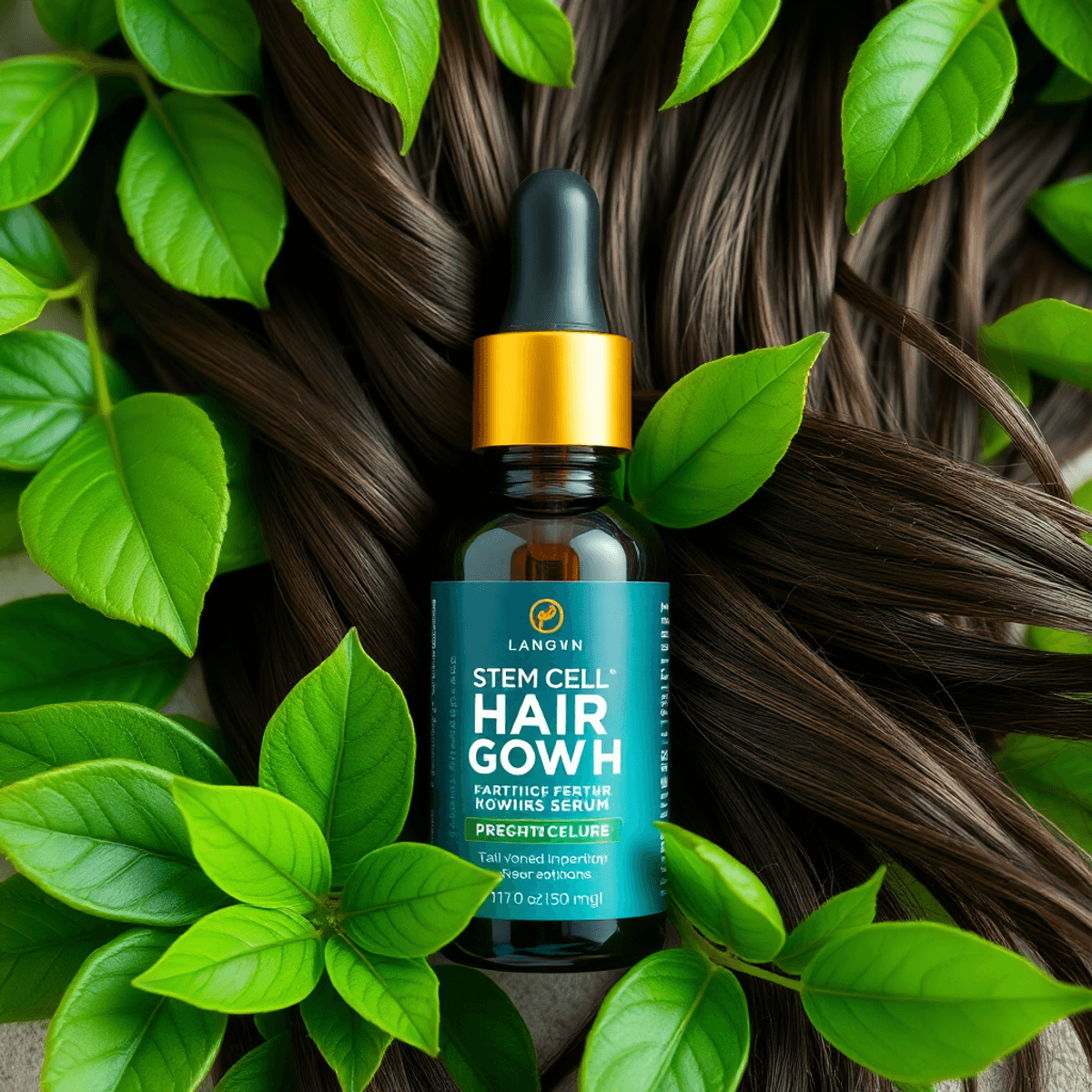
What is missing is what happens at the follicle after light activates it. Research demonstrated that 650nm red light promotes hair follicle proliferation and prolongs the anagen growth phase — but the strength of that response depends on the biological signals available to the follicle during activation (PMC8577899). Bradceuticals Gold Hair Follicle and Adipose Stem Cell Serum delivers human adipose stem cell-derived growth factors directly to the scalp after dermarolling, then pairs with your led helmet hair growth session to feed activated follicles the proteins they need to convert light energy into visible hair production.
How LED Helmet Hair Growth Actually Works
An led helmet hair growth device delivers low-level light therapy (LLLT) at wavelengths between 630nm and 670nm across the scalp. Photons at this wavelength penetrate the skin and are absorbed by cytochrome c oxidase in the mitochondria of hair follicle cells. That absorption triggers increased ATP production — cellular energy — which activates dormant follicles, extends the anagen growth phase, and stimulates dermal papilla cell proliferation.
The FDA has cleared multiple led helmet hair growth devices for the treatment of androgenetic alopecia in both men and women. The clinical evidence is robust — the meta-analysis confirmed statistically significant increases in hair density across both comb-type and helmet-type devices (PMC8906269). An led helmet hair growth device genuinely stimulates biological processes that support hair regrowth.
But light provides energy — not building materials. An activated follicle still needs growth factors, structural proteins, and coordinated biological signaling to manufacture a viable hair shaft. Without those inputs, led helmet hair growth produces thinner, weaker hairs that never reach their full potential.
Mistake 1: Using Your LED Helmet Hair Growth Device Without a Growth Factor Serum
This is the most common and most consequential mistake. An led helmet hair growth session activates mitochondrial energy production in follicle cells, but energy without instruction produces incomplete results. Growth factors including FGF, VEGF, EGF, and TGF-beta orchestrate each phase of the hair growth cycle. Without adequate growth factor supply, activated follicles produce shorter anagen phases, thinner shafts, and slower visible improvement.
Research confirms that up to 80% of the therapeutic effect of mesenchymal stem cells occurs through the molecules they release (PMC11518787). Bradceuticals Gold Hair Follicle and Adipose Stem Cell Serum delivers these exact molecules — human adipose stem cell conditioned media containing the complete growth factor secretome — directly to follicles before or after your led helmet hair growth session.
Mistake 2: Skipping Scalp Dermarolling Before Treatment
An led helmet hair growth device delivers light through intact scalp skin. Adding scalp dermarolling before serum application creates microchannels that allow growth factor proteins to bypass the stratum corneum and reach the dermal papilla where hair growth originates. A 2024 clinical trial evaluating LED light combined with microneedle delivery confirmed enhanced hair regrowth outcomes compared to either treatment alone (PMID:39325239).
The optimal protocol: dermaroll the scalp with 0.5mm–1.0mm needles, apply growth factor serum immediately, then wear your led helmet hair growth device. This three-step sequence delivers energy, biological instructions, and direct dermal access simultaneously.
Mistake 3: Inconsistent Treatment Schedule
Led helmet hair growth requires consistency over months, not occasional sessions. Most validated clinical protocols used every-other-day treatments for 16–24 weeks before measuring statistically significant results. A double-blind randomized controlled trial using a helmet-type device with every-other-day sessions for 16 weeks confirmed significant increases in hair count and thickness (PMID:24078483).
Treating sporadically — three sessions one week, none the next — disrupts the cumulative follicular stimulation that led helmet hair growth depends on. Set a schedule and maintain it.
Mistake 4: Wrong Wavelength or Insufficient Power Density
Not every led helmet hair growth device delivers equal results. The clinically validated wavelength range is 630nm–670nm, with 650nm being the most studied for hair follicle stimulation. Devices outside this range may not effectively target cytochrome c oxidase.
Power density matters equally. Measured in milliwatts per square centimeter, higher power density enables shorter sessions while delivering equivalent energy doses. Budget led helmet hair growth devices with insufficient diode density produce weaker biological responses regardless of session duration. When selecting a device, verify the wavelength specification and total diode count before purchasing.
Mistake 5: Expecting Results Too Soon
Led helmet hair growth operates on biological timelines, not cosmetic ones. Hair follicles cycle through growth (anagen), regression (catagen), and rest (telogen) phases that span months. Shifting follicles from telogen to anagen, then producing visible terminal hair, requires patience that most users underestimate.
Weeks 1–4: Reduced shedding is typically the first sign. Follicles begin transitioning from telogen to anagen.
Weeks 4–12: Early vellus hairs appear in thinning areas. Existing hairs may feel slightly thicker as improved follicular nutrition strengthens the shaft.
Weeks 12–24: Vellus hairs progressively thicken into terminal hairs. Density becomes visibly improved. This is where led helmet hair growth produces its most meaningful transformation — but only if consistent treatment has been maintained throughout.
Months 6+: Cumulative improvement continues. Each growth cycle produces stronger hairs than the previous cycle.
Mistake 6: Neglecting Scalp Health Between Sessions
Led helmet hair growth sessions happen every other day. What happens between sessions matters just as much. Applying Bradceuticals Gold Hair Follicle and Adipose Stem Cell Serum daily — not just on treatment days — maintains continuous growth factor stimulation that keeps follicles active between light sessions. A comprehensive review confirmed that stem cell conditioned media consistently demonstrates regenerative effects including reduced oxidative stress and improved inflammatory regulation (PMC11416772).
Scalp inflammation, product buildup, and oxidative stress all undermine the work your led helmet hair growth device performs. Keep the scalp clean, nourished, and continuously supplied with growth factor signaling for the best cumulative results.
The Complete LED Helmet Hair Growth Protocol
Step 1: Dermaroll the scalp with a 0.5mm–1.0mm dermaroller once weekly.
Step 2: Immediately apply Bradceuticals Gold Hair Follicle and Adipose Stem Cell Serum to the dermarolled scalp. The human adipose stem cell-derived growth factors penetrate through microchannels directly to the dermal papilla.
Step 3: Wear your led helmet hair growth device for the manufacturer’s recommended duration (typically 25–60 minutes every other day).
Step 4: On non-dermarolling days, apply the serum directly to clean scalp skin before or after your led helmet hair growth session.
Step 5: Maintain this protocol consistently for a minimum of 16–24 weeks before evaluating results.
Frequently Asked Questions
Does led helmet hair growth really work? Yes. Multiple randomized controlled trials and a meta-analysis of 11 studies confirm that LLLT helmet devices significantly increase hair density in both men and women with androgenetic alopecia.
How often should an led helmet hair growth device be used? Every other day for 25–60 minutes per session, consistently for at least 16–24 weeks. Results require cumulative follicular stimulation over months.
What serum should I use with my led helmet hair growth device? A serum containing human-derived growth factors. Bradceuticals Gold Hair Follicle and Adipose Stem Cell Serum provides the complete adipose stem cell secretome that activated follicles need to convert light stimulation into hair production. Apply after dermarolling for maximum penetration.
Is led helmet hair growth safe? LLLT at 630–670nm has an excellent safety profile with no significant adverse effects reported across clinical trials. Multiple devices have received FDA clearance for home use.
Can led helmet hair growth work for women? Yes. The meta-analysis confirmed efficacy in both male and female pattern hair loss, with statistically significant improvements in hair density for women as well as men.
References
- Afifi L, et al. Role of Low-Level Light Therapy in Androgenetic Alopecia. J Cutan Aesthet Surg. 2022;15(1):1-7. (PMC8906269)
- Yang K, et al. Hair Growth Promoting Effects of 650 nm Red Light Stimulation on Human Hair Follicles. Ann Dermatol. 2021;33(6):553-561. (PMC8577899)
- Taub A. Regenerative topical skincare: stem cells and exosomes. Front Med. 2024;11:1443963. (PMC11518787)
- Charoensuksira S, et al. The efficacy of light-guiding microneedle patch for stimulating hair growth in androgenetic alopecia. Arch Dermatol Res. 2024;316(9):639. (PMID:39325239)
- Lanzafame RJ, et al. The growth of human scalp hair mediated by visible red light laser and LED sources in males. Lasers Surg Med. 2013;45(8):487-495. (PMID:24078483)
- Alquraisy A, et al. A Comprehensive Review of Stem Cell Conditioned Media Role for Anti-Aging on Skin. Stem Cells Cloning. 2024;17:5-19. (PMC11416772)
Disclaimer: This article is for informational purposes only and does not constitute medical advice. Consult a qualified dermatologist or healthcare provider before beginning any hair loss treatment protocol. Individual results may vary.
Last Reviewed: April 2026
About Bradceuticals : Thuy Myers is the founder of Bradceuticals which manufactures and distributes skin care and hair regrowth serums that use growth factors from human stem cells as the catalyst for regeneration. When she is not busy running the business and maintaining blogs, she is continuing her practice as a semiconductor engineer and occasionally teaches college engineering. In her free time, she enjoys visiting the beach with her MUCH better half, working out at the gym, and hanging out with her kiddo.