

Androgenetic alopecia affects 60 to 70 percent of the adult population worldwide — and by the time most people notice visible thinning, they have already lost 20 to 30 percent of scalp hair density. (PMC8577899) What makes a red light helmet a clinically meaningful intervention is that it targets the follicular biology driving that loss — not just its surface appearance. A 16-week multicenter randomized double-blind sham-controlled trial of a helmet-type LLLT device at 655 nm confirmed significant increases in both hair density and hair thickness in subjects with androgenetic alopecia, with one male patient showing a 50% increase in hair density and 14.9% increase in hair thickness at the 16-week mark. (PMC7373546) A 24-week prospective clinical trial of a helmet-shaped LLLT device confirmed it is an effective and well-tolerated treatment option for androgenetic alopecia in both men and women, with the additional benefit of reducing excessive scalp sebum secretion. (PMC10564188) Understanding how a red light helmet produces these results is what separates an informed treatment decision from a consumer gadget purchase.
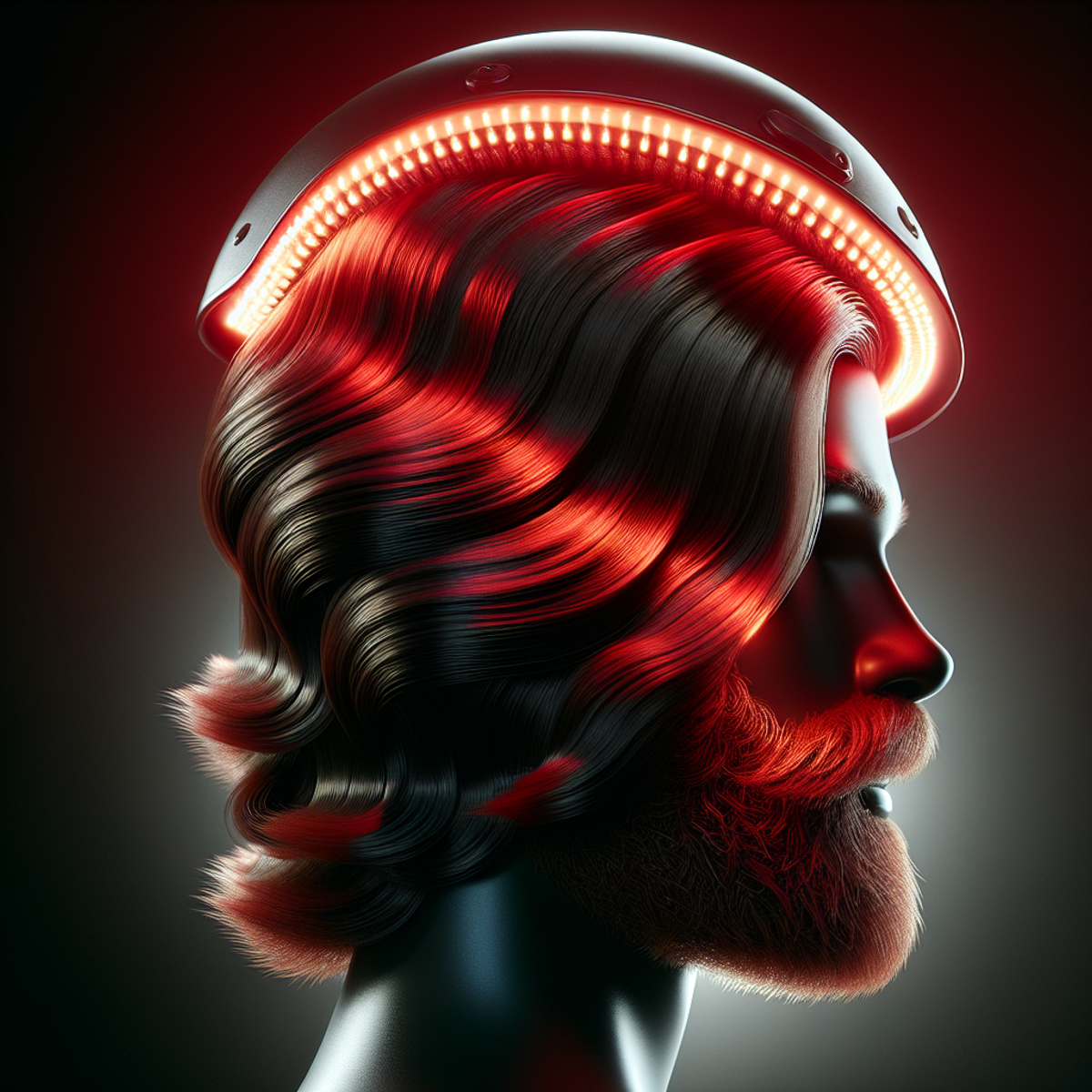
A red light helmet works on the scalp. What you apply immediately after your session works at the follicular level. The Bradceuticals Gold Hair Follicle and Adipose Stem Cell Serum is formulated specifically for this dermarolling and red light therapy protocol — applied to the scalp after dermarolling to open microchannels, followed immediately by your red light helmet session. The combination takes the photobiomodulation the helmet initiates and amplifies it with adipose stem cell-derived growth factors, VEGF, bFGF, and regenerative cytokines that reach the dermal papilla and follicle bulge directly through open microchannels. The red light helmet alone is clinically supported. Paired with this targeted post-dermarolling serum and red light therapy protocol, the results compound across every session.
How a Red Light Helmet Works: The Photobiomodulation Mechanism
A red light helmet delivers low-level light therapy (LLLT) — also called photobiomodulation — using specific wavelengths, typically 630 to 680 nm red light and sometimes near-infrared additions, to penetrate the scalp and reach the hair follicles below the surface. The primary cellular mechanism involves the absorption of red light by cytochrome c oxidase, a chromophore in the mitochondrial electron transport chain. This absorption releases nitric oxide, drives ATP production, generates controlled reactive oxygen species, and activates downstream transcription factors that collectively stimulate anagen re-entry in telogen follicles, prolong the active growth phase, increase the rate of cell proliferation in existing anagen follicles, and prevent premature catagen onset. (PMC7373546)
A red light helmet’s advantage over comb-type and handheld devices is full scalp coverage — it delivers photobiomodulation uniformly across the entire treatment area simultaneously, ensuring consistent follicle stimulation rather than the variable coverage of manual devices. (PMC7373546) This is why helmet-type and cap-type devices consistently appear in the highest-quality clinical trials for LLLT hair growth efficacy.
5 Ways a Red Light Helmet Drives Hair Regrowth
1. A Red Light Helmet Stimulates Anagen Re-Entry in Dormant Follicles
The most direct mechanism by which a red light helmet promotes hair regrowth is stimulating hair follicle stem cells located in the bulge region of the follicle to re-enter the active anagen growth phase. In androgenetic alopecia, follicles spend increasingly longer periods in telogen — the resting phase — progressively miniaturizing until they stop producing visible hair. Photobiomodulation activates the mitochondria in bulge stem cells, which are naturally quiescent and rely on low-metabolic anaerobic activity. By energizing these stem cells, the red light helmet shifts the follicular balance back toward anagen. (PMC6737896) A transcriptome RNA-sequencing study of 650 nm red light on cultured human hair follicles from AGA patients confirmed that low-level red light promoted hair follicle proliferation and identified the gene expression changes responsible — directly supporting the anagen re-entry mechanism. (PMC8577899)
This is also why a red light helmet is most effective when treatment begins early. Once follicles are completely atrophied — producing the shiny bald scalp seen in advanced alopecia — photobiomodulation cannot regenerate follicles that no longer exist. The clinical window for a red light helmet is active thinning, not complete follicle loss. (PMC6737896)
2. A Red Light Helmet Increases Scalp Vascularization and Nutrient Delivery
Photobiomodulation through a red light helmet induces vasodilation — the widening of blood vessels in the scalp — through nitric oxide release. This improved vascular supply delivers more oxygen, nutrients, and growth factors to the hair follicle dermal papilla, the cellular command center that signals follicle cycling. Reduced blood flow and nutrient delivery to the scalp is one of the contributing factors in follicle miniaturization — the red light helmet partially counteracts this by improving the scalp’s vascular environment. Research confirms that the mechanism likely explains both hair growth stimulation and the anti-inflammatory effects observed in red light helmet clinical trials, as improved microcirculation reduces the chronic low-grade scalp inflammation that accelerates androgenetic alopecia progression. (PMC12395542)
3. A Red Light Helmet Reduces Scalp Inflammation That Miniaturizes Follicles
Chronic scalp inflammation is a consistently documented factor in androgenetic alopecia progression — it contributes to follicle miniaturization and shortens the anagen phase. A red light helmet delivers anti-inflammatory photobiomodulation that modulates inflammatory cytokine expression at the scalp level, reducing the perifollicular inflammation that compresses and damages the follicle bulb. (PMC12395542) A 24-week clinical study of a helmet-type LLLT device confirmed it not only improved hair density but also significantly reduced scalp sebum secretion — the excess sebum that feeds the pro-inflammatory bacterial environment associated with scalp conditions that worsen hair loss. (PMC10564188) For people whose hair thinning is accompanied by scalp sensitivity, redness, or oiliness, the anti-inflammatory mechanism of the red light helmet may be as important as its direct follicle stimulation.
4. A Red Light Helmet Produces Results That Are Enhanced When Combined with Minoxidil or Dermarolling
Clinical evidence consistently supports the use of a red light helmet in combination with other hair growth therapies rather than as an isolated treatment. A randomized study of 45 patients with female pattern hair loss compared minoxidil alone, LLLT helmet alone, and the combination — with the combination group achieving superior results on Ludwig classification scores and patient satisfaction. (PMC8906269) A dual-wavelength LED device study found that subjects who were at least 80% compliant with their red light helmet protocol averaged 21 more hairs per cm² compared to placebo after 16 weeks. (PMC12395542)
Dermarolling the scalp before applying a growth factor serum and then following with a red light helmet session creates the most biologically complete protocol available for non-surgical hair regrowth. Dermarolling opens microchannels that deliver the Bradceuticals Gold Hair Follicle and Adipose Stem Cell Serum directly to the follicle bulge and dermal papilla, while the red light helmet session that follows amplifies cellular activity in those same follicles with photobiomodulation. This is the complete Bradceuticals hair regrowth protocol — not three separate steps but one compound intervention.
5. A Red Light Helmet Is Safe, Well-Tolerated, and Effective Across Both Sexes
One of the strongest clinical arguments for incorporating a red light helmet into a hair loss protocol is its safety profile. A meta-analysis of randomized controlled trials confirmed that LLLT significantly increases hair density in patients with androgenetic alopecia in both men and women, with adverse effects limited to mild and temporary scalp irritation in rare cases. (PMC12395542) Unlike finasteride, which carries sexual dysfunction risks and is contraindicated in women of childbearing age, and minoxidil, which can cause scalp irritation and systemic absorption concerns, a properly used FDA-cleared red light helmet is non-invasive, drug-free, and appropriate for most adults with active androgenetic alopecia. A large observational study of over 1,300 helmet-type LLLT device users documented approximately 80% self-reported clinical effectiveness after several months of regular use.
Who Benefits Most From a Red Light Helmet
The clinical evidence is strongest for the following populations:
Early-to-moderate androgenetic alopecia — both male and female pattern hair loss in the active thinning phase before complete follicle atrophy. This is where a red light helmet produces the most consistently documented results across randomized controlled trials.
Telogen effluvium — stress-induced, postpartum, or illness-related diffuse shedding. LLLT shows emerging evidence for prolonging the anagen phase and reducing shedding in this category. (PMC12395542)
Patients who cannot tolerate pharmaceutical options — a red light helmet provides a meaningful non-pharmacological alternative for people who experience side effects from minoxidil or finasteride or who wish to avoid systemic medications.
People seeking combination protocols — the additive benefit of combining a red light helmet with topical minoxidil, dermarolling, or a growth factor serum is well documented and represents the strongest clinical case for the device.
A red light helmet is not appropriate for completely bald scalps where follicle atrophy is complete, active scarring alopecia, or conditions where follicle architecture has been irreversibly destroyed.
How to Use a Red Light Helmet for Best Results
Scalp preparation: Wash the scalp before each session to remove sebum, product buildup, and any barrier that could reduce light penetration.
Session duration and frequency: Most clinical protocols use 20–30 minute sessions, two to four times per week. The 24-week clinical trial used 20-minute daily sessions. (PMC10564188) Consistency is the primary determinant of outcome — irregular use produces inconsistent results.
The complete Bradceuticals protocol: Dermaroll the scalp to create microchannels, apply the Bradceuticals Gold Hair Follicle and Adipose Stem Cell Serum immediately to the scalp, then complete your red light helmet session. The growth factors in the serum reach the follicle bulge through the open microchannels while the red light helmet simultaneously activates the photobiomodulation cascade in those same follicles.
Treatment timeline: Most users begin noticing reduced shedding within the first four to eight weeks. Visible density improvements typically emerge at the three-to-six-month mark. Importantly, hair loss will resume if treatment is discontinued — a red light helmet requires ongoing use to maintain results, similar to the maintenance requirement of topical minoxidil.
Device selection: FDA-cleared helmet and cap-type devices are the evidence-based standard. Prioritize devices with demonstrated wavelengths of 630–680 nm, adequate power output (above 5 mW/cm²), and full scalp coverage. Avoid handheld or partial-coverage devices for whole-scalp androgenetic alopecia treatment.
Frequently Asked Questions About Red Light Helmet for Hair Growth
Does a red light helmet actually work for hair loss? Yes — multiple randomized controlled trials, a meta-analysis of RCTs, and a large observational study all confirm that helmet-type LLLT devices produce measurable improvements in hair density and thickness for androgenetic alopecia. The evidence is strongest for early-to-moderate hair loss in both men and women. (PMC7373546)
How long before a red light helmet shows results? Most clinical studies document improvements at 16 to 24 weeks of consistent use. Reduced shedding is often the first sign, typically appearing within the first eight weeks. Full density improvements require a minimum of four to six months.
Can I use a red light helmet with other hair loss treatments? Yes — combining a red light helmet with topical minoxidil or a dermarolling and growth factor serum protocol consistently produces superior results compared to any single intervention alone. (PMC8906269)
Is a red light helmet safe for women? Yes — FDA-cleared red light helmets are approved for both men and women. Several of the largest clinical trials specifically included women, with results showing improvements in female pattern hair loss assessed by Ludwig classification. (PMC8906269)
What wavelength should a red light helmet use? The most clinically validated wavelength for hair growth is 630–680 nm red light. Near-infrared wavelengths (820–880 nm) penetrate more deeply and may additionally reach follicle stem cells at deeper dermal levels. Dual-wavelength devices providing both ranges offer the broadest biological coverage.
Will hair loss return if I stop using the red light helmet? Yes. Androgenetic alopecia is a progressive condition driven by ongoing hormonal and genetic factors. A red light helmet manages the condition rather than curing it — cessation of treatment typically results in resumption of hair loss over the following months.
References
- Low-Level Light Therapy Using a Helmet-Type Device for Androgenetic Alopecia: A 16-Week, Multicenter, Randomized, Double-Blind, Sham Device-Controlled Trial. PMC7373546. https://pmc.ncbi.nlm.nih.gov/articles/PMC7373546/
- Assessment of Effects of Low-Level Light Therapy on Scalp Condition and Hair Growth. PMC10564188. https://pmc.ncbi.nlm.nih.gov/articles/PMC10564188/
- Role of Low-Level Light Therapy (LLLT) in Androgenetic Alopecia. PMC8906269. https://pmc.ncbi.nlm.nih.gov/articles/PMC8906269/
- Hair Growth Promoting Effects of 650 nm Red Light Stimulation on Human Hair Follicles. PMC8577899. https://pmc.ncbi.nlm.nih.gov/articles/PMC8577899/
- The Use of Light-Based Therapies in the Treatment of Alopecia. PMC12395542. https://pmc.ncbi.nlm.nih.gov/articles/PMC12395542/
- Photobiomodulation for the Management of Alopecia: Mechanisms of Action, Patient Selection and Perspectives. PMC6737896. https://pmc.ncbi.nlm.nih.gov/articles/PMC6737896/
- Photobiomodulation — Underlying Mechanism and Clinical Applications. PMC7356229. https://pmc.ncbi.nlm.nih.gov/articles/PMC7356229/
Disclaimer: This article is for educational purposes only and does not constitute medical advice. Always consult a licensed dermatologist or healthcare professional before beginning any hair loss treatment. Individual results vary.
Last reviewed: March 2026
About Bradceuticals : Thuy Myers is the founder of Bradceuticals which manufactures and distributes skin care and hair regrowth serums that use growth factors from human stem cells as the catalyst for regeneration. When she is not busy running the business and maintaining blogs, she is continuing her practice as a semiconductor engineer and teaches college engineering. In her free time, she enjoys the beach, working out at the gym and hanging out with her kiddo.