

The Bradceuticals Gold Mesenchymal Stem Cell Growth Factor Serum sits at the forefront of this category. Formulated with growth factors derived from human mesenchymal stem cells, it delivers the precise biological signals that aging skin loses over time — stimulating fibroblast activity, collagen synthesis, and cellular renewal at the dermal level. It performs powerfully as part of any daily skincare routine, but applied immediately after microneedling, when open microchannels allow growth factors to reach the dermis directly, results are measurably amplified. If you’re investing in skin regeneration, this is where the science supports the investment.
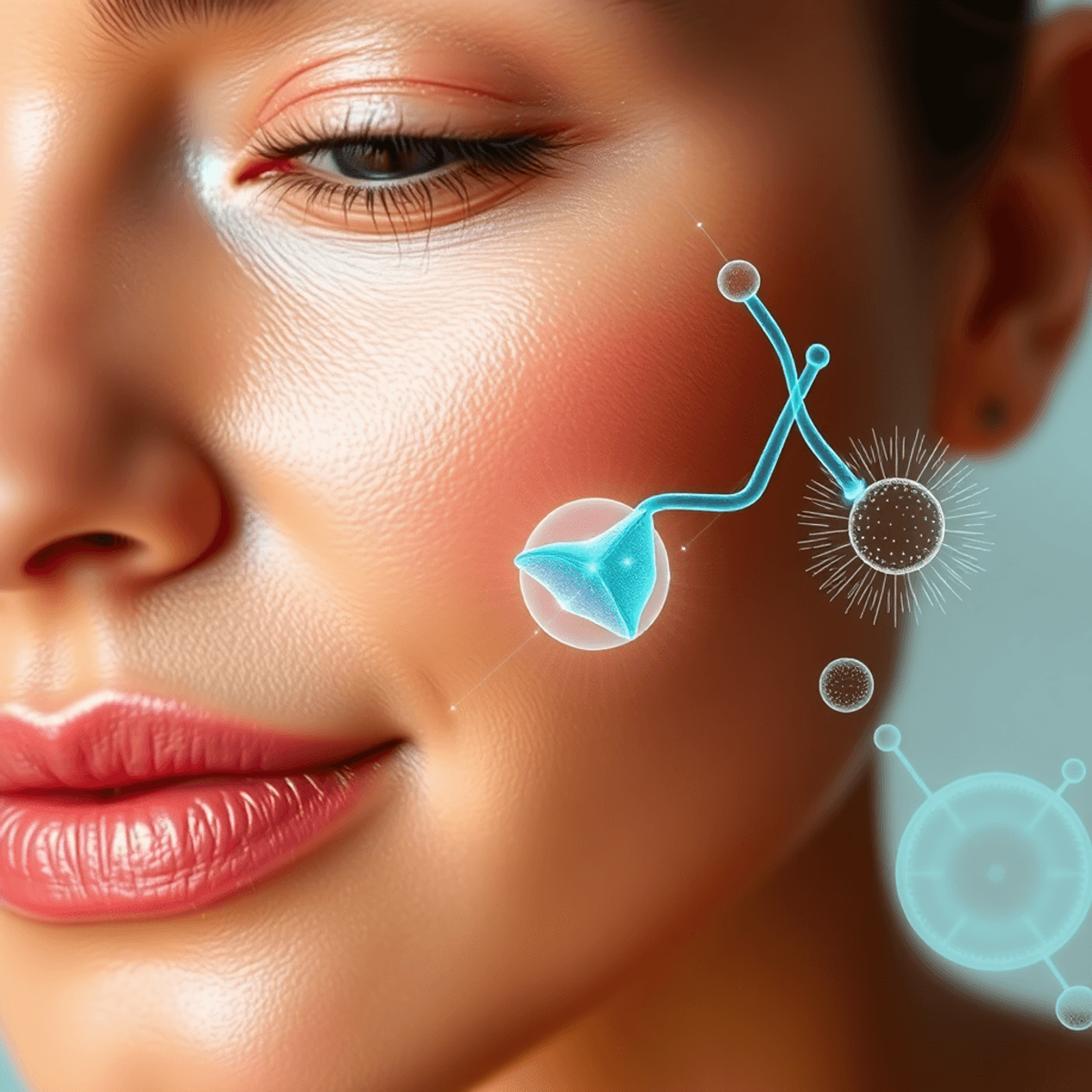
Stem cell skin care isn’t a trend built on clever marketing — it’s a science-driven category grounded in the biology of how skin actually ages and repairs itself.
What Is Stem Cell Skin Care?
Stem cell skin care refers to a category of topical products formulated with stem cell-derived ingredients — most commonly growth factors, conditioned media, peptides, and bioactive proteins — that are designed to activate the skin’s own repair and regeneration mechanisms.
A critical distinction: the stem cells themselves are not typically present in the final product. What skincare formulations deliver are the bioactive outputs of stem cells — the signaling molecules, growth factors, and proteins that stem cells secrete as part of their regenerative function. These molecules communicate with skin cells, instructing them to increase collagen production, accelerate turnover, and initiate repair processes that slow with age.
The sources of these ingredients vary:
Human mesenchymal stem cell-derived growth factors — derived from adult mesenchymal stem cells — are considered among the most biologically relevant for skin applications, as they most closely replicate the signaling environment of young, healthy human skin. Bradceuticals Gold is formulated with this class of growth factors.
Plant stem cell extracts — derived from the meristematic tissue of plants like apple, rose, or argan — deliver antioxidants, peptides, and plant-specific growth factors. They do not contain human growth factor proteins but support the skin’s antioxidant defense and complement growth factor formulas.
Snail egg proteins and marine-derived extracts represent a third category, offering growth-factor-like peptides and glycoproteins with demonstrated collagen-stimulating properties.
The Science of Skin Aging: Why Stem Cell Skin Care Matters
To understand why stem cell skin care is more than a buzzword, it helps to understand what aging does to the skin at the cellular level.
The Structural Decline of Aging Skin
Skin’s youthful appearance depends on the dynamic balance between collagen and elastin synthesis and degradation, epidermal renewal, and hydration. Two cell types are primarily responsible for maintaining this balance:
Fibroblasts produce collagen and elastin — the structural proteins that provide firmness, smoothness, and resilience. With age, fibroblast activity declines and the collagen they produce becomes increasingly fragmented and disorganized.
Keratinocytes form the epidermis — the outer protective layer. Their renewal rate slows with age, resulting in a thinner, drier, more fragile skin surface that loses moisture more readily and responds more slowly to damage.
The Role of Stem Cell Decline in Skin Aging
The skin contains its own population of resident stem cells that normally maintain a steady supply of new fibroblasts and keratinocytes. As we age, both the number and the functional vitality of these resident stem cells decrease — meaning fewer replacement cells are produced, repair processes slow, and the visible signs of aging accumulate more rapidly (Blanpain C, Fuchs E. Annual Review of Cell and Developmental Biology. 2006. PMID: 16824009).
This is the biological gap that stem cell skin care addresses. By delivering the growth factors and signaling molecules that declining stem cells would normally produce, these formulations help maintain the cellular activity levels associated with younger, more resilient skin.
9 Surprising Facts About Stem Cell Skin Care
1. Stem Cell Skin Care Products Don’t Contain Live Stem Cells
This is the most common misconception in the category. Living stem cells cannot survive in a topical formulation — they require a precisely controlled biological environment. What effective stem cell skin care products deliver are the conditioned media and growth factor secretomes that stem cells produce: the molecular signals that do the actual work of stimulating repair and regeneration. Understanding this distinction helps separate scientifically sound products from those making unsupportable claims.
2. Human Mesenchymal Stem Cell Growth Factors Are the Most Skin-Relevant
Not all stem cell-derived ingredients are equivalent. Human mesenchymal stem cell (MSC) growth factors are particularly relevant for skin applications because they are the same class of signaling molecules that the skin’s own repair systems respond to. When MSC-derived growth factors are applied topically and delivered to the dermis — particularly through the enhanced absorption window created by microneedling — they directly stimulate the fibroblast activity responsible for collagen and elastin production (Driskell RR, Watt FM. Trends in Cell Biology. 2015. PMID: 25455110).
3. Stem Cell Skin Care Targets Aging at the Cellular Level
Unlike ingredients that address surface symptoms — a hydrator that temporarily plumps fine lines, an exfoliant that brightens by removing dead cells — stem cell-derived growth factors work upstream, at the level of gene expression and cellular signaling. They instruct cells to behave more like younger cells — producing more collagen, renewing faster, and maintaining more efficient barrier function. This mechanism produces improvements that compound over time rather than disappearing when use is discontinued.
4. Plant Stem Cell Extracts Work Differently Than Human Growth Factors
Plant stem cell extracts have meaningful skincare benefits — primarily through their antioxidant content and plant-specific peptides — but they do not deliver the same biological signaling as human-derived growth factors. Plant cells cannot produce the human cytokines, interleukins, and growth factors that human skin cells respond to. The two categories are complementary, not interchangeable. Products that combine both — antioxidant plant extracts alongside human mesenchymal stem cell growth factors — offer the broadest spectrum of benefit.
5. Stem Cell Skin Care Is Significantly Enhanced by Microneedling
The growth factors and bioactive proteins in stem cell skin care formulas are large molecules — too large to penetrate intact skin in meaningful quantities through topical application alone. Microneedling changes this equation entirely. The microchannels created during a needling session provide a direct pathway to the dermis, allowing growth factors to reach the fibroblasts they’re designed to stimulate. This is why applying Bradceuticals Gold immediately post-microneedling produces results that measurably exceed either treatment used independently.
6. Peptides Amplify Stem Cell Skin Care Performance
Peptides — short chains of amino acids — are frequent companion ingredients in stem cell skin care formulations for good reason. Certain peptides directly signal fibroblasts to increase collagen synthesis; others inhibit the enzymes that break collagen down; others still improve skin barrier integrity and hydration. When combined with growth factors in a well-formulated serum, peptides provide a secondary layer of cellular signaling that amplifies and sustains the regenerative response (Katayama K, et al. Journal of Biological Chemistry. 1993. PMID: 8366099).
7. Consistent Use Is Required for Meaningful Results
Stem cell skin care produces results through cumulative cellular adaptation — not instant surface transformation. Users who expect immediate dramatic change often underestimate the timeline required for new collagen synthesis and cellular renewal to manifest visibly. Most individuals report meaningful improvement in skin texture, firmness, and tone after 8–12 weeks of daily use. Those combining growth factor serums with regular microneedling sessions typically see faster and more pronounced results, as the enhanced delivery accelerates the biological response.
8. Clinical Validation Matters — and Varies Widely
The stem cell skin care category spans products with rigorous clinical validation and products making unsupported claims. When evaluating products, look for transparency about the source and concentration of stem cell-derived ingredients, peer-reviewed research on the specific growth factors included, and clinical testing data rather than testimonials alone. Products built on human mesenchymal stem cell conditioned media — like Bradceuticals Gold — have a more substantial scientific foundation than those relying solely on plant extracts marketed under the “stem cell” label.
9. Stem Cell Skin Care Addresses Multiple Signs of Aging Simultaneously
Unlike single-mechanism ingredients, growth factor-rich stem cell formulations influence multiple biological pathways simultaneously — collagen synthesis, epidermal renewal, barrier repair, pigmentation regulation, and inflammatory modulation. This multi-target activity is why comprehensive stem cell serums consistently outperform individual active ingredients in clinical comparisons involving complex aging presentations.
Key Ingredients That Maximize Stem Cell Skin Care Results
Mesenchymal Stem Cell Growth Factors
The primary active in advanced human-derived stem cell formulations. Growth factors including EGF, TGF-β, IGF-1, VEGF, and FGF work cooperatively to stimulate fibroblast proliferation, collagen synthesis, and epidermal renewal. Their presence in a serum formula — at therapeutic concentrations — is the defining characteristic of an effective stem cell skin care product.
Peptides
Signal proteins that instruct skin cells to increase collagen and elastin production, inhibit collagen-degrading enzymes, and support barrier function. Key peptides in clinical use include Argireline (acetyl hexapeptide-3), Matrixyl (palmitoyl pentapeptide-4), and copper peptides — each targeting different aspects of the aging process.
Antioxidants
UV radiation, pollution, and metabolic byproducts generate free radicals that damage cellular DNA, degrade collagen, and accelerate the decline of skin stem cell populations. Antioxidants — including vitamin C derivatives, niacinamide, green tea extract, and resveratrol — neutralize these free radicals, protecting both the existing collagen matrix and the stem cell-derived growth factors being delivered topically.
Amino Acids
The molecular building blocks of proteins, amino acids support hydration, barrier function, and the full range of repair processes that stem cell skin care targets. Their inclusion in a growth factor serum ensures that the cellular machinery being activated by growth factors has the raw materials it needs to execute repair.
Hyaluronic Acid
A necessary companion to growth factor formulas — hyaluronic acid maintains the hydrated dermal environment in which stem cell-derived signals operate most effectively. Multi-weight HA formulations provide both surface barrier support and deeper dermal hydration, creating the tissue conditions that support optimal collagen synthesis and cellular renewal.
How to Maximize Stem Cell Skin Care Results
Build a Consistent Daily Routine
Apply your stem cell growth factor serum morning and evening to clean skin. Consistency is the single most important factor in achieving visible results — the cumulative collagen adaptation that produces lasting improvement requires sustained, regular signaling over weeks to months.
Pair with Microneedling for Accelerated Results
For those committed to the most significant possible outcomes, monthly professional microneedling sessions — or bi-weekly at-home derma roller sessions — combined with immediate post-procedure growth factor serum application represent the most evidence-supported protocol available. The microchannels deliver growth factors to the dermis at the concentrations required for meaningful fibroblast activation.
Protect Your Investment with Daily SPF
UV radiation is the leading cause of growth factor depletion, collagen degradation, and stem cell population decline in the skin. Daily broad-spectrum SPF 30 or higher is non-negotiable when using stem cell skin care — without it, ongoing UV damage actively counteracts the regenerative work the serum is performing.
Support from Within
Skin stem cell function is influenced by systemic factors: sleep quality, nutritional status, hydration, and stress levels all affect the skin’s capacity for renewal. A comprehensive approach — combining topical stem cell skin care with adequate sleep, antioxidant-rich nutrition, and stress management — produces results that topical application alone cannot match.
Stem Cell Skin Care for Different Skin Concerns
Fine lines and wrinkles: Growth factor serums address collagen loss — the primary structural cause of wrinkle formation — at the cellular level, producing progressive improvement over consistent use.
Loss of firmness and elasticity: By stimulating both collagen and elastin synthesis, stem cell formulations help restore the structural matrix that gives skin its ability to resist gravity and spring back after movement.
Uneven skin tone and hyperpigmentation: Growth factors modulate melanocyte activity and support the keratinocyte renewal that gradually replaces pigmented cells with more evenly toned new ones.
Acne scarring: The collagen remodeling effect of growth factor serums — amplified by microneedling — progressively improves the texture and depth of atrophic acne scars over a series of treatments.
Dullness and rough texture: Accelerated epidermal renewal produces a fresher, more reflective skin surface — the physical basis of the brightness and glow most users report within the first weeks of consistent stem cell serum use.
Frequently Asked Questions About Stem Cell Skin Care
Are stem cell skin care products safe? Yes — products containing stem cell-derived growth factors and conditioned media have a strong safety profile. They do not contain live cells and carry no risk of immune rejection. As with any active skincare, patch testing before first use is advisable for sensitive skin types.
How long does stem cell skin care take to work? Meaningful improvement in skin texture and tone is typically visible after 8–12 weeks of daily use. Firming and collagen-related improvements — which require new structural protein synthesis — develop over 3–6 months of consistent application.
Can stem cell skin care replace professional treatments? It reduces the frequency with which professional treatments are needed and sustains the results they produce. For comprehensive anti-aging outcomes, the combination of stem cell serums with periodic microneedling or professional treatments consistently outperforms either approach used alone.
What’s the difference between plant and human stem cell-derived ingredients? Plant stem cell extracts deliver antioxidants and plant-specific peptides that protect and support the skin. Human mesenchymal stem cell growth factors deliver the specific molecular signals that human skin cells respond to for collagen production and repair. Both are beneficial; human-derived growth factors are more directly relevant to the skin’s own regenerative biology.
Can stem cell skin care be used with other active ingredients? Yes — growth factor serums combine well with hyaluronic acid, peptides, niacinamide, and ceramides. Introduce retinoids and vitamin C separately and on an alternating schedule to avoid potential interaction with growth factor activity.
Final Thoughts
Stem cell skin care represents one of the most scientifically grounded approaches to skin rejuvenation available — working with the skin’s own biology rather than masking its symptoms. The growth factors and bioactive proteins derived from mesenchymal stem cells provide the cellular signaling that aging skin progressively loses, and consistent delivery of these signals produces genuine, lasting structural improvement.
For those ready to invest in a protocol built on the science of cellular regeneration, Bradceuticals Gold Mesenchymal Stem Cell Growth Factor Serum delivers that science in a concentrated, clinically informed formula — designed for daily use and optimized for maximum impact when paired with microneedling. Your skin’s repair systems are already capable of remarkable results. This serum gives them what they need to deliver.
References
- Blanpain C, Fuchs E. Epidermal stem cells of the skin. Annual Review of Cell and Developmental Biology. 2006;22:339-373. PMID: 16824009.
- Driskell RR, Watt FM. Understanding fibroblast heterogeneity in the skin. Trends in Cell Biology. 2015;25(2):92-99. PMID: 25455110.
- Katayama K, Armendariz-Borunda J, Raghow R, Kang AH, Seyer JM. A pentapeptide from type I procollagen promotes extracellular matrix production. Journal of Biological Chemistry. 1993;268(14):9941-9944. PMID: 8366099.
Disclaimer: The information provided in this article is for educational purposes only and does not constitute medical advice. Consult a licensed dermatologist or skincare professional before beginning any new skincare regimen. Individual results may vary.
Last Reviewed: March 2026
About Bradceuticals : Thuy Myers is the founder of Bradceuticals which manufactures and distributes skin care and hair regrowth serums that use growth factors from human stem cells as the catalyst for regeneration. When she is not busy running the business and maintaining blogs, she is continuing her practice as a semiconductor engineer and occasionally teaches college engineering. In her free time, she enjoys the beach, working out at the gym and hanging out with her kiddo Brad.