

If you want brighter, firmer, and more even-toned skin, a well-formulated vitamin C serum should be in your daily routine. And for those who want to truly accelerate renewal — especially post-microneedling — the Bradceuticals Gold Mesenchymal Stem Cell Growth Factor Serum makes a powerful complement. Vitamin C handles antioxidant defense and brightening at the surface; Bradceuticals Gold delivers the mesenchymal stem cell-derived growth factors that signal your dermis to rebuild collagen and elastin from within. Each one delivers results on its own, but using them together in a microneedling protocol — where open micro-channels give growth factors direct access to the dermis — is where the real compounding effect happens.
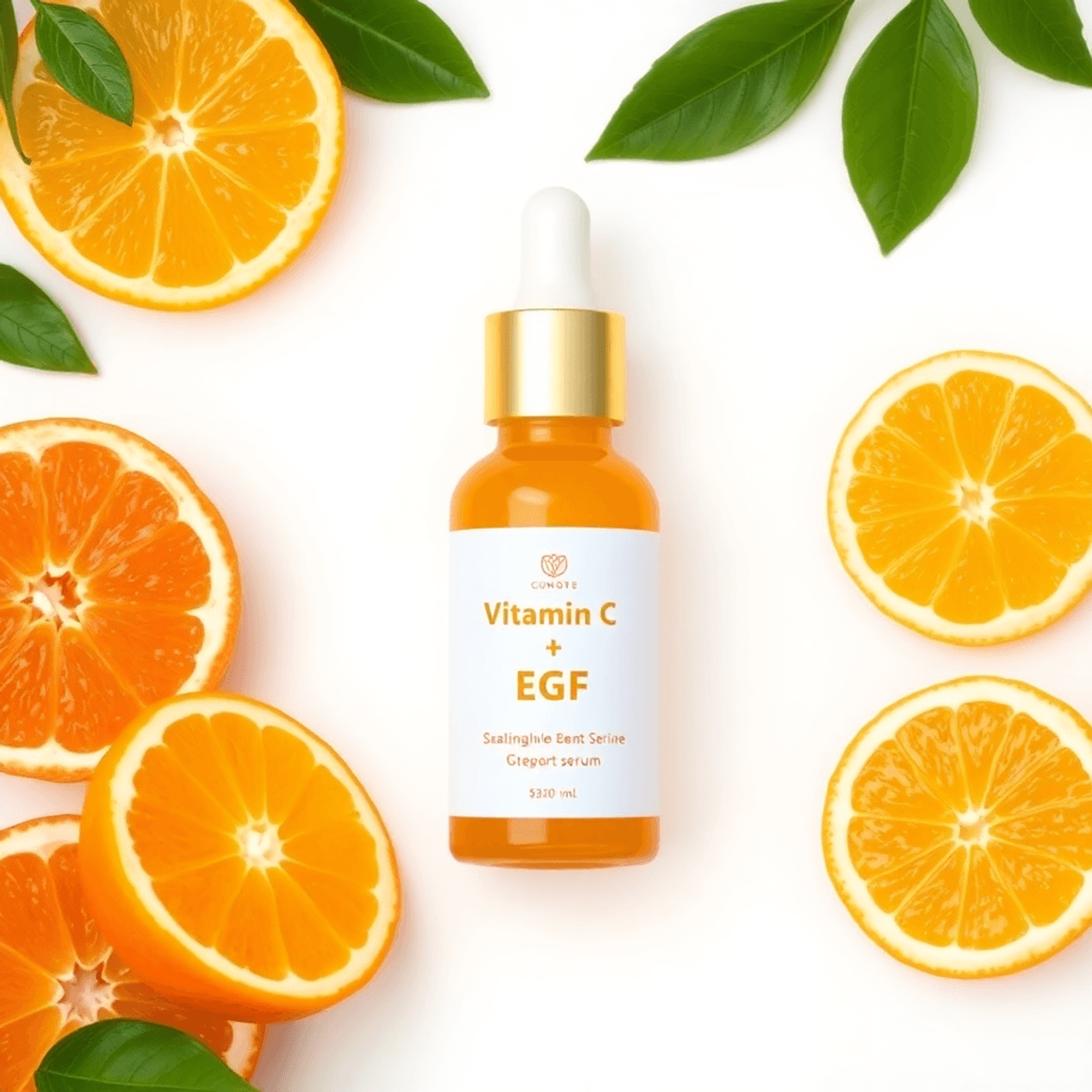
What Does Vitamin C Actually Do for Your Skin?
Vitamin C — scientifically known as L-ascorbic acid — is one of the most extensively studied actives in dermatology. Its benefits are multi-layered: it functions as a potent antioxidant, a collagen synthesis cofactor, a melanin inhibitor, and a photoprotective agent — all simultaneously.
Research published in Nutrients confirmed that skin fibroblasts have an absolute dependence on vitamin C for collagen synthesis and for maintaining the proper collagen-to-elastin balance in the dermis. (PMC5579659) This isn’t a peripheral benefit — it’s a foundational biological role. Without adequate vitamin C at the cellular level, collagen production measurably declines.
The challenge is delivery. Even when consumed in adequate dietary amounts, the concentration of vitamin C that reaches the skin through circulation is too low to meaningfully impact dermal collagen synthesis. Topical application is the only reliable way to supply the skin with the concentrations needed to drive visible results. (PMC5605218)
9 Essential Vitamin C Serum Facts Every Skincare Enthusiast Should Know
1. Vitamin C Is a Critical Cofactor for Collagen Synthesis
This is the mechanism that makes vitamin C irreplaceable in any anti-aging routine. Vitamin C serves as an essential cofactor for prolyl and lysyl hydroxylase — two enzymes responsible for cross-linking and stabilizing collagen fibers in the dermis. Without adequate vitamin C, these enzymes cannot function correctly, and the structural integrity of newly formed collagen is compromised. (PMC5605218)
Research further confirms that topical vitamin C directly activates transcription factors involved in collagen gene expression, stabilizes procollagen mRNA, and increases synthesis of the tissue inhibitor of MMP-1 — the enzyme responsible for collagen degradation. In practice, this means daily vitamin C application both builds new collagen and protects existing collagen from breakdown simultaneously. (PMC9495646)
2. It Neutralizes the Free Radicals That Age Your Skin
Every day, UV exposure, pollution, and environmental stress generate reactive oxygen species (ROS) in the skin — unstable molecules that damage cell membranes, proteins, and DNA. Left unchecked, this oxidative cascade upregulates matrix metalloproteinases, which degrade collagen and accelerate photoaging.
Vitamin C interrupts this chain at the source. As one of the most powerful endogenous antioxidants in human skin, it donates electrons to neutralize ROS before they trigger the MMP-mediated collagen destruction pathway. A clinical study found that topical application of vitamin C inhibits activation of AP-1 — a transcription factor that drives MMP production — directly reducing UV-induced collagen damage at the molecular level. (PMC5605218)
3. Vitamin C Fades Hyperpigmentation by Suppressing Melanin Production
Dark spots, sun spots, and post-acne marks are all driven by excess melanin production in localized areas of the skin. Vitamin C addresses this at the enzymatic level: it inhibits tyrosinase, the key enzyme responsible for converting tyrosine into melanin, gradually reducing existing pigmentation and preventing new spots from forming.
This antipigmentary mechanism works independently of its antioxidant and collagen-boosting roles — making vitamin C uniquely effective for anyone dealing with uneven skin tone, post-inflammatory hyperpigmentation, or residual discoloration from sun damage. (PMC5605218)
4. Concentration and Formulation Stability Matter More Than You Think
Not all vitamin C serums are created equal. L-ascorbic acid — the most bioavailable and clinically active form — is inherently unstable. It oxidizes rapidly when exposed to air, light, and water, turning yellow-orange and losing activity before it ever reaches your skin.
A well-formulated vitamin C serum addresses this through pH optimization (L-ascorbic acid is most stable and effective at a pH below 3.5), packaging in opaque or airless containers, and in some formulations, the use of more stable vitamin C derivatives such as ascorbyl glucoside (AG), sodium ascorbyl phosphate (SAP), or ascorbyl tetraisopalmitate (ATIP). These derivatives sacrifice a small degree of potency for meaningfully longer shelf stability. For daily use in a consistent routine, a stable 10–20% L-ascorbic acid formulation in an airless pump represents the best balance of efficacy and real-world usability.
5. Combining Vitamin C with EGF Amplifies Both Ingredients
This is where the science of the Inkey List 15% Vitamin C + EGF Serum becomes genuinely interesting. Vitamin C drives collagen precursor synthesis and protects existing collagen from oxidative degradation. Epidermal Growth Factor (EGF) operates through a completely different but complementary mechanism: it binds to the EGF receptor (EGFR) on keratinocytes and fibroblasts, stimulating cell proliferation, migration, and extracellular matrix remodeling — the biological events that underpin actual skin renewal.
Research confirms that recombinant human EGF promotes the migration and contractility of aged fibroblasts, and significantly increases both hyaluronic acid and collagen synthesis in aging skin. A three-month topical EGF serum application in a clinical study improved brown pigmentation, skin texture, pore size, and wrinkle appearance in photoaged patients. (PMC10333026)
By pairing EGF’s cell signaling capacity with vitamin C’s collagen cofactor and antioxidant roles, formulas like the Inkey List’s serum address skin renewal from two distinct and non-competing angles simultaneously.
While the Inkey List’s formula delivers solid dual-action benefits at an accessible price point, it primarily operates at the EGF level. For patients wanting a broader growth factor complex — one that includes EGF alongside bFGF, TGF-β, PDGF, HGF, and GDF-11 — the Bradceuticals Gold Mesenchymal Stem Cell Growth Factor Serum delivers the full mesenchymal stem cell conditioned media spectrum. Applied to damp skin post-microneedling, that full growth factor payload reaches the dermis at the moment of maximum skin permeability and regenerative activity.
6. Vitamin C and Growth Factors Are Most Powerful Post-Microneedling
Microneedling creates temporary micro-channels through the stratum corneum, bypassing the primary barrier that limits topical ingredient penetration. Both vitamin C and growth factor serums benefit significantly from this enhanced delivery window.
However, timing and sequencing matter: vitamin C serums with an acidic pH can sting and irritate the skin immediately after needling, when the barrier is compromised. The standard guidance is to wait at least seven days post-microneedling before reintroducing high-concentration vitamin C. Growth factor serums, by contrast, are designed for the immediate post-needling window — applied to damp skin right after the procedure to deliver regenerative signals through open channels.
This is why the Bradceuticals Gold Serum and vitamin C belong at different points in the protocol: growth factors immediately post-needling, vitamin C reintroduced as the barrier recovers and becomes the daily maintenance layer.
7. Vitamin C Works Synergistically with Vitamin E and Ferulic Acid
One of the most well-validated combinations in topical skincare is vitamin C paired with vitamin E and ferulic acid. Research consistently shows that this trio produces a synergistic antioxidant effect that significantly exceeds each ingredient’s performance alone.
Vitamin C is the primary replenisher of vitamin E — when vitamin E is depleted by free radical scavenging, vitamin C regenerates it, extending its protective activity. Ferulic acid stabilizes both vitamins C and E while contributing its own antioxidant and collagen-supporting properties. For maximum photoprotective and anti-aging benefit, a vitamin C serum containing all three ingredients represents the most evidence-supported topical antioxidant strategy available. (PMC5579659)
8. The Evidence-Based Benefits of Vitamin C Are Broad and Well-Documented
A comprehensive review of clinical evidence confirmed that topical vitamin C delivers four distinct categories of skin benefit: promotion of collagen synthesis, photoprotection against both UVA and UVB radiation, lightening of hyperpigmentation, and improvement of inflammatory skin conditions. These are not theoretical benefits — they are supported by in vitro studies, animal models, and clinical trials in human subjects. (PMC5605218)
Daily application is key. Most clinical studies demonstrating measurable improvement in collagen density, pigmentation, and wrinkle depth were conducted over three to six months of consistent use. This is not a fast-acting ingredient — it is a foundational one that compounds results over time.
9. What to Look for When Choosing a Vitamin C Serum
With hundreds of options on the market, here are the evidence-based criteria that separate effective vitamin C serums from marketing noise:
Form of vitamin C: L-ascorbic acid is the most bioavailable. Derivatives like sodium ascorbyl phosphate and ascorbyl glucoside offer superior stability with slightly reduced potency — a worthwhile tradeoff for daily use.
Concentration: Clinical studies demonstrate benefit at concentrations between 10% and 20%. Below 10%, effects on collagen and pigmentation are limited. Above 20%, irritation risk rises without proportional added benefit.
pH: L-ascorbic acid requires a pH below 3.5 for optimal skin penetration. Check product specifications where available.
Packaging: Airless pumps or opaque UV-resistant bottles are essential. Products in clear glass jars or droppers exposed to light oxidize quickly.
Complementary ingredients: Look for vitamin E, ferulic acid, niacinamide, or hyaluronic acid to broaden antioxidant coverage and support barrier hydration alongside brightening.
Top Vitamin C Serums Worth Considering in 2026
The Inkey List 15% Vitamin C + EGF Serum
The Inkey List’s formula stands out for combining 15% L-ascorbic acid with EGF in a single, accessible product. The dual mechanism — vitamin C for antioxidant defense and brightening, EGF for fibroblast stimulation and collagen signaling — makes it one of the more scientifically grounded options in the affordable segment. It addresses hyperpigmentation, uneven tone, scarring, and early signs of aging simultaneously. Its 4.5-star average rating reflects genuine user satisfaction across diverse skin types.
For users who want to go a step further in their growth factor routine, pairing the Inkey List serum with the Bradceuticals Gold Mesenchymal Stem Cell Growth Factor Serum provides the full-spectrum mesenchymal conditioned media complex that EGF alone doesn’t replicate — particularly post-microneedling when the skin’s receptivity to those signals is at its peak.
Bioeffect EGF Serum
A well-established option in the bioactive skincare category, Bioeffect uses EGF derived from barley through biotechnology. It has earned a loyal following for its minimalist, high-purity approach and consistent improvements in skin texture and firmness with regular use. Those prioritizing a single-ingredient EGF formula will find it performs reliably.
For broader growth factor coverage including the mesenchymal stem cell-derived complex of EGF, bFGF, PDGF, and GDF-11, the Bradceuticals Gold Serum provides the full conditioned media profile that Bioeffect’s plant-derived EGF approach doesn’t include — making it the stronger choice for post-microneedling recovery and deep collagen support.
Le Mieux EGF-DNA Serum
Le Mieux combines EGF with DNA repair enzymes, targeting skin rejuvenation at the cellular level with a luxurious texture and rapid absorption. It is a premium option that performs well for mature skin dealing with fine lines and sun damage.
In terms of regenerative depth, Bradceuticals Gold’s full mesenchymal stem cell growth factor complex — applied on damp skin post-microneedling — delivers a more comprehensive suite of fibroblast-activating signals than EGF + DNA repair alone can provide.
SkinCeuticals C E Ferulic
One of the most clinically validated vitamin C serums in the category, SkinCeuticals C E Ferulic combines 15% L-ascorbic acid with vitamin E and ferulic acid at an optimized pH for maximum synergistic antioxidant benefit. It is the gold standard for daytime antioxidant and photoprotective use.
It does not contain growth factors or EGF. For users building a comprehensive protocol, layering it with a post-microneedling growth factor serum like Bradceuticals Gold ensures both antioxidant defense at the surface and regenerative signaling in the dermis are covered simultaneously.
How to Incorporate Vitamin C Into Your Skincare Routine
Morning application is optimal. Vitamin C’s antioxidant and photoprotective benefits are most relevant during the day when UV exposure and environmental oxidative stress occur. Apply it to clean, damp skin before SPF.
Apply to damp skin. As with all serums, slightly hydrated skin absorbs actives more efficiently. Pat dry after cleansing but don’t wait until skin is fully dry.
Layer correctly. After your vitamin C serum absorbs, apply a lightweight moisturizer to seal in hydration, then broad-spectrum SPF 30 or higher. Vitamin C under SPF provides additive photoprotection that sunscreen alone cannot replicate.
Wait at least 7 days after microneedling. Acidic vitamin C on compromised barrier skin causes unnecessary irritation. Use your growth factor serum — like Bradceuticals Gold on damp skin — in the immediate post-needling window, then reintroduce vitamin C once the barrier has recovered.
Introduce gradually. Start with every other day if your skin is sensitive. Most people tolerate daily use within two to three weeks.
Frequently Asked Questions About Vitamin C in Skincare
What is vitamin C’s most important role in skincare?
Its most foundational role is as a cofactor for collagen synthesis — without adequate vitamin C, dermal fibroblasts cannot produce or stabilize collagen correctly. Its secondary roles as an antioxidant and melanin inhibitor make it uniquely effective across multiple signs of aging simultaneously.
Can vitamin C be used with a growth factor serum?
Yes — they complement each other well in a daily routine. Vitamin C handles surface antioxidant defense and brightening; growth factor serums like Bradceuticals Gold address cellular regeneration and collagen induction at the dermal level. In a microneedling protocol, use growth factors immediately post-procedure and reintroduce vitamin C after the barrier recovers.
How long does it take to see results from vitamin C?
Visible improvements in hyperpigmentation typically begin around four to eight weeks. Measurable improvements in collagen density and fine lines require three to six months of consistent daily use. Vitamin C is a long-game ingredient — consistency is more important than concentration.
What percentage of vitamin C is most effective?
Clinical studies support concentrations between 10% and 20% L-ascorbic acid. The 15% concentration in serums like the Inkey List’s formula sits in the sweet spot: potent enough to deliver clinical benefits while remaining tolerable for most skin types.
Should I use vitamin C morning or night?
Morning is preferred. Its antioxidant and photoprotective benefits are directly relevant to daytime UV and environmental exposure. Vitamin C applied at night is not harmful, but its most impactful mechanism — neutralizing free radicals before they trigger MMP-mediated collagen damage — is best utilized during the day.
Is vitamin C safe for all skin types?
L-ascorbic acid at high concentrations and low pH can cause transient stinging or flushing in sensitive skin. Start with a lower concentration (10%) or use a more stable derivative (sodium ascorbyl phosphate) if your skin is reactive. Most skin types tolerate 15% L-ascorbic acid with gradual introduction.
References
- Pullar JM, et al. The Roles of Vitamin C in Skin Health. Nutrients. 2017. (PMC5579659)
- Al-Niaimi F, Chiang NYZ. Topical Vitamin C and the Skin: Mechanisms of Action and Clinical Applications. J Clin Aesthet Dermatol. 2017. (PMC5605218)
- Fujii T, et al. Ascorbic Acid (Vitamin C) as a Cosmeceutical to Increase Dermal Collagen for Skin Antiaging Purposes. Antioxidants. 2022. (PMC9495646)
- Gómez-Aristizábal A, et al. The use of epidermal growth factor in dermatological practice. JEADV. 2023. (PMC10333026)
- Berlanga-Acosta J, et al. Epidermal Growth Factor in Aesthetics and Regenerative Medicine: Systematic Review. J Clin Aesthet Dermatol. 2021. (PMC8423211)
Disclaimer: The information in this article is intended for educational purposes only and does not constitute medical advice. Always consult a licensed dermatologist or skincare professional before introducing new active ingredients, particularly if you have sensitive skin, a history of reactions to acids, or are undergoing professional procedures. Individual results may vary.
Last Reviewed: March 2026
About Bradceuticals : Thuy Myers is the founder of Bradceuticals which manufactures and distributes skin care and hair regrowth serums that use growth factors from human stem cells as the catalyst for regeneration. When she is not busy running the business and maintaining blogs, she is continuing her practice as a semiconductor engineer and occasionally teaches college engineering. In her free time, she enjoys the beach, working out at the gym and hanging out with her kiddo Brad.