

The micro-channels created during microneedling do more than stimulate collagen — they temporarily bypass the stratum corneum that normally blocks high-molecular-weight active ingredients from reaching the dermis. A randomized controlled trial using VISIA imaging confirmed that adding growth factor serum to a standard microneedling protocol produced significantly greater improvements in skin texture and hydration than microneedling with hyaluronic acid gel alone — with the growth factor group showing superior outcomes across every measured parameter. (PMC7716740) This is the clinical basis for professional microneedling serums as a category: the procedure’s results are not determined at the needle — they are determined by what enters the open micro-channels in the 30 to 60 minutes that follow. Professional microneedling serums formulated with growth factors, stem cell-derived exosomes, and bioactive peptides deliver actives that cannot meaningfully penetrate intact skin, directly to the fibroblasts and keratinocytes where collagen remodeling is actively occurring.
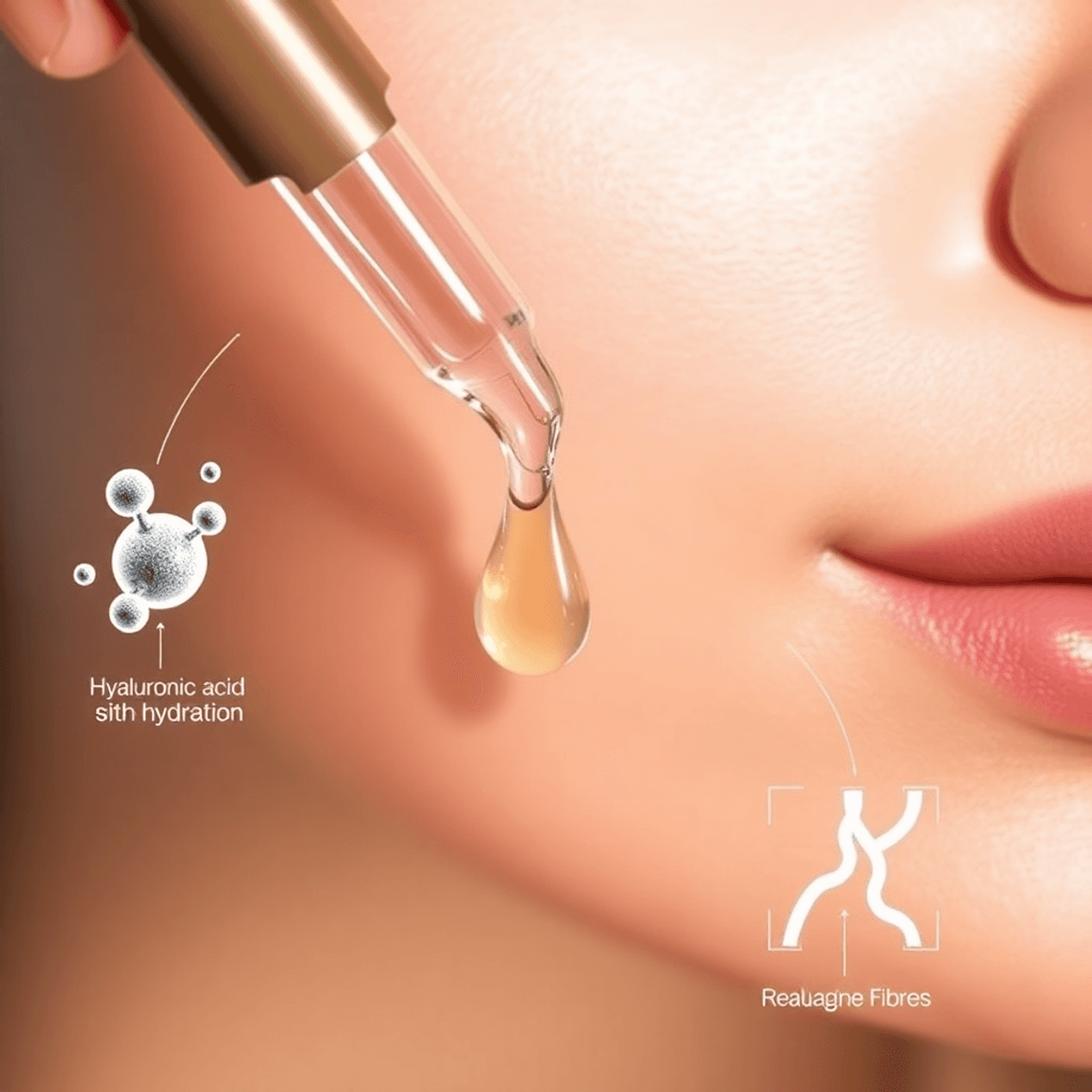
The Bradceuticals Gold Mesenchymal Stem Cell Growth Factor Serum is the post-microneedling serum in the Bradceuticals protocol for this reason. Applied to damp, dewy skin immediately after your session — never during the procedure as a gliding agent, never on dry skin — its mesenchymal stem cell-derived growth factor complex, EGF, and regenerative peptides enter the dermis while the collagen synthesis cascade is running at full capacity. Professional microneedling serums are the most important product decision in your entire microneedling protocol. Every session’s ceiling is set by what goes in through those channels.
What Makes a Serum Qualify as One of the Professional Microneedling Serums
Not every serum is appropriate for post-procedure use, and not every product marketed as a professional microneedling serum earns the designation on science. The characteristics that define genuine professional microneedling serums are specific:
Fragrance-free and alcohol-free — the enhanced permeability post-microneedling makes fragrance and alcohol potentially irritating at concentrations that normal skin tolerates without issue. Non-negotiable for professional microneedling serums.
Active ingredient bioavailability through micro-channels — the most valuable professional microneedling serums contain actives that cannot penetrate intact skin at therapeutic levels but reach the dermis effectively through open micro-channels. Growth factors, EGF, and exosomes all fall into this category.
No competing actives — retinoids, AHAs, BHAs, and high-concentration vitamin C are contraindicated in the immediate post-procedure window. Professional microneedling serums focus on repair, hydration, and collagen signaling — not exfoliation or stimulation.
Sterile or near-sterile formulation — with the skin barrier temporarily compromised, contamination risk is elevated. The best professional microneedling serums are formulated under conditions that minimize microbial risk.
The 6 Most Clinically Supported Ingredient Categories in Professional Microneedling Serums
1. Mesenchymal Stem Cell Growth Factor Complex: The Gold Standard Among Professional Microneedling Serums
The most evidence-backed active category in professional microneedling serums is mesenchymal stem cell-derived conditioned medium — delivering EGF, FGF-2, VEGF, HGF, TGF-β, PDGF-AA, and anti-inflammatory cytokines in a single formulation. The clinical evidence is direct: a randomized controlled trial of 20 patients confirmed that microneedling with growth factor serum produced significantly greater improvements in skin texture and hydration than microneedling with hyaluronic acid gel alone, with VISIA imaging confirming superior outcomes in the growth factor group. (PMC7716740) A case series of growth factor serum combined with microneedling at three sessions spaced 10 days apart documented significant improvement in texture, fine lines, and wrinkles on the Fitzpatrick Wrinkle Scale, assessed by independent physicians. (PMC7716740)
The Bradceuticals Gold Mesenchymal Stem Cell Growth Factor Serum applies this science as post-procedure protocol — applied to damp skin within 30 minutes of the session’s completion. For a full ranked comparison of options in this category, 7 Best Stem Cell Serums for Microneedling and 7 Proven Best Stem Cell Serums Ranked for 2026 cover the complete evidence-based breakdown.
2. Exosome Serums: The Emerging Front-Runner Among Professional Microneedling Serums
Stem cell-derived exosomes — extracellular vesicles containing miRNAs, proteins, and signaling molecules that regulate cell proliferation, collagen synthesis, and inflammatory response — are the most rapidly growing category within professional microneedling serums. A 12-week prospective randomized split-face study of microneedling combined with human adipose stem cell-derived exosome-containing solution confirmed significantly superior improvements in skin hydration (+6.5% vs +4.5% on control), melanin index (−9.9% vs −1.0% on control), and histopathological collagen and elastic fiber density in the exosome group. (PMC11899913)
A separate clinical trial compared adipose MSC-derived exosomes to PRP across radiofrequency microneedling sessions and found that both equally improved wrinkling, dyschromia, erythema, texture, and overall skin appearance — with exosomes offering the advantage of a standardized composition without requiring phlebotomy. (PMC12104007) A case series of three patients treated with microneedling and topical exosome application at four-week intervals documented visible reductions in pore size and improvements in skin texture sustained at 22 weeks post-treatment. (PMC12140750) The clinical evidence for exosome-based professional microneedling serums is accumulating rapidly — though larger randomized trials remain needed before this category achieves the same evidence level as growth factor serums.
3. Hyaluronic Acid: The Essential Foundation of All Professional Microneedling Serums
Multi-weight hyaluronic acid is the most universally appropriate active in professional microneedling serums — appropriate for every skin type, appropriate at every session, and confirmed in randomized clinical evidence to improve microneedling outcomes. A 60-patient randomized controlled trial confirmed that microneedling with hyaluronic acid produced significantly faster healing, reduced bruising, and higher proportions of “good” to “very good” outcome ratings compared to microneedling without HA. (PMC10833484) HA in professional microneedling serums serves multiple simultaneous functions: it forms the scaffold that guides fibroblast migration during wound healing, directly promotes collagen deposition by enhancing fibroblast anabolic activity, and reduces transepidermal water loss as micro-channels progressively close. For the complete ranked guide to HA serums in this context, 5 Best Hyaluronic Acid Serums to Use with Microneedling covers all evidence-based options.
4. EGF Serums: High-Impact Professional Microneedling Serums for Scar and Texture Correction
Epidermal growth factor is a 6 kDa polypeptide that cannot meaningfully penetrate the intact stratum corneum — making microneedling the primary delivery mechanism that unlocks its full dermal bioavailability. Through open micro-channels, EGF binds to receptors on fibroblasts and keratinocytes, upregulating collagen type I and III synthesis, suppressing MMP-1 collagenase activity, and reducing pro-inflammatory IL-1α and IL-8 simultaneously. (PMC10333026) EGF-based professional microneedling serums are particularly well-suited for acne scarring, textural irregularity, and pigmentation correction — the concerns where organized collagen induction and anti-fibrotic cytokine signaling are most therapeutically relevant. For the complete evidence base on EGF serums, 10 Reasons Why EGF Serums Are the Best for Skin Rejuvenation covers the full clinical picture.
5. Peptide Serums: Professional Microneedling Serums for Sustained Inter-Session Collagen Support
Signal peptides, carrier peptides, and enzyme inhibitor peptides each contribute distinct collagen-building mechanisms that extend the regenerative window of microneedling beyond the immediate post-procedure session. Signal peptides instruct fibroblasts to upregulate collagen and elastin production. Copper peptides (GHK-Cu) — the most clinically studied peptide in this context — showed significantly increased skin permeation through microneedle-pretreated skin, with no observable irritation. (PubMed 25690343) Enzyme inhibitor peptides slow the matrix metalloproteinases that degrade newly synthesized collagen during the remodeling phase. Professional microneedling serums containing copper peptides or multi-mechanism peptide complexes applied post-procedure and continued between sessions compound the collagen-building signal that microneedling initiates.
6. Centella Asiatica and Niacinamide: Professional Microneedling Serums for Sensitive and Reactive Skin
For sensitive, reactive, rosacea-prone, or darker-complexion skin types where post-procedure inflammation carries elevated hyperpigmentation risk, professional microneedling serums formulated with Centella Asiatica (CICA) or niacinamide address the immediate recovery window most safely. Centella Asiatica’s triterpenoids — asiaticoside, asiatic acid, and madecassic acid — demonstrate anti-inflammatory and wound-healing properties that accelerate the transition from the inflammatory to the proliferative healing phase. Niacinamide inhibits melanin transfer to keratinocytes — reducing post-inflammatory hyperpigmentation risk — while simultaneously supporting barrier ceramide synthesis. Both are appropriate for application within 24 hours of microneedling when growth factor serums have been applied and the initial inflammatory phase is subsiding.
How to Layer Professional Microneedling Serums for Maximum Results
The sequence and timing of professional microneedling serums matters as much as the ingredient selection. The correct protocol:
Immediately post-procedure (0–30 minutes): Apply the growth factor or exosome serum to damp, dewy skin first — this is the highest-bioavailability window when micro-channels are maximally open. Use a gentle pressing motion, never rubbing. Apply multi-weight hyaluronic acid serum next. Seal with a fragrance-free, ceramide-containing moisturizer.
Hours 24–72: Continue hyaluronic acid twice daily to damp skin. Introduce niacinamide serum if skin is sensitive or if hyperpigmentation is a concern. Avoid all retinoids, AHAs, BHAs, and high-concentration vitamin C during this phase.
Days 3–7: Introduce ceramide serum to support barrier recovery. Broad-spectrum SPF 30 or higher every morning from day one — UV exposure on newly remodeled skin triggers the MMP cascade that treatment is actively reversing.
Between sessions: Consistent daily use of growth factor serum morning and evening on damp skin maintains the regenerative environment between microneedling sessions and compounds structural improvements as newly synthesized collagen matures. For the complete recovery timeline, 7 Complete Stages of Microneedling Recovery Time maps every phase and its professional microneedling serum aftercare requirements.
What to Avoid in Professional Microneedling Serums
The enhanced skin permeability that makes professional microneedling serums so effective also makes the wrong ingredient potentially harmful. Avoid any professional microneedling serum that contains:
Retinoids — too stimulating for temporarily compromised barrier. Hold for four to seven days post-procedure minimum.
AHAs and BHAs — interfere with the wound healing cascade and exacerbate sensitivity. Never appropriate in the immediate post-microneedling window.
Fragrance and alcohol — pro-inflammatory when introduced through open micro-channels. Non-negotiable exclusions from all professional microneedling serums.
High-concentration vitamin C — causes burning on open micro-channels. Reintroduce at 48 to 72 hours as the barrier progressively restores.
Essential oils — commonly irritating when skin permeability is elevated.
Frequently Asked Questions About Professional Microneedling Serums
What makes a serum “professional” for microneedling use? Professional microneedling serums are formulated specifically for post-procedure application — fragrance-free, alcohol-free, free from AHAs/BHAs and retinoids, with actives that perform best when delivered through open micro-channels. The most clinically supported professional microneedling serums contain growth factors, exosomes, EGF, or multi-weight hyaluronic acid at concentrations meaningful for dermal delivery.
Can I use my regular serum as a professional microneedling serum? Only if it meets all the formulation requirements: fragrance-free, alcohol-free, no retinoids, no AHAs/BHAs, no high-concentration vitamin C. Most regular serums are not formulated for post-procedure use. Dedicated professional microneedling serums are always the appropriate choice.
How many microneedling sessions do professional microneedling serums take to show results? Clinical trials document significant improvements after three to four sessions spaced four to six weeks apart. Professional microneedling serums applied consistently post-procedure compound the collagen induction from each session across the full treatment series.
Are professional microneedling serums safe for all skin types? Growth factor serums, hyaluronic acid, and niacinamide-based professional microneedling serums are appropriate for all Fitzpatrick skin types. Sensitive skin and darker complexions benefit most from fragrance-free, alcohol-free formulations with anti-inflammatory properties. Microneedling itself is notably safe for darker skin tones compared to laser resurfacing. (PMC11499218)
References
- An Assessment of Microneedling with Topical Growth Factors: A Randomized Controlled Trial. PMC7716740. https://pmc.ncbi.nlm.nih.gov/articles/PMC7716740/
- Comparative Evaluation of Microneedling Alone Versus Microneedling with Hyaluronic Acid. PMC10833484. https://pmc.ncbi.nlm.nih.gov/articles/PMC10833484/
- Effectiveness of Extracellular Vesicle Application in Skin Aging Treatment and Regeneration. PMC11899913. https://pmc.ncbi.nlm.nih.gov/articles/PMC11899913/
- Adipose MSC-Derived Exosomes Versus PRP for Photoaged Facial Skin. PMC12104007. https://pmc.ncbi.nlm.nih.gov/articles/PMC12104007/
- The Efficacy of Combined Exosome and Microneedling Treatment for Pore Reduction. PMC12140750. https://pmc.ncbi.nlm.nih.gov/articles/PMC12140750/
- The Use of Epidermal Growth Factor in Dermatological Practice. PMC10333026. https://pmc.ncbi.nlm.nih.gov/articles/PMC10333026/
- Microneedling in Dermatology: A Comprehensive Review. PMC11499218. https://pmc.ncbi.nlm.nih.gov/articles/PMC11499218/
- Advances in Regenerative Medicine-Based Approaches for Skin Regeneration. PMC11861087. https://pmc.ncbi.nlm.nih.gov/articles/PMC11861087/
Disclaimer: This article is for educational purposes only and does not constitute medical advice. Always consult a licensed dermatologist or skincare professional before beginning any microneedling protocol. Individual results vary.
Last reviewed: March 2026
About Bradceuticals : Thuy Myers is the founder of Bradceuticals which manufactures and distributes skin care and hair regrowth serums that use growth factors from human stem cells as the catalyst for regeneration. When she is not busy running the business and maintaining blogs, she is continuing her practice as a semiconductor engineer and occasionally teaches college engineering. In her free time, she enjoys the beach, working out at the gym and hanging out with her kiddo Brad.