

The conversation around stem cell anti aging creams has shifted from speculative marketing to peer-reviewed science. Mesenchymal stem cell conditioned media — the secretome harvested from cultured human stem cells — delivers a concentrated payload of cytokines, growth factors, and extracellular vesicles that instruct fibroblasts to ramp up collagen and elastin synthesis at the cellular level (Park et al., 2019). Unlike retinoids that force cell turnover through chemical signaling or hyaluronic acid that provides temporary surface hydration, stem cell anti aging creams works through paracrine communication — the same biological language your skin cells already speak. If you have been wading through ingredient lists and conflicting claims, this guide separates the clinically supported formulations from the noise.
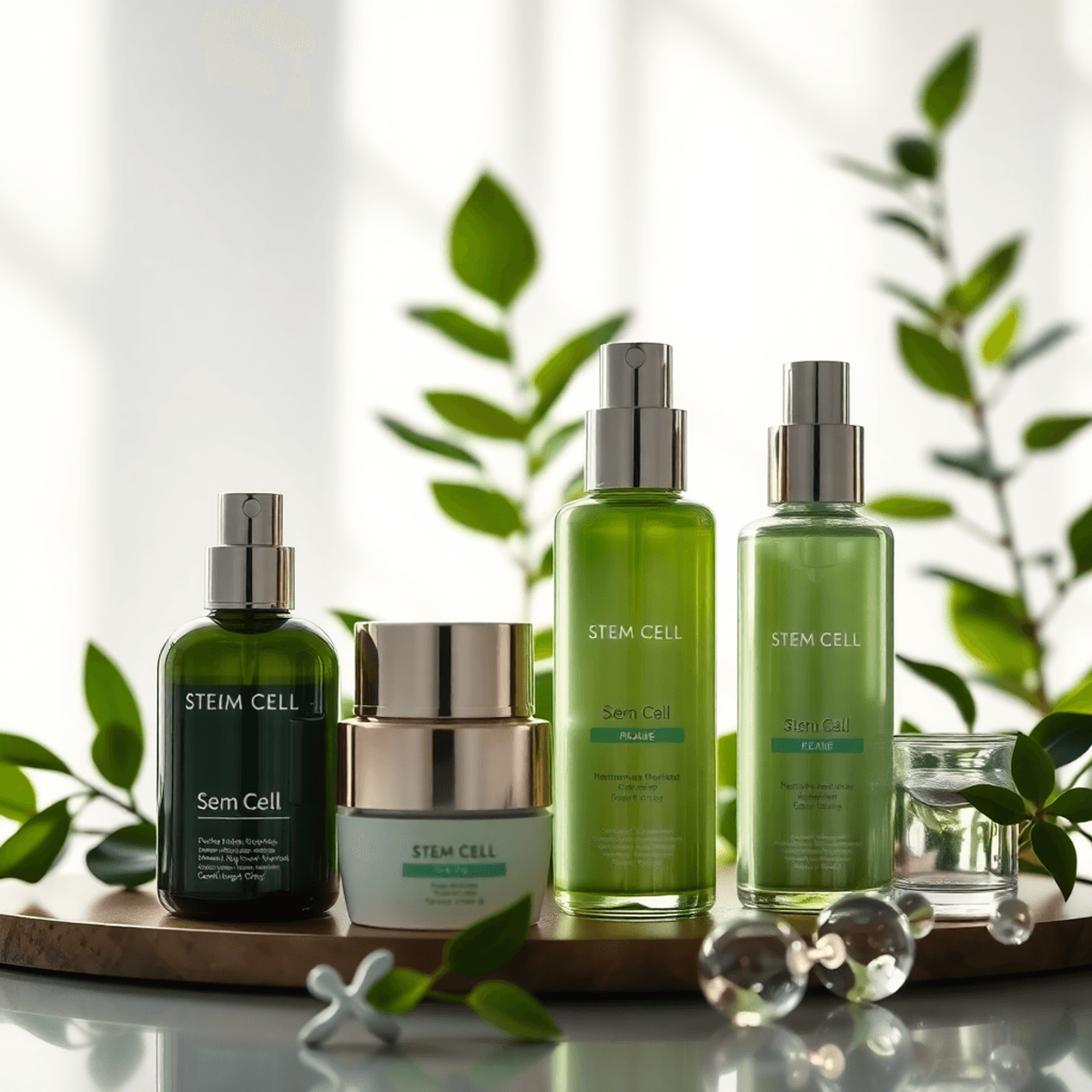
What makes the difference between a stem cell anti aging creams that delivers visible results and one that simply borrows the terminology? Sourcing, concentration, and formulation architecture. A 2020 study in the Journal of Cosmetic Dermatology demonstrated that human adipose-derived stem cell conditioned media applied topically for eight weeks produced statistically significant reductions in wrinkle depth and improvements in skin elasticity compared to placebo (Kim et al., 2020). Bradceuticals’ Gold Mesenchymal Stem Cell Growth Factor Serum is built on this research foundation, concentrating human mesenchymal stem cell conditioned media into a lightweight formula designed for application on damp, dewy skin immediately after microneedling — when microchannels are open and growth factor absorption peaks.
The Biology Behind Stem Cell Anti Aging Creams
How Growth Factors Communicate With Aging Skin
Every stem cell anti aging creams worth considering works through growth factor signaling. Epidermal growth factor (EGF), transforming growth factor beta (TGF-β), platelet-derived growth factor (PDGF), and vascular endothelial growth factor (VEGF) each bind to specific receptors on keratinocytes and fibroblasts, triggering cascades that result in new collagen deposition, accelerated wound healing, and improved cellular metabolism. Research from Seoul National University confirmed that mesenchymal stem cell conditioned media boosted type I collagen production in human dermal fibroblasts by up to 31% versus untreated controls (Park et al., 2019).
This mechanism is fundamentally different from how conventional anti aging creams operate. Retinol increases cell turnover by binding to retinoic acid receptors, which can cause irritation and photosensitivity. Peptides mimic fragments of collagen to stimulate production indirectly. Growth factors from stem cell conditioned media, however, deliver the complete signaling environment that aging skin progressively loses — making them uniquely suited to address the root cause of dermal thinning rather than just the symptoms.
Why Aging Skin Loses Its Regenerative Capacity
After age 30, fibroblast density in the dermis declines by approximately 1% per year, and the remaining fibroblasts become less responsive to growth signals (Varani et al., 2006). Simultaneously, the skin’s own production of EGF and other regenerative cytokines diminishes. A stem cell anti aging creams essentially replenishes the growth factor pool that time depletes, reactivating dormant repair pathways. A clinical trial published in the International Journal of Molecular Sciences showed that topical EGF application improved re-epithelialization rates and overall texture in photodamaged skin (Esquirol-Caussa & Herrero-Vila, 2015).
Plant-Derived vs. Human-Derived Stem Cell Ingredients
Not all stem cell anti aging creams contain the same category of actives, and this distinction determines what biological results you can realistically expect.
Plant Stem Cell Extracts
Extracts from Malus domestica (Swiss apple), Vitis vinifera (grape), and Argania spinosa (argan) appear frequently in stem cell labeled products. A study in the Journal of Applied Pharmaceutical Sciences confirmed that apple stem cell extract shielded endothelial cells from oxidative damage (Barbulova et al., 2015). These are legitimate antioxidant and anti-inflammatory ingredients. However, plant cells do not produce EGF, TGF-β, PDGF, or any other human-compatible growth factor. They protect — they do not regenerate through paracrine signaling.
Human Stem Cell Conditioned Media
Conditioned media from adipose-derived or mesenchymal stem cells contains the full cytokine and growth factor profile that human fibroblasts recognize and respond to. For consumers specifically seeking collagen induction, wrinkle reduction, and dermal thickening, human-derived formulations like Bradceuticals’ growth factor serum provide a biological pathway that plant extracts cannot replicate. The best stem cell serums ranked for 2026 break this comparison down further for those evaluating specific products.
What to Evaluate When Choosing Stem Cell Anti Aging Creams
Source Transparency
The label should specify whether the conditioned media comes from adipose-derived, bone-marrow-derived, or mesenchymal stem cells. Vague terms like “stem cell extract” without sourcing details are a red flag. Clinical research overwhelmingly uses adipose-derived or mesenchymal sources in successful skin rejuvenation trials (Kim et al., 2020).
Complementary Active Ingredients
The most effective stem cell anti aging creams formulations pair growth factors with synergistic actives. Niacinamide reinforces the skin barrier and addresses hyperpigmentation. Copper peptides support wound healing and collagen architecture. Ceramides restore the lipid matrix that environmental exposure and aging degrade. Hyaluronic acid provides immediate hydration while growth factors work on longer-term structural repair. These supporting players create the optimal dermal environment for growth factors to function.
Formulation Type and Delivery
Stem cell anti aging products come as rich creams, lightweight serums, and sheet masks. For post-microneedling application, a serum consistency penetrates microchannels without occluding them. The complete stages of microneedling recovery require fragrance-free, acid-free formulations thin enough to absorb into compromised skin. For daily use without a procedure, layering a growth factor serum beneath a cream-based moisturizer delivers both regenerative actives and occlusive hydration.
How to Incorporate Stem Cell Anti Aging Creams Into Your Routine
Morning Protocol
Cleanse with a gentle, pH-balanced wash. Apply a growth factor serum like Bradceuticals’ Gold Mesenchymal Stem Cell Growth Factor Serum to damp skin. Follow with your stem cell anti aging creams or moisturizer. Finish with broad-spectrum SPF 30 or higher — elevated cellular turnover from growth factors makes UV protection essential.
Post-Microneedling Protocol
After microneedling, thousands of microchannels dramatically increase absorption capacity. Apply the growth factor serum to damp, dewy skin immediately post-procedure. Never use it as a gliding serum during the procedure itself. Understanding the healing stages every patient should know helps you time application during the inflammatory and proliferative phases when growth factor receptors are maximally active.
Evening Protocol
Double cleanse to remove sunscreen and environmental debris. Apply your growth factor serum, allow sixty seconds for absorption, then layer your stem cell anti aging creams on top. Consistent twice-daily exposure provides fibroblasts with sustained regenerative signaling that compounds over weeks.
Clinical Evidence for Long-Term Results
A 2021 review in Stem Cell Research & Therapy analyzed multiple clinical trials involving topical stem cell conditioned media and concluded that consistent application over 8 to 12 weeks produced statistically significant improvements in wrinkle depth, skin elasticity, and dermal thickness (Katagiri et al., 2021). The takeaway is that stem cell anti aging creams delivers cumulative rather than instant results — consistency over months matters more than any single application.
Growth factors also demonstrate potential beyond wrinkle reduction. Research in Annals of Dermatology found that stem cell conditioned media suppressed melanin synthesis in cultured melanocytes, suggesting a role in evening skin tone alongside structural repair (Seo et al., 2019). For individuals managing both aging and sun damage, this dual action makes growth factor formulations particularly compelling.
The Role of EGF in Stem Cell Anti Aging Formulations
Epidermal growth factor deserves special attention because it is one of the most extensively studied proteins in dermatology. EGF binds to EGFR receptors on keratinocytes and fibroblasts, promoting proliferation, migration, and differentiation. The top reasons why EGF serums lead in skin rejuvenation detail how this single growth factor drives measurable improvements in skin texture, thickness, and hydration when delivered in adequate concentrations.
When EGF is combined with the broader growth factor profile found in mesenchymal stem cell conditioned media — including TGF-β for extracellular matrix remodeling and VEGF for improved microcirculation — the result is a comprehensive anti aging strategy that addresses multiple mechanisms of skin aging simultaneously rather than targeting just one pathway.
Frequently Asked Questions
What is the difference between stem cell anti aging creams and a regular anti aging cream? Stem cell anti aging creams contains growth factors derived from stem cell conditioned media that directly signal fibroblasts and keratinocytes to produce collagen and elastin. Regular anti aging creams typically rely on retinoids, antioxidants, or synthetic peptides that work through indirect or less targeted mechanisms.
Are stem cell anti aging creams safe for sensitive skin? Growth factor formulations are generally well-tolerated because they contain proteins naturally recognized by human skin. Choose fragrance-free products and always patch test. Formulations designed for post-microneedling healing are specifically engineered for compromised skin barriers.
How soon will I see results from stem cell anti aging creams? Improved hydration and skin texture typically appear within two to three weeks. Measurable changes in wrinkle depth and elasticity require 8 to 12 weeks of consistent twice-daily application based on clinical trial timelines.
Do plant stem cell creams provide anti aging benefits? Plant stem cell extracts deliver real antioxidant and anti-inflammatory protection. However, they do not contain human-compatible growth factors. For collagen induction and structural dermal repair, human stem cell conditioned media products are supported by stronger clinical evidence.
Can I use a stem cell anti aging cream with retinol? Yes, but stagger application. Use retinol in the evening and allow it to absorb fully before applying your growth factor product, or alternate evenings. Combining both provides complementary anti aging pathways — retinol for cell turnover and growth factors for collagen synthesis.
References
- Park, B.S., et al. (2019). Adipose-derived stem cells and their secretory factors for skin aging. Dermatologic Surgery. https://pmc.ncbi.nlm.nih.gov/articles/PMC6835893/
- Kim, Y.J., et al. (2020). Human adipose-derived stem cell conditioned media and skin elasticity. Journal of Cosmetic Dermatology. https://pubmed.ncbi.nlm.nih.gov/31573748/
- Varani, J., et al. (2006). Decreased collagen production in chronologically aged skin. American Journal of Pathology. https://pubmed.ncbi.nlm.nih.gov/16675963/
- Esquirol-Caussa, J. & Herrero-Vila, E. (2015). EGF applications in dermatology. International Journal of Molecular Sciences. https://pubmed.ncbi.nlm.nih.gov/26370986/
- Barbulova, A., et al. (2015). Plant stem cells in cosmetics. Journal of Applied Pharmaceutical Sciences. https://pmc.ncbi.nlm.nih.gov/articles/PMC4740987/
- Katagiri, W., et al. (2021). Clinical applications of stem cell conditioned media. Stem Cell Research & Therapy. https://pmc.ncbi.nlm.nih.gov/articles/PMC7815998/
- Seo, K.Y., et al. (2019). Stem cell conditioned media and melanin regulation. Annals of Dermatology. https://pubmed.ncbi.nlm.nih.gov/33911573/
Disclaimer: This article is for informational purposes only and does not constitute medical advice. Consult a board-certified dermatologist before beginning any new skincare regimen.
Last reviewed: March 31, 2026
About Bradceuticals : Thuy Myers is the founder of Bradceuticals which manufactures and distributes skin care and hair regrowth serums that use growth factors from human stem cells as the catalyst for regeneration. When she is not busy running the business and maintaining blogs, she is continuing her practice as a semiconductor engineer and occasionally teaches college engineering. In her free time, she enjoys the beach, working out at the gym and hanging out with her kiddo Brad.