

You have cleansed, toned, moisturized, and protected faithfully for years — and somewhere along the way the returns stopped matching the effort. The texture roughened. The firmness softened. The products you trusted quietly stopped keeping up. That slow disconnect between routine and results is not a failure of discipline. It is a failure of ingredients that never reach the cells where aging actually happens. Understanding what is a growth factor serum explains why — and changes what you reach for next. A dermatological review confirmed that growth factors promote fibroblast migration, increase collagen and hyaluronic acid synthesis, and activate the PI3K/AKT and ERK/MAPK intracellular repair pathways (PMC10333026).
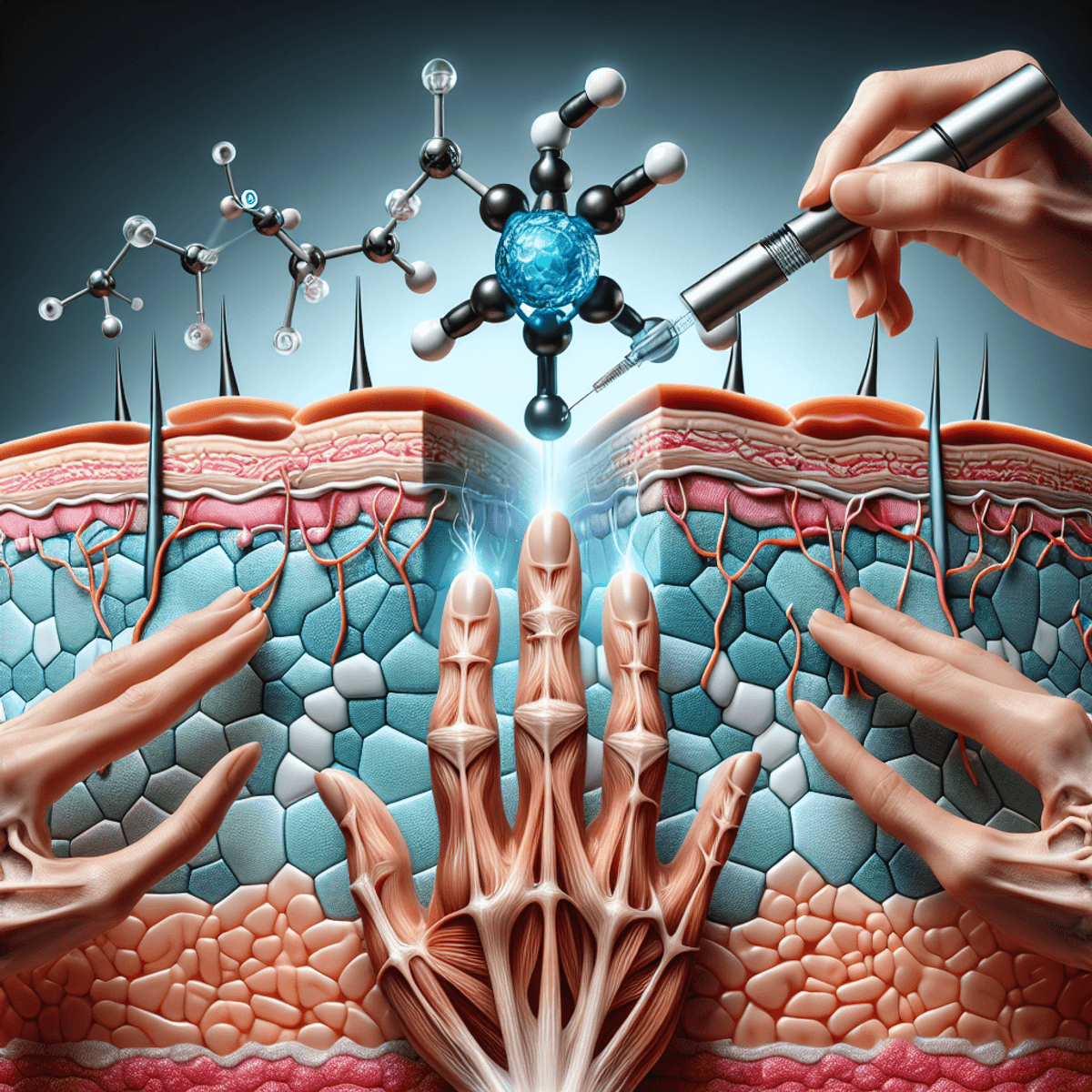
Knowing what is a growth factor serum turns a skincare routine from symptom management into cause reversal. A 24-week placebo-controlled clinical trial demonstrated that a growth factor-based regimen significantly reduced sagging, wrinkles, photodamage, and hyperpigmentation — with biopsy-confirmed increases in collagen, elastin, and epidermal barrier components (PMC9823186). Bradceuticals Gold Mesenchymal Stem Cell Growth Factor Serum delivers human mesenchymal stem cell conditioned media — the complete secretome including EGF, FGF, TGF-beta, VEGF, PDGF, and HGF — in a concentrated formula designed for exactly this purpose. Applied to damp, dewy skin after microneedling or twice daily as part of an everyday routine, it answers the question of what is a growth factor serum with visible, measurable results.
What Is a Growth Factor Serum at the Biological Level
To understand what is a growth factor serum, start with what growth factors are. They are naturally occurring signaling proteins produced by keratinocytes, fibroblasts, and melanocytes within human skin. Each protein binds to a specific receptor on the surface of a target cell and triggers an intracellular cascade that instructs that cell to perform a particular function — divide, migrate, produce collagen, synthesize hyaluronic acid, or initiate tissue repair.
A growth factor serum captures these proteins in a topically applicable format. The most clinically validated source is conditioned media — the nutrient-rich liquid collected after human stem cells or fibroblasts are cultured in a laboratory environment. During culture, these cells secrete dozens of growth factors, cytokines, peptides, and extracellular vesicles (exosomes) into the surrounding media. That secretion is what makes a growth factor serum biologically active.
Recent research revealed that the extracellular vesicles within conditioned media may be responsible for a significant portion of the therapeutic effects previously attributed to growth factors alone — producing statistically significant increases in Collagen 1, Collagen 3, and elastin when applied to human skin (PMC11518787). So when someone asks what is a growth factor serum, the answer is more complex and more powerful than most people realize — it is a multi-component biological delivery system, not a single ingredient.
How a Growth Factor Serum Differs from Ordinary Serums
Understanding what is a growth factor serum requires understanding what it is not. Conventional serums deliver nutrients, antioxidants, or hydrating agents to the skin surface. A vitamin C serum neutralizes free radicals. A hyaluronic acid serum attracts water. A niacinamide serum reduces inflammation. Each serves a valuable function — but none of them can instruct a cell to do anything.
A growth factor serum delivers biological instructions. When EGF binds to EGFR receptors on keratinocytes, it tells those cells to divide faster. When TGF-beta reaches fibroblasts, it commands them to manufacture collagen and elastin. When VEGF activates endothelial cells, it stimulates new blood vessel formation for improved nutrient delivery. No antioxidant, humectant, or vitamin can replicate this receptor-mediated signaling mechanism.
This distinction is the core answer to what is a growth factor serum — it is the only topical product category that communicates directly with skin cells in the biological language those cells are programmed to respond to.
Why Source Matters More Than the Label
Not every product labeled as a growth factor serum contains growth factors that human skin can respond to. The market includes formulations derived from human mesenchymal stem cells, plant stem cells, snail secretion, and synthetic recombinant proteins. These sources produce dramatically different biological outcomes.
Plant-derived growth factors from apple or barley stem cells function as mild antioxidants but lack the molecular structure to bind to human EGFR, PDGFR, or TGF-beta receptors. Snail secretion filtrates contain trace glycoproteins but at concentrations far below therapeutic thresholds. Research confirms that up to 80% of the therapeutic effect of mesenchymal stem cells occurs through the molecules they release — making the source of those molecules the single most important variable in any growth factor serum (PMC11518787).
Bradceuticals uses human bone marrow mesenchymal stem cell conditioned media — a source that delivers the broadest growth factor profile available because MSCs are multipotent cells that secrete signaling proteins for multiple tissue types. When evaluating what is a growth factor serum worth purchasing, the ingredient list answers the question before anything else.
What a Growth Factor Serum Does to Aging Skin
A comprehensive review of 23 qualifying studies confirmed that stem cell conditioned media consistently demonstrates anti-aging effects including enhanced collagen production, reduced oxidative stress, and improved inflammatory regulation across in vitro, in vivo, and clinical trials (PMC11416772). Understanding what is a growth factor serum becomes tangible when you see what it accomplishes:
Rebuilds collagen structure. Growth factors signal fibroblasts to manufacture new Type I and Type III collagen — the structural proteins that maintain skin firmness. The clinical trial confirmed increased collagen expression in skin biopsy samples after 12 weeks of topical growth factor application (PMC9823186).
Restores epidermal barrier function. The same biopsy analysis showed increased expression of claudin 1, filaggrin, and transglutaminase — key proteins that maintain the skin’s protective barrier against environmental damage and moisture loss (PMC9823186).
Reduces cellular senescence. The clinical trial demonstrated reduced expression of the cellular senescence biomarker H2A.J — meaning growth factors may help delay the biological aging process at the cellular level, not just improve surface appearance (PMC9823186).
Corrects hyperpigmentation. A systematic review confirmed that topical EGF application decreased melasma in 73.4% of participants by reducing melanogenesis-associated protein expression (PMC8423211).
Stimulates endogenous hyaluronic acid production. Rather than applying temporary surface hydration, a growth factor serum triggers the skin’s own HA synthesis from within (PMC10333026).
How to Use a Growth Factor Serum
Apply twice daily to thoroughly cleansed, slightly damp skin. Press gently into face and neck — never rub. Allow five to ten minutes for absorption before layering moisturizer and sunscreen. For dramatically enhanced results, apply immediately after monthly microneedling sessions — the microchannels bypass the stratum corneum, allowing growth factor proteins exceeding 15,000 daltons direct access to dermal fibroblasts where collagen is manufactured.
A randomized controlled trial confirmed that growth factors applied post-microneedling produced statistically significant improvements in texture and hydration after just one session (PMC7716740). Anyone who has learned what is a growth factor serum and still applies only hyaluronic acid after microneedling is leaving the most valuable part of the post-procedure window on the table.
Results Timeline
Weeks 1–3: Improved hydration and subtle luminosity as accelerated cell turnover replaces damaged surface cells.
Weeks 4–8: Collagen remodeling becomes apparent — firmer skin, softened fine lines, visually smaller pores.
Weeks 8–12: The clinical trial reported a median decrease in self-perceived age of six years at the 12-week mark (PMC9823186). Structural changes become visible to others.
Months 3–6+: Cumulative collagen deposition creates lasting improvement. New collagen fibers persist five to seven years, meaning each month of consistent use builds a structural foundation that endures.
Frequently Asked Questions
What is a growth factor serum made from? A growth factor serum contains conditioned media — the signaling molecules secreted by cultured human stem cells or fibroblasts. This media is rich in growth factors (EGF, TGF-beta, PDGF, VEGF, FGF), cytokines, peptides, and extracellular vesicles that instruct skin cells to regenerate.
What is a growth factor serum best used for? Anti-aging concerns including wrinkles, loss of firmness, uneven texture, hyperpigmentation, and post-procedure recovery. It is also effective for anyone experiencing diminishing returns from their current skincare routine.
What is a growth factor serum compared to retinol? Both increase collagen and accelerate cell turnover, but through different mechanisms. Growth factors work through receptor-mediated signaling without the irritation, peeling, and photosensitivity retinol produces — making them a preferable alternative for sensitive skin.
What is a growth factor serum’s advantage over peptide serums? Peptides are short amino acid chains that provide partial signaling. A growth factor serum contains complete proteins that trigger full biological cascades — collagen synthesis, angiogenesis, cellular migration — a more comprehensive regenerative response.
What is a growth factor serum’s role after microneedling? Post-microneedling is when a growth factor serum delivers its most dramatic results. Open microchannels allow growth factor proteins to bypass the stratum corneum and reach dermal fibroblasts directly, producing measurable collagen improvement after a single session.
References
- Shin SH, et al. The use of epidermal growth factor in dermatological practice. Int Wound J. 2023;20(6):2414-2423. (PMC10333026)
- Naughton GK, et al. Targeting Multiple Hallmarks of Skin Aging: Preclinical and Clinical Efficacy of a Novel Growth Factor-Based Skin Care Serum. Dermatol Ther. 2023;13(1):169-186. (PMC9823186)
- Taub A. Regenerative topical skincare: stem cells and exosomes. Front Med. 2024;11:1443963. (PMC11518787)
- Alquraisy A, et al. A Comprehensive Review of Stem Cell Conditioned Media Role for Anti-Aging on Skin. Stem Cells Cloning. 2024;17:5-19. (PMC11416772)
- Miller-Kobisher B, et al. Epidermal Growth Factor in Aesthetics and Regenerative Medicine: Systematic Review. J Cutan Aesthet Surg. 2021;14(2):137-146. (PMC8423211)
- Merati M, et al. An Assessment of Microneedling with Topical Growth Factors for Facial Skin Rejuvenation: A Randomized Controlled Trial. J Clin Aesthet Dermatol. 2020;13(11):22-27. (PMC7716740)
Disclaimer: This article is for informational purposes only and does not constitute medical advice. Consult a qualified dermatologist or healthcare provider before starting any new skincare treatment. Individual results may vary.
Last Reviewed: April 2026
About Bradceuticals : Thuy Myers is the founder of Bradceuticals which manufactures and distributes skin care and hair regrowth serums that use growth factors from human stem cells as the catalyst for regeneration. When she is not busy running the business and maintaining blogs, she is continuing her practice as a semiconductor engineer and occasionally teaches college engineering. In her free time, she enjoys visiting the beach with her MUCH better half, working out at the gym, and hanging out with her kiddo.